

Yes, eating too much sugar can cause headaches through rapid blood sugar spikes followed by crashes. The World Health Organization recommends limiting added sugar to under 10% of daily calories, partly due to these metabolic swings.
Headaches from sugar typically appear 1 to 3 hours after eating sugary foods, as blood sugar drops sharply. This guide covers the science behind this, symptoms, dehydration links, and proven prevention strategies.
Why Sugar Causes Headaches
Why sugar causes headaches comes down to five connected processes happening inside the body within hours of eating sugary food. Blood sugar spikes and crashes, hormone responses, brain energy supply changes, and inflammation all play a role, often stacking together after a single sugary meal or snack.
Rapid Blood Sugar Spikes
Sugary foods cause blood glucose to rise quickly. The American Diabetes Association notes that rapid glucose spikes can affect blood vessel function temporarily, contributing to headache onset in sensitive individuals.
Sudden Blood Sugar Drops
After a spike, the body releases insulin to bring glucose levels back down, sometimes overshooting and causing a drop below normal, called reactive hypoglycemia. This drop is the most common trigger for can too much sugar cause headaches complaints reported to doctors.
Hormonal Responses to Excess Sugar
When blood sugar drops, the body releases stress hormones like adrenaline and cortisol to raise glucose back up. These hormones constrict and then dilate blood vessels, a pattern linked to headache and migraine onset.
Changes in Brain Energy Supply
The brain relies heavily on stable glucose for energy. A 2021 study in Nutritional Neuroscience found that rapid glucose fluctuations were associated with increased headache frequency in participants prone to migraines.
Inflammation and Sugar Intake
High sugar intake increases certain inflammatory markers in the blood. The American Heart Association links excess added sugar consumption to higher levels of inflammatory markers like CRP, which can sensitize pain pathways involved in headaches.
Sugar Crash Headache Symptoms
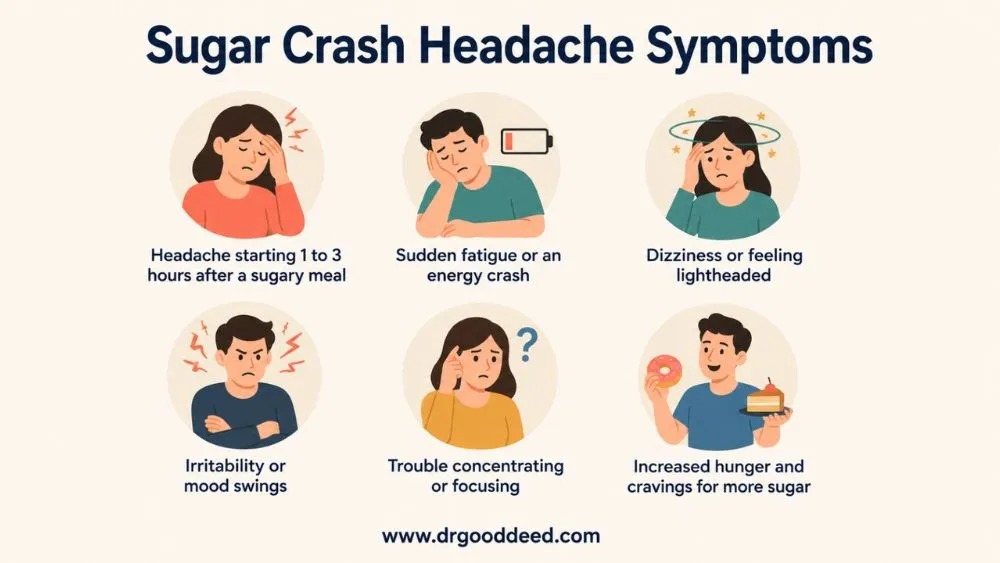
Sugar crash headache symptoms follow a recognizable pattern that typically starts 1 to 3 hours after eating something high in added sugar, especially on an empty stomach.
- Headache starting 1 to 3 hours after a sugary meal or snack
- Sudden fatigue or an energy crash
- Dizziness or feeling lightheaded
- Irritability or mood swings
- Trouble concentrating or focusing
- Increased hunger and cravings for more sugar
Headache After a Sugar Rush
The headache typically follows the energy “high” from the initial sugar rush, appearing as blood sugar drops below the level it was before eating.
Fatigue and Low Energy
A sudden drop in available glucose leaves less energy for brain and body functions, causing the fatigue that often accompanies sugar crash headaches.
Dizziness and Lightheadedness
Low blood sugar reduces glucose available to the brain, which can cause brief dizziness, especially when standing up quickly.
Irritability and Mood Changes
Blood sugar drops trigger stress hormone release, which can cause irritability or anxiety-like feelings alongside the physical symptoms.
Difficulty Concentrating
The brain needs steady glucose for focus. A rapid drop after a sugar spike often causes brain fog and trouble concentrating within an hour or two of eating.
Hunger and Cravings
Low blood sugar triggers hunger signals, often specifically for more sugar or refined carbs, creating a cycle that can repeat the spike-crash pattern throughout the day.
Dehydration From High Sugar Intake
Dehydration from high sugar intake is a connection most articles on this topic skip entirely, yet it plays a direct role in sugar-related headaches. High sugar intake, especially from sugary drinks, increases urination and fluid loss, and dehydration itself is one of the most common headache triggers documented by the National Headache Foundation.
How Excess Sugar Affects Hydration
The kidneys work to filter excess glucose from the blood, and this process pulls additional water from the body, increasing urine output.
Increased Urination and Fluid Loss
Sugary drinks, especially sodas and juices, can increase urination frequency within an hour of consumption, particularly when blood sugar levels rise above normal ranges.
Signs of Dehydration
- Dry mouth or increased thirst
- Dark yellow urine
- Fatigue beyond normal tiredness
- Headache, often described as dull and widespread
Why Dehydration Can Trigger Headaches
Dehydration reduces blood volume slightly, which can affect blood flow to the brain. The National Headache Foundation lists dehydration among the most common, and most preventable, headache triggers.
Risk Factors for Sugar-Induced Headaches
People in the United States who notice headaches after eating sugary foods often share certain risk factors that make them more sensitive to blood sugar swings. These factors include having migraine disorders, insulin resistance, irregular eating patterns, and high caffeine intake alongside sugar, all of which amplify the spike-and-crash effect on the brain.
- History of migraines, which increases sensitivity to blood sugar fluctuations
- Insulin resistance or prediabetes, even if undiagnosed
- Skipping meals, which worsens the impact of a later sugar spike
- High caffeine intake combined with sugary drinks or snacks
- Inconsistent meal timing throughout the day
- Family history of diabetes or metabolic conditions
How Doctors Diagnose Sugar-Related Headaches
Doctors typically start with a detailed symptom timeline, asking when headaches occur relative to meals and what foods precede them. A food and symptom diary kept for two weeks to identify patterns linking specific foods to headache onset.
If a pattern emerges, doctors may order:
- Fasting blood glucose test to check baseline blood sugar levels
- HbA1c test, which shows average blood sugar over the past 3 months
- Oral glucose tolerance test, if reactive hypoglycemia is suspected
- Referral to a registered dietitian for personalized meal planning if blood sugar swings are confirmed
How Tracking Food Patterns Stopped Recurring Afternoon Headaches
Case Study: Identifying Reactive Hypoglycemia Reduced Afternoon Headaches From Daily to Rare
Michael (name altered for privacy), a 39-year-old from Georgia, dealt with afternoon headaches almost every workday for over a year. He initially assumed stress was the cause and tried meditation apps and over-the-counter pain relievers, both providing minimal relief.
His doctor suggested a two-week food and symptom diary. The pattern became clear: Michael typically skipped breakfast, then ate a large pastry and sweetened coffee around 10 AM. Headaches consistently started between 1 and 2 PM, roughly 3 hours after this sugary breakfast.
An oral glucose tolerance test confirmed reactive hypoglycemia, meaning Michael’s blood sugar dropped significantly below baseline a few hours after the glucose spike. His doctor recommended eating a protein-and-fiber breakfast within an hour of waking, replacing the pastry with options like eggs and whole grain toast, and limiting added sugar in his morning coffee.
Within two weeks, Michael’s afternoon headaches dropped from near-daily to about once every two weeks. His doctor noted this case reflects a well-documented pattern in metabolic health research, where stabilizing morning blood sugar prevents the afternoon crash responsible for headache onset.
Foods That Stabilize Blood Sugar Levels
Foods that stabilize blood sugar levels slow glucose absorption, preventing the sharp spikes that lead to crashes and headaches. The table below organizes practical food choices by category, based on dietary guidance from the American Diabetes Association.
| Food Category | Examples | Why It Helps |
| High-fiber foods | Lentils, chickpeas, oats | Slows sugar absorption into the bloodstream |
| Whole grains | Brown rice, quinoa, whole wheat | Releases glucose gradually instead of quickly |
| Lean protein | Chicken, fish, eggs, tofu | Helps slow digestion and stabilize blood sugar |
| Healthy fats | Avocado, nuts, olive oil | Slows stomach emptying, reducing glucose spikes |
| Non-starchy vegetables | Broccoli, spinach, peppers | Low in sugar, high in fiber and nutrients |
| Low-glycemic fruits | Berries, apples, pears | Cause smaller blood sugar rises than high-sugar fruits |
How to Prevent Sugar Induced Headaches
Preventing sugar-induced headaches involves six practical habits that target blood sugar stability throughout the day. Most people notice fewer headaches within one to two weeks of applying these changes consistently.
Limiting Added Sugars
The American Heart Association recommends limiting added sugar to no more than 25 grams daily for women and 36 grams for men.
Eating Balanced Meals
Pairing carbohydrates with protein and fat slows glucose absorption, reducing the size of blood sugar spikes after eating.
Avoiding Large Sugar Loads
Eating a large dessert or sugary drink on an empty stomach causes a bigger spike, and a bigger crash, than the same sugar eaten alongside a balanced meal.
Staying Hydrated
Drinking water throughout the day, especially alongside sugary foods or drinks, helps offset the increased fluid loss from excess sugar intake.
Monitoring Personal Triggers
Keeping a simple log of foods and headache timing for two weeks helps identify which specific foods or combinations trigger symptoms.
Maintaining Consistent Meal Timing
Eating at regular intervals, roughly every 3 to 4 hours, prevents the extreme hunger that often leads to overeating sugary foods, which then triggers a bigger spike and crash.
Treatment Options for Sugar-Related Headaches
For confirmed reactive hypoglycemia, dietary changes focusing on protein, fiber, and balanced meals are the primary treatment, often showing improvement within one to two weeks.
Hydration Strategies
Replacing sugary drinks with water, especially after consuming sugar, addresses the dehydration component of sugar-related headaches directly.
Dietary Modifications
A registered dietitian can help design a meal plan that stabilizes blood sugar while still allowing occasional sugary foods in moderation, paired with protein or fiber.
Migraine Management
For people with both migraines and sugar sensitivity, standard migraine treatments combined with blood sugar stabilization often reduce overall headache frequency more than either approach alone.
Addressing Underlying Medical Conditions
If testing reveals prediabetes or diabetes, treating the underlying condition through medication and lifestyle changes typically reduces headache frequency as blood sugar control improves.
Long-Term Health Effects of Excess Sugar Intake
The CDC links sustained high added sugar consumption to increased risk of type 2 diabetes, heart disease, and obesity over years, making headache patterns an early warning sign worth addressing.
- Increased risk of type 1 and 2 diabetes with sustained high sugar intake over years
- Higher risk of heart disease linked to chronic inflammation from excess added sugar
- Weight gain from excess calorie intake, particularly from sugary beverages
- Dental problems from frequent sugar exposure affecting tooth enamel
- Worsening of existing migraine patterns if blood sugar swings remain unaddressed long-term
FAQ
1. Can too much sugar cause headaches?
Yes, eating too much sugar can cause headaches through blood sugar spikes followed by crashes, typically appearing 1 to 3 hours after eating sugary food on an empty stomach.
2. Why does sugar cause headaches in some people?
Rapid glucose spikes trigger insulin release, often overshooting and causing reactive hypoglycemia. This drop releases stress hormones that affect blood vessels, triggering headache pain.
3. What are sugar crash headache symptoms?
Headache starting 1 to 3 hours after eating sugar, paired with fatigue, dizziness, irritability, and trouble concentrating, distinguishing it from headaches unrelated to food timing.
4. Can high blood sugar trigger headaches?
Yes, though less commonly than crashes. Rapid glucose spikes above normal range can temporarily affect blood vessel function, contributing to headache onset in sensitive individuals.
5. Can low blood sugar cause headaches after eating sugar?
Yes. This is called reactive hypoglycemia, where blood sugar drops below baseline 1 to 3 hours after a sugar spike, the most common sugar-headache trigger.
6. Is there a connection between sugar and migraines?
Yes. A 2021 Nutritional Neuroscience study found rapid glucose fluctuations increased headache frequency specifically in participants with existing migraine history, more than in non-migraine participants.
7. Can dehydration from high sugar intake cause headaches?
Yes. Excess sugar increases urination as kidneys filter glucose, reducing blood volume slightly. The National Headache Foundation lists dehydration among the most preventable headache triggers.
8. How can I prevent sugar-induced headaches?
Limit added sugar to 25 grams (women) or 36 grams (men) daily, pair sugar with protein or fiber, and maintain meal timing every 3 to 4 hours.
9. Which foods help stabilize blood sugar levels?
Lentils, oats, eggs, avocado, broccoli, and berries. These combine fiber, protein, or healthy fat to slow glucose absorption and prevent spike-crash cycles.
10. Are headaches after sugary foods a sign of diabetes?
Not necessarily. They more often indicate reactive hypoglycemia. However, recurring headaches after sugar warrant a fasting glucose or HbA1c test to rule out prediabetes.
Sources
- World Health Organization
- American Diabetes Association
- American Heart Association
- National Headache Foundation
- Centers for Disease Control and Prevention
Disclaimer: This article is for informational purposes only and does not replace professional medical advice. Talk to a licensed healthcare provider for diagnosis and treatment of recurring headaches or blood sugar issues.