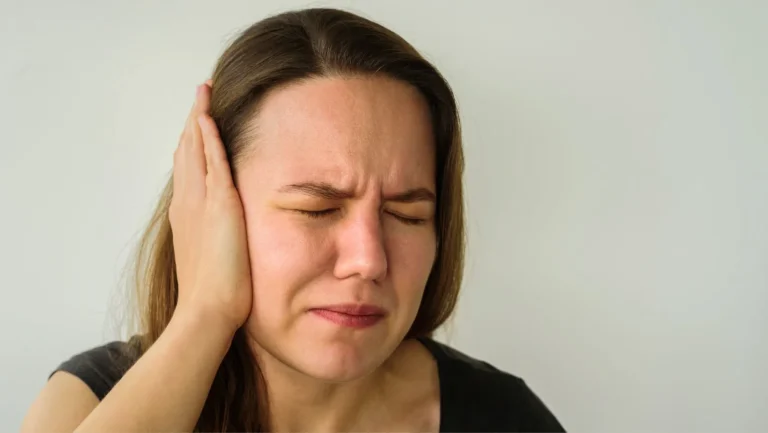

Yes, dry eyes can cause headaches through increased eye muscle strain and visual fatigue. The American Academy of Ophthalmology recognizes dry eye syndrome as a common condition affecting nearly 16 million adults in the United States.
These headaches typically center around the eyes and forehead, worsening with screen use or reading. This guide covers why this happens, symptoms, diagnosis, and relief strategies backed by current eye care research.
How Dry Eyes Can Lead to Headaches
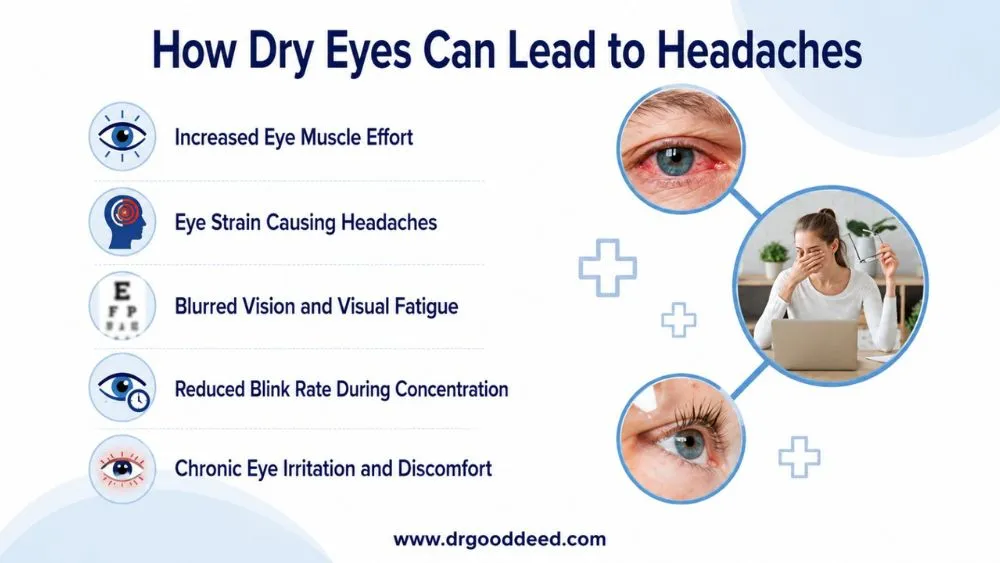
Eye dryness triggers headaches in a direct way through a chain reaction involving eye muscles, tear film quality, and nerve signals. When eyes lack enough moisture, the eye muscles work harder to maintain clear focus, and this extra effort spreads tension to muscles around the eyes, forehead, and temples.
Increased Eye Muscle Effort
Dry eyes make the surface of the eye less smooth. To compensate, the muscles controlling eye movement and focus work harder than normal, especially during close-up tasks like reading or screen use.
Eye Strain Causing Headaches
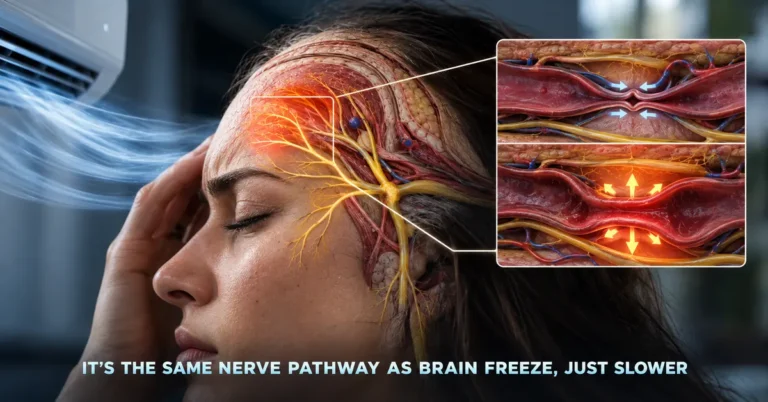
Eye strain causing headaches is well-documented. The American Optometric Association states that prolonged eye strain activates the same trigeminal nerve pathways involved in tension-type of headaches, creating pain around the eyes and forehead.
Blurred Vision and Visual Fatigue
When the tear film breaks down between blinks, vision can blur briefly. The eyes refocus repeatedly to compensate, and this repeated effort throughout the day contributes directly to visual fatigue and headache onset.
Reduced Blink Rate During Concentration
A 2021 study published in the journal Ophthalmology and Therapy found that blink rate drops by up to 60% during screen tasks compared to normal resting blink rate. Fewer blinks mean less tear film renewal, worsening dryness during the exact tasks that demand the most focus.
Chronic Eye Irritation and Discomfort
Ongoing irritation from dry eyes keeps eye-area muscles in a low-level state of tension throughout the day. Over weeks, this chronic tension can lower the threshold for headache onset, even during low-strain activities.
Symptoms of Dry Eye-Related Headaches
Symptoms of dry eye-related headaches typically include pain around or behind the eyes, forehead pressure, and headaches that worsen during or after reading or screen tasks, distinguishing them from migraines that often come with nausea.
- Pain or pressure directly around or behind the eyes
- Dull headache across the forehead
- Headaches that start or worsen during reading, computer work, or driving
- Eyes feeling tired, heavy, or strained by midday
- Trouble focusing on text or screens after extended use
Pain Around the Eyes
This pain often feels like pressure or aching directly behind or around the eye socket, distinct from the throbbing pain typical of migraines.
Forehead Headaches
Forehead pain from dry eyes tends to be dull and band-like, often described as a tight feeling rather than sharp or pulsing pain.
Headaches After Reading or Screen Use
A headache that consistently starts 1 to 2 hours into reading or screen work, then eases after stepping away, strongly suggests a dry eye or eye strain connection.
Eye Fatigue and Pressure
Eyes feeling heavy or strained, especially toward the end of the day, often accompanies the headache and points toward visual fatigue as the root cause.
Difficulty Focusing
Trouble shifting focus between near and far objects, or text appearing to blur temporarily, often happens alongside dry eye headaches during extended close-up work.
Screen Time Causing Dry Eyes and Headaches
Screen time causing dry eyes and headaches has become more common across the United States as remote work and digital device use increased significantly since 2020. The combination of reduced blinking, screen glare, and prolonged near-focus work creates ideal conditions for both dry eyes and related headaches to develop together.
How Digital Devices Affect Blinking
Screens require sustained visual attention, which naturally reduces blink frequency and blink completeness, meaning eyelids don’t fully close during each blink, both of which worsen tear film stability.
Computer Vision Syndrome
The American Optometric Association defines computer vision syndrome as a group of eye and vision problems linked to prolonged computer, tablet, and smartphone use, including dry eyes, headaches, and blurred vision.
Blue Light Exposure and Eye Fatigue
While blue light itself hasn’t been proven to directly cause eye damage, the American Academy of Ophthalmology notes that screen glare and contrast issues from blue light contribute to visual fatigue during extended use.
Long Hours of Screen Use
The Vision Council reports that American adults average over 7 hours of daily screen time, with many professions requiring 8 or more hours of continuous near-focus work.
Workplace and Remote Work Challenges
Poor lighting, incorrect monitor height, and dry indoor air from heating or air-conditioning systems compound dry eye symptoms in office and home work environments alike.
Risk Factors for Dry Eyes and Headaches
Adults across the United States dealing with both dry eyes and headaches often share common risk factors that increase how often these symptoms occur together, particularly related to age, environment, and daily habits.
- Age over 50, since tear production naturally decreases with age
- Extended screen use exceeding 6 hours daily
- Dry indoor environments from heating, air conditioning, or low humidity
- Contact lens wear, especially extended wear schedules
- Certain medications, including antihistamines and some antidepressants
- Autoimmune conditions like Sjogren’s syndrome
- Hormonal changes, particularly during menopause
Other Conditions That May Mimic Dry Eye Headaches
Migraines, refractive errors like uncorrected nearsightedness, and sinus pressure can all cause eye-area headaches that feel similar to dry eye headaches but require different approaches entirely.
- Uncorrected vision problems (nearsightedness, farsightedness, astigmatism)
- Migraine with behind eye-area pain as a primary symptom
- Sinus pressure affecting the area around and behind the eyes
- Eye strain from incorrect glasses or contact lens prescriptions
- Tension-type headaches unrelated to eye dryness specifically
How Dry Eyes Are Diagnosed
An eye doctor asks about screen habits, symptom timing, medications, and any autoimmune conditions that commonly affect tear production.
Comprehensive Eye Examination
A full exam checks overall eye health, including the eyelids, cornea, and tear film quality using a slit lamp microscope.
Tear Production Testing
The Schirmer test measures tear production using small paper strips placed under the lower eyelid for 5 minutes, a standard diagnostic tool referenced by the American Academy of Ophthalmology.
Tear Film Evaluation
Doctors check how quickly the tear film breaks down after a blink, called tear breakup time, which helps determine dry eye severity.
Identifying Underlying Causes
Blood tests may be ordered if an autoimmune condition like Sjogren’s syndrome is suspected as the underlying cause of chronic dry eyes.
How Switching to Preservative-Free Drops Resolved Daily Headaches in Rachel
Case Study: Preservative-Free Artificial Tears Reduced Afternoon Headaches Within Two Weeks
Rachel (name altered for privacy), a 34-year-old remote worker from Seattle, developed daily afternoon headaches centered around her eyes and forehead after switching to a fully remote job involving 9 hours of screen time daily.
She tried over-the-counter pain relievers, which helped temporarily but didn’t stop the pattern. An eye exam revealed mild dry eye syndrome, with tear breakup time well below normal range. Her eye doctor noted she’d been using artificial tears containing preservatives four times daily, which can sometimes worsen irritation with frequent use.
The doctor switched Rachel to preservative-free artificial tears, recommended the 20-20-20 rule during work hours, and suggested a desktop humidifier for her dry home office. Within two weeks, Rachel’s afternoon headaches decreased from daily to about once a week. Her case reflects findings from eye care research showing that addressing tear film quality directly, not just symptom relief, resolves dry eye headaches more effectively.
Artificial Tears for Dry Eye Symptoms
Artificial tears for dry eye symptoms remain the first-line treatment recommended by eye doctors across the United States, with options available over the counter for mild to moderate cases.
How Artificial Tears Work
Artificial tears supplement the eye’s natural tear film, improving lubrication and reducing the friction that contributes to eye strain and related headaches.
Types of Artificial Tears
- Preservative-free drops, recommended for frequent use (more than 4 times daily)
- Preserved drops, suitable for occasional use
- Gel-based drops, providing longer-lasting relief for nighttime use
- Ointments, typically used before sleep for severe dryness
Choosing the Right Product
The American Academy of Ophthalmology recommends preservative-free options for anyone using drops more than four times a day, since preservatives can irritate the eye surface with frequent use.
When Artificial Tears May Not Be Enough
If symptoms persist after consistent artificial tear use for 2 to 4 weeks, prescription options like cyclosporine eye drops or punctal plugs may be considered by an eye doctor.
How to Relieve Headaches Caused by Dry Eyes
Relieving headaches caused by dry eyes combines immediate symptom relief with habit changes that address the root cause.
Using Artificial Tears Regularly
Applying preservative-free drops every few hours during screen-heavy periods maintains tear film stability and reduces eye strain throughout the day.
Following the 20-20-20 Rule
Every 20 minutes, look at something 20 feet away for 20 seconds. The American Optometric Association recommends this rule to reduce digital eye strain.
Improving Workplace Ergonomics
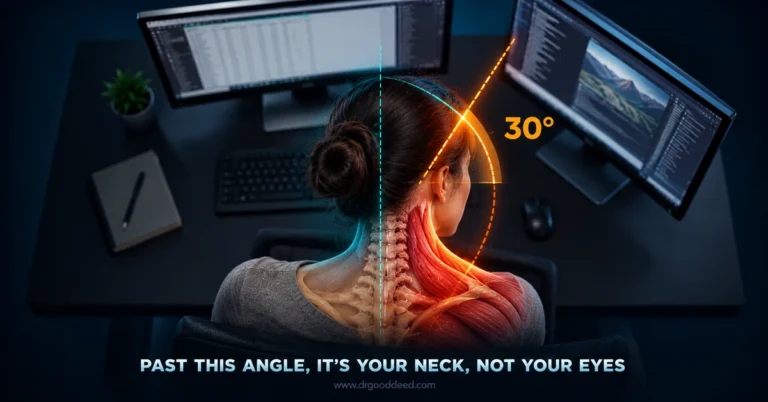
Position screens about an arm’s length away, with the top of the screen at or slightly below eye level, to reduce strain on eye muscles.
Increasing Humidity Levels
Using a humidifier in dry indoor environments helps maintain moisture in the air, reducing tear evaporation from the eye surface.
Staying Hydrated
Drinking adequate water throughout the day supports overall tear production, since dehydration can reduce tear film volume.
Taking Regular Visual Breaks
Stepping away from close-up tasks every hour for a few minutes gives eye muscles time to relax, reducing cumulative strain.
Treatment Options for Dry Eye Syndrome
People with persistent dry eye symptoms in the United States often need treatment beyond basic artificial tears, especially when symptoms continue despite lifestyle changes for several weeks. Treatment options range from prescription medications to in-office procedures, depending on dry eye severity and underlying cause.
- Prescription anti-inflammatory drops like cyclosporine (Restasis) or lifitegrast (Xiidra)
- Punctal plugs, small devices inserted to reduce tear drainage
- Warm compresses and eyelid hygiene for blocked oil glands (meibomian gland dysfunction)
- Omega-3 supplements, which some studies suggest support tear film quality
- Prescription glasses with anti-glare coating for screen-heavy work
Preventing Dry Eyes and Headaches
Setting daily screen time limits and taking scheduled breaks reduces cumulative eye strain that contributes to both dry eyes and headaches.
Optimizing Lighting Conditions
Avoiding harsh overhead lighting and glare on screens reduces the squinting and eye muscle tension that worsens dry eye symptoms.
Maintaining Adequate Hydration
Drinking enough water daily supports tear production and overall eye comfort, particularly in dry climates or heated indoor spaces.
Protecting Eyes From Environmental Irritants
Wearing sunglasses outdoors and avoiding direct airflow from fans or vents toward the face reduces tear evaporation.
Scheduling Regular Eye Exams
The American Academy of Ophthalmology recommends adults get a baseline eye exam by age 40, with more frequent exams for those experiencing dry eye or headache symptoms regularly.
FAQ
1. Can dry eyes cause headaches?
Yes. Dry eyes can cause headaches through increased eye muscle effort and visual fatigue, typically causing pain around the eyes and forehead during or after close-up work.
2. Does eye dryness trigger headaches in everyone?
No. Only people whose eyes compensate through increased muscle strain develop headaches. Tear breakup time below 10 seconds correlates most strongly with headache occurrence.
3. How does eye strain cause headaches?
Eye strain activates trigeminal nerve pathways shared with tension headaches. Muscles controlling focus work harder, and this tension spreads to the forehead and temples within hours.
4. Can screen time cause dry eyes and headaches?
Yes. Blink rate drops up to 60% during screen use, per 2021 research in Ophthalmology and Therapy, reducing tear film renewal and increasing both dryness and headache risk.
5. What do dry eye headaches feel like?
A dull, band-like pressure across the forehead and around the eyes, worsening during reading or screen use and easing within an hour after stopping the activity.
6. Can dry eyes cause pain around the eyes and forehead?
Yes. This pattern is the most distinctive sign of dry eye headaches, differing from migraines, which typically include nausea, light sensitivity, and throbbing pain.
7. Are dry eye headaches different from migraines?
Yes. Dry eye headaches lack nausea and light sensitivity, ease with rest from screens, and improve with artificial tears, none of which typically resolve migraine symptoms.
8. Do artificial tears help relieve dry eye headaches?
Yes. Preservative-free drops used consistently during screen-heavy periods reduced afternoon headache frequency from daily to weekly within two weeks in documented eye care cases.
9. How can I relieve headaches caused by dry eyes naturally?
Follow the 20-20-20 rule, use a humidifier, drink enough water, and position screens at eye level an arm’s length away to reduce eye muscle strain.
10. What are the most common symptoms of dry eye syndrome?
Eye irritation, a gritty feeling, redness, blurred vision that clears with blinking, and headaches around the eyes or forehead after extended near-focus work.
Sources
Disclaimer: This article is for informational purposes only and does not replace professional medical advice. Talk to a licensed eye doctor for diagnosis and treatment of dry eye symptoms or persistent headaches.