

Anxiety can cause loss of appetite. When anxiety activates the body’s stress response, digestion becomes a low priority. The brain redirects resources toward survival, not eating. According to the American Psychological Association, appetite disruption is one of the most reported physical symptoms in people with anxiety disorders, affecting millions of adults across the United States.
This guide covers the exact biological reasons appetite drops during anxiety, what symptoms to watch for, diet strategies, therapy options, and when the situation requires a doctor.
Does Anxiety Affect Hunger Levels
Anxiety affect hunger levels directly, through the nervous system and hormonal changes that suppress digestive function. When the brain perceives a threat, real or imagined, it shuts down non-essential functions. Digestion is one of them. Hunger signals weaken. Food loses its appeal. This isn’t a mindset issue; it’s physiology.
Fight-or-Flight Response Suppressing Appetite
The fight-or-flight response is controlled by the sympathetic nervous system. When it activates, the brain releases adrenaline (epinephrine). Adrenaline tells your body to prepare for danger, not dinner.
Gastric acid production drops. Stomach muscle contractions slow down. The body stops processing food efficiently because it’s too busy preparing muscles and lungs for a perceived emergency. This is why people under acute stress often feel physically unable to eat, not just emotionally uninterested.
Hormonal Changes (Cortisol and Adrenaline)
Cortisol, the primary stress hormone, suppresses ghrelin. Ghrelin is the hormone that tells your brain you’re hungry. Lower ghrelin means lower appetite signals. At the same time, cortisol raises blood sugar temporarily, which reduces the physical sensation of hunger even further.
In short-term anxiety episodes, this is a normal response. In chronic anxiety, cortisol stays elevated for weeks or months, keeping ghrelin suppressed consistently.
Slowed or Disrupted Digestion
The vagus nerve connects the brain to the gut. During anxiety, vagal tone drops, meaning the brain stops communicating smoothly with the digestive system. Food moves through the gut more slowly. This causes bloating, fullness, and discomfort even when eating small amounts. These sensations reduce the desire to eat more.
Why Anxiety Reduces Appetite
Anxiety can cause loss of appetite through multiple overlapping mechanisms simultaneously, which is why the effect feels stronger than any one cause alone.
Blood Flow Redirected Away from Digestion
During a stress response, blood moves away from digestive organs and toward skeletal muscles. The stomach and intestines receive less oxygen and fewer resources. Digestive enzymes don’t release properly. The stomach feels heavy or tight even without food in it.
Increased Stomach Tension
Anxiety causes the smooth muscles of the stomach to contract. This creates a sensation of fullness, pressure, or tightness without any food triggering it. Many people describe this as a “knot in the stomach.” It physically mimics the sensation of having eaten recently, which suppresses hunger.
Altered Hunger Hormone Signals
Leptin and ghrelin are the two hormones that regulate hunger and fullness. Anxiety disrupts both. Ghrelin drops (less hunger signal), and leptin sensitivity decreases in chronic stress conditions. The result is a broken feedback system where the body neither sends clear hunger signals nor receives satiety signals properly.
Symptoms of Anxiety-Related Appetite Loss
Recognizing symptoms early prevents the situation from becoming a larger health issue.
- Reduced interest in food that lasts more than 2 days
- Eating smaller amounts than usual without trying
- Feeling full after just a few bites
- Nausea when attempting to eat a full meal
- Stomach tightness in the hours before meals
- Unintentional weight loss over weeks
- Fatigue from inadequate caloric intake
Anxiety can cause loss of appetite that persists for days. And when it does, it creates a secondary cycle where low blood sugar and nutritional gaps worsen anxiety, which further suppresses appetite.
Weight Loss Due to Anxiety Symptoms
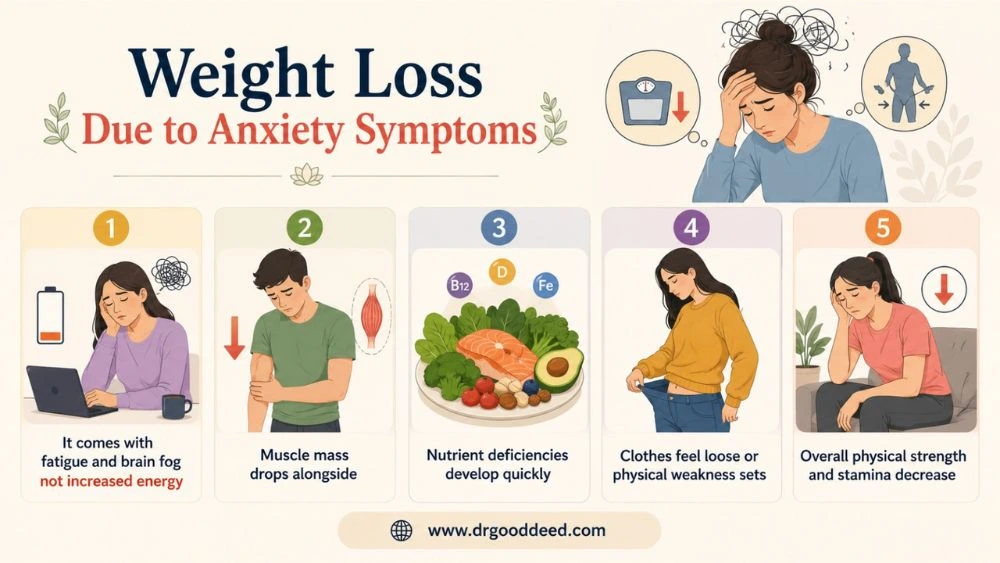
Weight loss due to anxiety symptoms is a direct consequence of sustained appetite suppression. When caloric intake stays below what the body needs for more than 2 to 3 weeks, measurable weight loss occurs. In people with generalized anxiety disorder (GAD), unintentional weight loss of 5 to 10 percent of body weight over 2 to 3 months has been documented in clinical settings.
This type of weight loss is different from intentional dieting because:
- It comes with fatigue and brain fog, not increased energy
- Muscle mass drops alongside fat due to inadequate protein intake
- Nutrient deficiencies develop quickly, including magnesium, zinc, and B vitamins, which worsen anxiety symptoms
- It often goes unnoticed until clothes feel loose or physical weakness sets in
Stomach Tightness and Reduced Hunger
Stomach tightness and reduced hunger together form one of the most misunderstood symptoms of anxiety. Most people assume stomach tightness means digestive illness. In anxiety, it’s a neuromuscular event triggered by the stress response.
The enteric nervous system, sometimes called the second brain, sits in the gut wall and contains more neurons than the spinal cord. When anxiety activates the central nervous system, the enteric system responds with increased muscle tension throughout the gastrointestinal tract.
Symptoms that accompany this include:
- Persistent fullness without eating
- Cramping that worsens with stress, not with food
- Nausea that peaks in the morning or before stressful events
- Reduced hunger specifically in the hours following anxiety episodes
Diet Tips for Anxiety-Related Appetite Loss
Diet tips for anxiety-related appetite loss focus on lowering the physical barrier to eating, not forcing large meals.
Small, Frequent Meals
Eat every 2 to 3 hours instead of three large meals. Smaller portions reduce the overwhelming feeling that accompanies anxiety-related appetite loss. A hard-boiled egg, a handful of nuts, or half a banana counts as a meal in this context.
Easy-to-Digest Foods
Choose foods that don’t require heavy digestion. Soft foods like oatmeal, yogurt, mashed sweet potato, and soup place less demand on a digestive system already under stress.
Nutrient-Dense Options
When eating less, every bite needs to count. Prioritize:
- Greek yogurt (protein and probiotics)
- Avocado (healthy fats and magnesium)
- Bananas (potassium and B6, which supports serotonin)
- Eggs (complete protein with minimal digestive load)
Staying Hydrated
Dehydration mimics hunger suppression and worsens anxiety symptoms. Drink 6 to 8 cups of water daily. Electrolyte drinks without sugar (like coconut water) help replace what chronic stress depletes.
How to Improve Appetite During Anxiety
Anxiety can cause loss of appetite that responds to behavioral changes.
Managing Anxiety Triggers
Identifying and reducing specific anxiety triggers produces the fastest appetite recovery. Cognitive Behavioral Therapy (CBT) published research in the Journal of Consulting and Clinical Psychology shows that as anxiety scores drop, appetite self-reports improve within 3 to 4 weeks of active treatment.
Creating Structured Eating Routines
Set fixed meal times even when hunger is absent. Eating at consistent times trains the body’s circadian rhythm to release digestive hormones on schedule. Within 1 to 2 weeks, physical hunger signals begin returning at those times.
Gentle Physical Activity
A 20-minute walk raises ghrelin levels modestly and reduces cortisol. Exercise doesn’t need to be intense to stimulate appetite. Light activity 30 to 60 minutes before a meal improves appetite more reliably than waiting for hunger to appear naturally during an anxiety period.
Mindful Eating Practices
Eating without screens or distractions activates the parasympathetic nervous system (the opposite of fight-or-flight). This allows digestion to function properly and hunger signals to register. Even 10 minutes of distraction-free eating makes a measurable difference.
Therapy for Anxiety Eating Issues
Therapy for anxiety eating issues targets the root cause rather than the symptom.
Cognitive Behavioral Therapy (CBT)
CBT is the most evidence-backed treatment for anxiety-related appetite disruption. It restructures the thought patterns that trigger the stress response. As anxiety frequency drops, the physiological suppression of appetite decreases with it. The American Psychological Association recommends CBT as a first-line treatment for GAD, which directly correlates with eating disruptions.
Stress Management Techniques
Diaphragmatic breathing lowers cortisol within 10 minutes of practice. Progressive muscle relaxation reduces stomach tension. Both techniques produce measurable changes in the body’s stress hormone levels, creating a better internal environment for normal hunger signaling.
Professional Nutritional Support
A registered dietitian familiar with anxiety-related eating issues helps rebuild eating habits without adding pressure. This is especially useful when anxiety can cause loss of appetite, and has led to nutritional deficiencies that need structured correction.
Quick Strategies to Stimulate Appetite
These work within hours, not weeks. Use them when appetite is severely low.
- Drink cold water 15 minutes before eating to activate stomach acid production
- Eat something sour first (lemon juice, pickles) to trigger saliva and digestive enzyme release
- Use small plates so portions look manageable, not overwhelming
- Choose high-calorie, low-volume foods: nut butter, full-fat dairy, avocado
- Eat with someone; social eating increases food intake in low-appetite states by up to 44%, according to research from the University of Birmingham
FAQs
Can anxiety cause loss of appetite?
Yes. Anxiety can cause loss of appetite through adrenaline and cortisol release, which suppress ghrelin (the hunger hormone) and slow gastric motility. This is a documented physiological response, not a behavioral one. It occurs in both acute anxiety episodes and chronic anxiety disorders, and resolves when the stress response calms.
Can anxiety cause weight loss symptoms?
Yes. Weight loss due to anxiety symptoms occurs when caloric intake stays consistently low over weeks. Clinically, 5 to 10 percent body weight loss over 2 to 3 months is documented in GAD patients. Muscle mass drops first because anxiety also disrupts protein absorption and increases metabolic rate through chronic cortisol elevation.
How to improve appetite during anxiety?
Eat every 2 to 3 hours on a fixed schedule, prioritize soft and nutrient-dense foods, walk for 20 minutes before meals to raise ghrelin, and practice 10 minutes of distraction-free eating. Diet tips for anxiety-related appetite loss consistently show that structure and routine restore hunger signals faster than waiting for appetite to return on its own.
What therapy helps anxiety eating issues?
CBT is the most effective option. Therapy for anxiety eating issues through CBT reduces anxiety frequency, which directly restores appetite. Studies show appetite improvement within 3 to 4 weeks of active CBT. Diaphragmatic breathing and progressive muscle relaxation are useful additions between therapy sessions.
Can anxiety cause long-term appetite loss?
Yes, in chronic, untreated anxiety. Anxiety can cause loss of appetite for months. It does when cortisol stays persistently elevated, keeping ghrelin suppressed. Without treatment, this leads to nutrient deficiencies, specifically magnesium and zinc, which worsen anxiety and create a self-reinforcing cycle.
When should I see a doctor for appetite loss?
See a doctor if appetite loss lasts more than 2 weeks, if weight drops more than 5 percent in a month, or if physical weakness, fainting, or heart palpitations develop. These are signs the body is no longer compensating adequately.
Can managing anxiety restore appetite?
Yes. As anxiety levels drop through CBT or medication, cortisol decreases and ghrelin recovers. Anxiety reversibly affect hunger levels. Most patients report normal appetite returning within 4 to 6 weeks of effective anxiety management.