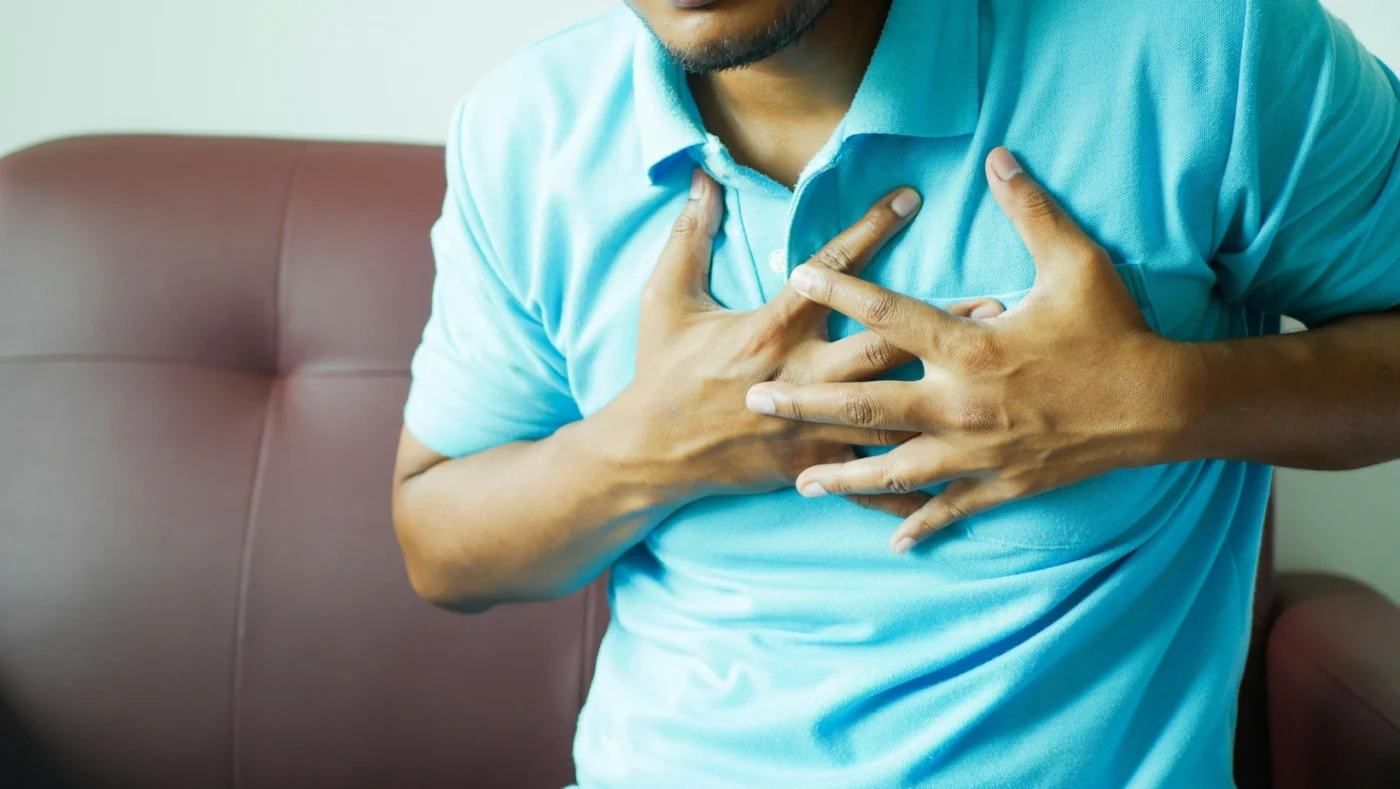

Anxiety can cause heart palpitations. Anxiety triggers the release of adrenaline (epinephrine), which directly increases heart rate and can disrupt normal cardiac rhythm. According to the American Heart Association, palpitations linked to anxiety are among the most common cardiac complaints in emergency rooms across the United States, yet most cases involve no structural heart disease. Understanding the mechanism behind this response separates manageable anxiety symptoms from conditions requiring medical attention.
This guide covers how anxiety affects heart rhythm, how to tell the difference between anxiety palpitations and cardiac disease, breathing techniques, and when to see a doctor.
How Anxiety Affects Heart Rhythm
How anxiety affects heart rhythm is through the autonomic nervous system, specifically through sympathetic activation that sends adrenaline into the bloodstream within seconds of perceived threat. The heart speeds up, beats harder, and sometimes skips into irregular patterns, all without any structural problem in the heart itself.
Fight-or-Flight Response Activation
The hypothalamus triggers the adrenal glands to release adrenaline the moment anxiety activates the fight-or-flight response. Adrenaline binds to beta-adrenergic receptors in the heart muscle. This binding increases both the rate and force of contractions. Heart rate climbs from a resting 60 to 80 beats per minute to anywhere between 100 and 160 beats per minute during acute anxiety.
This is a survival mechanism. The heart prepares the body to run or fight. The problem is that modern anxiety triggers (work stress, social situations, health fears) don’t resolve through physical action, so the heart stays elevated longer than the physiology intends.
Adrenaline Surge Increasing Heart Rate
Adrenaline has a half-life of roughly 2 to 3 minutes in the bloodstream. But anxiety attacks can produce repeated adrenaline bursts over 10 to 30 minutes. Each burst keeps the heart rate elevated. This is why palpitations during anxiety don’t always stop quickly. The adrenaline keeps refueling the response even as the conscious mind tries to calm down.
Temporary Irregular Heart Rhythm
Adrenaline also increases electrical sensitivity in the heart. This means the heart fires extra beats (premature atrial contractions or premature ventricular contractions) more easily. These extra beats produce the “skipped beat” or “flip-flop” sensation many people describe. They’re not dangerous in an otherwise healthy heart. But they feel alarming, which worsens anxiety and prolongs the episode.
Rapid Heartbeat During Anxiety Attacks
Rapid heartbeat during anxiety attacks is one of the most physically distressing symptoms of panic disorder and generalized anxiety disorder (GAD). Heart rates exceeding 100 beats per minute (tachycardia) during anxiety episodes meet clinical criteria documented under ICD-10 code F41.
Sudden Increase in Heart Rate
The increase happens fast. Within 30 to 90 seconds of acute anxiety, heart rate climbs significantly. People often describe it as going from normal to racing with no warning. This sudden onset is what makes anxiety palpitations so frightening, particularly for people experiencing them for the first time.
Feeling of Pounding or Racing Heart
The sensation is both internal and sometimes visible. The heart pounds against the chest wall with enough force that some people can see their shirt moving. This sensation alone can escalate anxiety, creating a feedback loop where fear of the palpitation increases adrenaline, which worsens the palpitation further.
Associated with Panic Symptoms
Rapid heartbeat during anxiety attacks rarely occurs in isolation. It typically accompanies chest tightness, shortness of breath, dizziness, tingling in the hands or face, and a sense of impending doom. This symptom cluster is what distinguishes a panic attack from simple stress and what leads many patients to seek emergency care.
Chest Fluttering Anxiety Symptoms
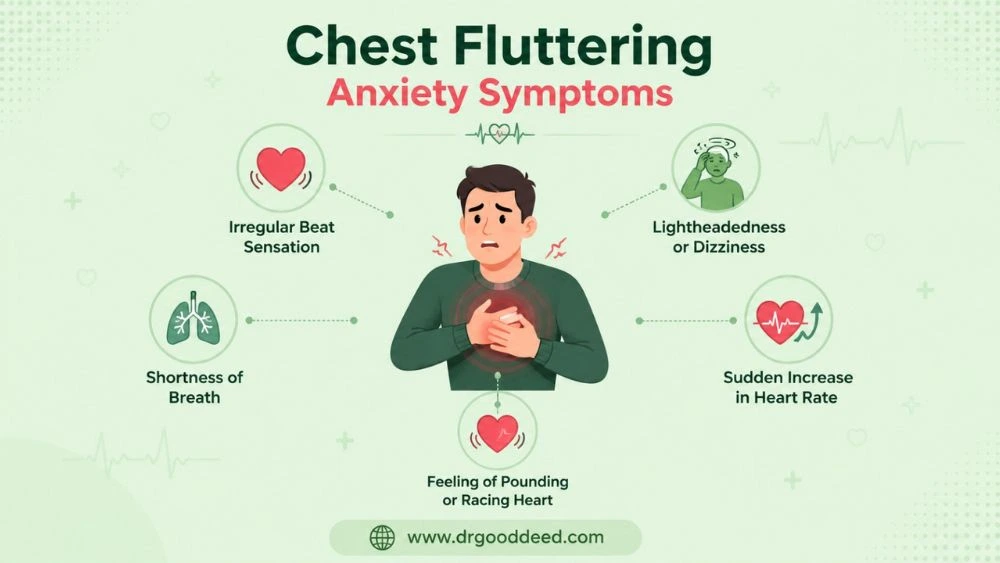
Chest-fluttering anxiety symptoms describe the sensation of irregular, missed, or extra heartbeats that differ from a racing heart. This is a different physiological event with a different cause.
Skipped or Irregular Beat Sensation
Premature contractions cause the heart to fire an extra beat, followed by a brief pause, then a stronger beat as the heart resets. This sequence produces a “flutter,” “flip,” or “thud” sensation in the chest. A 2012 study in Heart Rhythm confirmed that anxiety and emotional stress independently trigger premature atrial contractions in otherwise healthy adults.
Lightheadedness or Dizziness
During chest-fluttering anxiety symptoms, cardiac output briefly drops during the premature beat pause. This temporary drop reduces blood flow to the brain for a fraction of a second, causing lightheadedness. The dizziness passes quickly in most cases but contributes to the sense that something serious is happening.
Shortness of Breath
Anxiety causes hyperventilation, which lowers carbon dioxide levels in the blood. Low carbon dioxide causes blood vessels to constrict, reduces oxygen delivery efficiency, and produces the sensation of not being able to get enough air. This breathlessness amplifies the chest fluttering sensation and makes both symptoms feel worse simultaneously.
How to Differentiate Anxiety Palpitations From Heart Problems
This is the section most online articles skip or oversimplify. Anxiety can cause heart palpitations that mimic serious cardiac events, closely enough that self-diagnosis is unreliable. But the distinguishing features are specific.
| Feature | Anxiety Palpitations | Cardiac Palpitations |
| Trigger | Stress, panic, worry | Exercise, lying flat, no trigger |
| Duration | Minutes, tied to anxiety episode | Seconds to hours, variable |
| Response to calm | Improve with relaxation | Do not reliably improve |
| Associated symptoms | Chest tightness, dizziness, fear | Syncope (fainting), chest pain radiating to arm or jaw |
| EKG finding | Normal or minor variations | Structural arrhythmia present |
Anxiety palpitations improve when the anxiety episode resolves. Cardiac arrhythmias like atrial fibrillation or ventricular tachycardia do not follow this pattern. If palpitations occur during exercise, cause fainting, or involve chest pain radiating to the left arm or jaw, seek emergency evaluation immediately.
How to Calm Heart Palpitations Anxiety
How to calm heart palpitations anxiety quickly requires interrupting the adrenaline cycle, not just telling the brain to relax.
Relaxation and Grounding Techniques
The 5-4-3-2-1 grounding technique pulls attention into the present moment and reduces amygdala firing within minutes. Identify 5 visible objects, 4 things you can touch, 3 sounds, 2 smells, 1 taste. This interrupts the threat-processing loop that sustains adrenaline release.
Splashing cold water on the face activates the diving reflex, which directly slows heart rate through vagus nerve stimulation. This is a physiological override, not a psychological trick. It works within 30 to 60 seconds.
Reducing Caffeine and Stimulants
Caffeine increases sensitivity to adrenaline. A 2016 study in Psychosomatic Medicine found that caffeine consumption significantly increased self-reported palpitation frequency in adults with anxiety disorders. Cutting caffeine to below 100mg per day (roughly one small cup of coffee) reduces palpitation episodes measurably within 1 to 2 weeks.
Managing Anxiety Triggers
Identifying and reducing specific triggers, through CBT journaling or a mood tracking app like Daylio, removes the root stimulus that starts the adrenaline cycle. Calm heart palpitations anxiety long-term requires this upstream intervention; symptom management alone is a short-term solution.
Breathing Exercises for Heart Rate Control
Breathing exercises for heart rate control work because the breath directly influences the vagus nerve, which regulates heart rate through the parasympathetic nervous system.
Deep Diaphragmatic Breathing
Inhale through the nose for 4 seconds, expanding the belly rather than the chest. Exhale slowly through the mouth for 6 to 8 seconds. The extended exhale activates the vagus nerve more than the inhale. Research published in Frontiers in Psychology found that 5 minutes of slow diaphragmatic breathing reduced heart rate by an average of 8 beats per minute in acutely anxious adults.
Box Breathing Technique
Inhale for 4 seconds, hold for 4, exhale for 4, hold for 4. This technique equalizes breathing phases and prevents the hyperventilation that worsens chest-fluttering anxiety symptoms. Box breathing is used clinically in emergency medicine to stabilize patients experiencing acute anxiety-related tachycardia without medication.
Slow Exhale-Focused Breathing
The exhale phase is the key. A 2:1 exhale-to-inhale ratio activates the parasympathetic nervous system faster than equal breathing. Inhale for 4 seconds, exhale for 8. Heart rate drops measurably within 4 to 6 breath cycles using this ratio.
Quick Relief Methods for Palpitations
When palpitations start, these steps reduce severity within 2 to 5 minutes.
- Sit down immediately. Standing during palpitations keeps blood pressure variable, which sustains the heart rate response.
- Begin slow exhale-focused breathing before trying any other technique.
- Avoid sudden movements. Quick movements trigger additional adrenaline release and prolong the episode.
- Loosen any tight clothing around the chest or neck. Constriction worsens the breathlessness that accompanies palpitations.
- Don’t check your pulse repeatedly. Checking increases health anxiety and sustains the feedback loop.
Long-Term Strategies to Prevent Anxiety Palpitations
Anxiety can cause heart palpitations that become chronic without intervention. Repeated adrenaline exposure increases baseline heart rate variability and sensitizes cardiac receptors over time. Long-term prevention requires addressing anxiety at its source.
Effective long-term strategies include:
- CBT (Cognitive Behavioral Therapy): The most evidence-backed intervention for reducing panic-related palpitations. A 2013 Journal of the American Medical Association study found CBT reduced panic attack frequency by 60 to 80 percent over 12 weeks, with corresponding reductions in palpitation episodes.
- Beta-blockers (prescribed): Propranolol and atenolol block adrenaline’s effect on the heart. Cardiologists prescribe these specifically for anxiety-driven palpitations in patients without structural heart disease.
- Regular aerobic exercise: 150 minutes per week of moderate aerobic activity increases vagal tone, which means the heart’s parasympathetic regulation gets stronger. This lowers resting heart rate and reduces palpitation susceptibility.
- Magnesium supplementation: Magnesium stabilizes cardiac electrical activity. Anxiety depletes magnesium rapidly. A 2017 review in Nutrients found magnesium supplementation reduced anxiety symptoms and palpitation frequency in deficient adults.
- Eliminating alcohol: Alcohol disrupts heart rhythm directly through acetaldehyde toxicity and worsens anxiety rebound the following day, increasing palpitation risk by up to 3-fold in regular drinkers.
FAQs
Can anxiety cause heart palpitations?
Yes. Anxiety can cause heart palpitations through adrenaline release that binds to cardiac beta receptors, increasing heart rate and triggering premature beats. This is a documented physiological response, not imagination. A 2012 Heart Rhythm study confirmed anxiety independently triggers premature atrial contractions in otherwise healthy adults with no cardiac disease.
How to calm heart palpitations anxiety?
Splash cold water on the face immediately to activate the diving reflex and slow heart rate within 60 seconds. Then use the 4-8 exhale-focused breathing technique for 5 minutes. Calm heart palpitations, anxiety fastest also involves sitting down immediately and removing caffeine, which reduces adrenaline receptor sensitivity within 1 to 2 weeks of consistent elimination.
How to tell if palpitations are anxiety or heart problems?
Anxiety palpitations improve within minutes of relaxation and correlate directly with stress episodes. Cardiac arrhythmias occur during exercise, cause fainting, or produce chest pain radiating to the left arm or jaw. How anxiety affects heart rhythm differs from structural disease: anxiety palpitations normalize on an EKG taken within hours of the episode.
Can anxiety cause irregular heartbeat?
Yes. Adrenaline increases electrical sensitivity in the heart, causing premature atrial contractions (PACs) and premature ventricular contractions (PVCs). These produce the irregular “skipped beat” sensation. Can anxiety cause heart palpitations in an irregular pattern? Yes, but in a structurally healthy heart, these irregularities are benign and resolve when anxiety decreases.
When should I see a doctor for palpitations?
See a doctor immediately if palpitations occur during physical exercise, cause fainting or near-fainting, involve chest pain radiating to the left arm or jaw, or last more than 30 minutes without linking to an identifiable anxiety episode. These patterns suggest cardiac arrhythmia, not anxiety, and require EKG evaluation.
Can reducing anxiety stop palpitations?
Yes. Anxiety can cause heart palpitations that fully resolve with treatment. In patients with no underlying cardiac disease, palpitation frequency drops by 60 to 80 percent after 12 weeks of CBT according to JAMA research. Cutting caffeine, adding aerobic exercise, and correcting magnesium deficiency produce additional measurable reductions within 4 to 6 weeks.