
The best teas for anxiety include chamomile, lavender, green tea, peppermint, and lemon balm. Each one works through a different mechanism in your body, and not all of them work the same way for everyone. Anxiety affects roughly 40 million adults in the United States, according to the Anxiety and Depression Association of America. Herbal teas are one of the few natural interventions backed by both clinical data and centuries of documented use.
This guide covers which teas work, how they work, the best time to drink them, how to pick the right one for your symptoms, and the most commonly asked questions answered with actual specifics.
Herbal Teas That Reduce Anxiety
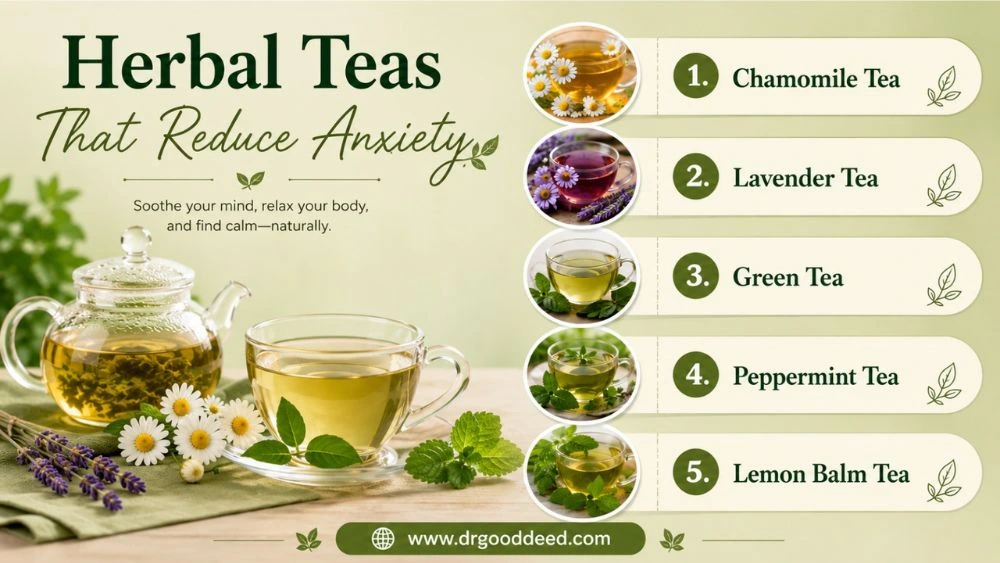
Herbal teas that reduce anxiety work by acting on your nervous system, cortisol levels, or neurotransmitter pathways. They are not sedatives. They don’t knock you out. They lower the physical stress response in your body so your mind can follow.
Chamomile Tea for Anxiety Relief
Chamomile tea for anxiety relief is the most studied herbal tea in clinical settings. A 2016 study published in Phytomedicine found that long-term chamomile use significantly reduced generalized anxiety disorder (GAD) relapse rates compared to placebo.
The active compound is apigenin. It binds to GABA receptors in the brain, which are the same receptors that anti-anxiety medications target. Chamomile does this without the sedation or dependency risk.
One cup steeped for 5 to 7 minutes gives you a clinically relevant dose. Bagged chamomile works, but whole dried flowers have a higher apigenin concentration.
Lavender Tea (Calming and Sleep Support)
Lavender contains linalool and linalyl acetate. These compounds reduce activity in the amygdala, the part of your brain that triggers the fear and stress response.
A clinical preparation called Silexan (80mg lavender oil extract) has been studied head-to-head against lorazepam, a prescription anti-anxiety drug, and showed comparable results in reducing anxiety symptoms.
Lavender tea won’t replicate that exact dose, but it consistently lowers heart rate and cortisol in stress studies. Drink it warm, slowly, and without distractions for the best effect.
Green Tea (L-Theanine Effect)
Green tea sits in an unusual category. It contains caffeine, which normally spikes anxiety. But it also contains L-theanine, an amino acid that promotes calm mental alertness without sedation.
L-theanine increases alpha brain wave activity. This is the same wave state you enter during meditation. Studies from the University of Shizuoka in Japan show that 200mg of L-theanine, the amount in roughly two cups of green tea, reduces anxiety response under high stress conditions.
The caffeine-L-theanine combination produces focus without the jitters. This is why green tea is worth including in the best teas for anxiety list despite having caffeine.
Peppermint Tea (Stress + Digestion Relief)
Peppermint doesn’t directly reduce anxiety in the brain. What it does is break the gut-brain feedback loop that worsens anxiety symptoms.
Anxiety triggers gut distress. Gut distress feeds back into anxiety. Peppermint’s menthol content relaxes the smooth muscles of the digestive tract. When your gut calms down, your body stops sending distress signals upward. This is especially useful for people whose anxiety shows up as stomach cramping, nausea, or IBS flares.
Peppermint is caffeine-free and safe to drink multiple times a day.
Lemon Balm Tea (Mood Stabilizer)
Lemon balm inhibits an enzyme called GABA transaminase. That enzyme breaks down GABA in the brain. Block the enzyme, GABA stays higher. Higher GABA means lower anxiety.
A study published in Nutrients in 2014 found that 600mg of lemon balm extract improved mood and reduced anxiety in healthy adults within just a few hours of consumption.
Lemon balm has a mild sedative effect at higher doses. It pairs well with chamomile if your anxiety is keeping you awake at night.
Natural Teas for Relaxation Anxiety
Natural teas for relaxation anxiety work through three distinct physiological channels. Understanding which channel is disrupted in your body helps you pick the right tea.
Calming the Nervous System
The autonomic nervous system has two modes: sympathetic (fight-or-flight) and parasympathetic (rest-and-digest). Anxiety keeps you locked in sympathetic mode. Chamomile and lavender both shift the balance toward parasympathetic by binding to GABA receptors or reducing amygdala firing.
Reducing Cortisol Levels
Cortisol is the hormone your body releases under stress. Chronic anxiety keeps cortisol elevated, which damages sleep, digestion, and immune function over time. Lemon balm and ashwagandha-infused teas are two options that show direct cortisol-lowering effects in published research. Ashwagandha root tea reduced cortisol by up to 27.9% in a 2012 study in the Indian Journal of Psychological Medicine.
Supporting Sleep and Relaxation
Sleep deprivation worsens anxiety the next day. Broken sleep and anxiety form a loop. Teas that support sleep, specifically chamomile, lavender, and lemon balm, interrupt this loop at night so the anxiety cycle doesn’t compound over days.
Best Time to Drink Tea for Anxiety
The best time to drink tea for anxiety depends on the type of tea and what symptom you’re targeting.
Morning (Low Caffeine Options)
Start your morning with green tea or peppermint if you need focus with a calm edge. Avoid chamomile and lavender in the morning. They lower alertness. Peppermint gives digestive support and mild mental clarity without raising cortisol.
Afternoon Stress Relief
Lemon balm tea works well mid-afternoon when cognitive fatigue builds and stress peaks. A 2004 study in Psychosomatic Medicine showed lemon balm reduced stress-induced anxiety within 3 hours of ingestion. This timing fits a 2 or 3 PM cup well.
Nighttime Relaxation (Sleep Support Teas)
Chamomile and lavender belong at night. Drink chamomile 45 minutes before bed. The apigenin binding takes roughly 30 minutes to produce a noticeable effect. Lavender tea can be consumed at the same time or paired with chamomile for a stronger relaxation response.
How to Choose the Best Tea for Anxiety
Herbal teas that reduce anxiety are not interchangeable. Picking the wrong one for your symptom pattern produces mild or no results.
Based on Symptoms
| Symptom | Best Tea |
| Racing thoughts at night | Chamomile or lavender |
| Gut issues tied to stress | Peppermint |
| Mood dips and irritability | Lemon balm |
| Anxious but need focus | Green tea |
Caffeine Sensitivity
If caffeine worsens your anxiety, skip green tea entirely. Caffeine-free teas for anxiety relief are chamomile, lavender, peppermint, and lemon balm. All four carry zero caffeine. People with panic disorder or generalized anxiety disorder often find that even small caffeine amounts increase symptom severity.
Desired Effect (Calm vs. Focus)
Calm without sleep: lemon balm. Calm with sleep: chamomile. Calm with focus: green tea. Calm with digestion support: peppermint. There’s a specific tea for each outcome. Picking based on your actual goal saves time.
How to Use Tea for Maximum Anxiety Relief
Drinking one cup once in a while won’t move the needle much. Consistency is what produces measurable results with best teas for anxiety.
Consistency in Daily Routine
In clinical trials showing anxiety reduction, subjects consumed herbal teas or their extracts daily for 4 to 8 weeks. A single cup here and there won’t replicate those conditions. Pick one or two teas and drink them at fixed times every day.
Combining with Relaxation Techniques
Tea slows your body down. Pair that with a 5-minute breathing exercise and the effect compounds. Slow breathing (4 seconds in, 6 seconds out) activates the vagus nerve, which amplifies the parasympathetic response your tea is already promoting.
Avoiding Excessive Caffeine
Natural teas for relaxation anxiety lose effectiveness if you’re consuming 3 or 4 cups of coffee alongside them. Caffeine raises cortisol and blocks adenosine receptors, which increases alertness and anxiety simultaneously. Limit caffeine to one cup in the morning if anxiety is a consistent issue.
FAQs
What are the best teas for anxiety?
The best teas for anxiety are chamomile, lavender, lemon balm, peppermint, and green tea. Chamomile has the strongest clinical evidence. It binds GABA receptors and reduced GAD relapse rates in a 2016 Phytomedicine trial. Lemon balm works fastest, with effects appearing within 3 hours.
Are caffeine free teas for anxiety relief better?
Yes, for most anxiety sufferers. Caffeine-free teas for anxiety relief like chamomile, lavender, and lemon balm don’t trigger cortisol spikes or worsen panic symptoms. Caffeine worsens anxiety in people with GAD and panic disorder because it raises heart rate and activates the same stress pathways.
Does chamomile tea help with anxiety?
Yes. Chamomile tea for anxiety relief works through apigenin, a compound that binds GABA-A receptors. A Phytomedicine clinical trial (2016) showed chamomile reduced anxiety symptoms in patients with diagnosed GAD over 26 weeks. It works best when consumed daily, not occasionally.
Can tea replace medication for anxiety?
No. The best teas for anxiety are supportive tools, not clinical treatments. Prescription medications like SSRIs or benzodiazepines work on a different scale. Tea helps mild-to-moderate situational anxiety. Diagnosed anxiety disorders need medical oversight. Tea works alongside treatment, not instead of it.
How often should I drink tea for anxiety relief?
Drink anxiety-reducing teas once or twice daily for at least 4 weeks before judging effectiveness. Clinical studies consistently use daily consumption over 4 to 8 weeks to produce measurable results. One cup occasionally produces negligible effects.
Which tea is best for anxiety and sleep?
Chamomile. It binds GABA receptors to reduce anxiety and has mild sedative properties that shorten sleep onset time. A 2017 study in Phytomedicine found chamomile extract significantly improved sleep quality in postpartum women with insomnia compared to a control group.
Are natural teas for relaxation anxiety effective?
Yes, for mild-to-moderate anxiety. Natural teas for relaxation and anxiety, like chamomile and lemon balm have peer-reviewed clinical support. They don’t work for severe anxiety disorders without additional treatment. But for everyday stress and situational anxiety, the evidence is solid and consistent across multiple trials.
When should I see a doctor for anxiety?
See a doctor when anxiety interferes with work, sleep, or daily relationships for more than two weeks. Panic attacks, physical chest pain, agoraphobia, or suicidal thoughts require immediate medical evaluation. Tea is not a substitute for that level of care.