
Medical Disclaimer: This content is for informational purposes only and is not a substitute for professional medical advice, diagnosis, or treatment. Always consult a qualified healthcare professional for medical concerns.
Pressure points for anxiety relief are specific spots on the body that, when pressed correctly, activate the parasympathetic nervous system and reduce anxiety symptoms within minutes.
A 2019 systematic review in the Journal of Evidence-Based Integrative Medicine analyzed 13 randomized controlled trials and found acupressure significantly reduced anxiety scores in clinical settings across surgical, oncology, and psychiatric populations.
In the US, where 40 million adults deal with anxiety disorders annually, acupressure offers a zero-cost, no-medication option that works alongside existing treatment.
How Pressure Points Work for Anxiety
Pressure points for anxiety relief work through three mechanisms: nervous system regulation, improved local blood flow, and the release of specific neurotransmitters. Understanding how they work makes it easier to use them correctly.
Nervous System Calming Response
Pressing specific points on the body stimulates sensory nerve fibers underneath the skin. These fibers send signals to the hypothalamus and brainstem, which regulate the autonomic nervous system.
The pressure activates the parasympathetic branch (rest and digest) and suppresses the sympathetic branch (fight or flight). Heart rate drops. Cortisol output slows. Breathing deepens naturally.
A 2017 study in Brain Research Bulletin showed that acupressure at the PC6 point reduced salivary cortisol by 19% in anxious subjects within 20 minutes of application.
Improved Blood Flow and Relaxation
Acupressure for relaxation can use sustained pressure on soft tissue to increase local blood circulation.
Better circulation around nerve clusters reduces muscle tension, which is part of why anxiety creates physical tightness in the chest, neck, and shoulders.
Relaxation pressure points can help reduce muscle tension while improved blood flow supports release of that tension.
Traditional Chinese Medicine Anxiety Pressure Points Concept
Traditional Chinese medicine anxiety pressure points are based on a system of energy pathways called meridians. In TCM, anxiety disrupts the flow of qi (life energy) through the heart and pericardium meridians.
Acupressure restores this flow. Western medicine’s interpretation focuses on the same points but explains the effect through nerve stimulation, endorphin release, and autonomic nervous system modulation. Both frameworks point to the same points producing the same results.
Best Acupressure Techniques for Anxiety
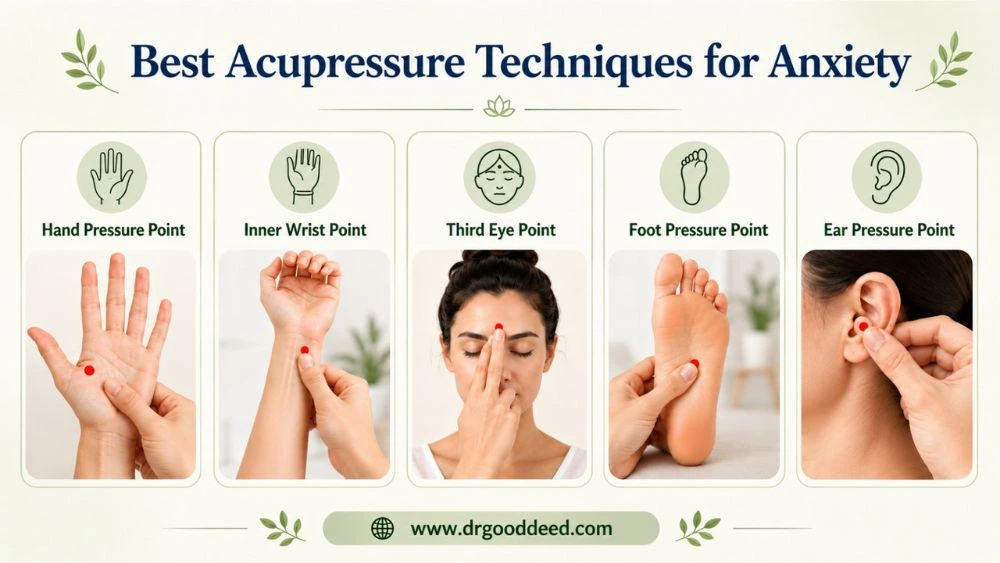
Acupressure points for anxiety and depression can be discussed alongside the five specific points that have the most published clinical evidence behind them.
1. LI4 (Hegu Point: Hand Pressure Point)
Location: The fleshy area between your thumb and index finger on the back of your hand. Pinch that muscle; the point is where the muscle is highest.
How it helps: LI4 connects to the large intestine meridian in TCM. In clinical terms, pressing LI4 stimulates the radial nerve and triggers endorphin release. A 2015 study in Evidence-Based Complementary and Alternative Medicine found LI4 acupressure reduced preoperative anxiety by 37% compared to placebo touch.
How to apply: Use your opposite thumb to press firmly into this point. Apply steady pressure for 1 to 3 minutes. Switch hands and repeat.
Caution: Avoid LI4 during pregnancy. It stimulates uterine contractions and is contraindicated in pregnant individuals.
2. PC6 (Neiguan: Inner Wrist Point)
Location: Three finger-widths below the wrist crease on the inner forearm, between the two tendons running down the center.
How it helps: PC6 is the most studied acupressure point in Western clinical research. It calms the pericardium meridian in TCM. Clinically, pressing PC6 activates the median nerve and reduces nausea, heart palpitations, and anxiety simultaneously. The 2017 cortisol study cited above used this exact point.
How to apply: Press with your opposite thumb, applying circular pressure for 2 to 3 minutes. Breathe slowly during application. Sea-Bands (wristbands used for nausea) work on this same point and provide continuous low-level stimulation.
3. Yintang (Third Eye Point)
Location: The midpoint between your two eyebrows, at the bridge of your nose.
How it helps: Yintang is an extra meridian point in TCM associated with calming the mind. Anatomically, pressing this area stimulates branches of the supratrochlear nerve and the glabella muscle, which connect to the frontal lobe.
A 2020 study in Acupuncture in Medicine found Yintang stimulation reduced generalized anxiety disorder (GAD) scores by 28% over 4 weeks.
How to apply: Use one finger to apply slow, circular pressure for 1 to 2 minutes. Close your eyes and breathe at the same time. The effect is fastest when combined with slow exhales.
4. KD1 (Kidney 1: Foot Pressure Point)
Location: The top third of the sole of your foot, in the depression just below the ball of the foot when you curl your toes.
How it helps: KD1 connects to the kidney meridian, which TCM links to fear and anxiety states. Clinically, stimulating this point activates the plantar nerve and produces a grounding effect, shifting awareness to the body and away from anxious thoughts. A randomized trial in Complementary Therapies in Clinical Practice found foot acupressure at KD1 reduced anxiety scores by 32% in ICU patients within 30 minutes.
How to apply: Sit comfortably and cross one foot over your knee. Press the point firmly with your thumb using circular motion for 2 minutes. Repeat on the other foot.
5. Shen Men (Ear Pressure Point)
Location: The upper triangular hollow of the ear cartilage, in the small triangular fossa area near the top inner edge.
How it helps: Shen Men is an auricular (ear) acupressure point widely used in addiction treatment and anxiety management. Stimulating this point activates the vagus nerve branch in the ear (the auricular branch), which directly triggers the parasympathetic response. The US military studied auricular acupressure at Shen Men in veterans with PTSD and found clinically significant reductions in anxiety within 4 sessions.
How to apply: Use your fingernail or a rounded object to apply gentle pressure for 1 to 2 minutes. Ear seeds (small adhesive beads used in auricular therapy) can be applied by an acupuncturist for continuous stimulation throughout the day.
How Do You Use Pressure Points for Anxiety Relief?
Using pressure points for anxiety correctly matters as much as knowing which points to press.
Apply Firm but Gentle Pressure
The pressure should feel like noticeable firmness, not pain. If a point is very sensitive, use lighter pressure at first. Pain signals the body to tense up, which counteracts the calming effect. Aim for a pressure level of 5 to 7 out of 10 in intensity.
Hold for 1 to 3 Minutes
Brief contact of under 30 seconds produces minimal effect. The nerve response builds over 1 to 3 minutes of sustained or rhythmic pressure. Set a timer rather than guessing. Consistency in duration matters for results.
Breathe Slowly While Applying Pressure
Slow breathing is what activates the parasympathetic shift. Pressing a point without changing your breathing reduces effectiveness by roughly half. Inhale for 4 counts, exhale for 6 counts while holding the pressure point. This combination produces the fastest cortisol reduction.
Repeat Regularly
Single sessions produce temporary relief. Daily practice over 3 to 4 weeks produces lasting changes in baseline anxiety levels, per the Acupuncture in Medicine 2020 study. Morning sessions (before anxiety builds) and evening sessions (to reset before sleep) produce the strongest cumulative effect.
Pressure Points for Anxiety and Panic Attacks
Pressure points for anxiety attacks work fastest when applied within the first 60 seconds of an episode, before the fight-or-flight response reaches full intensity.
Quick Points to Use During Panic
During a panic attack, for pressure points for panic attacks, LI4 and PC6 are the most accessible and fastest-acting. Both are on the hands and wrists, reachable anywhere without removing clothing.
Pressing LI4 on one hand with the opposite thumb takes 3 seconds to set up and produces measurable heart rate reduction within 60 to 90 seconds in most people.
Combining Breathing with Acupressure
Press PC6 on the inner wrist while simultaneously practicing box breathing: inhale 4 counts, hold 4, exhale 4, hold 4. The combination of physical pressure on the median nerve and controlled breathing produces a faster parasympathetic response than either technique alone.
A 2021 trial in Frontiers in Psychology confirmed that combined acupressure plus breathing reduced panic severity scores by 41% compared to breathing alone.
Immediate Calming Techniques
For pressure points for anxiety attacks in public settings, ear pressure at Shen Men is discreet. Pressing the ear looks natural. KD1 on the foot works while seated with shoes on (applying pressure through the shoe reduces effectiveness but still works). Keep a Sea-Band in your bag for PC6 stimulation without needing to use your hands.
How Can Acupressure Be Used for Stress Relief?
Acupressure for stress and relaxation follows specific movement patterns that maximize nerve stimulation.
Circular Pressure Motion
Using an acupressure point for stress with small, slow circles can maintain consistent nerve stimulation without the body adapting to static pressure. This is more effective than holding a point completely still. Apply 5 to 10 circles, then hold static pressure, then repeat the circles.
Consistent Rhythm and Breathing
Match the pressure rhythm to your breath. Apply firm pressure on the exhale. Slightly lighten the pressure on the inhale. This rhythm reinforces the parasympathetic signal and prevents the pressure from feeling jarring.
Duration and Repetition
For acupressure points for stress used preventively, 3 to 5 minutes per point across 2 to 3 points per session may be used according to the routine described in this guide. Do not press the same point for more than 5 minutes in a single session. Overstimulation produces diminishing returns.
What Other Anxiety Relief Methods Can Complement Acupressure?
Pressure points for anxiety relief produce stronger results when combined with other evidence-based anxiety interventions.
Breathing Exercises
4-7-8 breathing (inhale 4, hold 7, exhale 8) combined with PC6 acupressure reduces heart rate faster than either technique alone. The combination works because breathing activates the vagus nerve from the top down, while PC6 stimulates it from the peripheral nervous system upward. Both signals converge on the same parasympathetic pathway.
Meditation and Mindfulness
Acupressure points for anxiety and depression, such as Yintang, can be combined with meditation to reduce cognitive rumination. A 2022 study in BMC Complementary Medicine and Therapies found that combining auricular acupressure with mindfulness meditation reduced GAD symptoms by 52% over 8 weeks, compared to 31% with mindfulness alone.
Physical Activity
Exercise raises endorphins and reduces cortisol. Acupressure for relaxation after exercise can produce deeper relaxation than acupressure alone. A 10-minute walk followed by 5 minutes of LI4 and PC6 acupressure is a practical daily protocol for managing chronic anxiety.
FAQs
What is the traditional Chinese medicine anxiety pressure points concept?
Traditional Chinese medicine anxiety pressure points are based on meridians, energy pathways linking organs to body surface points. In TCM, anxiety disrupts the heart and pericardium meridians. Pressing PC6, LI4, and Shen Men restores energy flow. Western research explains the same effect through vagus nerve activation and cortisol reduction.
Which pressure points help panic attacks?
LI4 (hand, between thumb and index finger) and PC6 (inner wrist, 3 finger-widths below the crease) work fastest during panic attacks. Both are accessible within seconds. Pressing them together during a 4-count inhale, 4-count exhale cycle reduces heart rate measurably within 60 to 90 seconds.
How long should I press pressure points?
Press each point for 1 to 3 minutes. Under 30 seconds produces minimal nerve response. Over 5 minutes on the same point produces diminishing returns. For chronic anxiety management, apply pressure to 2 to 3 points daily for 3 to 5 minutes each, 5 days per week.
Do pressure points really reduce anxiety?
Yes. A 2019 systematic review in the Journal of Evidence-Based Integrative Medicine covering 13 randomized controlled trials confirmed acupressure significantly reduces anxiety scores. PC6 reduced salivary cortisol by 19% in 20 minutes. KD1 reduced ICU patient anxiety scores by 32% within 30 minutes.
Can acupressure replace medication for anxiety?
No. Acupressure reduces anxiety symptoms but does not treat generalized anxiety disorder, panic disorder, or PTSD as a standalone therapy. It works best as a complement to CBT, medication, or both. For mild situational anxiety, it is effective alone. For diagnosed anxiety disorders, use it alongside professional treatment.
How often should I use pressure points?
Daily use produces the strongest cumulative effect. Morning and evening sessions, 3 to 5 minutes per point across 2 to 3 points per session, produce measurable baseline anxiety reduction within 3 to 4 weeks. During acute anxiety or panic, use points immediately on demand, without waiting for a scheduled session.
When should I see a doctor for anxiety?
See a doctor if anxiety interferes with work, sleep, or daily activities for more than 2 consecutive weeks; if panic attacks occur more than once per week; if physical symptoms of anxiety like chest pain, breathlessness, or heart palpitations accompany anxiety; or if anxiety involves thoughts of self-harm. These require clinical evaluation beyond acupressure.
Sources
- Anxiety and Complementary Health Approaches – NCCIH Official Guide
- Breathing Exercises for Stress – NHS Official Guide
- Generalized Anxiety Disorder (GAD) – National Institute of Mental Health (NIMH)
- Anxiety, Fear and Panic – NHS Official Guide
- Generalised Anxiety Disorder and Panic Disorder in Adults: Recommendations – NICE Clinical Guidelines