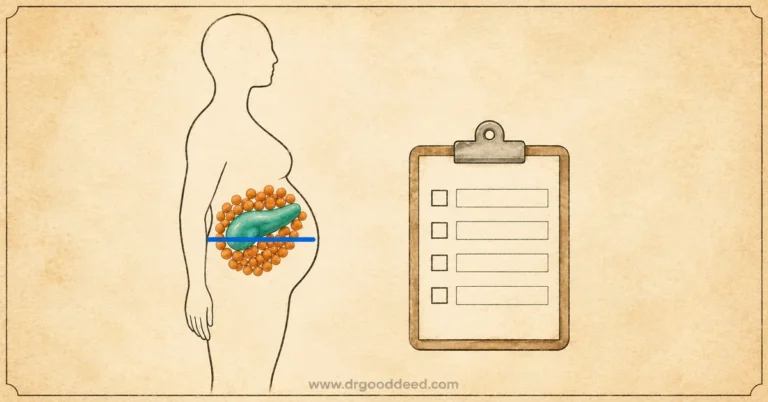

The reason why insulin causes weight gain comes down to energy: insulin helps your body use and store calories it was losing while blood sugar ran high. Insulin can affect weight in several ways, and understanding what is happening can help you manage it without risking your health.
Key Takeaways
- Insulin can cause weight gain because your body starts using and storing calories that high blood sugar was sending out in urine.
- Insulin helps glucose enter your cells and supports energy storage. Some weight gain may also reflect recovery from weight lost before treatment.
- Weight changes vary. A 2014 Diabetes Care study of people with type 2 diabetes found an average gain of about 4 pounds after one year.
- Balanced meals, regular activity, and a review of your treatment plan can help you manage your weight safely.
- Never skip or reduce insulin to lose weight. Talk with your care team about ongoing weight gain, frequent lows, or concerns about your treatment.
Why Does Insulin Cause Weight Gain?
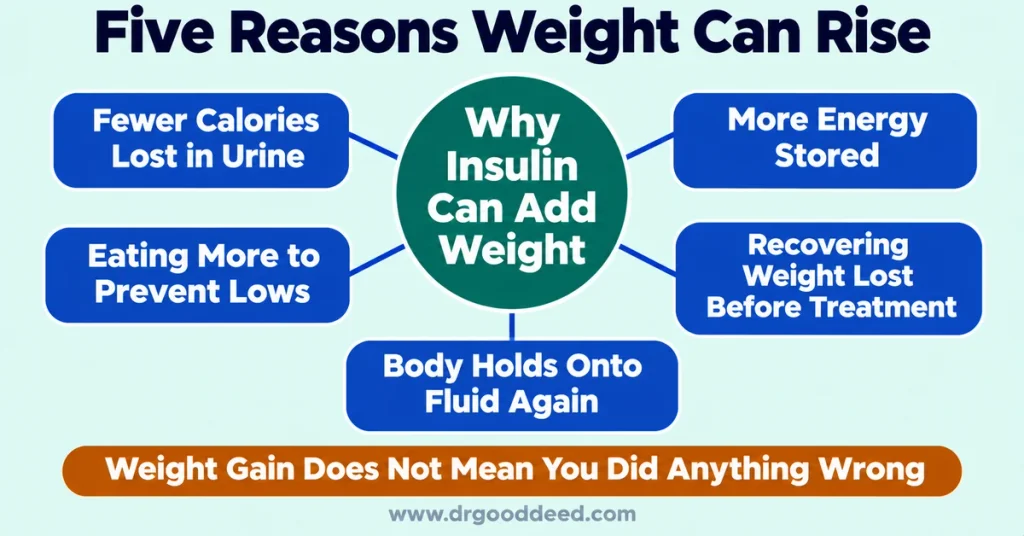
The main reason why insulin causes weight gain is simple: insulin moves sugar into cells and helps store it, so calories once lost in urine stay in the body. When blood sugar was high before treatment, your body may have been losing calories through urine.
A few changes can explain the weight gain:
- Calories are no longer lost in urine: When blood sugar is very high, glucose can spill into urine. This also means your body loses calories. With better glucose control, fewer calories are lost this way.
- More energy is stored: Insulin is often called a storage hormone because it helps move glucose into cells and supports fat storage. If your body receives more energy than it uses, some may be stored as fat.
- You may eat more to prevent lows: Some people snack frequently because they worry about low blood sugar. This is sometimes called defensive snacking. If it happens often, the extra calories can add up.
- Your body recovers lost weight: Before diagnosis or treatment, your body may have broken down fat and muscle for energy. Insulin helps restore normal energy use, so some of the weight you lost may return.
- Your body holds onto fluid again: High blood sugar can cause frequent urination and fluid loss. As glucose levels improve, your body may regain some of that fluid.
These changes do not mean you have done anything wrong. Weight gain can happen even when you are following your treatment plan.
A chart of normal blood sugar levels can help you understand your readings and discuss them with your care team.
How Much Weight Do People Gain on Insulin?
Weight gain on insulin varies widely, and studies report different averages. Some people notice little change, while others gain more, particularly during the first year of treatment.
A study published in Diabetes Care in 2014 followed 2,179 people with type 2 diabetes who started insulin. After one year, the average weight gain was 1.78 kg, or about 4 pounds. Around 24% gained at least 5 kg, or approximately 11 pounds.
Another paper, cited by the Obesity Medicine Association in 2024, reported gains of 3 to 9 kg, or about 7 to 20 pounds, in the first year of insulin treatment.
The study also found that weight gain was more likely among people who had:
- Higher A1C levels before starting insulin. A1C is a blood test that reflects average blood sugar over roughly three months.
- Higher insulin requirements.
- A lower BMI at the start of treatment. BMI, or body mass index, is a screening measure based on height and weight.
These figures describe a group of people, not what will happen to you personally. Your weight may also change because of food choices, activity levels, fluid balance, or other health conditions.
The aim is not to avoid every pound of weight gain. It is to maintain a healthy weight while keeping blood sugar under control.
Insulin Weight Gain in Type 1 vs Type 2
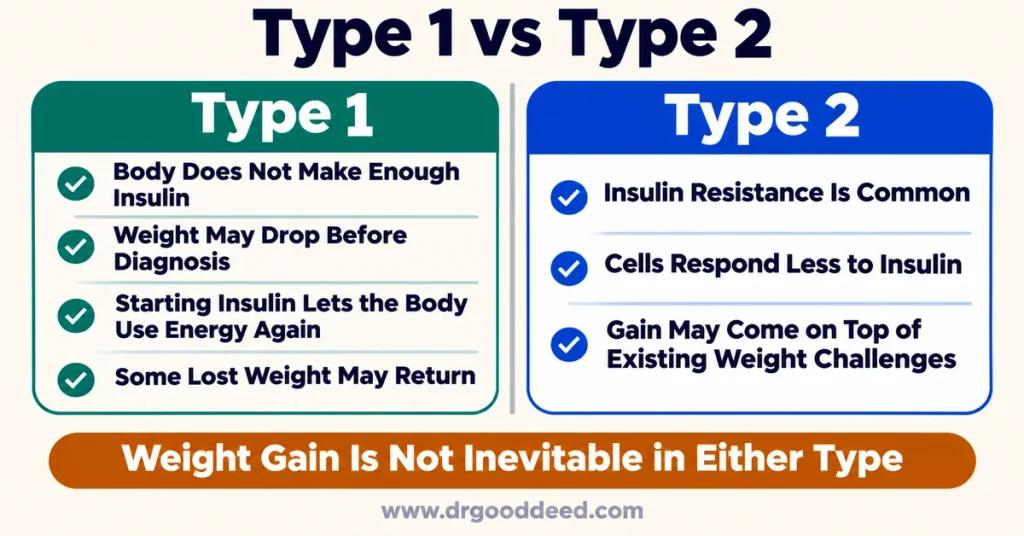
Insulin weight gain looks different in type 1 and type 2 diabetes because the starting point differs.
With type 1 diabetes, the body does not make enough insulin to manage blood sugar. Before diagnosis, people may lose weight because their bodies cannot use glucose properly. Starting insulin allows the body to use energy again, and some of the lost weight may return.
With type 2 diabetes, the body often has insulin resistance, which means cells do not respond to insulin as well as they should. Insulin treatment can improve blood sugar, but weight gain may occur alongside existing weight-related challenges. Signs of insulin resistance can include dark velvety neck patches.
The body makes or uses insulin differently in type 1 and type 2 diabetes.
Weight gain is not inevitable in either type. Your care team can help you understand whether your weight change reflects recovery, treatment effects, or another issue.
Which Insulin Is Linked to More Weight Gain?
Insulin type may affect weight, but the evidence is mixed.
The American Diabetes Association’s 2026 Standards of Care notes that insulin analogs may be associated with less weight gain and fewer low blood sugar episodes than human insulin in people with type 1 diabetes.
However, a 2014 study of people with type 2 diabetes found that the insulin treatment regimen itself did not predict weight gain. Other factors, including starting A1C, insulin requirements, and baseline BMI, were more closely associated with the change.
This means there is no insulin type that guarantees you will not gain weight.
If you are concerned about weight gain, ask your care team whether your current treatment plan is right for your blood sugar patterns and health goals. Do not switch insulin or change your dose on your own.
Belly Fat, Injection Lumps or Something Else?
A change around your waist does not always mean you are gaining body fat. Sometimes, a lump under the skin where you inject insulin can be mistaken for belly fat.
The table below compares what a weight change on insulin may mean and what to do.
| What you notice | What it may mean | What to do |
| Gradual weight gain after starting insulin | Your body is using and storing calories more effectively | Discuss food choices and portions with a dietitian |
| Frequent snacks to prevent lows | Defensive snacking or repeated low blood sugar | Review your glucose patterns with your care team |
| Mild gain early in treatment | Your body may be replacing fluid lost during high blood sugar | Monitor the change and discuss it at follow-up |
| A firm or rubbery lump near an injection site | Lipohypertrophy, or fatty tissue buildup from repeated injections | Show the area to your care team |
| Weight gain with other symptoms | Another medicine, thyroid problems, or a different health issue | Ask your primary care doctor about an evaluation |
Lipohypertrophy happens when fatty tissue builds up under the skin after repeated injections in the same area. The lump may feel firm or rubbery and can develop around the belly or thighs. It may also affect how insulin is absorbed, making blood sugar less predictable.
Doctor’s Tip: Do not assume every change around your abdomen is belly fat. A lump at an injection site may be lipohypertrophy. Show it to your care team and ask whether you need to change your injection-site routine.
You cannot choose where your body loses fat. If you are concerned about abdominal weight, your care team can help identify the cause and set realistic goals.
How to Stop Insulin Weight Gain Safely
Managing weight while taking insulin is possible, but the approach should protect your blood sugar first. Small, sustainable changes are more useful than restrictive diets or skipping meals.
- Build balanced meals. Include vegetables, protein-rich foods, high-fiber carbohydrates, and healthy fats. A registered dietitian can help you find portions that meet your needs. These breakfast foods for diabetes can help you plan the first meal of the day.
- Keep meals regular. Skipping meals can increase the risk of low blood sugar and may leave you overly hungry later. Ask your care team how to coordinate meals with your insulin schedule.
- Review frequent lows. If you often snack because you are worried about low blood sugar, discuss your readings and eating patterns with your care team. The goal is to address the lows rather than rely on extra food all day.
- Move in ways you enjoy. Walking, cycling, swimming, or strength exercises can support weight management. Regular activity can also improve insulin sensitivity. Ask how to exercise safely while using insulin.
- Review your treatment options. Some other diabetes medicine classes may support weight management when appropriate. For adults with type 2 diabetes who use insulin, the ADA’s 2026 guidance recommends considering a GLP-1 class medicine for weight and low blood sugar benefits, with treatment reassessed by the clinician. Ask about GLP-1 long-term side effects as well.
- Check for other causes. If weight gain continues, your doctor may review other medicines, thyroid function, and other possible health conditions.
- Do not reduce insulin yourself. Skipping or cutting insulin to lose weight can cause dangerously high blood sugar and diabetic ketoacidosis (DKA), a life-threatening complication.
Cutting insulin to control weight is a recognized eating-disorder pattern, and as many as 31% of women with type 1 diabetes report it, according to Breakthrough T1D. If weight concerns make you want to skip insulin, tell your care team. You deserve support with both your diabetes and your concerns about body weight.
When to See a Doctor About Insulin Weight Gain
Insulin weight gain alone is usually not an emergency. However, some symptoms need immediate attention, especially if you have changed or missed insulin doses.
The table below matches each situation with where to get care.
| Situation | What to do |
| Blood sugar stays at 300 mg/dL or above, or you have vomiting, trouble breathing, fruity-smelling breath, or confusion | Go to the ER or call 911 |
| Severe low blood sugar, seizure, fainting, or inability to treat a low yourself | Call 911. Someone nearby should follow your emergency care plan |
| Injection site becomes hot, red, painful, or increasingly swollen | Visit urgent care or contact your care team |
| Steady weight gain, frequent lows, or difficulty managing blood sugar | Contact your primary care doctor or diabetes care team |
| Weight-related distress or urges to skip insulin | Tell your care team and ask for mental health support, or call or text 988 |
Low blood sugar is below 70 mg/dL. A level below 55 mg/dL is considered severely low (CDC, 2024). If someone is unconscious, having a seizure, or unable to swallow safely, do not give food or drink by mouth. Call 911 and follow their emergency care plan.
If you are unsure why insulin causes weight gain in your case, ask your primary care doctor or diabetes care team before changing your routine.
Frequently Asked Questions
Is it hard to lose weight while taking insulin?
It can feel harder because insulin, appetite, food choices, and eating to prevent low blood sugar can affect your weight. However, weight management is possible with a realistic plan. A dietitian and diabetes care team can help you balance meals, activity, and blood sugar control without reducing insulin unsafely.
Does insulin cause weight gain or loss?
Gain is the usual pattern, and the reason why insulin causes weight gain is that stored calories replace calories once lost in urine. Treatment can also restore weight lost before diagnosis. The amount varies from person to person, and some people experience little change.
Does insulin cause weight gain in pregnancy?
Weight changes during pregnancy are influenced by both pregnancy itself and diabetes treatment. A 2025 review found lower pregnancy weight gain with oral treatment than with insulin, but that does not mean one option is right for everyone. Your pregnancy care team should guide treatment decisions.
Is weight gain a sign that insulin is working?
It can be. Your body may be using glucose and storing energy again instead of losing calories through urine. However, excessive weight gain can still affect your health. Discuss ongoing changes with your care team rather than assuming all weight gain is necessary.
Can I lower my insulin to stop gaining weight?
No. Do not reduce or skip insulin on your own to manage weight. Taking less than prescribed can cause dangerously high blood sugar and diabetic ketoacidosis. If weight gain concerns you, ask your care team to review your treatment and discuss safe options.
What should I ask my care team about my weight?
Ask whether your meal plan, activity level, and insulin schedule fit your needs. You can also discuss frequent low blood sugar, other medicines that may affect weight, and whether thyroid testing is appropriate. If weight concerns make you want to skip insulin, ask for support.
Sources
Diabetes, Obesity and Metabolism, Insulin-associated weight gain in diabetes: causes, effects and coping strategies (Russell-Jones and Khan, 2007). link
Diabetes Care, Factors Associated With Weight Gain in People With Type 2 Diabetes Starting on Insulin (Balkau et al., 2014). link
Obesity Medicine Association, Insulin and Weight Gain: Understanding the Connection (2024). link
American Diabetes Association, Pharmacologic Approaches to Glycemic Treatment: Standards of Care in Diabetes 2026. link
Cleveland Clinic, Lipohypertrophy. link
Cleveland Clinic, How To Manage Your Weight When You Take Insulin. link
Centers for Disease Control and Prevention, Diabetic Ketoacidosis. link
Centers for Disease Control and Prevention, Treatment of Low Blood Sugar (Hypoglycemia). link
National Institute of Diabetes and Digestive and Kidney Diseases, Low Blood Glucose (Hypoglycemia). link
Breakthrough T1D, Early Identification Strategies to Assist With Prevention of Eating Disorders: Insulin Restriction in Type 1 Diabetes. link
PMC, Gestational weight gain according to treatment in gestational diabetes (2025). link
Mayo Clinic, Insulin and weight gain: Keep the pounds off. link
Medical Disclaimer: This article is for general information only and is not medical advice. It does not replace a diagnosis, treatment plan, or guidance from a qualified healthcare professional. Always talk to your doctor about your own symptoms and before starting, stopping, or changing any treatment. If you think you may be having a medical emergency, call 911 or go to your nearest emergency room.