
Here is what to expect during a nerve conduction study: small sticky pads on your skin and quick electrical pulses that stop as soon as each one ends. If you have been asked to have this test, you may be concerned about the electric shocks and whether needles will be involved. The test usually causes only brief discomfort. Knowing what to expect can help you feel more reassured.
Key Takeaways
- Knowing what to expect during a nerve conduction study helps: expect brief electrical pulses that feel like tingling or a static shock, not lasting pain.
- The test measures how quickly and strongly electrical signals travel through your peripheral nerves.
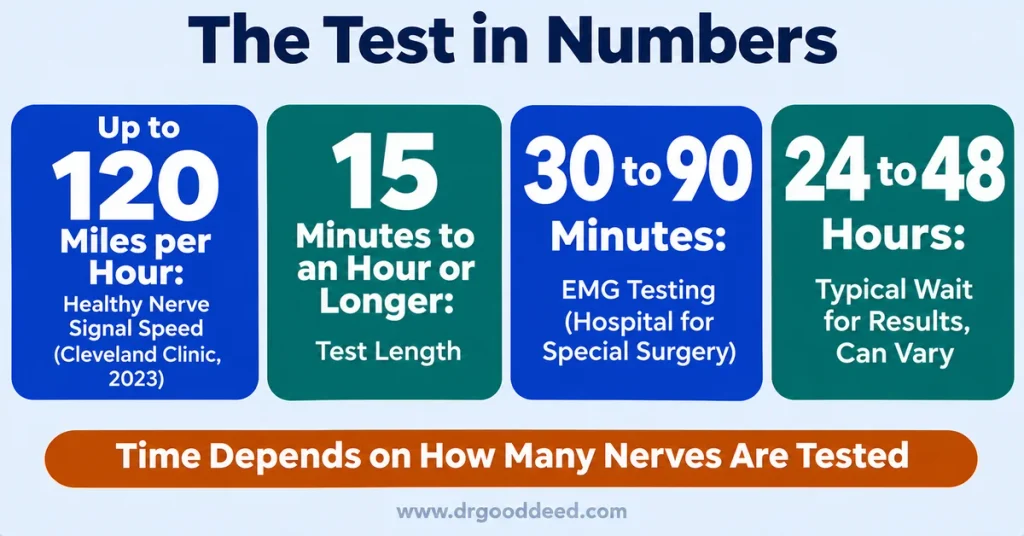
- The test usually takes 15 minutes to an hour or longer, depending on which nerves are being tested (Cleveland Clinic, 2023).
- Tell your care team if you have a pacemaker, implanted devices, take blood thinners, or have a bleeding disorder.
What Is a Nerve Conduction Study?
A nerve conduction study tests how quickly and well electrical signals travel through your peripheral nerves. Peripheral nerves are the nerves outside your brain and spinal cord. They help your muscles and other body parts send signals to your brain.
The test measures how quickly electrical signals travel through your nerves. This is known as nerve conduction velocity (NCV). Healthy nerves can send signals at speeds of up to 120 miles per hour, according to Cleveland Clinic (2023).
Your doctor may recommend this test if you experience:
- Numbness or tingling in your hands, arms, feet, or legs.
- Muscle weakness or unexplained changes in your movements.
- Burning sensations or pain that may be caused by nerve damage.
- Symptoms that could be related to carpal tunnel syndrome, peripheral neuropathy, or a nerve problem in your spine.
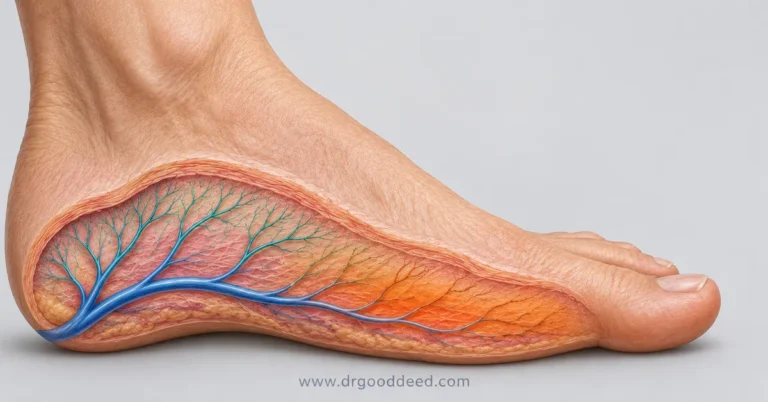
Doctors may order this test when someone has neuropathy in feet symptoms such as numbness or tingling. It can help determine whether a nerve is damaged and whether electrical signals are traveling more slowly or weakly than expected.
Does a Nerve Conduction Study Hurt?
A nerve conduction study usually causes brief discomfort rather than lasting pain. You may feel tingling, light tapping, or a static sensation for a short time. Most people tolerate the electrical pulses without much difficulty.
If you are wondering how painful a nerve conduction study is, remember that the electrical pulses feel different from the needle part of an EMG.
Table: What you may feel during the pulses, the needle EMG, and afterward
| Part of the test | What you may feel |
| Electrical pulses | A brief tingling, tapping, or static sensation. The intensity may increase slightly during the test. |
| Needle EMG | A thin needle is inserted into selected muscles. You may feel a slight twinge, cramp, or spasm. |
| After the test | Your skin may feel normal. However, if the examiner tested any muscles with a needle, you may experience some soreness or bruising. |
The electrical pulses last only a short time and may cause slight discomfort, according to Cleveland Clinic (2023). The needle portion may cause a slight twinge or spasm, according to Mayo Clinic (2019). You can ask the examiner for a short break if you need one.
How to Prepare for a Nerve Conduction Test
Preparing for a nerve conduction test means keeping your skin clean, wearing comfortable clothes, and informing your care team about your medical history and any devices you have.
Before your appointment:
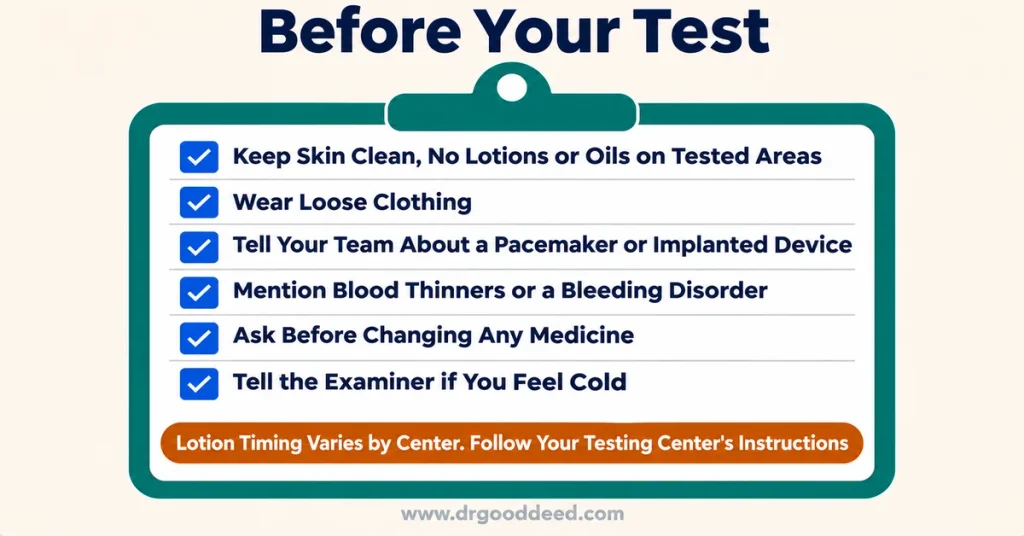
- Keep your skin clean: Avoid using lotions, creams, oils, or other products on the areas of your skin that will be tested. UTHealth Houston asks you to avoid lotions on the day of your test, while MedlinePlus says a day or two and Johns Hopkins Medicine says a few days. Follow your testing center’s instructions.
- Wear loose clothing: This makes it easier for the examiner to access your arms or legs.
- Report implanted devices: Inform your care team if you have a pacemaker, defibrillator, or any other implanted device.
- Mention bleeding concerns: Tell your provider if you have a bleeding disorder or take blood thinners.
- Ask about your medications: Do not stop or change your medications on your own. Ask the testing center whether you should take your usual medications.
Tell the examiner if your leg falls asleep easily so they know which nerves are causing concern.
Doctor’s Tip: If you feel cold or the electrical pulses are uncomfortable, let the examiner know. Low body temperature can slow nerve signals. If the sensation becomes very uncomfortable, speak up rather than trying to tolerate it.
What to Expect During a Nerve Conduction Study
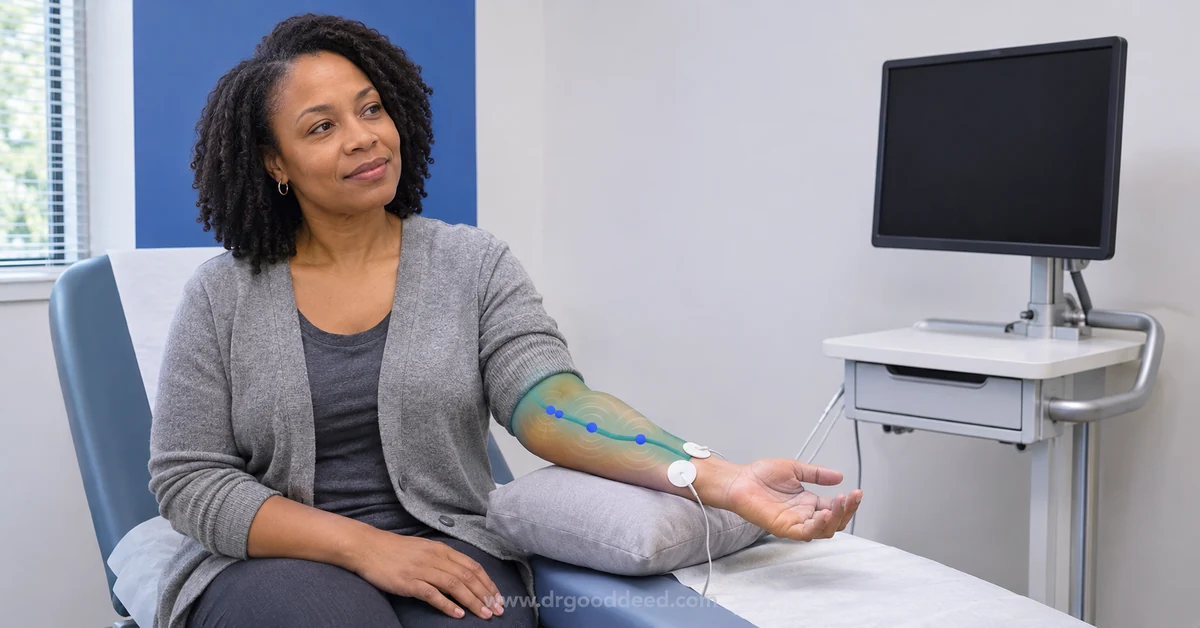
What to expect during a nerve conduction study is a simple process: a provider places pads over a nerve, sends short electrical pulses, and records the signal. The test is usually performed by a neurologist or physiatrist. Sometimes, a trained technologist also assists.
During the test:
- Getting comfortable: You will sit or lie down so the examiner can easily access the nerves being tested.
- Placing the electrodes: Small sensors called electrodes are placed on your skin near the nerve and the muscle supplied by that nerve. Electrodes are small sensors that detect electrical activity.
- Sending electrical pulses: The examiner sends short, low-voltage electrical pulses. You may feel quick tingling, tapping, or a static sensation.
- Recording the response: The electrodes detect how quickly and strongly the signal travels along the nerve. The muscle being tested may twitch slightly.
- Repeating the process: The examiner moves the electrodes to test other nerves, depending on your symptoms and the reason for the test.
The test can take 15 minutes to an hour or longer, depending on how many nerves are being tested, according to Cleveland Clinic (2023) and MedlinePlus. Your hand or foot may be warmed if your skin is cold, as temperature can affect nerve signals.
Nerve Conduction Study vs. EMG: Why Both?
A nerve conduction study tests how well your nerves send electrical signals. An electromyography (EMG) test checks the electrical activity inside your muscles.
These tests provide different information. A nerve conduction study uses electrodes placed on your skin, whereas a needle EMG uses a thin needle inserted into selected muscles.
Doctors may recommend both tests to understand whether your symptoms are caused by a nerve problem, a muscle problem, or both. They may also perform these tests separately.
If you experience cramping or muscle twitching all over your body, your doctor may also recommend a needle EMG.
If you have both tests during the same appointment, the visit may take longer. EMG testing can take around 30 to 90 minutes, according to Hospital for Special Surgery. A combined NCS and EMG appointment can take between one and two hours, according to UTHealth Houston.
What Your Nerve Conduction Test Results Mean
Your nerve conduction test results show how quickly and strongly electrical signals travel through your nerves. A specialist reviews the results and interprets them alongside your symptoms, medical history, and examination.
Your results may show:
- Slow signals: Your nerves may not be sending electrical signals as quickly as expected.
- Weak signals: The results may indicate that a nerve is damaged or not working as well as it should.
- Abnormal patterns: These findings can help your doctor investigate conditions such as peripheral neuropathy, carpal tunnel syndrome, or nerve compression.
- Normal results: Normal results do not always explain your symptoms or rule out every nerve problem. A nerve conduction study is not a diagnosis by itself. Your doctor may need to consider other tests and your overall medical history.
For example, your doctor may investigate whether a nerve is being compressed in your spine, as can happen with neuroforaminal stenosis.
Sometimes, a normal result can miss problems affecting small nerve fibers. These fibers are not detected well by standard nerve conduction testing. If your symptoms suggest small fiber neuropathy, your doctor may consider other tests, such as a skin biopsy (StatPearls, 2022).
You may receive your results within 24 to 48 hours, according to Cleveland Clinic (2023), although this can vary. Some doctors discuss the results during a follow-up appointment (Mayo Clinic, 2019).
If diabetes is the cause, ask your doctor whether reversing diabetic neuropathy is a realistic goal for your situation.
After the Test: When to See a Doctor
Most people can return to their usual activities after a nerve conduction study. The electrical pulses should not cause long-term problems. If you also had a needle EMG, you may experience temporary soreness or bruising.
The duration of soreness can vary. Hospital for Special Surgery reports that soreness rarely lasts more than an hour or two. However, some people may experience soreness for a few days, according to MedlinePlus. Bruising from the needle portion may also take a few days to settle (Mayo Clinic, 2019).
Table: What you may notice after the test and what to do
| What you experience | What to do |
| Mild, temporary tingling or soreness | This can happen after the test. Monitor how you feel and follow your care team’s instructions. |
| Increased pain, unusual swelling, or other concerning symptoms | Contact your doctor or testing center for advice. |
| New weakness, slurred speech, facial drooping, or sudden vision changes | Call 911 or go to the ER. Do not drive yourself. |
| Sudden severe headache or fainting | Call 911 or go to the ER. |
Call your doctor if anything feels wrong, because what to expect during a nerve conduction study does not include worsening pain or new weakness.
Frequently Asked Questions
Can a Nerve Conduction Test Be Done on the Legs and Feet?
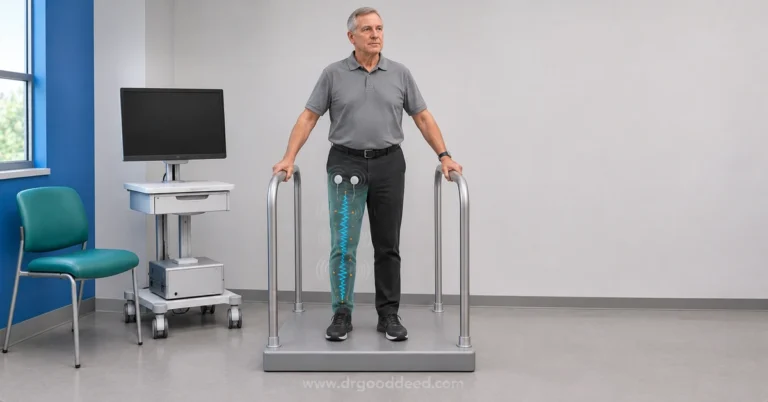
Yes, a nerve conduction test can be done on the legs and feet, as well as the arms and hands. The electrodes are placed close to selected nerves and muscles to record their responses. You may notice the electrical pulses more around areas such as your ankle, wrist, or elbow.
Is a Nerve Conduction Study Safe With a Pacemaker?
Often, a nerve conduction study can be performed in people with modern pacemakers or defibrillators. However, make sure you inform the testing team before your appointment. Research has not shown a significant clinical effect with modern bipolar devices, but evidence is limited for some device types. Your specialist should assess your individual situation.
Can I Drive Myself Home After a Nerve Conduction Study?
Usually, yes. Since you will not be sedated, most people can drive themselves home. If you also had a needle EMG, ask the testing center whether it has any specific recommendations. You may want to arrange a ride if you feel uncomfortable after the appointment.
Should I Take My Usual Medicines Before the Test?
Ask your doctor or testing center when you book your appointment. Some centers recommend taking your usual medications, while others may give specific instructions based on your medical history. Tell the team if you take blood thinners or other medications. Do not stop or change any medication without medical advice.
Why Might My Hand or Foot Be Warmed Before the Test?
Your hand or foot may be warmed because low body temperature can slow nerve signals and affect the results. Warming the area helps the examiner obtain more accurate readings. If you feel cold during your appointment, let the examiner know.
Sources
Cleveland Clinic, Nerve Conduction Study (2023). link
Johns Hopkins Medicine, Nerve Conduction Studies. link
MedlinePlus, Electromyography (EMG) and Nerve Conduction Studies. link
Mayo Clinic, Electromyography (EMG) (2019). link
National Library of Medicine, Nerve Conduction Studies and Electromyography (StatPearls, 2025). link
National Library of Medicine, Small Fiber Neuropathy (StatPearls, 2022). link
Hospital for Special Surgery, EMG Testing: A Patient’s Guide. link
UTHealth Houston, NCS-EMG Patient Information Guide. link
Muscle and Nerve, Safety of Nerve Conduction Studies in Patients With Implanted Cardiac Devices (Schoeck et al., 2007). link
Medical Disclaimer: This article is for general information only and is not medical advice. It does not replace a diagnosis, treatment plan, or guidance from a qualified healthcare professional. Always talk to your doctor about your own symptoms and before starting, stopping, or changing any treatment. If you think you may be having a medical emergency, call 911 or go to your nearest emergency room.