
Do artificial sweeteners raise insulin? Most research suggests they do not significantly raise insulin levels when consumed alone (Zhang et al., 2023). However, the response can vary depending on the type of sweetener and how it is used.
Understanding how artificial sweeteners affect insulin can help you read food labels and make informed choices about your blood sugar. It is also important to remember that a sugar-free label does not always mean a food is low in carbohydrates.
Key Takeaways
- Most trials suggest artificial sweeteners raise insulin little or not at all when taken alone, but the answer varies by sweetener and setting.
- Sucralose may produce a different insulin response when consumed before a sugary drink.
- Sugar-free foods can still contain carbohydrates that affect blood sugar. Always check the total carbohydrate content.
- Talk to your healthcare team about changes in your blood sugar. Do not change your diabetes medication or insulin without medical advice.
Do Artificial Sweeteners Raise Insulin Levels?
No, in most trials artificial sweeteners raise insulin no more than water when taken alone in a drink. However, some small studies have reported different results.
The response may depend on how the sweetener is consumed.
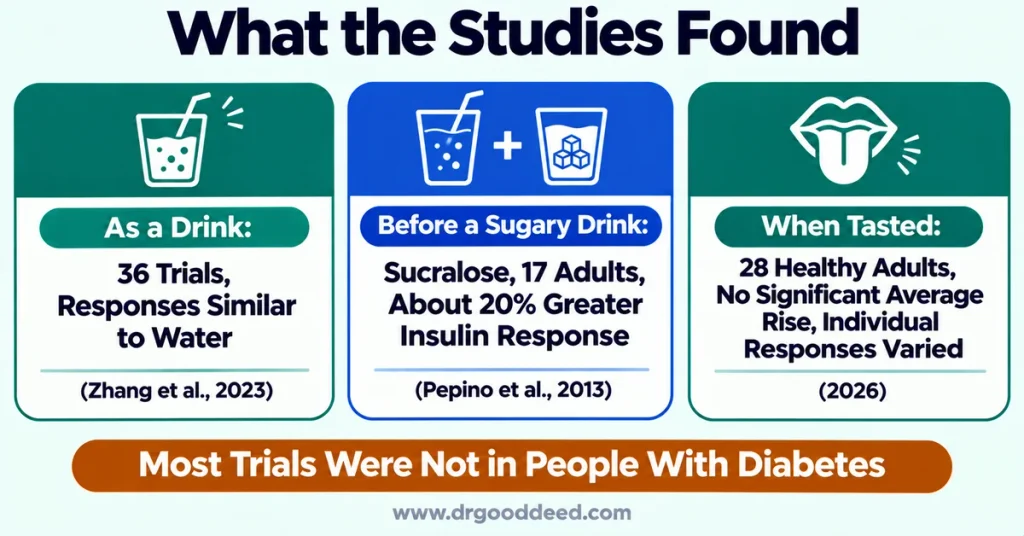
When consumed as a drink: A 2023 review examined 36 trials and found that drinks containing non-nutritive sweeteners generally produced glucose and insulin responses similar to water. This was also the case when they were consumed alongside or before sugar (Zhang et al., 2023).
Before a sugary drink: A 2013 study involving 17 adults with obesity found that consuming sucralose before a glucose drink was associated with an approximately 20% greater insulin response. The participants were insulin-sensitive and did not regularly use artificial sweeteners (Pepino et al., 2013).
When tasted: A 2026 study in Physiology and Behavior involving 28 healthy adults found no statistically significant average increase in insulin after tasting sucralose. However, individual responses varied.
These findings do not necessarily contradict each other. The studies examined different situations, sweeteners, and groups of people. The 2023 review also disclosed food and beverage industry links, while the 2013 study was small.
Most of these trials did not focus on people with diabetes. Therefore, their findings may not fully reflect how artificial sweeteners affect someone who uses insulin or other diabetes medication.
Improving your insulin sensitivity can also support better blood sugar management. Maintaining regular, healthy habits may help. Read more about how to improve insulin sensitivity.
Why a Sweet Taste Can Trigger Insulin
Sometimes, tasting something sweet may cause a small insulin response. This is known as cephalic phase insulin release.
It is part of the body’s early response to seeing, smelling, tasting, or expecting food. However, the response can vary from person to person.
A 2017 review examined non-nutritive sweeteners and found inconsistent effects on glucose regulation. It also found no reliable evidence that these sweeteners lowered blood glucose (Tucker and Tan, 2017).
The 2026 sucralose study also reported individual differences. Although the average insulin increase was not statistically significant, some participants had a greater response.
A sweet taste does not automatically mean that your insulin levels will rise significantly.
Which Sweeteners Have the Most Insulin Evidence
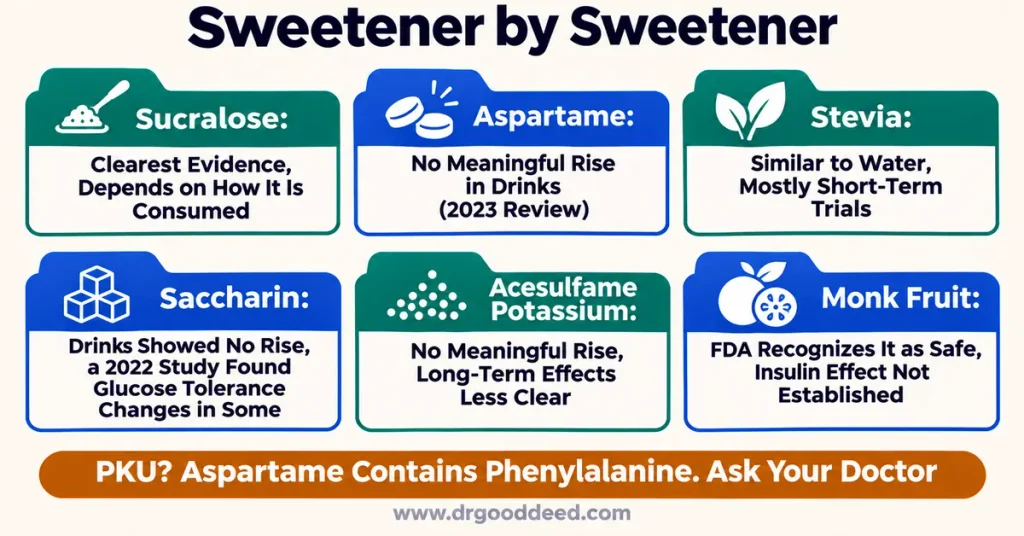
Sucralose has some of the clearest human research suggesting a possible increase in insulin under specific conditions. However, the response depends on how it is consumed. Most sweetened drinks included in the 2023 review produced insulin responses similar to water (Zhang et al., 2023).
The table below compares what studies show for each sweetener and the limits of that evidence.
| Sweetener | What the research found | Limitations |
| Sucralose | A 2013 study found a higher insulin response when it was consumed before a glucose drink. A 2026 study found no significant average increase after tasting it. | The 2013 study included only 17 adults. |
| Aspartame | The 2023 review found no meaningful insulin increase from drinks containing non-nutritive sweeteners. | The findings mainly relate to drinks. |
| Stevia | Responses were generally similar to water in the 2023 review. | Much of the evidence comes from short-term trials. |
| Saccharin | Drinks did not show a meaningful insulin increase. A 2022 study found changes in glucose tolerance in some individuals. | The study examined individual responses over two weeks. |
| Acesulfame potassium | The 2023 review found no meaningful insulin increase from sweetened drinks. | Long-term effects are less clear. |
| Monk fruit | The FDA recognizes monk fruit as safe for use in foods. | Its effect on insulin in people has not been established. |
Overall, there is some evidence that sucralose may increase insulin in a particular situation. However, the available research does not show that it consistently causes an insulin spike. Several sweetened drinks produced responses similar to water in the 2023 review.
People with phenylketonuria (PKU) should also be aware that aspartame contains phenylalanine. If you have PKU, speak with a healthcare professional about which foods and drinks are suitable for you (Cleveland Clinic, 2023).
Diet Soda vs. Sugary Drinks: Insulin Compared
Sugary drinks can increase both blood glucose and insulin. In contrast, non-nutritive sweetened drinks generally produced responses similar to water in pooled trials (Zhang et al., 2023).
This means you do not need to assume that a zero-sugar drink will have the same immediate effect as a sugary drink. However, different diet drinks may contain different ingredients, so their effects are not necessarily identical.
Sugar or artificial sweeteners?
Switching from a sugary drink to a zero-sugar option may reduce your sugar and carbohydrate intake. You do not need to switch back to sugary drinks because of concerns about a possible insulin response to artificial sweeteners. Water is another simple option. Learn more about whether water contains calories.
Sugar-Free Foods That Can Still Raise Blood Sugar
Sugar-free foods may still affect your blood sugar. They can contain carbohydrates from starch, flour, or other ingredients (Mayo Clinic, 2025).
Approved high-intensity sweeteners generally do not raise blood glucose significantly. However, other ingredients in the food may still affect your readings.
Some sugar-free products contain sugar alcohols, which are a type of carbohydrate. Their effects on blood sugar can vary. Some may cause a rise in blood glucose or digestive problems. Check the full product label rather than relying only on the sugar-free claim.
The table below compares what you are having, its likely effect and what to check.
| What you are having | Likely effect | What to check |
| Diet drink | Generally produced responses similar to water in short-term trials. | Total carbohydrates on the nutrition label. |
| Sweetener before something sugary | One small study found a higher insulin response with sucralose before a glucose drink (Pepino et al., 2013). | The overall meal or drink. |
| Sugar-free snack | May raise blood sugar if it contains starch or other carbohydrates. | Total carbohydrates, portion size, and sugar alcohols. |
| Sweetener packet | The sweetener may have little effect, but other ingredients can matter. | Ingredient list and nutrition information, if available. |
A sugar-free claim means a product contains less than 0.5 grams of sugar per serving. However, total carbohydrates include sugar, starch, and fiber (American Diabetes Association).
Doctor’s Tip: Always check the total carbohydrates listed on the nutrition label. A sugar-free label only refers to the amount of sugar in the food.
This is important when choosing breakfast products marketed as sugar-free, too. You can also explore these breakfast foods for diabetes.
Long-Term Effects: Insulin Resistance and Diabetes
Research into the long-term effects of artificial sweeteners has raised questions about insulin resistance and gut bacteria. However, current evidence does not establish that artificial sweeteners cause insulin resistance or diabetes.
Some studies have found associations between sweetener use and metabolic changes (Suez et al., 2022). An association means two things are observed together. It does not prove that one caused the other.
Insulin resistance: A 2020 cross-sectional study compared people with type 2 diabetes who used artificial sweeteners with those who did not. It found differences in HOMA-IR, a measure used to estimate insulin resistance. However, the study design cannot establish that sweeteners caused these differences (Mathur et al., 2020).
Gut bacteria: A 2022 study followed 120 healthy adults for two weeks. It found that people had different responses to certain sweeteners. Changes in gut bacteria were also associated with differences in glucose tolerance (Suez et al., 2022).
Weight management: In 2023, the World Health Organization advised against using non-sugar sweeteners for weight control. This recommendation does not apply to people with pre-existing diabetes. It also does not establish that sweeteners cause diabetes (World Health Organization, 2023).
Most short-term trials have focused on generally healthy adults. A 2018 review of 29 randomized controlled trials involving 741 participants found no overall increase in blood glucose. Some responses varied by age, weight, and diabetes status. This review examined blood glucose, not insulin (Nichol et al., 2018).
The FDA has also reviewed observational research involving erythritol. Observational findings cannot establish cause and effect. They should not be treated as proof that erythritol causes a particular health condition.
Sometimes, physical changes can provide clues about insulin resistance. For example, darkening of the skin around the neck can be associated with insulin resistance. Speak with your doctor if you notice this change. Learn more about dark neck and insulin resistance.
When to See a Doctor About Blood Sugar Changes
Speak with your primary care doctor if your blood sugar readings change regularly, you are unsure how a particular food affects you, or you have questions about artificial sweeteners and diabetes.
If you monitor your blood sugar at home, keeping a log can help your healthcare team identify patterns. Record your readings alongside what you ate and how you were feeling.
Know the signs of hypoglycemia
- Below 70 mg/dL: This is considered low blood sugar, according to the CDC.
- Below 54 mg/dL: This is considered severe hypoglycemia.
- Severe symptoms: Confusion, seizures, or loss of consciousness require emergency help.
The National Institute of Diabetes and Digestive and Kidney Diseases advises calling 911 if someone is experiencing severe hypoglycemia. If the person is unconscious or having seizures, do not give them anything to eat or drink.
For concerning symptoms that are not an emergency, contact your primary care doctor. If you need prompt assessment, visit an urgent care center. For severe symptoms or a life-threatening emergency, go to the emergency room or call 911.
You can compare your readings with normal blood sugar levels and discuss any patterns with your doctor.
If you are worried that artificial sweeteners raise insulin or blood sugar for you, bring your readings and food labels to your primary care doctor.
Frequently Asked Questions
What Spikes Insulin the Most?
Carbohydrates play an important role in raising blood sugar and insulin. Sugars and starches can increase blood glucose, although the response depends on the food, meal, and individual. Sugary drinks increased insulin in pooled trials, while non-nutritive sweetened drinks generally produced responses similar to water (CDC; Zhang et al., 2023).
Does Artificial Sweetener Spike Blood Sugar?
Generally, artificial sweeteners do not cause a significant increase in blood glucose. The FDA states that approved high-intensity sweeteners generally do not raise blood sugar. A 2018 review of 29 trials involving 741 participants also found no overall increase in blood glucose (FDA; Nichol et al., 2018).
Can I Still Use Artificial Sweeteners If I Have Diabetes?
Many people with diabetes can use artificial sweeteners. However, check total carbohydrates and portion sizes, especially when choosing sugar-free snacks. If you notice changes in your blood sugar readings, discuss your food choices with your healthcare team (Mayo Clinic, 2025).
Should I Change My Insulin or Diabetes Medication?
No. Do not change your insulin or diabetes medication because you are using artificial sweeteners. If you use mealtime insulin, your healthcare team may have advised you to match your dose to the carbohydrates you eat. Check the total carbohydrates in sugar-free foods and ask your care team if you are unsure (CDC).
Why Do Studies Disagree on Whether Artificial Sweeteners Spike Insulin?
Studies disagree on whether artificial sweeteners spike insulin because they test different sweeteners, people and timing. Some tested sweetened drinks, while others examined sweeteners consumed before glucose or tasted on their own. These differences may explain why results vary. Reviews from Tucker and Tan (2017) and the 2026 sucralose study also reported individual variation.
Sources
Nutrients, The Effect of Non-Nutritive Sweetened Beverages on Postprandial Glycemic and Endocrine Responses (Zhang et al., 2023). link
Diabetes Care, Sucralose affects glycemic and hormonal responses to an oral glucose load (Pepino et al., 2013). link
Physiology and Behavior, 2026 study of sucralose taste and insulin in healthy adults. link
Physiology and Behavior, review of non-nutritive sweeteners and glucose control (Tucker and Tan, 2017). link
European Journal of Clinical Nutrition, meta-analysis of 29 trials on sweeteners and blood glucose (Nichol et al., 2018). link
Cell, Personalized microbiome-driven effects of non-nutritive sweeteners on human glucose tolerance (Suez et al., 2022). link
Journal of Family Medicine and Primary Care, cross-sectional study of sweetener users with type 2 diabetes (Mathur et al., 2020). link
U.S. Food and Drug Administration, Aspartame and Other Sweeteners in Food. link
Mayo Clinic, Artificial sweeteners: Any effect on blood sugar? link
American Diabetes Association, How to Read Nutrition Labels. link
Centers for Disease Control and Prevention, Carb Counting. link
Centers for Disease Control and Prevention, Low Blood Sugar (Hypoglycemia). link
National Institute of Diabetes and Digestive and Kidney Diseases, Low Blood Glucose (Hypoglycemia). link
World Health Organization, WHO advises not to use non-sugar sweeteners for weight control in newly released guideline. link
Cleveland Clinic, Are Artificial Sweeteners Safe for People With Diabetes? link
Medical Disclaimer: This article is for general information only and is not medical advice. It does not replace a diagnosis, treatment plan, or guidance from a qualified healthcare professional. Always talk to your doctor about your own symptoms and before starting, stopping, or changing any treatment. If you think you may be having a medical emergency, call 911 or go to your nearest emergency room.