
Alcohol can cause diabetes. Chronic heavy drinking significantly raises the risk of type 1 or type 2 diabetes. It does this through multiple pathways: damaging the liver, promoting visceral fat accumulation, driving insulin resistance, and causing repeated blood sugar spikes and crashes. Moderate drinking carries lower risk, but the effects depend on drink type, frequency, and existing health status.
How Alcohol Affects Blood Sugar Levels
Alcohol creates a confusing effect on blood sugar. It can both raise and lower it, sometimes within hours.
When you drink, the liver shifts its priority from releasing stored glucose (glycogen) to processing alcohol. This means the liver stops releasing glucose into the blood, which can cause blood sugar to drop, sometimes dangerously low, especially in people who drink on an empty stomach.
At the same time, sugary mixers, beer, and sweet wines add a significant glucose load that spikes blood sugar first, before the drop occurs. Blood sugar spikes after alcohol are most pronounced with cocktails, sweet wines, and beer, while spirits mixed with soda water cause smaller initial spikes.
Alcohol can cause diabetes through this mechanism over time. Repeated disruption of liver glucose management damages the body’s ability to regulate blood sugar consistently.
Does Drinking Alcohol Increase Blood Sugar?
Drinking alcohol increases blood sugar, depending entirely on what is being consumed. Alcohol’s effect on blood glucose is not uniform.
Spirits like vodka, gin, whiskey, and tequila contain near-zero carbohydrates. Consumed alone, they do not directly raise blood sugar. However, blood sugar spikes after alcohol occur when these are mixed with juice, soda, tonic, or syrup-based mixers.
Beer contains 10 to 15 grams of carbohydrates per standard 12-ounce serving. Sweet wines and dessert wines contain 10 to 20 grams of sugar per glass. Cocktails like margaritas, daiquiris, and piña coladas deliver 25 to 50 grams of sugar per serving.
Drinking alcohol increases blood sugar with delayed effects. Many people experience a rise in blood sugar during drinking followed by a significant drop 4 to 8 hours later, particularly overnight. This is especially dangerous for people with diabetes who may not wake up to recognize hypoglycemia (dangerously low blood sugar).
Insulin Resistance From Alcohol Consumption
Insulin resistance from alcohol consumption develops through three distinct mechanisms that most people aren’t aware of.
Chronic inflammation: Alcohol metabolism produces acetaldehyde (a toxic byproduct) and drives oxidative stress throughout the body. This inflammation impairs insulin receptor function at the cellular level. Cells become less responsive to insulin, leaving glucose trapped in the bloodstream.
Liver fat accumulation: Regular drinking promotes fat storage in the liver (non-alcoholic fatty liver disease, or NAFLD). A fatty liver processes insulin less effectively, becoming a central driver of whole-body insulin resistance. Up to 90% of heavy drinkers show some degree of liver fat.
Hormonal disruption: Alcohol raises cortisol and lowers adiponectin (a hormone that improves insulin sensitivity). Lower adiponectin levels directly worsen insulin response. Insulin resistance from alcohol consumption compounds over years, and alcohol can cause diabetes through this pathway even without significant weight gain.
Weight Gain and Alcohol-Related Diabetes Risk
Alcohol contains 7 calories per gram, nearly as many as fat (9 calories per gram). A single pint of beer delivers 180 to 250 calories. A cocktail averages 200 to 400 calories. These calories provide no nutritional value and the body can’t store them; it must burn them first, pushing fat and glucose burning to a halt.
Weight gain and alcohol-related diabetes risk compound because alcohol directly stimulates appetite. It increases ghrelin (the hunger hormone) while impairing judgment around food choices. Most people consume more food, and higher-calorie food, when drinking.
Abdominal fat accumulation is particularly significant. Alcohol preferentially promotes visceral fat growth (fat around internal organs), which is more metabolically harmful than fat elsewhere. Alcohol can cause diabetes through visceral fat. Visceral fat releases inflammatory chemicals that directly impair insulin function, independent of total body weight.
Best Alcoholic Drinks for Diabetes
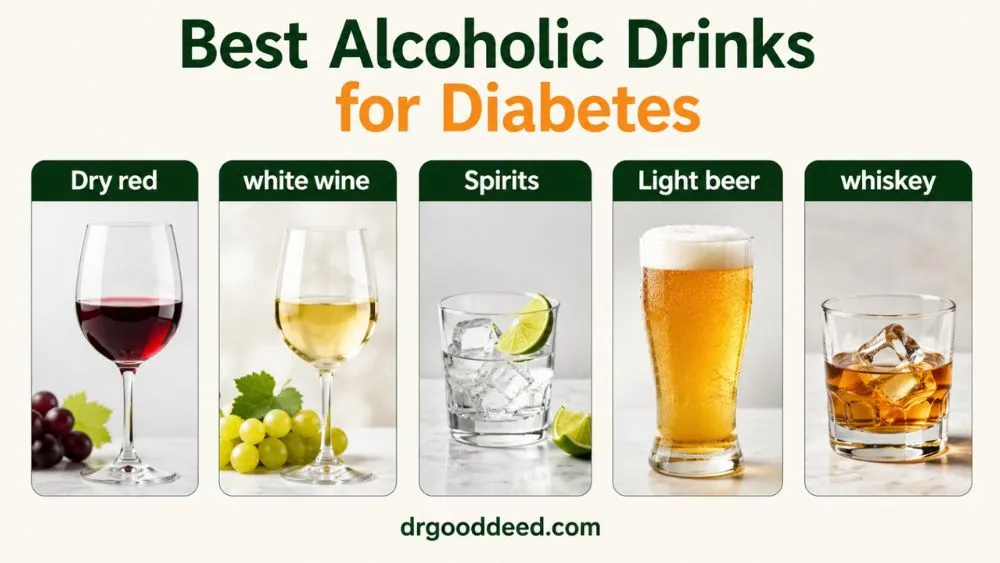
The best drinks for diabetes minimize sugar, carbohydrates, and caloric load while avoiding mixers that spike blood glucose.
Lower-risk choices:
- Dry red or white wine (4 to 5g carbs per 5 oz glass; resveratrol in red wine has mild insulin-sensitizing effects)
- Spirits (vodka, gin, whiskey, tequila, rum) mixed with soda water, a squeeze of lime, or ice; near-zero carbohydrates
- Light beer (3 to 7g carbs per serving, versus 13g in regular beer)
The worst alcoholic drinks for diabetes candidates are sweet cocktails, dessert wines, regular beer, hard cider, flavored malt beverages, and pre-mixed drinks, all of which deliver 15 to 50 grams of sugar per serving.
Portion control matters equally. Even the best alcoholic drinks for diabetes management become problematic in excess. Women should limit to 1 drink per day; men to 2 drinks per day, based on American Diabetes Association guidance.
Alcoholic Drinks That May Spike Blood Sugar Quickly
Certain alcoholic drinks cause rapid blood sugar spikes after alcohol consumption that people with diabetes or prediabetes need to avoid or limit strictly:
- Sweet cocktails: Margaritas (40 to 50g sugar), piña coladas (45 to 60g sugar), cosmopolitans (15 to 20g sugar), and Long Island iced teas (30 to 40g sugar)
- Dessert wines and Port: 15 to 20g of sugar per small glass
- Hard ciders: 20 to 25g of carbohydrates per 12-ounce serving
- Flavored malt beverages (hard seltzers with added flavor): Many contain 15 to 25g of sugar despite “seltzer” branding
- Regular lager beer: 12 to 15g of carbohydrates per serving
These options produce the most significant blood sugar spikes after alcohol because they combine direct sugar delivery with alcohol’s interference in liver glucose regulation simultaneously.
How Alcohol Impacts People Already Living With Diabetes
People with diagnosed diabetes face compounded risks from alcohol. Alcohol can cause diabetes complications in those already diagnosed.
Key concerns for people managing diabetes:
- Hypoglycemia risk: Alcohol blocks the liver from releasing glucose. Combined with insulin or sulfonylurea medications, this creates severe risk of low blood sugar, particularly overnight
- Masking symptoms: Alcohol intoxication mimics hypoglycemia symptoms (shakiness, confusion, weakness), making it difficult to recognize a dangerous blood sugar drop
- Medication interactions: Metformin and alcohol together increase the risk of lactic acidosis (a rare but serious buildup of lactic acid in the blood)
- HbA1c disruption: Regular drinking raises average blood sugar over months, worsening long-term glucose control metrics
People with type 1 or type 2 diabetes should consult their doctor before drinking, always eat food with alcohol, never drink on an empty stomach, and check blood sugar before sleeping.
Tips to Reduce Diabetes Risk While Drinking Alcohol
Alcohol can cause diabetes risk even at moderate intake levels. For some people, particularly those with pre-existing insulin resistance or a family history of diabetes, yes. These habits reduce the risk:
- Drink in moderation: Maximum 1 drink daily for women, 2 for men; more than 3 drinks per day consistently raises diabetes risk by 40 to 50%
- Avoid sugary mixers: Replace juice, soda, and tonic with sparkling water, soda water, or a lime squeeze
- Eat balanced meals with alcohol: Food slows alcohol absorption and stabilizes blood sugar. Protein and fiber are especially effective at blunting blood glucose swings
- Choose lower-carb options: Dry wine and spirits outperform beer, cider, and cocktails for blood sugar management
- Hydrate consistently: Alcohol dehydrates, and dehydration worsens blood sugar regulation
Lifestyle Habits That Protect Metabolic Health
For people who drink regularly, these habits offset metabolic damage:
Regular exercise: Aerobic exercise and strength training improve insulin sensitivity. A 30-minute walk after drinking blunts some of the insulin-disrupting effects of alcohol by increasing muscle glucose uptake directly.
Healthy body weight management: Keeping visceral fat low reduces the diabetes risk that alcohol promotes. Waist circumference below 35 inches for women and 40 inches for men indicates lower visceral fat risk.
Consistent sleep and stress control: Alcohol disrupts sleep architecture (particularly deep sleep), raising cortisol and impairing insulin sensitivity the following day. Prioritizing 7 to 9 hours of quality sleep and managing stress actively reduces the metabolic burden that alcohol compounds.
When to Seek Medical Advice
Seek medical attention for blood sugar concerns if you:
- Frequently feel shaky, dizzy, or confused after drinking
- Notice increased thirst, urination, or fatigue regularly
- Have a family history of diabetes and drink more than 7 drinks per week
- Experience unexplained weight gain around the abdomen despite no dietary change
- Have been told you have fatty liver disease or prediabetes
Alcohol can cause diabetes without warning symptoms. Blood sugar dysregulation builds silently over years. A fasting glucose test and HbA1c check give a definitive picture of where metabolic health stands.
FAQs
Can heavy drinking increase the risk of Type 2 diabetes over time?
Yes. Alcohol can cause diabetes through heavy drinking. Drinking more than 3 to 4 drinks daily increases type 2 diabetes risk by 40 to 50% compared to non-drinkers. This happens through liver fat accumulation, insulin resistance, visceral fat growth, and chronic inflammation, all driven by regular heavy alcohol intake.
Why do sugary alcoholic drinks raise blood sugar quickly?
Sugary alcoholic drinks deliver glucose directly through their sugar content (juice, soda, syrup) while simultaneously blocking the liver from regulating blood sugar. This double effect produces faster and higher blood sugar spikes after alcohol than either sugar or alcohol would cause alone.
Can alcohol worsen insulin resistance and belly fat accumulation?
Yes. Insulin resistance from alcohol consumption develops when liver fat builds up, inflammation impairs insulin receptors, and cortisol rises from chronic alcohol exposure. Alcohol specifically promotes visceral fat (around the organs), which worsens insulin resistance more than fat stored elsewhere in the body.
Is beer or wine safer for blood sugar control?
Dry wine is safer. Dry red or white wine contains 4 to 5 grams of carbohydrates per 5-ounce glass. Standard beer contains 12 to 15 grams per 12-ounce serving. Drinking alcohol increases blood sugar more significantly with beer. Light beer is a middle ground at 3 to 7 grams of carbohydrates.
How does the liver affect blood sugar after drinking alcohol?
The liver is the body’s blood sugar regulator. When alcohol is present, the liver prioritizes breaking it down over releasing stored glucose. This stops normal blood sugar maintenance, causing glucose levels to drop 4 to 8 hours after drinking, a risk especially dangerous during sleep.
Can alcohol cause both high and low blood sugar levels?
Yes. Alcohol can cause diabetes-like glucose swings in a single drinking session. Initial consumption of sugary drinks causes blood sugar spikes. Hours later, the liver’s preoccupation with alcohol metabolism stops glucose release, causing drops. This dual swing is the most dangerous pattern for people on diabetes medication.
What alcoholic drinks contain the least added sugar?
Vodka, gin, whiskey, tequila, and rum contain near-zero carbohydrates. Mixed with soda water, they are among the best alcoholic drinks for diabetes management. Dry red wine (Cabernet Sauvignon, Pinot Noir) and dry white wine (Sauvignon Blanc, Pinot Grigio) contain 4 to 5 grams of carbs per glass.
Does drinking alcohol at night affect fasting glucose levels?
Yes. Alcohol consumed within 3 hours of sleep suppresses liver glucose production overnight, dropping blood sugar below normal. The body then compensates by morning, sometimes producing a rebound rise in fasting glucose. This pattern confuses fasting glucose readings and can mask true metabolic health status.
How can people with diabetes drink alcohol more safely?
Always eat protein and fiber-rich food before or during drinking. Check blood sugar before sleeping. Avoid drinking on an empty stomach. Choose the best alcoholic drinks for diabetes (dry wine, spirits with soda water). Carry fast-acting glucose in case of hypoglycemia. Never drink more than 1 to 2 drinks in a single session.
When should alcohol-related blood sugar symptoms become a concern?
Seek testing if you experience shakiness, confusion, or extreme fatigue after drinking regularly; frequent urination or thirst alongside regular alcohol use; unexplained abdominal weight gain; or if your doctor has flagged prediabetes or fatty liver disease. Alcohol can cause diabetes, and early testing catches it before progression.