
A hole in tooth pain home remedy gives short-term relief when a cavity starts causing sharp, throbbing, or constant discomfort. Dental cavities, clinically called dental caries, affect 2.3 billion people worldwide with untreated permanent tooth decay, according to the World Health Organization (WHO).
In the United States, the CDC reports that 90% of adults over 20 have had at least one cavity. These remedies do not treat the decay. They reduce pain while you wait for a dental appointment. This guide covers what causes cavity pain, which home options bring real relief, and the signs that require urgent dental care.
Natural Remedies for Tooth Decay Pain
Natural remedies for tooth decay pain target pain signals, oral bacteria, and inflammation at the surface level. None of them reverse decay, but some have clinically recognized compounds that reduce pain measurably. Starting them at the first sign of a cavity gives better results than waiting until pain becomes severe.
Garlic and Antimicrobial Properties
Garlic contains allicin, a sulfur compound with documented antibacterial properties. A 2011 study published in the Archives of Oral Biology found that allicin inhibits Streptococcus mutans, the primary bacteria responsible for tooth decay.
Crush one raw garlic clove into a paste. Apply it directly to the painful tooth for 3 to 5 minutes. Rinse after. Use once daily. Garlic does not numb pain instantly, but it reduces the bacterial activity around the cavity.
Peppermint Tea for Soothing Discomfort
Peppermint contains menthol, which activates cold-sensitive receptors (TRPM8 channels) in nerve endings. This creates a numbing sensation without blocking the nerve entirely.
Steep a peppermint tea bag in hot water for 5 minutes. Let it cool to lukewarm. Hold it against the painful tooth for 5 minutes. Do not swallow. The tannins in peppermint also reduce minor gum swelling near the cavity.
Hydrogen Peroxide Rinse Precautions
A 1.5% hydrogen peroxide rinse kills oral bacteria and reduces gum inflammation. The American Dental Association (ADA) recognizes hydrogen peroxide as an active ingredient in oral antiseptic rinses.
Use a 3% drugstore hydrogen peroxide solution diluted 50/50 with water. Swish for 30 seconds. Spit. Never swallow. Do not use undiluted hydrogen peroxide directly on a cavity. Full-strength peroxide burns soft tissue and damages the gum around the tooth.
Hydration and Dry Mouth Prevention
Dry mouth reduces saliva flow. Saliva naturally neutralizes acids produced by bacteria. Without enough saliva, acid sits on tooth enamel longer and worsens cavity pain. Drinking water consistently throughout the day prevents dry mouth and helps clear food debris from around the cavity.
What Causes a Hole in the Tooth?
Tooth decay causing cavity pain begins long before a visible hole forms. The process is bacterial, acidic, and gradual. Most people feel no pain in early stages, which is why cavities are often discovered only after significant damage has already occurred.
Bacteria and Enamel Breakdown
Streptococcus mutans and Lactobacillus species feed on sugars left in the mouth. They produce lactic acid as a byproduct. That acid drops the mouth’s pH below 5.5, the level at which tooth enamel begins to dissolve. This process is called demineralization.
Untreated Cavities and Nerve Exposure
Tooth enamel has no nerve endings. When decay reaches dentin, the softer layer beneath enamel, fluid inside tiny dentin tubules moves in response to temperature, pressure, and sugar. That fluid movement stimulates the nerve. That is why sweet, cold, and hot foods suddenly cause sharp pain.
Why Cavities Become Painful Over Time
As decay deepens, the distance between the cavity and the tooth’s nerve (dental pulp) shortens. Bacteria produce toxins that travel into the pulp chamber before physical contact. These toxins cause pulp inflammation, called pulpitis. Pulpitis causes spontaneous pain, even without eating or drinking.
Symptoms of a Painful Tooth Cavity
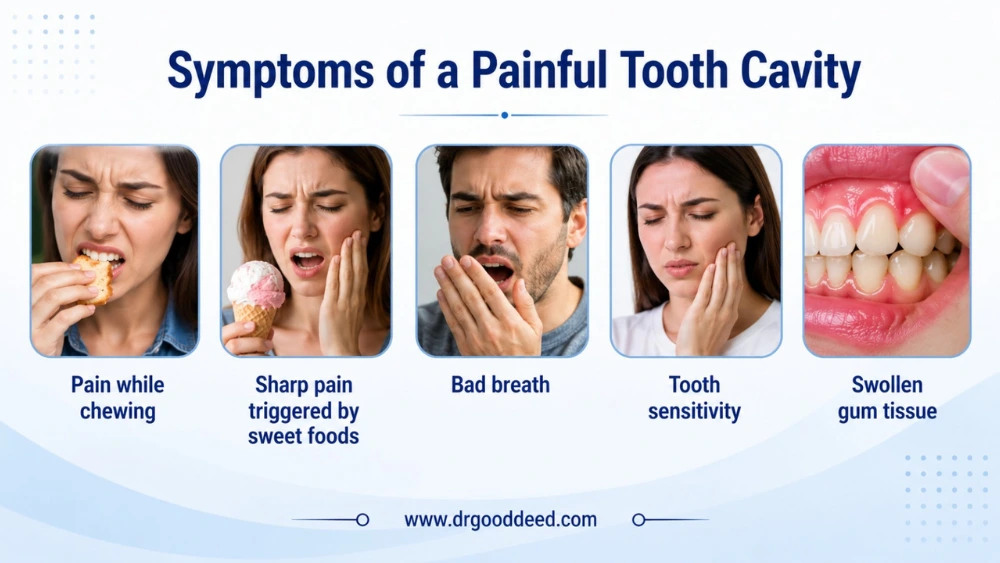
Cavity pain in the US is one of the most common reasons for emergency dental visits. Knowing the specific symptom pattern helps distinguish a simple cavity from a deeper infection that needs urgent care.
Common symptoms of a painful cavity include:
- Sharp pain triggered by sweet foods or cold drinks
- Dull, constant aching that gets worse at night
- Pain while chewing on one side of the mouth
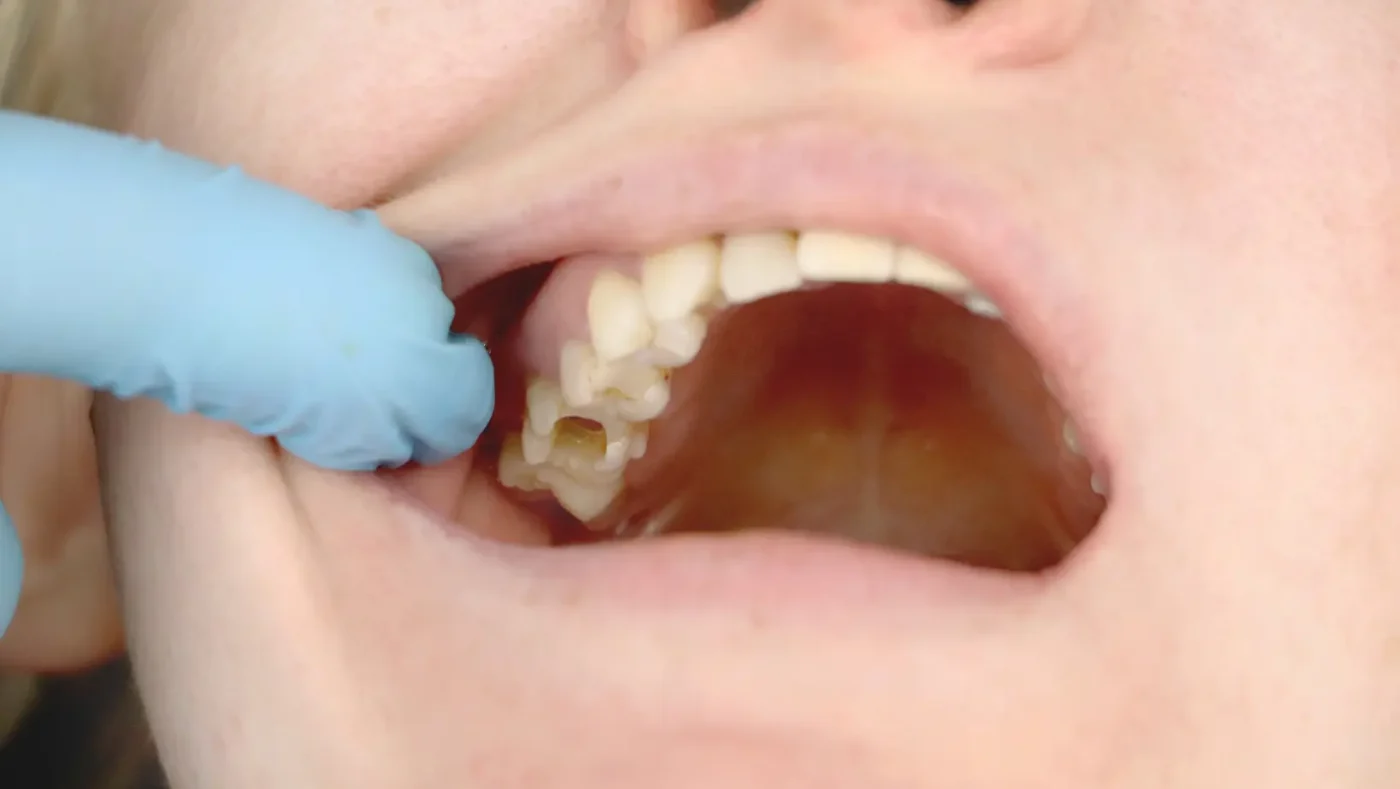
- Visible dark spots, pits, or holes on the tooth surface
- Tooth sensitivity that lingers more than 30 seconds after removing the stimulus
- Swollen gum tissue directly around the affected tooth
- Bad breath or a bad taste that does not clear with brushing
Sensitivity lasting more than 30 seconds after cold exposure suggests the nerve is already inflamed. That requires a dental evaluation within 48 to 72 hours.
Temporary Relief for Tooth Cavity Pain
Temporary relief for tooth cavity pain reduces pain intensity while protecting the cavity from further irritation. These methods work within minutes for most people.
Saltwater Rinse for Oral Bacteria Reduction
Mix half a teaspoon of table salt in 8 ounces of warm water. Swish for 30 seconds and spit. Saltwater creates a hypertonic environment that draws fluid out of swollen gum tissue. This reduces inflammation and removes loose food particles from around the cavity. The ADA recommends saltwater rinses as a first-line oral wound care measure.
Cold Compress for Swelling and Pain
Apply a cold pack wrapped in a cloth to the outside of the cheek, directly over the painful tooth. Use for 15 minutes, then remove for 15 minutes. Cold constricts blood vessels, which reduces the pressure and throbbing that makes cavity pain worse.
Avoiding Sugary or Very Hot Foods
Sugar feeds Streptococcus mutans directly. Eating sugar when a cavity is already present increases acid production within 3 minutes of contact. Very hot foods raise the temperature inside the tooth chamber and push inflamed pulp tissue against the nerve. Both make pain significantly worse.
Keeping the Cavity Area Clean Gently
Food packed into a cavity increases bacterial activity and pain. Rinse the area after every meal with warm water. Use a soft-bristled toothbrush and brush gently around the affected tooth, not scrubbing the cavity itself. Removing food debris reduces acid exposure between meals.
Clove Oil for Cavity Toothache Relief
Clove oil for cavity toothache relief is the most evidence-backed home remedy for tooth pain available without a prescription. It works faster than most other natural options and has a long history of clinical use in dentistry.
Eugenol and Temporary Numbing Effects
Clove oil’s active compound is eugenol. Eugenol blocks sodium ion channels in nerve fibers, which interrupts pain signal transmission. This is the same mechanism used by local anesthetics like benzocaine in dental offices. A 2006 study in the Journal of Dentistry confirmed that eugenol provides comparable short-term pain reduction to benzocaine in patients with dentin sensitivity.
Safe Ways to Apply Clove Oil
- Dilute clove essential oil with a carrier oil (olive oil or coconut oil) at a 1:1 ratio
- Dip a cotton ball in the diluted mixture
- Press the cotton ball gently against the painful tooth for 5 to 10 minutes
- Remove and rinse with warm water
- Use no more than 3 times per day
Pre-made clove oil dental gels such as Red Cross Toothache Medicine are available at pharmacies and contain standardized eugenol concentrations, which are safer than applying undiluted essential oil directly.
Possible Irritation or Sensitivity Risks
Undiluted clove oil burns gum tissue and mucous membranes. It also irritates exposed dentin if applied directly into a deep cavity. People with eugenol allergies, which sometimes occur in individuals sensitive to cinnamon or balsam of Peru, should not use clove oil.
Why Clove Oil Does Not Fix Cavities
Eugenol numbs nerve signals. It does not kill the bacteria inside the cavity, stop acid production, or rebuild enamel. Clove oil for cavity toothache relief is pain management only. The decay continues progressing underneath.
Foods and Drinks That Worsen Cavity Pain
| Category | Examples | Why It Hurts |
| Sugary foods | Candy, soda, cookies | Feeds bacteria, increases acid within 3 minutes |
| Acidic drinks | Orange juice, sports drinks, wine | Lowers mouth pH below 5.5, worsens enamel erosion |
| Hard foods | Ice, hard candy, nuts | Increases biting pressure directly on the cavity |
| Hot foods | Coffee, soup, hot tea | Expands fluids inside the tooth, irritates inflamed nerve |
| Sticky foods | Caramel, gummy candy | Stays packed in cavity longer than other foods |
Carbonated drinks combine acid and sugar simultaneously. A single 12-ounce soda drops mouth pH to around 2.5, well below the enamel dissolution threshold.
How Cavities Progress Without Treatment
A cavity that goes untreated does not stabilize. Tooth decay moves through four distinct stages, each more painful and expensive to treat than the previous one.
Enamel Damage and Deeper Decay
Early decay stays in enamel and causes no pain. Once decay crosses into dentin, pain while chewing and temperature sensitivity begin. Dentin decays 5 times faster than enamel because it is softer and less mineralized.
Infection Reaching Tooth Nerves
When bacteria reach the dental pulp, the tooth’s blood and nerve supply, infection develops inside the pulp chamber. The immune system sends blood and inflammatory cells to fight the infection. Inside a rigid tooth structure, that swelling has nowhere to go. The resulting pressure is what causes the severe, throbbing pain of an infected tooth.
Abscess Formation and Severe Pain
A dental abscess is a pocket of pus that forms at the root tip or in the gum. It signals that infection has spread beyond the tooth. Abscesses cause constant, severe pain, jaw swelling, and sometimes fever. No hole in tooth pain home remedy controls abscess pain. This requires drainage and antibiotics from a dentist.
Tooth Loss and Gum Complications
Without treatment, an abscess can destroy surrounding bone. The tooth loses its structural support and eventually falls out or requires extraction. Adjacent teeth shift into the gap, disrupting the bite and creating new areas where food traps.
Oral Hygiene Habits That Help Prevent Cavities
Proper Brushing and Flossing
Brush twice daily for two full minutes. Use a soft-bristled brush held at a 45-degree angle to the gum line. Floss once daily. Flossing removes plaque from between teeth where brushes cannot reach. Most cavities in adults form between teeth, not on chewing surfaces.
Fluoride Toothpaste and Enamel Protection
Fluoride remineralizes early enamel lesions before they become full cavities. The ADA recommends toothpaste with at least 1,000 ppm fluoride for adults. Fluoride does not reverse established cavities. It prevents new ones from forming in weakened enamel.
Limiting Sugary Snacks and Drinks
Frequency matters more than total sugar amount. Sipping soda throughout the day keeps mouth pH low for hours. Drinking it once with a meal and rinsing afterward limits acid exposure to a shorter window.
Regular Dental Checkups and Cleanings
Professional cleanings remove calcified tartar that home brushing cannot. X-rays detect cavities between teeth before they cause pain. The ADA recommends checkups every 6 months for most adults, or every 3 months for those with high cavity risk.
Common Mistakes People Make With Tooth Pain
Most people delay dental care when a hole in tooth pain home remedy temporarily controls pain. That delay lets decay reach the nerve, turning a simple filling into a root canal or extraction.
- Placing aspirin directly on the gum: Aspirin is acidic. Holding it against gum tissue causes chemical burns. Aspirin must be swallowed, not applied topically, to reduce tooth pain
- Using undiluted clove oil: Full-strength clove oil burns soft tissue and can cause chemical injury to the gum around the cavity
- Assuming pain disappearing means the cavity healed: When severe cavity pain suddenly stops, it often means the nerve has died. The infection continues silently and an abscess forms
- Only treating one side of the mouth: People chew only on the non-painful side, which increases wear and decay risk on those teeth
- Rinsing with very hot saltwater: Hot water increases blood flow to already-inflamed tissue and worsens throbbing pain. Always use warm, not hot, water
When Tooth Pain Needs Immediate Dental Care
A home remedy for tooth pain is not a substitute for dental treatment. Certain symptoms indicate that infection has progressed to a point where home care is unsafe.
Go to a dentist or emergency dental clinic immediately if:
- Pain is constant and severe, rated above 7 out of 10, for more than 24 hours
- The jaw, cheek, or neck is visibly swollen
- Fever above 100.4°F (38°C) appears alongside tooth pain
- There is difficulty swallowing or opening the mouth fully
- A pimple-like bump appears on the gum near the painful tooth
- Pain spreads to the ear, jaw joint, or temple
- The tooth has turned gray or black, signaling nerve death
Jaw swelling combined with fever and difficulty swallowing signals a spreading infection called Ludwig’s angina. This is a medical emergency requiring hospital care, not just a dentist visit.
FAQs
What causes pain in a tooth with a hole or cavity?
Tooth decay, causing cavity pain happens when bacteria-produced acid breaks through enamel into dentin. Fluid inside dentin tubules moves in response to temperature or pressure, stimulating the pulp nerve. Once decay reaches the pulp directly, bacteria toxins cause pulpitis, producing spontaneous pain without any food or drink trigger.
How can cavity pain be temporarily relieved at home?
The most effective home remedies for tooth pain are diluted clove oil (eugenol numbs the nerve within 5 minutes), a warm saltwater rinse (reduces gum swelling), and a cold compress on the cheek (controls throbbing). Over-the-counter benzocaine gels like Orajel work within 1 to 2 minutes for direct surface numbing.
Does clove oil help reduce toothache pain naturally?
Yes. Clove oil for cavity toothache relief works because eugenol blocks nerve sodium channels, the same mechanism as benzocaine. A 2006 Journal of Dentistry study confirmed eugenol matches benzocaine for short-term dentin pain reduction. Apply diluted (1:1 with olive oil) on a cotton ball for 5 to 10 minutes, maximum 3 times daily.
Why does chewing worsen cavity-related tooth pain?
Pain while chewing worsens because biting pressure forces fluid through exposed dentin tubules toward the nerve. If decay has reached the pulp, the biting force compresses already-inflamed pulp tissue. Chewing on hard or sticky foods increases both the pressure and the duration of nerve stimulation.
Can saltwater rinses help reduce oral bacteria and swelling?
Yes. Saltwater creates a hypertonic solution that draws fluid out of inflamed gum tissue through osmosis. This reduces swelling around the cavity within 10 to 15 minutes of rinsing. It also raises mouth pH briefly, which slows bacterial acid production. It does not penetrate the cavity itself or kill bacteria inside the tooth.
Which foods and drinks commonly worsen tooth cavity pain?
Carbonated sodas (pH 2.5 to 3.5), orange juice (pH 3.3), and sports drinks (pH 2.9 to 3.7) cause the sharpest acid-driven pain. Sticky sweets like caramel pack into cavities and maintain sugar contact for 20 to 40 minutes. Ice and hard candy cause sudden pain while chewing by creating pressure spikes on already-weakened tooth structure.
Can a cavity heal naturally without dental treatment?
No. A cavity that has broken through enamel into dentin cannot remineralize on its own. Fluoride can arrest very early enamel lesions (white spots), but once a physical hole forms, the structural loss is permanent. Only a dentist can remove the decay and restore the tooth with a filling or crown.
What are signs that a cavity infection is becoming serious?
A pimple-like bump (dental fistula) on the gum, persistent bad taste from pus drainage, facial swelling, and fever above 100.4°F (38°C) all signal abscess formation. When tooth decay-causing cavity pain is accompanied by any of these, the infection has spread beyond the tooth and needs antibiotics plus professional drainage.
Why does untreated tooth decay become more painful over time?
Dentin decays 5 times faster than enamel. As the cavity deepens, the distance to the pulp nerve shrinks. Bacterial toxins enter the pulp before bacteria do, causing progressive pulp inflammation. Each stage produces more inflammation with less room for pressure to dissipate inside the rigid tooth structure, intensifying pain with every passing week.
When should cavity tooth pain become a dental emergency?
Treat tooth pain as a dental emergency when jaw or neck swelling appears, when fever accompanies the pain, or when swallowing becomes difficult. These signs indicate spreading infection beyond the tooth socket. A home remedy for tooth pain cannot manage this. Emergency dental care or a hospital visit is required within hours, not days.