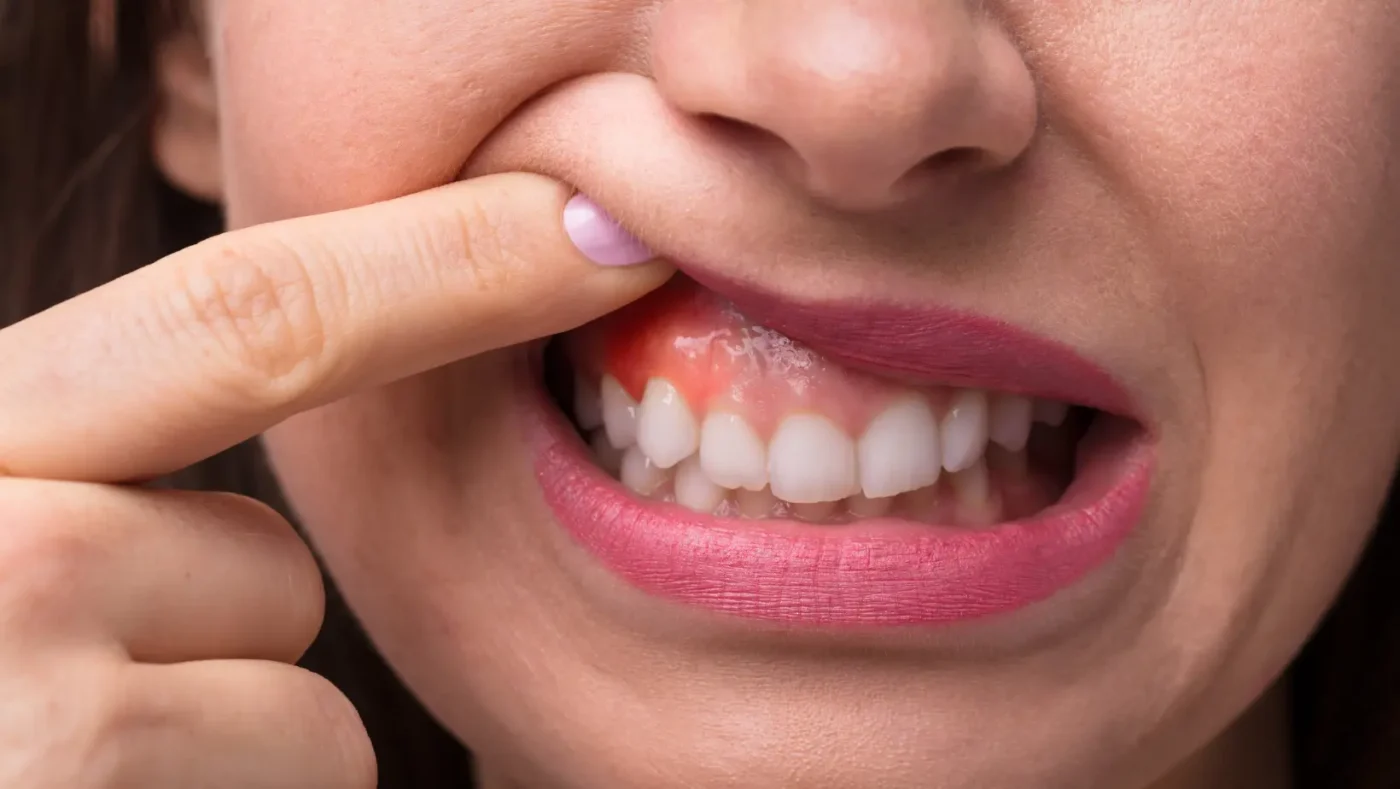

Swollen gums home remedies reduce gum inflammation, lower bacterial load, and ease pain without a prescription, when used consistently and correctly. Gum disease, clinically called periodontal disease, affects 47.2% of adults aged 30 and older in the United States, according to the CDC’s Division of Oral Health. Its earliest and most reversible stage, gingivitis, causes gum swelling, redness, and bleeding before any bone loss occurs.
Natural Remedies for Gum Swelling
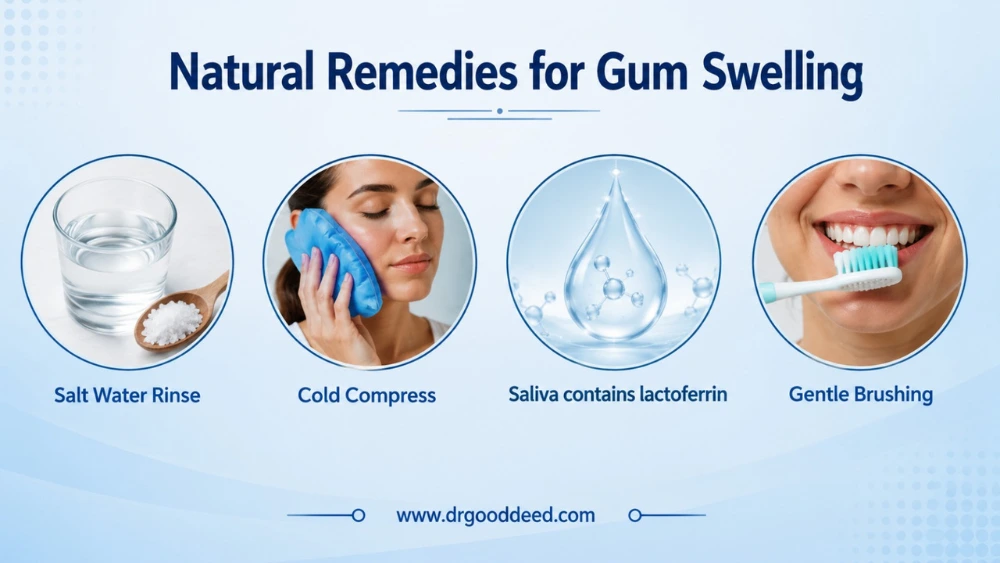
Natural remedies for gum swelling target the bacterial buildup and inflammation at the gum line that cause swelling in the first place. Most work within 24 to 72 hours of consistent use when gingivitis is the underlying cause.
Salt Water Rinse for Swollen Gums
A salt water rinse for swollen gums is the most clinically supported home option. It draws fluid from swollen gum tissue through osmosis and disrupts the environment where oral bacteria thrive. Mix half a teaspoon of salt in 8 ounces of warm water. Swish for 30 seconds, spit, and repeat twice daily. Do not exceed 3 rinses per day; overuse dries out oral mucosa and delays tissue recovery.
Cold Compress for Inflammation Relief
Cold temperature constricts blood vessels in gum tissue. This reduces the volume of fluid leaking into swollen areas. Wrap ice in a clean cloth. Press it against the outside of the cheek, directly over the swollen gum, for 10 minutes. Remove for 10 minutes. Repeat once. Direct ice contact on gum tissue causes cold burns. Always use a barrier cloth.
Hydration and Saliva Production Support
Saliva contains lactoferrin, IgA antibodies, and lysozyme, three compounds that actively fight oral bacteria. Dehydration drops cells volume and removes this natural defense layer. Drinking 8 to 10 cups of water daily maintains salivary flow at protective levels. Dry mouth, clinically called xerostomia, accelerates plaque formation and worsens gum inflammation.
Gentle Brushing and Flossing Techniques
Aggressive brushing with a hard-bristled brush causes gingival recession, not clean gums. Use a soft-bristled brush at a 45-degree angle to the gum line. Apply light pressure. Brush for 2 minutes, twice daily. Floss once daily using a C-shape motion around each tooth. Snapping floss against the gum line causes micro-tears that increase inflammation rather than reduce it.
What Causes Swollen Gums?
Understanding the causes of swollen gums determines which remedy works. Swelling from plaque buildup responds differently than swelling from a vitamin deficiency or hormonal change. Treating one type with a remedy designed for another delays recovery.
Plaque Buildup and Gum Inflammation
Dental plaque is a sticky film of bacteria that forms on teeth within 4 to 12 hours of brushing. When plaque sits at the gum line, bacteria release toxins that trigger an immune response. That immune response causes the classic redness, swelling, and bleeding of gingivitis. Plaque that stays in place for 72 hours hardens into tartar (calculus), which brushing cannot remove.
Gingivitis and Early Gum Disease
Gingivitis is the inflammation of the gingiva, the gum tissue surrounding teeth. It is fully reversible with improved oral hygiene. Periodontitis, the advanced stage, involves bone loss and is not reversible without professional treatment. The line between the two is plaque control. Swollen gums home remedies reverse gingivitis but do not treat periodontitis.
Food Particles and Bacterial Irritation
Food packed between teeth and at the gum line feeds Porphyromonas gingivalis and Tannerella forsythia, two bacteria directly linked to gum disease progression. Eating without rinsing afterward allows these bacteria to produce acid and toxins for hours between meals.
Hormonal Changes Affecting Gums
Estrogen and progesterone increase blood flow to gum tissue. During pregnancy, puberty, and menstruation, hormone surges make gums more reactive to plaque. Pregnant women develop a specific condition called pregnancy gingivitis, where gums swell significantly even with adequate oral hygiene. The American Academy of Periodontology (AAP) lists hormonal changes as a documented non-plaque cause of gingival inflammation.
Common Symptoms of Swollen Gums
Swollen gums in the US are one of the most searched oral health complaints. Recognizing the full symptom picture helps distinguish simple gingivitis from a more serious infection requiring dental care.
Common symptoms include:
- Gums that appear red or dark pink instead of their normal coral pink
- Puffy or enlarged gum tissue around one or multiple teeth
- Gums that bleed during brushing, flossing, or eating firm foods
- Tenderness or soreness when touching the gum line
- Persistent bad breath that does not clear with brushing
- Gum tissue pulling away from teeth, creating visible gaps
- Pus between the tooth and gum line (signals abscess formation)
- Loose teeth in advanced cases where bone support has weakened
Bleeding during brushing is not normal. Healthy gums do not bleed. Bleeding gums signal active inflammation that home remedies can still reverse when caught early.
Salt Water Rinse for Swollen Gums
A salt water rinse for swollen gums is one of the oldest and most studied swollen gums home remedies. The science behind it is specific and worth knowing.
How Salt Water Reduces Bacteria
Salt creates a hypertonic environment. Bacteria rely on osmotic balance to survive. When surrounding fluid is saltier than their interior, water pulls out of bacterial cells through osmosis. This disrupts bacterial metabolism without creating the antibiotic resistance concerns associated with prescription antimicrobials.
Gum Soothing and Inflammation Relief
The warm water component of the rinse increases local blood circulation. This brings immune cells to the inflamed gum tissue faster. Salt also raises mouth pH temporarily. Streptococcus mutans and P. gingivalis both prefer an acidic environment and slow their toxin production when pH rises above 7.0.
Safe Preparation and Rinsing Methods
Use half a teaspoon of plain, non-iodized salt in 8 ounces of warm water. Iodized salt does not harm gum tissue, but non-iodized salt creates a cleaner solution. Swish slowly around all areas of the mouth for 30 full seconds. Concentrate the rinse at the gum line. Spit completely; never swallow saltwater rinses regularly.
Frequency and Precautions for Use
Use twice daily for up to 2 weeks during active swelling. After swelling resolves, once daily maintenance is sufficient. People with hypertension or kidney disease should use saltwater rinses cautiously. Even small amounts of swallowed sodium add up over time. An alcohol-free antiseptic mouthwash is a safer alternative for these individuals.
Bleeding Gums and Swelling Remedies
Bleeding gums and swelling remedies work fastest when the underlying cause is plaque-related gingivitis. Improving oral hygiene alone reverses early-stage gum inflammation in 10 to 14 days, per the American Academy of Periodontology.
Improving Oral Hygiene Habits
Consistency matters more than technique alone. Brush twice daily, floss once daily, and rinse with an antiseptic mouthwash every night. Skipping even one session allows plaque to begin hardening at the gum line within 72 hours.
Soft-Bristle Toothbrush Benefits
Hard and medium-bristle brushes abrade the gingival margin. This causes mechanical inflammation on top of bacterial inflammation. The ADA recommends soft-bristled toothbrushes for all adults, particularly those with existing gum swelling. Replace toothbrushes every 3 months or immediately after any oral infection.
Antiseptic Mouthwash Considerations
Chlorhexidine 0.12% mouthwash is the gold standard prescription-strength antiseptic for gingivitis. Over-the-counter options with cetylpyridinium chloride (CPC) reduce plaque effectively. The ADA Seal of Acceptance confirms which mouthwashes have documented efficacy. Avoid alcohol-based mouthwashes during active gum swelling; alcohol dehydrates gum tissue and delays healing.
Reducing Plaque Accumulation Naturally
Electric toothbrushes remove 21% more plaque than manual brushes, according to a 2019 Cochrane systematic review covering 56 studies and over 5,000 participants. Water flossers (oral irrigators) remove plaque from below the gum line where string floss cannot reach. Both tools are clinically supported additions to a bleeding gums and swelling remedies routine.
Foods and Habits That Worsen Gum Swelling
| Trigger | Mechanism | Effect on Gums |
| Sugary foods and drinks | Feed S. mutans and P. gingivalis | Increases acid and toxin production at gum line |
| Smoking | Reduces gingival blood flow by vasoconstriction | Masks bleeding; delays immune response |
| Alcohol | Dehydrates oral mucosa; reduces saliva | Allows bacteria to multiply faster |
| Aggressive brushing | Causes micro-tears at gum line | Increases physical inflammation |
| Poor hydration | Reduces saliva volume and IgA levels | Removes natural antibacterial protection |
Smoking deserves particular attention. Nicotine constricts gingival blood vessels so effectively that smokers often do not bleed when brushing, even with active gum disease. This masks the symptom that typically prompts people to seek care. Smokers have 2 to 7 times higher risk of periodontitis than non-smokers, per the CDC.
Common Mistakes People Make With Swollen Gums
Most people using swollen gums home remedies make one or more of these errors, which explain why their symptoms persist despite effort.
- Brushing harder to remove redness: Vigorous brushing does not remove plaque faster. It causes gum recession and mechanical injury. Only the correct angle and motion remove plaque effectively
- Using alcohol-based mouthwash on inflamed gums: Alcohol mouthwash kills bacteria but simultaneously dehydrates already-damaged gum tissue. This slows healing more than it helps
- Stopping remedies when pain disappears: Gum swelling feels better before the bacterial load is actually reduced. Stopping after 3 to 4 days allows bacteria to rebuild and symptoms to return within a week
- Assuming bleeding gums mean brushing too hard: Bleeding during gentle brushing signals inflammation, not trauma. Brushing less makes gingivitis worse, not better
- Using full-strength hydrogen peroxide on gums: Undiluted 3% hydrogen peroxide damages gingival fibroblasts (cells that repair gum tissue) and delays healing. Always dilute 50/50 with water if using it as a rinse
- Skipping flossing because gums bleed: Bleeding stops within 7 to 10 days of consistent, gentle flossing as inflammation reduces. Avoiding flossing leaves the primary cause of gum disease untreated
When Swollen Gums Need Dental Attention
Swollen gums home remedies are appropriate for mild to moderate gingivitis. Certain symptoms signal that the condition has advanced beyond home management and requires professional care immediately.
See a dentist promptly if:
- Swelling does not reduce after 10 to 14 days of consistent home care
- Pus drains from between the tooth and gum
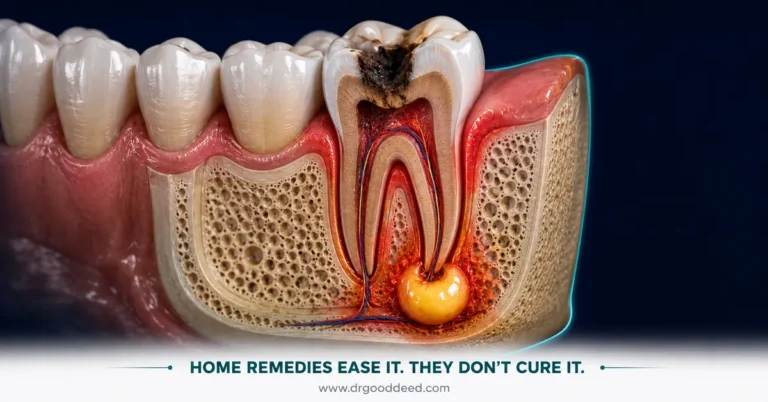
- A tender, dome-shaped bump appears on the gum (dental abscess)
- Fever above 100.4°F (38°C) accompanies gum pain
- One or more teeth feel loose or shift position
- The jaw, cheek, or neck swells alongside gum pain
- Swallowing becomes painful or difficult
- A gum sore does not heal after 3 weeks
A dental abscess requires professional drainage and antibiotics. It does not resolve with saltwater rinses or any other home option. Untreated dental abscesses spread infection to the jaw, neck, and airway, a condition called Ludwig’s angina, which carries a mortality risk without hospital treatment.
Vitamin deficiency and gum swelling is a separate category that home remedies do not fully address. Vitamin C deficiency (scurvy) causes spontaneous gum bleeding, tissue breakdown, and tooth loosening. This requires vitamin C supplementation (65 to 90 mg daily for adults, per the NIH Office of Dietary Supplements), not just improved oral hygiene.
FAQs
What are the most common causes of swollen gums?
The primary causes of swollen gums are plaque-related gingivitis (the most common), hormonal changes during pregnancy or menstruation, vitamin deficiency and gum swelling (especially vitamins C and D), poorly fitting dental appliances, and early-stage periodontitis. Plaque-related gingivitis accounts for over 90% of cases in US adults, per the CDC.
How does a salt water rinse help reduce gum swelling?
A salt water rinse for swollen gums creates a hypertonic environment that draws fluid out of swollen gum tissue through osmosis, reducing puffiness within 24 hours of consistent use. It also raises mouth pH above 7.0, which slows acid production by P. gingivalis, the primary bacteria linked to gum disease progression.
Why do gums bleed while brushing or flossing?
Gums bleed because bacterial toxins at the gum line trigger inflammation. Inflamed gum tissue contains more blood vessels than healthy tissue, and those vessels sit closer to the surface. Gentle, consistent flossing reduces bleeding in 7 to 10 days as bacterial load drops. Bleeding is not caused by flossing correctly; it signals gum disease is already present.
Can vitamin deficiencies contribute to swollen gums?
Yes. Vitamin deficiency and gum swelling share a direct link. Vitamin C deficiency weakens the collagen fibers that hold gum tissue together, causing spontaneous bleeding and tissue breakdown. Vitamin D deficiency impairs the immune response inside gum tissue. Both deficiencies appear in bloodwork before symptoms become severe. The NIH recommends 65 to 90 mg of vitamin C daily for adults.
What foods help support healthy gums naturally?
Vitamin C-rich foods (kiwi, bell peppers, broccoli) rebuild gum collagen. Omega-3 fatty acids in salmon and walnuts reduce prostaglandin-driven gum inflammation. Green tea contains catechins that inhibit P. gingivalis growth. A 2009 study in the Journal of Periodontology found that adults who drank one or more cups of green tea daily had significantly lower gum bleeding scores than non-drinkers.
How can plaque buildup lead to gum inflammation?
Plaque contains Porphyromonas gingivalis and Tannerella forsythia, which release lipopolysaccharides (LPS). LPS triggers the immune system to release interleukin-1 and TNF-alpha, two inflammatory compounds that cause gum redness, swelling, and tissue breakdown. Plaque left for 72 hours hardens into tartar, which requires professional scaling to remove; no swollen gums home remedies can dissolve it.
What oral hygiene habits reduce gum swelling?
Brush twice daily with a soft-bristled brush at a 45-degree angle. Floss once daily using a C-shape motion. Use an alcohol-free CPC-based mouthwash nightly. Switch to an electric toothbrush; Cochrane’s 2019 review confirmed electric brushes remove 21% more plaque than manual ones over 3 months. Consistent use of these habits reverses gingivitis in 10 to 14 days.
Can smoking worsen gum disease and gum irritation?
Yes. Smoking constricts gingival blood vessels, reducing immune cell delivery to infected gum tissue. It also suppresses neutrophil activity, the immune cells responsible for clearing oral bacteria. Smokers have 2 to 7 times higher risk of periodontitis than non-smokers. Smoking also masks bleeding, making gum disease appear milder than it is until bone loss has already occurred.
What are signs of serious gum infection or abscess?
A dental abscess produces a painful, dome-shaped swelling on the gum, pus discharge, constant throbbing pain, and fever above 100.4°F. These symptoms signal causes of swollen gums that go beyond gingivitis. No swollen gums home remedies reverse an abscess. It requires professional drainage within 24 to 48 hours to prevent infection from spreading to the jaw and neck.
When should swollen gums be professionally evaluated?
See a dentist within 48 to 72 hours if swelling persists after 14 days of home care, if pus appears at the gum line, if a tooth feels loose, or if jaw swelling or fever develops. Any gum sore that does not heal within 3 weeks needs evaluation to rule out oral cancer, particularly in adults over 40 who smoke or drink alcohol regularly.