
Sinusitis relief home remedies reduce sinus pressure, thin trapped mucus, and restore nasal drainage without requiring antibiotics for the vast majority of cases. Sinusitis, clinically called rhinosinusitis, affects approximately 31 million Americans annually, making it one of the most common reasons for physician visits in the United States, according to the American College of Allergy, Asthma and Immunology (ACAAI).
Over 90% of adult sinusitis cases stem from viral infections, not bacterial ones, which means antibiotics provide no benefit in most cases. The CDC specifically advises against antibiotics for viral sinusitis.
Natural Ways to Relieve Sinusitis
Natural ways to relieve sinusitis target the two core problems: swollen sinus lining tissue and thickened mucus that cannot drain. When mucus cannot exit the sinuses, pressure builds and bacteria get a chance to grow in the stagnant fluid. Reducing swelling and thinning mucus restores drainage and resolves symptoms faster.
Steam Inhalation for Sinus Drainage
Steam adds moisture to dry, inflamed nasal passages. Warm, humid air reduces the viscosity of thick mucus, making it easier to drain. Fill a bowl with hot water. Drape a towel over your head.
Breathe through your nose for 8 to 10 minutes. Adding 2 drops of eucalyptus oil increases the effect. Eucalyptus contains 1,8-cineole, a compound studied for its mucolytic (mucus-thinning) and anti-inflammatory properties in a 2003 paper in Laryngoscope. Do steam inhalation twice daily during active sinusitis.
Saline Rinses Clearing Nasal Passages
Saline nasal irrigation is the most clinically validated sinusitis relief home remedy. A 2007 Cochrane review and a 2016 randomized controlled trial in the Canadian Medical Association Journal both confirmed that daily saline irrigation reduces symptom duration, antibiotic use, and recurrence in sinusitis patients.
Use isotonic saline (0.9% sodium chloride) in a neti pot or squeeze bottle. Always use distilled or sterile water, never tap water. Flush once in the morning and once before bed during active symptoms.
Warm Compresses Reducing Facial Pressure
A warm, damp cloth placed over the cheeks, nose, and forehead for 10 to 15 minutes dilates blood vessels in sinus tissue. This increases local circulation, helps reduce swelling, and temporarily relieves the pressure sensation over the maxillary sinuses (cheeks) and frontal sinuses (forehead). Reheat the compress every 3 to 5 minutes to maintain warmth. Use 2 to 3 times daily.
Hydration Helping Thin Mucus Naturally
Mucus consists of approximately 95% water. Dehydration thickens mucus and slows ciliary movement, the tiny hair-like structures lining the nasal passages that sweep mucus toward the throat for drainage.
Drinking 8 to 10 cups of water daily maintains mucus at a thin, mobile consistency. Warm fluids are more effective than cold fluids because heat adds ambient moisture to nasal passages during swallowing and breathing.
Common Symptoms of Sinusitis
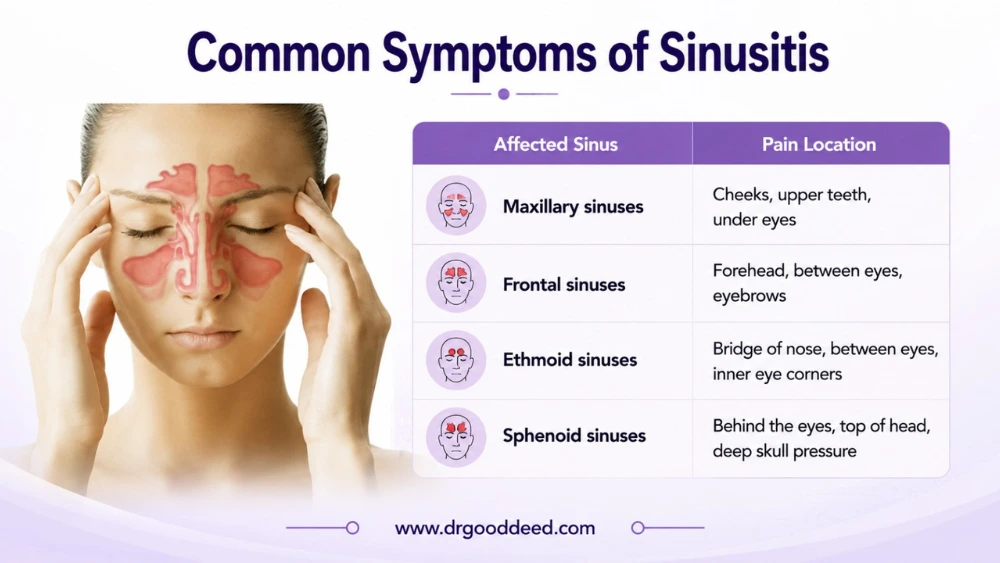
Sinusitis produces a specific cluster of symptoms that differ from a common cold in their location and duration. Identifying the symptom pattern determines how long home treatment is appropriate before seeking professional care.
Facial Pain and Sinus Pressure Relief Needs
The four sinus cavities each produce pain in a different facial location when inflamed:
| Affected Sinus | Pain Location |
| Maxillary sinuses | Cheeks, upper teeth, under eyes |
| Frontal sinuses | Forehead, between eyes, eyebrows |
| Ethmoid sinuses | Bridge of nose, between eyes, inner eye corners |
| Sphenoid sinuses | Behind the eyes, top of head, deep skull pressure |
Nasal Congestion and Thick Mucus
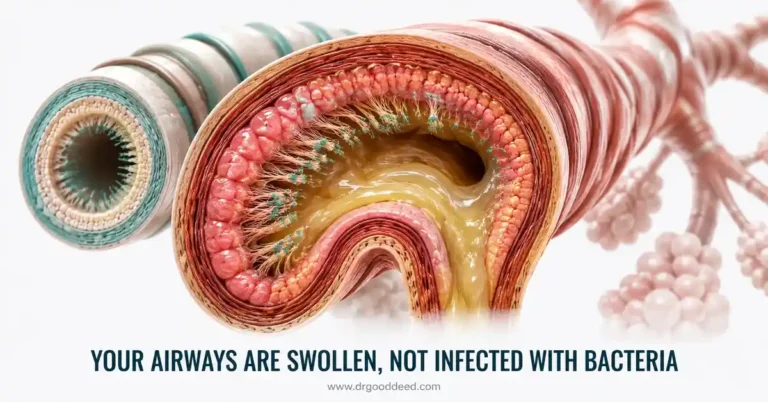
Sinus lining swelling blocks the ostia, the tiny drainage openings connecting each sinus to the nasal cavity. Blocked ostia trap mucus inside. That mucus thickens as water absorbs back into tissue. Clear mucus suggests viral sinusitis. Yellow or green mucus appears as white blood cells accumulate in the fluid; color alone does not confirm bacterial infection.
Headache and Forehead Pressure
Sinus headaches feel worse when bending forward or lying flat. This is because changing head position shifts the fluid and increases pressure on sinus walls. Tension headaches and migraines are often misidentified as sinus headaches. True sinus headaches always accompany nasal symptoms. A headache without nasal congestion or discharge is rarely sinus-related.
Postnasal Drip and Throat Irritation
Excess mucus draining down the back of the throat causes a tickling sensation, a sore throat, and a chronic cough, especially at night. Sleeping flat allows mucus to pool in the throat rather than drain. Elevating the head of the bed by 30 degrees reduces postnasal drip significantly during sleep.
Reduced Smell and Breathing Discomfort
Swollen nasal tissue physically blocks odorant molecules from reaching smell receptors (olfactory epithelium) located high in the nasal cavity. This causes hyposmia (reduced smell) or anosmia (no smell) during active sinusitis. Smell returns fully once swelling resolves in viral sinusitis; persistent smell loss after symptoms clear warrants evaluation for nasal polyps or chronic sinusitis.
Facial Pain and Sinus Pressure Relief
Facial pain and sinus pressure relief focuses on reducing the fluid buildup and tissue swelling inside the sinus cavities. These remedies provide measurable relief within 15 to 30 minutes of consistent application.
Warm Compresses Around Cheeks and Forehead
A moist heat pack increases blood flow and reduces the tension in swollen sinus membranes. It also keeps the outer nasal skin from drying and cracking during high-frequency blowing. Microwave a damp cloth for 30 seconds. Test the temperature on your wrist before applying it to the face. Use for 10 to 15 minutes, 3 times daily.
Gentle Sinus Massage Techniques
Apply light circular pressure with two fingertips to the following points for 30 seconds each:
- Beside the nose: Press on both sides of the nostrils where the nose meets the cheek (maxillary sinus drainage point)
- Between the eyebrows: Apply steady pressure at the bridge of the nose (ethmoid sinus point)
- Under the cheekbones: Press gently upward under the cheekbone midpoint (zygomatic arch)
Massage stimulates lymphatic drainage and increases local circulation. It does not force sinus drainage mechanically, but it does temporarily reduce the sensation of pressure.
Sleeping With Head Elevated
Lying flat causes blood to pool in sinus tissue, which increases swelling and pressure overnight. Elevate your head with two pillows or place a wedge pillow under the mattress to create a 30-degree angle. Side sleeping on the less congested side positions that sinus cavity lower, which promotes gravity-assisted drainage from the more blocked side.
Rest and Reduced Inflammation Support
Physical exertion raises blood pressure and increases blood flow to already-inflamed nasal tissue. This temporarily worsens sinus pressure. Rest allows the immune system to focus energy on reducing viral load instead of supporting muscle activity. Most viral sinusitis episodes improve measurably in 7 to 10 days with consistent rest.
Headache From Sinusitis Home Treatment
Headache from sinusitis home treatment works best when it targets the pressure causing the pain rather than only the pain signal. Pain relievers like ibuprofen reduce both pain and the prostaglandin-driven inflammation inside sinus tissue simultaneously, making them more effective for sinus headaches than acetaminophen, which only reduces pain without addressing inflammation.
Pressure-Related Sinus Headaches Explained
Sinus headaches stem from increased intrasinus pressure. When blocked ostia trap air and fluid together, pressure inside the sinus rises above normal atmospheric pressure. This presses on sinus walls lined with pain-sensitive nerves. The pain intensifies when bending forward because gravity shifts the trapped fluid toward the already-pressured sinus wall.
Hydration and Sinus Headache Relief
Dehydration thickens mucus further, worsening the blockage driving the headache. Drinking 16 ounces of warm water at the onset of a sinus headache thins mucus within 30 to 60 minutes in mildly congested sinuses. Combining hydration with steam inhalation produces faster relief than either approach alone.
Steam and Moisture Reducing Congestion
Steam reduces headache intensity by thinning mucus enough to allow partial sinus drainage. Even partial drainage drops intrasinus pressure, which reduces the force pressing on pain-sensitive sinus walls.
Menthol from peppermint oil added to steam inhalation creates a cooling sensation that narrows the perception of pain intensity without changing actual sinus pressure.
Avoiding Triggers Worsening Headache Symptoms
- Altitude changes (flying or driving through mountains) increase sinus pressure rapidly
- Chlorinated swimming pools irritate already-inflamed sinus lining
- Tobacco smoke paralyzes nasal cilia, preventing mucus clearance for up to 30 minutes per cigarette
- Cold, dry outdoor air inhaled through the mouth bypasses nasal warming and worsens nasal membrane irritation
Viral Infection and Sinus Congestion
Viral infection and sinus congestion account for over 90% of all acute sinusitis cases. Understanding why viruses cause sinus symptoms clarifies why antibiotics do not help and why specific home strategies work better than others.
Cold and Flu Viruses Affecting Sinuses
Rhinovirus (the most common cold virus), influenza virus, and respiratory syncytial virus (RSV) all infect nasal mucosal cells. The infection triggers an inflammatory response: blood vessels dilate, tissue swells, and mucus production increases rapidly. This swelling closes the sinus ostia within 24 to 48 hours of symptom onset, trapping mucus inside.
Inflammation Causing Blocked Drainage
Sinus ostia measure only 1 to 2 mm in diameter. A small amount of mucosal swelling closes them completely. Once blocked, cilia inside the sinus cannot move mucus out. Bacteria naturally present in the nasal passages migrate into the warm, stagnant fluid inside the sinus. This is how viral sinusitis sometimes progresses to secondary bacterial sinusitis after 7 to 10 days.
Why Viral Sinusitis Often Improves Gradually
The immune system clears viral infections through T-cell and antibody responses that peak 5 to 7 days after exposure. Most viral infection and sinus congestion episodes improve noticeably by day 7 to 10. Symptoms lasting beyond 10 days without improvement, or symptoms that improve and then worsen again (called double worsening), suggest bacterial sinusitis.
Difference Between Viral and Bacterial Sinusitis
| Feature | Viral Sinusitis | Bacterial Sinusitis |
| Duration | Improves by day 7 to 10 | Persists beyond 10 days or worsens after day 5 |
| Mucus color | Clear to yellow | Yellow to green, thick |
| Fever | Low-grade or absent | Fever above 102°F (38.9°C) common |
| Facial pain | Mild to moderate | Severe, localized to one sinus |
| Treatment | Home remedies effective | Antibiotics may be needed |
Dry Air Worsening Sinus Irritation
Dry air worsening sinus irritation is one of the least discussed but most consistent sinusitis aggravators in US households, particularly during winter when indoor heating drops relative humidity to 15% to 20%. Healthy nasal function requires indoor humidity between 40% and 50%.
Indoor Heating and Dry Nasal Passages
Forced-air heating systems remove moisture from indoor air rapidly. Dry nasal passages crack and bleed at the microscopic level. These micro-cracks disrupt the mucosal barrier and allow viral particles and bacteria direct access to nasal tissue. This is one reason sinusitis and upper respiratory infections peak in winter months, not only because people gather indoors.
Humidifiers and Airway Moisture Support
A cool-mist or ultrasonic humidifier maintaining 40% to 50% indoor humidity prevents nasal dryness and keeps mucus thin enough for ciliary clearance. Place the humidifier in the bedroom where the longest period of breathing occurs. Clean the water tank every 3 days with diluted white vinegar. Stagnant humidifier water grows mold and bacteria that worsen respiratory symptoms.
Preventing Nasal Dryness Naturally
Apply a small amount of plain coconut oil or petroleum jelly (Vaseline) inside the nostrils with a cotton swab before sleep. Both create a moisture barrier on the nasal lining. Saline nasal spray (not the rinse, the fine mist spray) applied 3 to 4 times daily during heating season keeps nasal passages moist between steam sessions.
Importance of Clean Indoor Air
HEPA air purifiers remove mold spores, dust mite particles, and pollen, all of which independently inflame nasal passages and worsen dry air worsening sinus irritation in people with underlying allergies. Change HVAC filters every 60 days during winter. Avoid aerosol sprays, scented candles, and wood-burning fireplaces during active sinusitis flares.
Foods and Drinks That Help Sinus Symptoms
Warm Soups and Hydration Support
Hot chicken soup produces measurable improvements in nasal airflow. A 2000 study in Chest by Dr. Stephen Rennard at the University of Nebraska found that chicken soup inhibited neutrophil migration, reducing the upper respiratory inflammatory response. The steam from the soup adds moisture to nasal passages simultaneously.
Herbal Teas for Throat Comfort
Ginger tea reduces sinus-related throat inflammation. Licorice root tea (deglycyrrhizinated form) coats irritated throat tissue from postnasal drip. Elderberry tea contains anthocyanins that showed antiviral properties against influenza in a 2016 randomized trial in Nutrients. All three are caffeine-free and safe for daily use during sinusitis.
Spicy Foods and Temporary Mucus Drainage
Capsaicin in chili peppers triggers a temporary increase in nasal secretions. This thins and loosens mucus briefly, providing short-term drainage. Hot sauce, wasabi, and horseradish all activate this response. The effect lasts 10 to 20 minutes. It is not a sustained drainage solution but provides immediate temporary relief during severe congestion.
Fluids Helping Thin Nasal Secretions
Warm water, herbal teas, and clear broths thin nasal secretions better than cold drinks because warm liquids raise local tissue temperature and add steam moisture to airways during swallowing. Avoid caffeinated drinks exceeding 2 cups daily; caffeine has mild diuretic effects that counteract the hydration needed to keep mucus thin.
Habits That Worsen Sinusitis Symptoms
People using sinusitis relief home remedies sometimes unknowingly slow their own recovery through specific daily habits.
- Blowing the nose too hard: Forceful blowing creates pressure that pushes mucus backward into sinus cavities instead of expelling it. Blow one nostril at a time, gently, with the other nostril lightly pinched
- Using nasal decongestant sprays for more than 3 consecutive days: Oxymetazoline sprays (Afrin) cause rebound congestion (rhinitis medicamentosa) after 3 days, making congestion worse than before treatment started
- Smoking or using vape devices: Tobacco and vape aerosols paralyze nasal cilia for up to 30 minutes per use. Without cilia function, mucus cannot clear regardless of how much home remedy support is provided
- Staying in dry, unventilated rooms: Recycled, dry indoor air worsens mucosal drying continuously
- Flying with blocked sinuses: Cabin pressure changes during takeoff and landing shift intrasinus pressure violently when ostia are blocked. This causes severe pain and risks barotrauma (pressure injury to sinus walls). Decongest sinuses before flying with a saline rinse and a short-acting decongestant taken 30 minutes before boarding
- Drinking alcohol during sinusitis: Alcohol causes blood vessel dilation throughout nasal tissue, worsening sinus swelling. It also dehydrates the body, thickening mucus further
FAQs
What are the best home remedies for sinusitis relief?
The most evidence-backed sinusitis relief home remedies are isotonic saline nasal irrigation (confirmed in a 2016 Canadian Medical Association Journal RCT), steam inhalation with eucalyptus oil (1,8-cineole studied in Laryngoscope 2003), and warm compresses applied for 15 minutes, 3 times daily. Drinking 10 cups of water daily sustains mucus mobility throughout recovery.
How do saline rinses help reduce sinus congestion?
Saline rinses physically flush allergens, viral particles, and thickened mucus from nasal passages. The 0.9% sodium chloride solution also reduces mucosal swelling by drawing excess fluid from inflamed tissue through osmosis. A 2007 Cochrane review confirmed that daily saline irrigation shortens symptom duration and reduces antibiotic use in acute sinusitis.
Why does sinusitis cause facial pain and pressure?
Sinus ostia measure only 1 to 2 mm. Mucosal swelling closes them completely, trapping air and fluid inside the sinus cavity. The trapped content creates pressure above normal atmospheric levels, pressing on pain-sensitive sinus walls. Facial pain and sinus pressure relief correlates directly with how much drainage restores; even partial drainage drops pressure noticeably within minutes.
Can steam inhalation help clear blocked sinuses naturally?
Yes. Steam inhalation adds moisture that reduces mucus viscosity, making it thin enough for ciliary clearance. Eucalyptus oil (1,8-cineole) added to steam shows additional mucolytic and anti-inflammatory effects, per a 2003 Laryngoscope study. Use for 8 to 10 minutes, twice daily. Do not use steam with children under 12 due to burn risk from hot water bowls.
How does dry air worsen sinus irritation and congestion?
Dry air worsening sinus irritation damages nasal cilia and dries mucus to the point where it cannot move. Indoor humidity below 30% causes microscopic nasal lining cracks, removing the barrier that keeps viruses and bacteria out of nasal tissue. A humidifier maintaining 40% to 50% indoor humidity prevents this damage during winter heating months.
What foods and drinks help support sinus drainage?
Hot chicken soup inhibits upper respiratory inflammation (per a 2000 Chest study by Dr. Rennard). Capsaicin from chili peppers triggers a 10 to 20 minute mucus drainage response. Elderberry tea showed antiviral activity against influenza in a 2016 Nutrients trial. Warm water and clear broths maintain the hydration level required to keep nasal mucus thin enough for drainage.
How can sinus headaches be relieved at home?
Headache from sinusitis home treatment works fastest with ibuprofen (reduces both pain and prostaglandin-driven sinus inflammation) combined with steam inhalation. Applying a warm compress to the forehead and cheeks for 15 minutes drops intrasinus pressure by thinning mucus and improving local drainage. Sleeping with the head elevated at 30 degrees prevents overnight pressure buildup.
What is the difference between viral and bacterial sinusitis?
Viral infection and sinus congestion improve within 7 to 10 days, produce low-grade or no fever, and respond to sinusitis relief home remedies. Bacterial sinusitis lasts beyond 10 days, produces fever above 102°F (38.9°C), causes severe localized facial pain, and sometimes shows double worsening (symptoms improving then suddenly getting worse). Bacterial sinusitis requires antibiotic evaluation.
Which habits commonly worsen chronic sinus symptoms?
Using oxymetazoline nasal sprays (Afrin) for more than 3 days causes rebound congestion that worsens blockage. Blowing both nostrils simultaneously pushes mucus into sinus cavities. Smoking paralyzes cilia for 30 minutes per cigarette. Flying with blocked sinuses risks barotrauma. Alcohol dilates nasal blood vessels and dehydrates mucus simultaneously, making both swelling and thick mucus worse.
When should sinusitis symptoms be medically evaluated?
Seek care within 48 hours if symptoms last beyond 10 days without improvement, if fever rises above 102°F (38.9°C), if vision changes or eye swelling appear, if severe headache does not respond to ibuprofen, or if neck stiffness develops alongside facial pain. Eye swelling and neck stiffness signal orbital cellulitis or meningitis, both requiring emergency hospital care.