
A headache after a nap usually comes from napping too long, breathing or jaw problems during sleep, or missing your usual caffeine, water or food. Longer naps may also cause you to wake during deep sleep, leaving you groggy with a headache. Try keeping naps to 20 to 30 minutes (Mayo Clinic, 2024), staying hydrated, and maintaining a regular sleep schedule.
If headaches happen frequently, are severe, or come with vomiting, vision changes, weakness, or confusion, seek medical attention.
Key Takeaways
- A headache after a nap is usually linked to nap length, snoring or sleep apnea, jaw clenching, or missed caffeine, water or food.
- Aim for a 20 to 30 minute nap. Grogginess after waking often fades within about 35 minutes (Mayo Clinic, 2024).
- Loud snoring, gasping or a dry mouth on waking calls for a sleep apnea check.
- Caffeine withdrawal headache needs regular use over 200 mg a day for over 2 weeks, then a stop (ICHD-3, 2018).
- Call 911 for a sudden explosive headache, weakness, confusion or trouble speaking.
Why You Get a Headache After a Nap
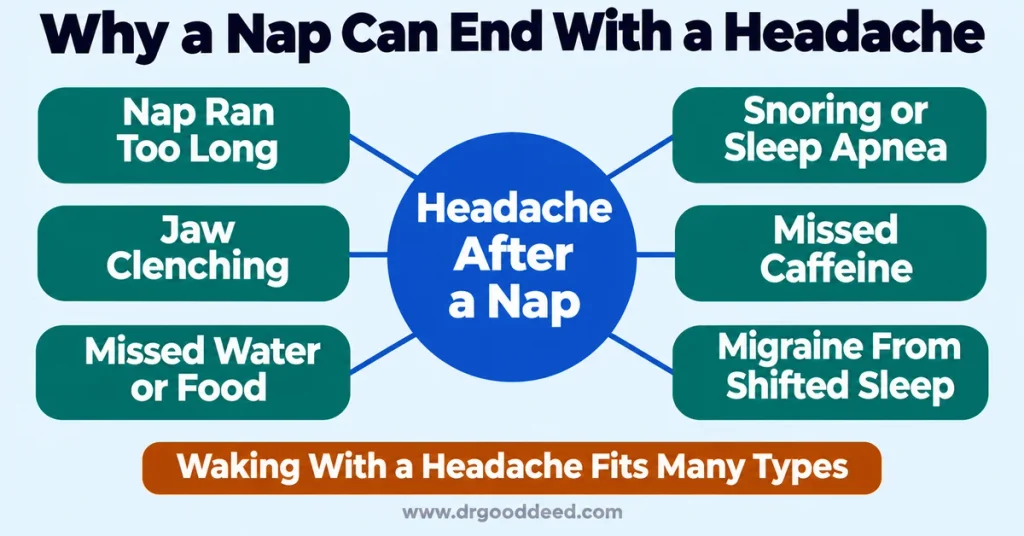
You get a headache after a nap most often because of something that happened while you slept: a nap that ran long, pauses in breathing, clenched teeth, or a missed coffee or meal. Waking with a headache is also non-specific, which means it fits many headache types.
- Sleep itself: a long nap, interrupted breathing, grinding teeth.
- Your routine: caffeine, water, or food that didn’t show up on schedule, or a migraine set off by shifted sleep.
- The odd one out: a headache that wakes you from sleep, which follows its own pattern.
Doctors recognize many types of headaches, and several can show up after sleep.
Sleep Inertia and Napping Too Long
Sleep inertia is the groggy, heavy-headed stretch right after waking. It often fades within about 35 minutes (Mayo Clinic, 2024), and longer naps leave more of it.
- Why length matters: deep, slow-wave sleep usually starts around the 30-minute mark, and waking out of it feels rough. Hilditch and McHill (2019) say naps of 30 minutes or less are less likely to leave you groggy, though not always. Plenty of pages blame REM sleep. The grogginess traces to deep sleep instead.
- Where the headache fits: it is not yet proven that grogginess itself causes a sleep inertia headache. For some it may just feel like a dull ache.
- Timing: Mayo Clinic (2024) says napping after about 3 p.m. can make night sleep harder, and needing more naps than usual is worth raising with a professional.
Feeling groggy with pain is common with headache and fatigue.
Snoring, Sleep Apnea and Morning Headaches
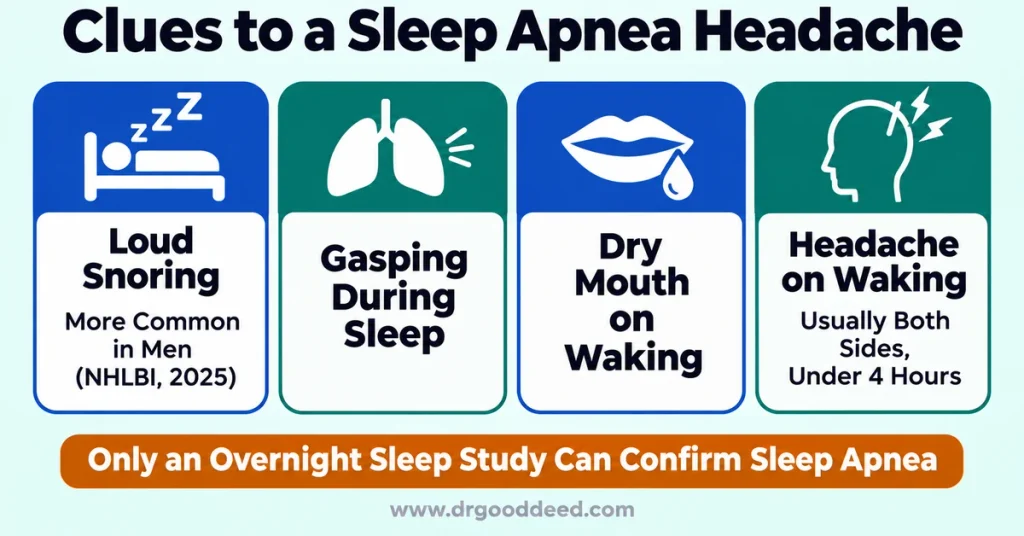
Sleep apnea means your breathing repeatedly stops and starts while you sleep. A sleep apnea headache shows up on waking, usually on both sides, and lasts under 4 hours.
- The clues: NHLBI (2025) lists loud snoring, gasping, a dry mouth, and a headache. Loud snoring is more common in men, and headaches are more common in women, it says. If you keep asking, “Why do I wake up with a headache and dry mouth?” apnea is one answer to check.
- The test: an overnight sleep study, called polysomnography, and the headache clears once the apnea is treated (ICHD-3, 2018).
Your tongue can also show signs of sleep apnea.
A headache on waking is a non-specific symptom, so timing alone points to nothing. ICHD-3 diagnoses sleep apnea headache only after an overnight sleep study, and it should ease once the apnea is treated, which is the real test of whether apnea was the cause.
Teeth Grinding and Jaw Clenching
Sleep-related bruxism, clenching or grinding your teeth in your sleep, is linked to jaw muscle pain and headaches (AASM, 2020).
- A tension headache after a nap often feels like a dull, pressing ache around the temples and jaw.
- Clues include a jaw that’s sore or tight when you wake, and teeth that feel worn.
- A dentist or doctor can check. They can advise on options for you.
Caffeine, Water, and Skipped Meals
Skipping caffeine, water, or food can bring on a headache after a nap, but each one follows different rules.
- Caffeine withdrawal: the headache comes within 24 hours after you stop regular use, meaning more than 200 mg a day for over 2 weeks (ICHD-3, 2018). If you drink coffee daily and skipped it today, that’s a real suspect.
- Water: the American Migraine Foundation says about 1 in 3 people with migraine name dehydration as a trigger.
- Food: a fasting headache needs at least 8 hours without eating, and ICHD-3 says it doesn’t appear related to low blood sugar. NIDDK (2021) says that in people with diabetes, glucose can drop during sleep and headache is among the signs, so mention it to your doctor.
Migraine and Naps: Why Sleep Cuts Both Ways
Irregular sleep can set off migraine, and migraine can scramble sleep, so naps cut both ways.
- Why does my headache go away when I nap? Sleep can ease some headache pain. But the American Academy of Sleep Medicine warned back in 2009 that napping to treat headaches can slide into poor sleep habits and insomnia.
- The American Migraine Foundation also says sleep apnea may be more common in people with migraine, so the two problems can overlap.
- Read more about waking up with a migraine and morning attacks.
Headaches That Wake You From Sleep
A headache that wakes you up isn’t a typical nap headache. Hypnic headache, one rare cause, wakes you from sleep for up to 4 hours, on 10 or more days a month for over 3 months, and usually starts after 50.
- It’s a diagnosis of exclusion. Doctors have to rule out sleep apnea and other causes first (ICHD-3, 2018).
- Tell your doctor how often you’re woken, how long it lasts, and how old you were when it started.
- A headache when lying down has its own set of causes.
Clues to What Is Causing Your Nap Headache
Most nap headaches fit one of the patterns below. The table matches each clue to a possible cause and what to do; use it as a guide, not a diagnosis.
| Clue | Possible cause | What to do |
| Nap ran past 30 minutes, you feel foggy | Sleep inertia | Shorten naps to 20 to 30 minutes (Mayo Clinic, 2024) |
| Loud snoring, gasping, dry mouth, headache on both sides after waking | Sleep apnea | Ask about an overnight sleep study (NHLBI, 2025; ICHD-3, 2018) |
| Sore jaw or worn teeth | Grinding or clenching | Ask your dentist |
| Headache within a day of skipping your usual coffee | Caffeine withdrawal | Keep intake steady |
| 8 or more hours without eating | Fasting headache | Eat on schedule |
| Nausea, or a repeating pattern of attacks | Migraine | See your doctor and keep sleep regular |
| Wakes you from sleep, and you’re over 50 | Hypnic headache or another cause | See your doctor |
| Sudden explosive pain, weakness or trouble speaking | Emergency | Call 911 |
Where it hurts can help too, so see our headache location chart.
How to Prevent and Ease a Headache After a Nap
How do you get rid of a headache after a nap? Drink some water and give yourself time to wake up. To stop the next one, keep naps to 20 to 30 minutes and finish before 3 p.m.
- Caffeine: keep it steady, since a sudden stop after regular use is the trigger.
- Water: drink through the day, not just after the headache starts.
- Fix the cause: snoring and gasping call for a sleep study, and a sore jaw calls for a dentist.
- Pillow: a pillow that keeps your neck neutral may help some people feel more comfortable.
- Medicine: Ask your doctor what’s safe for you.
When a Headache After a Nap Needs a Doctor
Waking up from a nap with a headache is usually minor, but call 911 for a sudden, explosive or worst-ever headache, or one with weakness, speech trouble or vision changes.
- ER or 911: a headache with fever, stiff neck, nausea and vomiting.
- Doctor soon: why is morning headache a red flag? MedlinePlus (2025) lists headaches that are worse in the morning, that wake you from sleep, or that start after 50 as reasons to get checked.
- Urgent care: a headache that keeps coming back or has changed from your usual pattern when your own doctor can’t see you soon.
- Primary care doctor: start here for repeated nap headaches, snoring or jaw pain. Bring a note of nap length, caffeine and water.
Doctor’s Tip: Headaches that wake you, are worse every morning or start after 50 deserve a visit even if they fade by afternoon.
If a headache after a nap comes with weakness, confusion or trouble speaking, call 911 instead of trying to sleep it off.
Frequently Asked Questions
What Is the 30-60-90 Nap Rule?
It isn’t a rule from any medical group. Mayo Clinic (2024) suggests naps of 20 to 30 minutes, and longer naps make grogginess more likely. Hilditch and McHill (2019) say deep sleep usually starts after about 30 minutes, which is why shorter naps are less likely to leave you groggy.
Why Do I Wake Up From a Nap With a Headache and Nausea?
If you wake up from a nap with a headache and nausea, it may be a migraine attack, which irregular sleep can trigger. A headache with fever, stiff neck, nausea and vomiting needs the ER or 911. Keeping a regular sleep schedule may help prevent these attacks.
Why Does My Headache Go Away When I Nap?
Sleep can ease some headache pain, which is why a nap sometimes works. The catch is that relying on naps can lead to poor night sleep that keeps headaches going (AASM, 2009). The American Migraine Foundation (2026) also ties irregular sleep to migraine, so a steady schedule beats napping it off.
Why Do I Wake Up With a Headache After Sleeping In?
Often because your schedule slipped. An irregular sleep pattern can trigger migraine, and sleeping late can mean missing your usual morning caffeine, which can bring on a withdrawal headache in regular users. Frequent waking headaches deserve a doctor’s look.
Can a Headache After a Nap Be a Sign of Sleep Apnea?
Yes, if you also snore loudly, gasp or wake with a dry mouth (NHLBI, 2025). A sleep study confirms it, and ICHD-3 (2018) says the headache clears once the apnea is treated. Plain snoring alone doesn’t cause the headache.
Sources
Mayo Clinic, Napping: Do’s and don’ts for healthy adults. link
Hilditch CJ, McHill AW, Sleep inertia: current insights (Nature and Science of Sleep, 2019). link
International Headache Society, ICHD-3, 10.1.4 Sleep apnoea headache. link
International Headache Society, ICHD-3, 10.5 Headache attributed to fasting. link
International Headache Society, ICHD-3, 8.3.1 Caffeine-withdrawal headache. link
International Headache Society, ICHD-3, 4.9 Hypnic headache. link
National Heart, Lung, and Blood Institute, Sleep Apnea: Symptoms. link
American Academy of Sleep Medicine, Bruxism. link
American Academy of Sleep Medicine, Tension headaches, naps and insomnia. link
American Migraine Foundation, Migraine and Sleep: Understanding the Two-Way Connection. link
NIDDK, Low Blood Glucose (Hypoglycemia). link
MedlinePlus, Headaches: danger signs. link
Centers for Disease Control and Prevention, Signs and Symptoms of Stroke. link
Medical Disclaimer: This article is for general information only and is not medical advice. It does not replace a diagnosis, treatment plan, or guidance from a qualified healthcare professional. Always talk to your doctor about your own symptoms and before starting, stopping, or changing any treatment. If you think you may be having a medical emergency, call 911 or go to your nearest emergency room.