

If you wake up with neck stiffness and a dull, band-like headache, your sleep posture may be the trigger. The best neck pillow for tension headache prevention supports the natural curve of the cervical spine so neck muscles stay relaxed through the night. Tension-type headache is the most common primary headache in the United States, and poor pillow support is a documented, modifiable contributor to it.
Key Takeaways
- The best neck pillow for tension headache prevention keeps the head, neck, and spine aligned in a neutral position, reducing overnight strain on cervical muscles.
- Back and side sleepers need different loft heights; there is no single pillow that works for every sleep position.
- Buckwheat and contoured memory foam pillows have the strongest evidence for reducing waking neck pain and associated headache.
- Most people need two to four weeks of consistent use before headache frequency noticeably drops.
- Sudden, severe, or unusual headaches need medical evaluation regardless of pillow choice.
Why Pillow Choice Affects Tension Headaches
Sleep posture directly influences cervical muscle tension, and a pillow that fails to support the neck’s natural curve forces those muscles to stay contracted for hours. Research on pillow use links poor cervical support during sleep to waking headache, neck stiffness, and shoulder pain the next morning.
- A pillow that is too flat, too thick, or mismatched to your sleep position pushes the cervical spine out of neutral alignment, forcing sustained muscle contraction overnight.
- Sustained muscle contraction reduces local blood flow, which limits oxygen delivery to neck tissue and slows clearance of metabolic waste products, both of which can worsen morning pain.
- People with tension-type headache commonly show forward head posture, reduced cervical range of motion, and tenderness in neck and scalp muscles on clinical exam.
- Tension-type headache is no longer believed to stem purely from muscle contraction; current theory points to a sensitized central pain system, with muscle tenderness as a downstream sign rather than the sole cause.
- A properly supportive pillow addresses one modifiable factor, the mechanical strain component, without correcting daytime posture, stress load, or an underlying sensitized pain system.
Best Pillow Type by Sleep Position
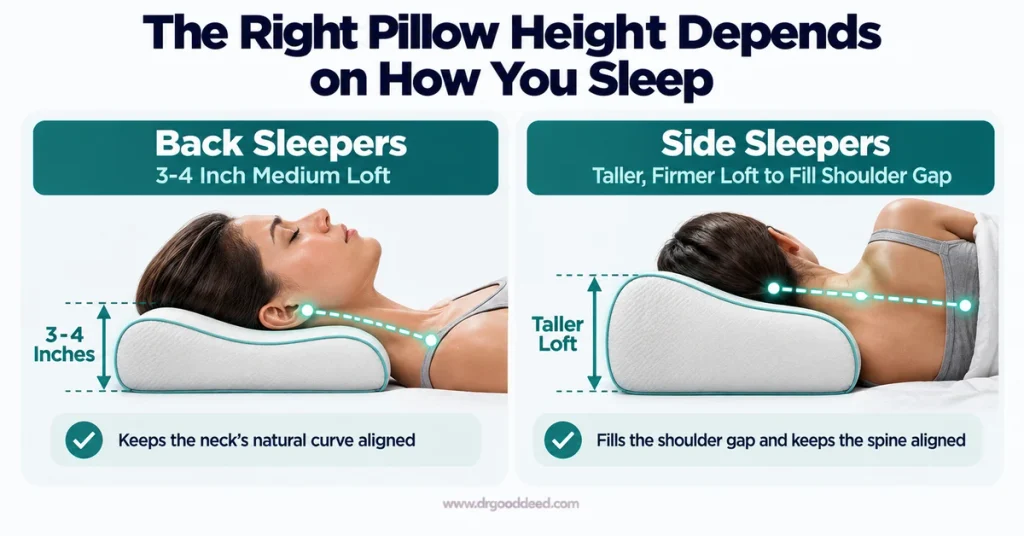
Matching pillow height to how you actually sleep prevents both over-flexion and over-extension of the neck.
Back Sleepers
- Back sleepers need a medium loft pillow, generally 3 to 4 inches, that elevates the head just enough to preserve the cervical lordosis without pushing the chin toward the chest.
- A pillow with a raised neck roll and a shallower center cradles the head while supporting the curve underneath the neck.
- Too much loft flexes the neck forward for hours, straining the same suboccipital muscles implicated in tension-type headache.
Side Sleepers
- Side sleepers need a firmer, higher-loft pillow to fill the gap between the ear and the mattress, keeping the spine level from head to hip.
- Sleepers over roughly 230 pounds sink deeper into the mattress and typically need a taller pillow than lighter side sleepers.
- An insufficient loft tilts the head downward toward the mattress, laterally straining neck muscles on one side through the night.
Why Stomach Sleeping Makes This Harder
- Stomach sleeping forces the neck into sustained rotation to one side, which is incompatible with any neutral-alignment cervical support pillow.
- No pillow loft fully compensates for this rotation, which is why stomach sleepers report disproportionately high rates of waking neck pain and headache.
- Clinicians generally recommend gradually transitioning toward side or back sleeping rather than searching for a stomach-sleeper-specific pillow.
Comparing Pillow Materials
Pillow fill affects contouring, temperature, and how long the best neck pillow for tension headache prevention holds its supportive shape. The table below compares the three materials most studied for neck pain and headache relief.
| Material | Best For | Firmness | Temperature | Adjustability |
| Contoured memory foam | Back sleepers needing cervical contouring | Medium-firm | Retains heat unless gel-infused | Mostly fixed loft |
| Cooling gel-infused foam | Neck pain sufferers who sleep hot | Medium | Better heat dissipation than plain foam | Mostly fixed loft |
| Buckwheat | Side and back sleepers needing structure | Firm, fully adjustable | Naturally breathable | Add or remove hulls freely |

Contoured Memory Foam
- A contoured memory foam pillow molds to the head and neck under body heat, providing consistent pressure relief and strong shape retention through the night.
- Most solid foam designs have fixed loft, so buyers must select the correct height upfront rather than adjusting it later.
- Standard memory foam traps heat more than latex or buckwheat, which can disrupt sleep quality independent of neck support.
Cooling Gel-Infused Foam
- Gel infusions or open-cell structures pull heat away from the head, addressing the main drawback of standard memory foam without sacrificing contouring.
- This option suits people who need cervical contouring but wake up overheated on plain foam pillows.
- Cooling layers do not change the pillow’s loft or firmness profile, so sleep position guidance still applies.
Buckwheat Pillows
- Buckwheat hulls interlock and hold their shape, letting users add or remove hulls to fine-tune loft for their exact body size and sleep position.
- A crossover study comparing buckwheat and latex pillows found both reduced neck pain scores over two weeks, with buckwheat also reducing shoulder pain more consistently.
- Buckwheat pillows run more expensive than foam and can feel unfamiliar at first, with some users needing a short adjustment period.
Pro Tip: Pillow height often matters more than fill material. Biomechanical research on cranio-cervical pressure shows that a one-inch difference in loft can shift the same pillow from relieving neck strain to worsening it, so measure the gap between your neck and mattress in your usual sleep position before choosing a fill type.
What to Look for When Buying
Beyond sleep position and material, a few buying criteria separate a genuinely supportive cervical support pillow from one that only looks orthopedic in marketing photos.
- Loft height: Confirm the manufacturer lists an exact height range, ideally 3 to 4 inches for back sleepers and taller for side sleepers.
- Firmness rating: Firmer pillows resist compression under head weight, which matters most for side sleepers filling a wider shoulder gap.
- Cervical contour or roll: A raised edge or roll under the neck, not just under the head, is what actually supports the cervical curve.
- Breathability: Fill that traps heat can fragment sleep even when spinal alignment is correct, indirectly worsening headache through poor sleep quality.
- Trial period: Reputable brands offer 30 to 100 night trials, since it typically takes several weeks to know if a new pillow for neck pain and headaches is actually working.
How Long Until You Notice a Difference
Most people using a properly fitted best neck pillow for tension headache prevention notice reduced neck stiffness within one to two weeks. Full changes in headache frequency typically take two to four weeks of consistent use, since muscle tension patterns built up over months do not resolve in a single night.
For a full breakdown of the muscle and nerve mechanism behind this timeline, see our guide on headache when lying down.
When to See a Doctor
A supportive pillow will not resolve headaches that stem from a serious underlying condition, so certain symptoms always warrant prompt medical evaluation regardless of sleep setup.
- Sudden, severe headache unlike any you have had before, sometimes described as a “thunderclap” headache.
- Headache accompanied by fever, stiff neck, confusion, seizures, double vision, weakness, numbness, or trouble speaking.
- Headache that starts or worsens after a head injury.
- Needing headache medication more than twice a week, which can itself trigger medication-overuse headache.
- A headache pattern that changes significantly from your usual history, even if you have had headaches for years.
FAQs
Can the wrong pillow actually cause tension headaches?
Yes, an unsupportive pillow can strain the cervical spine overnight and contribute to tension headaches, though stress, posture, and pain sensitivity usually play a larger role than pillow choice alone.
How often should you replace a cervical pillow?
Replace a cervical support pillow every 12 to 24 months, or sooner once it loses loft, flattens under your neck, or leaves indentations that no longer spring back.
Do cervical pillows help with migraines too?
Cervical pillows can ease neck-related migraine triggers by reducing muscle tension, but they do not address the neurological mechanisms of migraine, so most migraine sufferers still need separate preventive treatment.
Can a cervical pillow fix years of poor posture?
No, a cervical pillow only supports posture during sleep. Years of forward head posture require daytime ergonomic changes, targeted neck exercises, and often physical therapy for lasting correction.
Is a firmer or softer pillow better for neck support?
Firmer pillows suit side sleepers who need to fill a wider gap between neck and mattress. Softer, medium-loft pillows suit back sleepers seeking gentler cervical curve support.
Sources
- National Institute of Neurological Disorders and Stroke: Headache link
- American Migraine Foundation: Tension-Type Headache link
- PMC: Pillow use, the behavior of cervical stiffness, headache and scapular/arm pain link
- PMC: Effect of pillow height on the biomechanics of the head-neck complex link
- ScienceDirect: The cervical spine in tension type headache link
- ClinicalTrials.gov: Comfort and Support Values of Different Pillow Designs (NCT05707715) link
- Sleep Foundation: Best Pillows link
- Harvard Health Publishing: Tension Headache link
Medical Disclaimer: This article is for general information only and is not medical advice. It does not replace a diagnosis, treatment plan, or guidance from a qualified healthcare professional. Always talk to your doctor about your own symptoms and before starting, stopping, or changing any treatment. If you think you may be having a medical emergency, call 911 or go to your nearest emergency room.