
When choosing a meditation app for migraine management, look for features that support stress reduction, relaxation, sleep quality, and consistent mindfulness practice. Apps with guided breathing exercises, body scans, sleep meditations, customizable session lengths, and reminders can make it easier to build a daily routine.
If you’re picking meditation apps for migraine management, you’re really solving two separate problems: calming your nervous system during an attack, and building a long-term practice that may reduce how often attacks show up.
Key Takeaways
- A Wake Forest Baptist pilot study found mindfulness-based stress reduction (MBSR) cut headache duration by about 2.9 hours per episode, a statistically significant result even though the sample was small (19 people).
- Meditation may work through hormonal shifts, higher dopamine, serotonin, and melatonin, alongside lower cortisol and norepinephrine, the body’s primary stress chemicals.
- Migraine sufferers need photophobia-friendly (light sensitivity) app design, dark interfaces matter here far more than for general relaxation apps.
- Acute-attack sessions and daily preventive practice call for different features entirely, so one app rarely fits both jobs perfectly.
- Meditation apps for migraine management support medical treatment; they don’t replace prescribed medication or a neurologist’s care plan.
Does Meditation Actually Help With Migraines? What the Research Shows
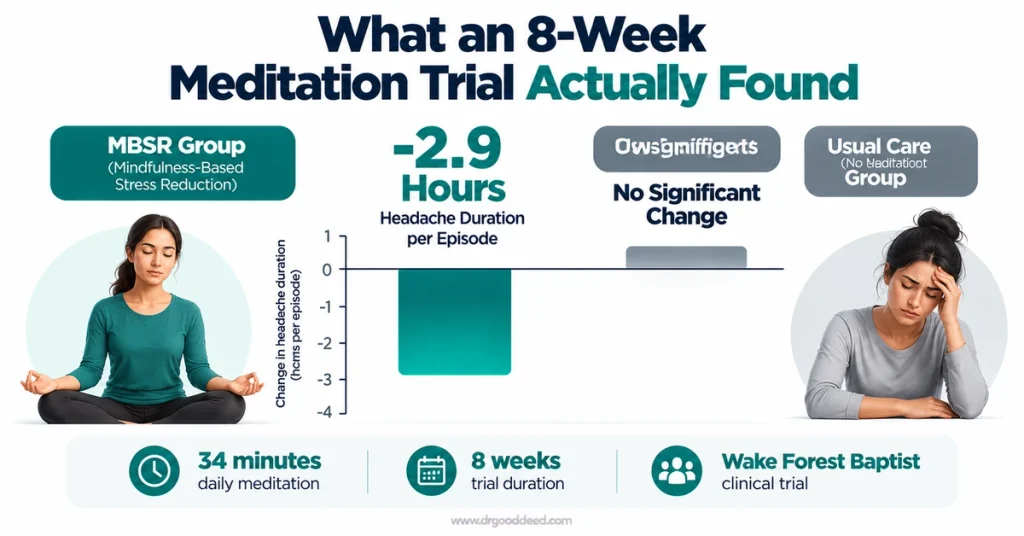
The clearest evidence for meditation apps for migraine management comes from a 2014 randomized controlled trial. Researchers at Wake Forest Baptist Medical Center randomized 19 adults with episodic migraine to either an eight-week MBSR course or usual medical care.
- The MBSR group meditated an average of 34 minutes daily and attended weekly two-hour classes combining mindfulness meditation with gentle yoga.
- Headache duration dropped by 2.9 hours per episode versus the control group, a result that reached statistical significance (P = .043).
- Migraine frequency fell too, about 1.4 fewer migraines a month, but this change wasn’t statistically significant because the study group was so small.
- A larger 2020 follow-up trial from the same research team, published in JAMA Internal Medicine, tested MBSR against headache education in 89 adults and found meditation improved disability scores and pain-related quality of life over 36 weeks, even though it didn’t outperform education on raw migraine-day counts.
Why Migraine Sufferers Need Different App Features Than General Stress Relief Tools
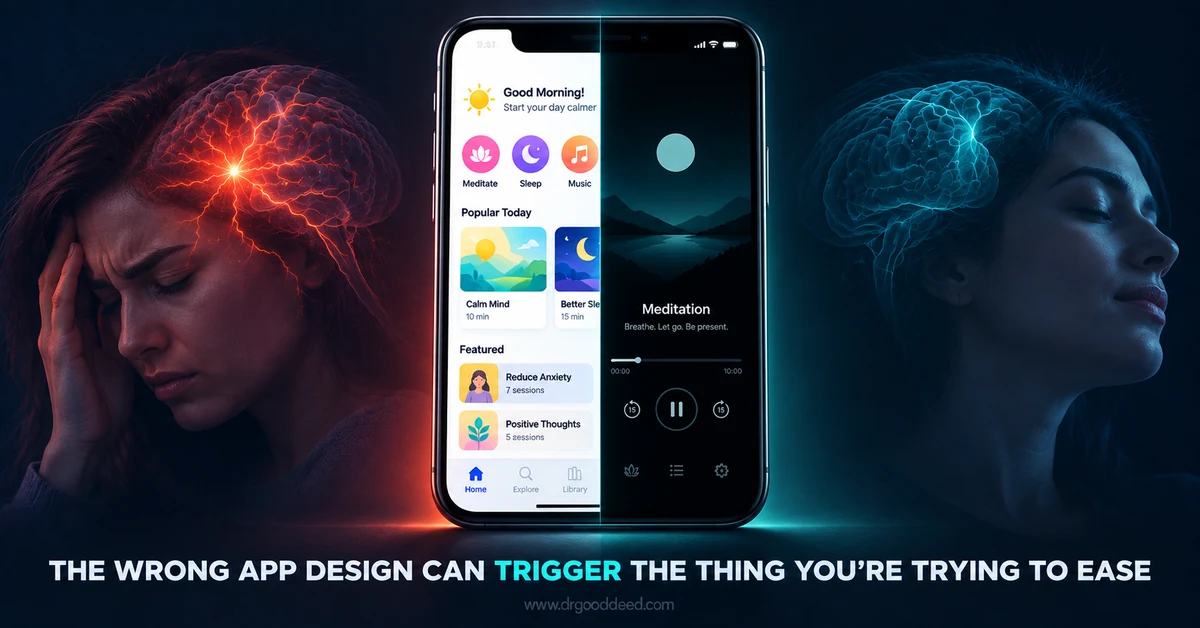
- Bright, high-contrast interfaces with animated backgrounds can genuinely worsen photophobia and even provoke nausea during an active migraine; this is a sensory-processing one tied to how migraine affects visual pathways.
- Dark mode, muted color palettes, and low-brightness defaults matter for meditation apps for migraine management in a way they simply don’t for a general relaxation app used by someone without headache disease.
- Sound sensitivity (phonophobia) is common during attacks too, so apps with adjustable volume, silence options, or low-frequency audio tend to be tolerated better than upbeat background music.
- Auto-playing videos, chimes between sessions, or bright loading screens can act as unintentional triggers rather than soothing cues.
If you want the broader relaxation angle, including breathing techniques that pair well with these same apps, our guide to 60-second breathing exercises covers that ground in more depth. For migraine specifically, though, screen design is a clinical consideration, not just an aesthetic one.
Acute Rescue: Evaluating App Features Used During an Active Migraine Attack
During an active migraine, the most useful meditation-app features are those that require minimal concentration and sensory input. Look for short relaxation sessions, guided breathing, progressive muscle relaxation, and audio-only options that can be started quickly without navigating through complex menus.
Progressive Muscle Relaxation (PMR) and Vagal Breathing Audio Cues
PMR guides users through deliberately tensing and relaxing different muscle groups, while slow breathing exercises can encourage a calmer physiological state. Apps should offer simple voice instructions, adjustable session lengths, and gentle pacing so users can follow them without looking at the screen.
Visual Accessibility: True Black UI Themes and Screen-Free Audio Controls
Bright screens can be uncomfortable during migraine attacks, particularly for people with light sensitivity. A true-black or low-luminance interface, dimming controls, large touch targets, and screen-free playback controls can make an app easier to use when visual stimulation is limited.
Long-Term Prevention: Core Features for Daily Neuro-Retraining and Habit Tracking
For prevention, consistency matters more than long individual sessions. Useful features include daily meditation plans, habit tracking, reminders, sleep-focused sessions, breathing exercises, and migraine or symptom journaling that helps users identify patterns between stress, sleep, mindfulness practice, and attacks.
Advanced options: Some platforms incorporate camera-based biofeedback, using a phone camera or connected sensors to estimate physiological signals such as heart rate or breathing patterns. Cognitive Behavioral Therapy (CBT) apps can also complement mindfulness by teaching structured techniques for managing stress, anxiety, negative thought patterns, and pain-related responses.
The Multimodal Reality: Why Mindfulness Apps Must Coexist with Physical Prevention Tools
Meditation apps work best as one part of a broader migraine-management plan. They can support stress regulation, relaxation, sleep, and behavioral consistency, but they do not replace appropriate medical treatment or physical prevention strategies such as regular sleep and meals, hydration, exercise, trigger management, prescribed preventive medication, and follow-up with a healthcare professional.
What to Look for When Choosing an App
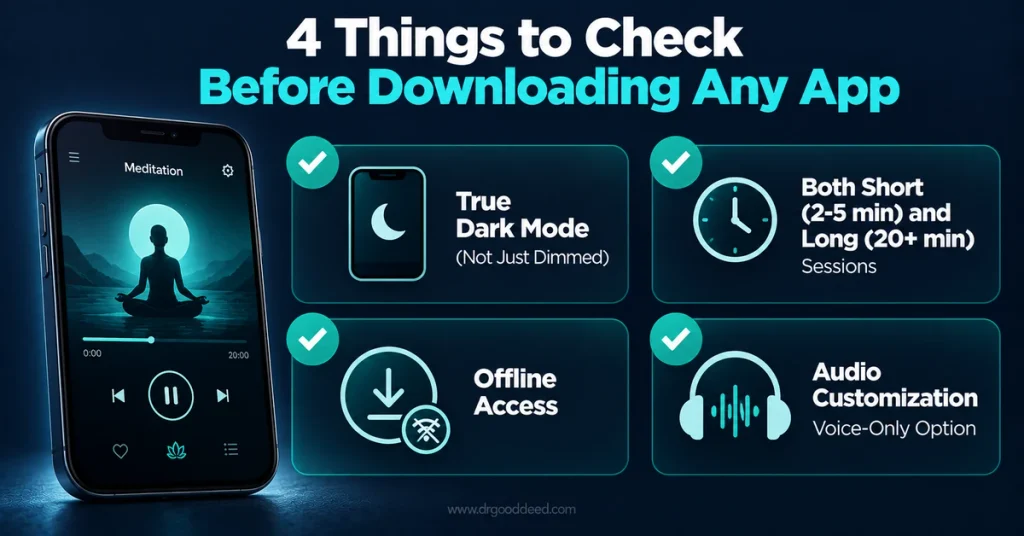
Before downloading anything, run it against a short, practical checklist built around what actually helps during migraine.
- Dark mode availability: check whether it’s a true low-light theme, not just a slightly dimmed default screen.
- Session length flexibility: look for both short (two to five minute) and longer (20-plus minute) options within the same app, since acute and preventive use need different lengths.
- Offline access: confirm sessions can be downloaded; screen brightness and data reliability both become bigger issues mid-attack.
- Audio customization: volume control, ability to mute background music, and voice-only options all support phonophobia-sensitive users.
When Digital Relaxation Tools Aren’t Enough: When to See a Specialized Neurologist
- Migraines occurring more than four days a month, worsening in intensity, or changing in pattern warrant a conversation with a doctor about preventive treatment options.
- Sudden, severe headache unlike previous episodes, or a migraine accompanied by confusion, vision loss, weakness, or fever needs urgent medical attention, these aren’t typical migraine features.
- If over-the-counter or prescribed acute medication is needed more than a couple of days a week, that’s a sign preventive care needs reassessing with a neurologist.
FAQs
Can meditation replace migraine medication?
No. Clinical trials tested meditation alongside standard medical care, not as a replacement. It reduced headache duration in research, but didn’t eliminate the need for acute or preventive migraine medication in study participants.
How long before meditation starts helping with migraines?
The Wake Forest trial measured effects after eight weeks of near-daily practice (about 30 minutes a day). Shorter or inconsistent use hasn’t been studied and likely won’t replicate the same duration benefit.
Are free meditation apps effective, or do you need a paid subscription?
Effectiveness depends on consistent practice, not price. Free apps offering guided mindfulness and body-scan sessions can match paid ones; premium tiers mainly add extras like offline libraries or progress tracking.
Can bright app screens trigger migraines?
Bright, high-contrast, or flickering screens can worsen photophobia during an active migraine, though they’re not a proven trigger for onset. Choosing dark-mode apps reduces discomfort during attacks specifically.
Is guided meditation better than silent meditation for migraines?
Guided meditation is generally easier for beginners and matches the format used in the Wake Forest trials. Silent meditation works equally well once you’ve built the skill, research hasn’t compared the two directly for migraine outcomes.
Sources
- Meditation for migraines: a pilot randomized controlled trial (PubMed) link
- Mindfulness Meditation May Decrease Impact of Migraine, Wake Forest Baptist Health link
- Effectiveness of Mindfulness Meditation vs Headache Education for Adults With Migraine, JAMA Internal Medicine link
- Mindfulness Meditation and Migraine, American Migraine Foundation link
Medical Disclaimer: This article is for general information only and is not medical advice. It does not replace a diagnosis, treatment plan, or guidance from a qualified healthcare professional. Always talk to your doctor about your own symptoms and before starting, stopping, or changing any treatment. If you think you may be having a medical emergency, call 911 or go to your nearest emergency room.