

A migraine clinic and a neurologist can both help manage migraines, but their approach may differ: a neurologist provides broader evaluation and treatment for neurological conditions, while a dedicated migraine clinic typically focuses specifically on headache disorders and may offer specialized assessment, preventive treatments, acute therapies, and lifestyle guidance.
When choosing between them, consider whether your headaches are new, changing, unusually severe, or accompanied by neurological symptoms, as these may require a broader neurological evaluation. For frequent or difficult-to-control migraines, a specialist headache or migraine service may provide more focused care.
Key Takeaways
- General neurology covers the entire nervous system, migraine is one of dozens of conditions a general neurologist manages day to day.
- Headache medicine is its own accredited subspecialty, recognized by the United Council for Neurologic Subspecialties (UCNS) since 2005, not every neurologist holds this additional certification.
- Migraine clinics are frequently multidisciplinary, combining neurology with dietitians, physical therapists, or behavioral health specialists under one roof.
- Many people manage their migraines well with a general neurologist or even primary care, a specialized clinic isn’t automatically necessary for everyone.
- Bringing a detailed headache diary makes either type of visit significantly more productive, regardless of which provider you choose.
The Core Difference: General Neurology vs. Specialized Headache Subspecialties
Not all neurologists are headache specialists. A general neurologist completes broad residency training covering strokes, seizures, movement disorders, and headache among many other conditions.
- Headache medicine became a formally recognized neurologic subspecialty in 2005, with certification issued through the United Council for Neurologic Subspecialties, a credentialing body separate from general neurology boards.
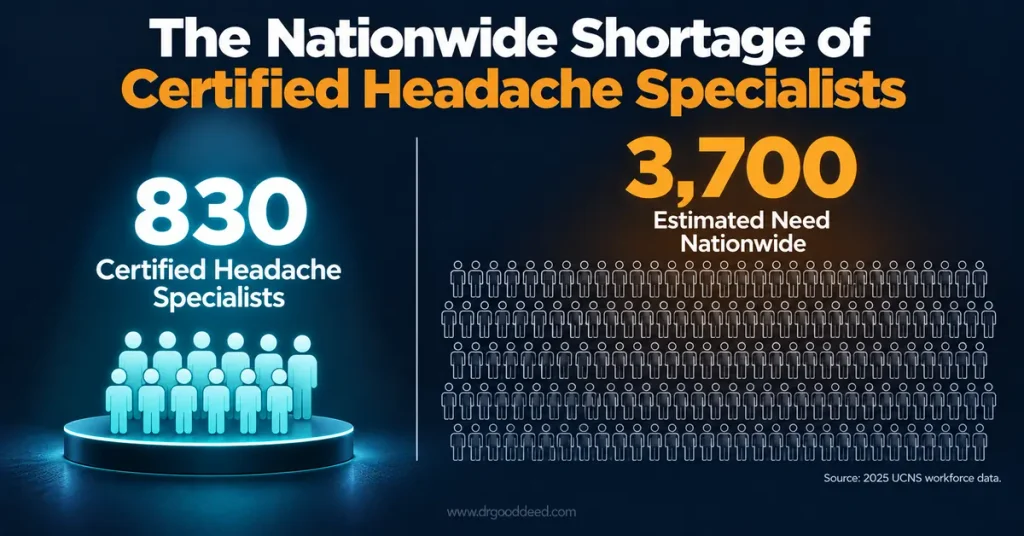
- As of 2025, roughly 830 physicians in the United States and Canada hold UCNS certification in headache medicine, while workforce studies estimate the country needs closer to 3,700 headache specialists to meet patient demand.
- A general neurologist may have this additional training, or may not, there’s no guarantee, so it’s worth directly asking whether a provider holds UCNS certification in headache medicine before assuming subspecialty-level expertise.
- Migraine clinics are frequently built around one or more UCNS-certified headache specialists, which is what typically justifies their narrower, deeper focus.
What to Expect During a General Neurologist Consultation
Before considering specialized migraine care, it helps to understand what a standard neurological consultation involves and how a neurologist evaluates symptoms that may resemble migraine.
Physical Nerve Screenings and Reflex Mapping
A neurologist typically begins with a detailed history of your headaches, including their frequency, duration, triggers, associated symptoms, medications, and any changes in your usual pattern.
The neurological examination may assess strength, sensation, coordination, eye movements, balance, cranial nerves, and reflexes to identify signs that could point to another neurological condition.
Diagnostic Referrals: Brain MRIs vs. CT Scans
Brain imaging is not routinely necessary for every person with an established migraine diagnosis and a normal neurological examination. When imaging is clinically indicated, the choice between MRI and CT depends on the symptoms and urgency. MRI generally provides greater detail of brain structures, while CT is faster and is often used when clinicians need to rapidly evaluate conditions such as bleeding or certain acute neurological emergencies.
What to Expect at a Dedicated, Multidisciplinary Migraine Clinic
When migraines remain frequent, disabling, or difficult to control, a dedicated headache clinic can provide more specialized treatment options and a broader care approach.
Advanced Interventions: Botox Mapping, Nerve Blocks, and Neuromodulation
A specialized headache clinic may provide treatments beyond standard migraine medications. For eligible patients with chronic migraine, onabotulinumtoxinA (Botox) can be administered using a standardized injection pattern. Some clinics also offer peripheral nerve blocks or noninvasive neuromodulation devices, depending on the patient’s diagnosis, treatment history, and available evidence.
The Integrated Team Model: Dieticians, Physical Therapists, and Pain Psychologists
Some multidisciplinary programs combine headache medicine with complementary services such as dietary counseling, physical therapy, behavioral therapy, or psychological support. These services can address factors that may contribute to migraine burden, including medication overuse, sleep problems, stress, musculoskeletal issues, and difficulties maintaining regular routines.
The Clinical Crossroads: How to Decide Which Tier of Care Matches Your Attack Profile
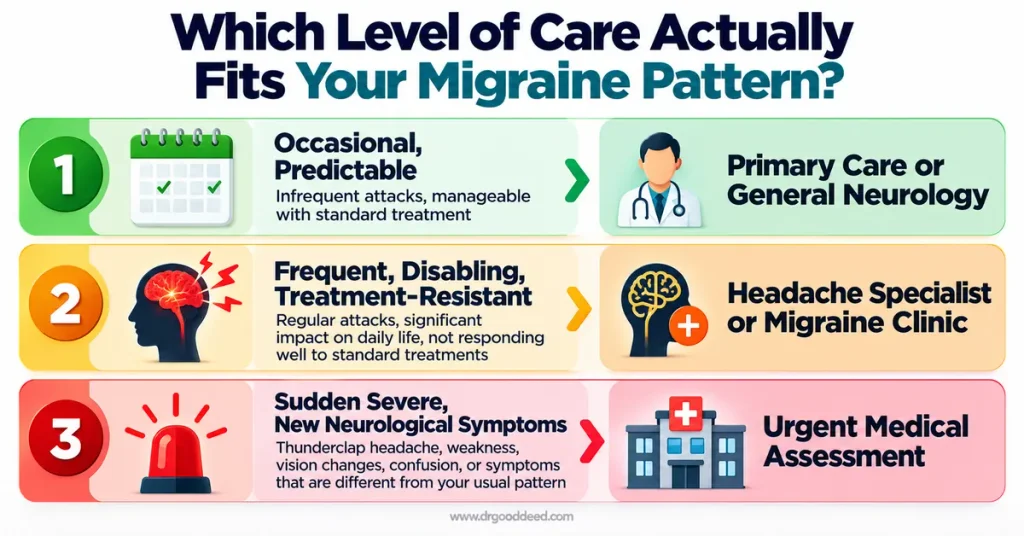
For occasional, predictable migraines that respond well to treatment, a primary-care clinician or general neurologist may be sufficient.
- Frequent, disabling, treatment-resistant, or diagnostically complicated headaches may justify evaluation by a headache specialist or dedicated migraine clinic.
- Sudden severe headache, new neurological deficits, fainting, confusion, seizures, or other unusual symptoms require urgent medical assessment rather than routine specialist scheduling.
Patient Logistics: How to Source a UCNS-Certified Headache Specialist Near You
When looking for a headache specialist in the United States, check the United Council for Neurologic Subspecialties (UCNS) directory for physicians who hold headache medicine certification. You can also verify the clinician’s current credentials, practice location, insurance participation, and whether the clinic treats your specific migraine pattern before scheduling an appointment.
FAQs
Do you need a referral to see a headache specialist?
Often, yes. Most insurance plans require a primary care or general neurology referral before covering a headache medicine specialist visit. Contact your insurer directly, requirements vary by plan and whether the specialist is in-network.
Is a migraine clinic more expensive than seeing a neurologist?
Often, yes, mainly due to longer visits and multidisciplinary services like nerve blocks or behavioral therapy. Costs vary by insurance coverage and clinic structure, verify covered services and copays before your first appointment.
Can a general neurologist treat migraines effectively?
Yes, for most people. General neurologists successfully manage typical episodic migraine using first-line medications. Chronic or treatment-resistant cases often benefit more from a UCNS-certified headache specialist’s deeper subspecialty training.
What should you bring to your first headache specialist appointment?
Bring a headache diary tracking frequency, duration, triggers, and medication response, plus a full list of prior treatments tried. This data directly shapes diagnosis accuracy and treatment planning at specialized visits.
How long does it take to get an appointment at a migraine clinic?
Wait times commonly range from several weeks to a few months, driven by the shortage of roughly 830 certified headache specialists nationwide. Booking early and asking about cancellation lists can shorten the wait.
Sources
- Applications Open for Certification in Headache Medicine, American Academy of Neurology link
- Neurologic Subspecialty Updates 2025, United Council for Neurologic Subspecialties link
- Certification FAQs, United Council for Neurologic Subspecialties link
- Headache Medicine Fellowship, University of Utah Department of Neurology link
Medical Disclaimer: This article is for general information only and is not medical advice. It does not replace a diagnosis, treatment plan, or guidance from a qualified healthcare professional. Always talk to your doctor about your own symptoms and before starting, stopping, or changing any treatment. If you think you may be having a medical emergency, call 911 or go to your nearest emergency room.