
The best cooling pads for headache relief pair a gel or foam insert with a wrap that fits the head or neck. They lower skin temperature enough to dull pain signals. They do this without harming healthy tissue, when used correctly.
Adults across the United States use these pads for migraine, tension headache, and cluster headache. They use them alongside doctor-prescribed treatment, not instead of it. Cold application is one of the oldest self-administered remedies for head pain.
Key Takeaways
- The best cooling pads for headache relief are either full-head wraps or targeted neck or forehead bands.
- Gel inserts cool faster but rewarm sooner than foam-gel hybrids. Sessions beyond 20 minutes raise frostbite risk.
- Full-head wraps cool the whole scalp and suit widespread tension-type pain, while targeted neck or forehead bands concentrate cold over the trigeminal or occipital nerve pathways most linked to migraine pain.
- Gel-filled inserts reach lower temperatures faster than foam-gel hybrids, but they rewarm within 15 to 20 minutes, while thicker foam-gel combinations hold a stable, milder cold for 30 minutes or longer.
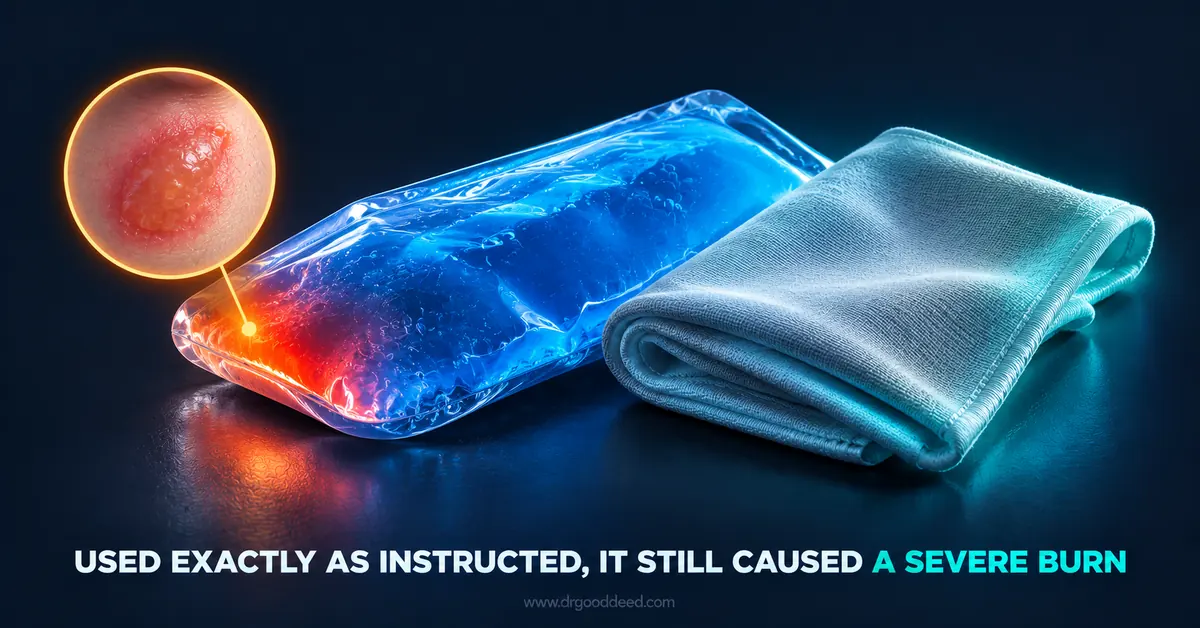
- A documented FDA adverse event report describes a consumer who developed a severe forehead burn, four days of swelling, and two weeks of skin peeling after using a cooling headache pad exactly as instructed.
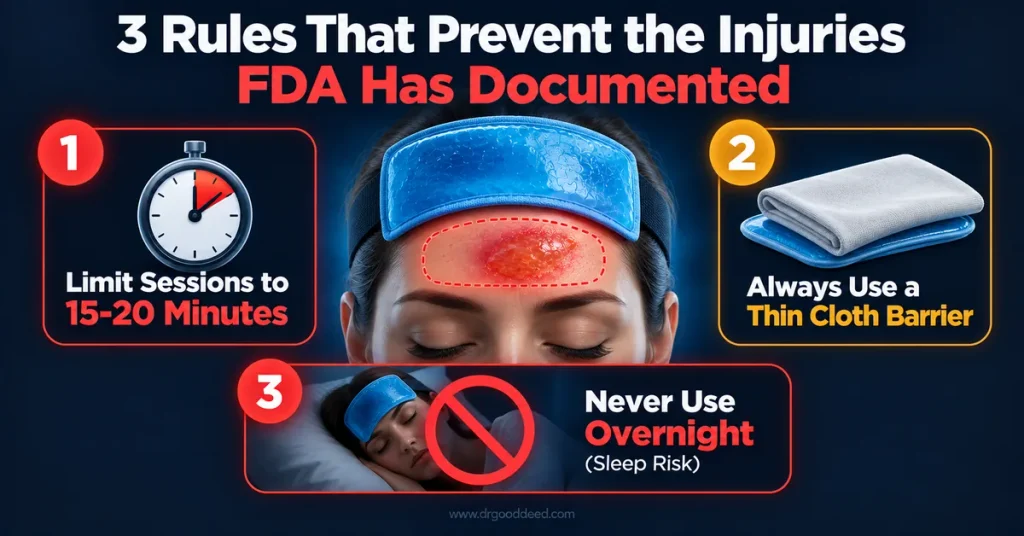
- Limiting any cooling session to 15 to 20 minutes, with a thin cloth barrier between pad and skin, is the standard precaution in cryotherapy safety literature, and it prevents most reported frostnip and skin injury cases.
The Science of Cryotherapy: Forehead Cooling vs. Occipital Nerve Targeting
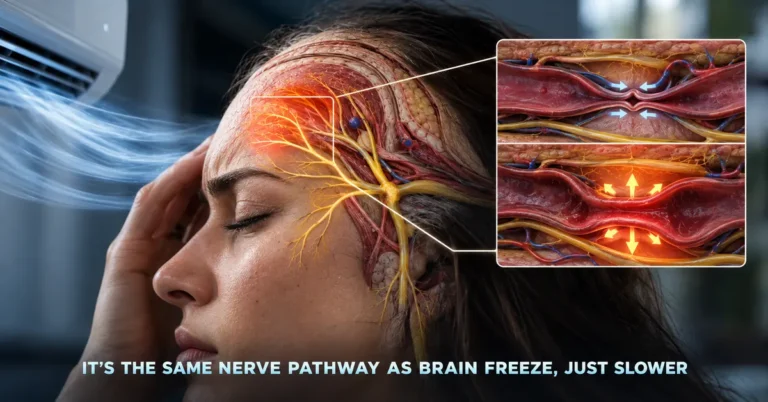
Cryotherapy narrows blood vessels and slows nerve conduction, which reduces pain-signaling activity tied to migraine. Forehead cooling targets trigeminal nerve branches linked to facial and frontal head pain.
Occipital nerve cooling targets the pathway linked to neck and base-of-skull migraine triggers. Both approaches show measurable short-term pain reduction in controlled research.
- Cold exposure causes vasoconstriction, a narrowing of blood vessels, which researchers believe reduces the release of calcitonin gene-related peptide, a molecule strongly tied to migraine pain generation.
- The 2023 Hsu et al. meta-analysis pooled four randomized trials and two non-randomized studies using cold-gel headbands, cold-gel caps, intraoral cooling, and cold wraps, and found a short-term pain benefit versus no cold treatment.
- A randomized controlled trial applying gel packs to the forehead, both temples, and the occipital area for a total of 15 minutes found a modest added drop in migraine attack frequency when cold therapy joined progressive muscle relaxation.
- Forehead and temple cooling mainly affects trigeminal nerve branches, which carry most frontal and facial pain signals, while occipital nerve cooling targets the greater occipital nerve, often involved in cervicogenic and tension-type headache overlap.
- Nerve conduction slows measurably in cooled tissue, creating a temporary numbing effect that blunts pain perception, separate from any change in the underlying vascular or neurochemical process driving migraine.
Cold therapy does not stop a migraine attack at its biological source, since it acts on nerve signaling rather than the neurochemical cascade behind the disorder. It works best alongside prescribed treatment. For a full efficacy review with additional trial data, see our companion guide, Cooling Caps for Migraine Relief.
Full-Head Wraps vs. Targeted Neck Cooling: Which Format Do You Need?
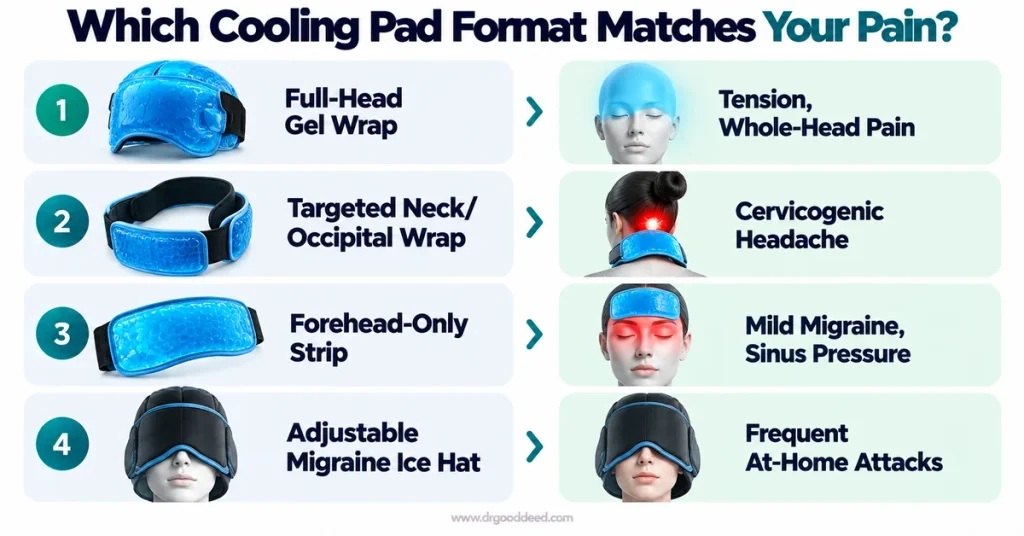
Full-head wraps cover the scalp, forehead, and temples, suited to widespread tension-type headache. Targeted neck wraps concentrate cold over the greater occipital nerve, suited to cervicogenic headache. Among the best cooling pads for headache relief, format choice depends on where pain concentrates during an attack.
| Format | Coverage Area | Best For | Typical Session |
| Full-head gel wrap | Scalp, forehead, temples | Tension headache, whole-head migraine pain | 15 to 20 minutes |
| Targeted neck or occipital wrap | Base of skull, upper neck | Cervicogenic headache, occipital neuralgia overlap | 15 to 20 minutes |
| Forehead-only strip | Forehead, temples | Mild migraine, sinus-related pressure | 10 to 15 minutes |
| Adjustable migraine ice hat | Full scalp with strap closure | Frequent migraine, at-home acute attacks | 15 to 20 minutes |
Buyer’s Comparison Guide: Choosing the Right Migraine Ice Hat
Choosing among the best cooling pads for headache relief comes down to three variables, insert material, closure style, and how long the pad holds a therapeutic temperature.
A migraine ice hat with a foam-gel hybrid insert and an adjustable strap typically outperforms basic gel-only packs for repeated home use.
- Gel-only inserts reach colder temperatures faster, often within five minutes out of the freezer, but they also warm up sooner and can feel intense against sensitive facial skin.
- Foam-gel hybrid inserts warm more gradually and spread cold more evenly across the surface, which lowers the chance of one overly cold contact point causing frostnip.
- Slip-on sleeve styles go on quickly but cannot be tightened, so they can lose direct skin contact once a person shifts position or lies down.
- Velcro or elastic strap closures let the wearer adjust pressure and keep the pad against the forehead, temples, or neck, which matters most during nighttime rest.
- Cold retention time depends on insert thickness and room temperature, with most gel packs holding a therapeutic temperature for 15 to 20 minutes before needing refreezing.
- Reusable pads need at least two hours in a standard freezer to fully re-cool, so keeping a second pad frozen helps anyone with frequent attacks.
Expert Insight: A pad that still feels cool to the touch after 10 minutes may have already lost its therapeutic effect, because meaningful vasoconstriction requires sustained skin surface cooling below roughly 15°C. Clinicians often see better consistency in patients who reapply cold at the first sign of pain return, rather than waiting for full rewarming.
Safety Protocols: Avoiding Skin Freeze Burns and Rebound Spasms
The best cooling pads for headache relief carry a real, documented skin injury risk when used without a fabric barrier or beyond recommended time limits. Rebound vasodilation, a widening of blood vessels after cold removal, can briefly worsen head pain.
- A documented FDA MAUDE report on cooling headache pads describes a consumer whose forehead became severely swollen and beet red overnight, with swelling reaching the eyes, nose, and cheeks, lasting more than four days.
- The same consumer experienced skin peeling over the next two weeks and needed a prescription cortisone cream and ibuprofen, and reported incomplete recovery afterward, despite following the label instructions exactly.
- A second, separate FDA report on the same product line describes permanent forehead discoloration shaped like the pad itself, still visible months after the initial use.
- Direct skin contact with a gel pack colder than roughly 0°C for more than 15 to 20 minutes can cause frostnip or a full-thickness cold burn, even when the pad never touches ice directly.
- Placing one layer of thin cloth, such as a pillowcase or T-shirt, between the pad and skin lowers injury risk substantially while still letting effective cooling reach the skin.
- Rebound vasodilation, a temporary widening of blood vessels once a cold pad comes off, can cause a brief uptick in throbbing pain, which is why some people alternate short cold sessions with breaks.
- People with Raynaud phenomenon, cryoglobulinemia, or reduced sensation from diabetic neuropathy face a higher risk of cold-related skin injury and should ask a clinician before regular use.
Pro Tip: Test any new cooling pad on your inner forearm for five minutes before placing it on your face or scalp, since the skin over the frontal bone has less fat padding and less sensation. If the cold has not intensified by the three-minute mark, the pad may be too warm for real therapeutic benefit.
When to See a Neurologist or Headache Specialist
The best cooling pads for headache relief cannot replace a clinical workup for headaches that change in pattern, frequency, or severity. The American Headache Society uses the SNOOP4 framework to flag headaches that need urgent or specialist evaluation rather than home treatment.
- A sudden, severe headache described as the worst of your life, often called a thunderclap headache, needs emergency evaluation to rule out a brain aneurysm or bleed.
- Headache with fever, stiff neck, confusion, vision loss, one-sided weakness, or slurred speech needs urgent care, since these can signal meningitis, stroke, or another neurological emergency.
- A new headache pattern after age 50, or a major change in a long-standing headache disorder, warrants imaging and specialist evaluation under current headache society guidance.
- Headaches occurring 15 or more days a month for at least three months may meet criteria for chronic migraine or medication overuse headache, both needing physician-guided treatment changes.
- A cooling pad that stops helping, or that a person needs several times a week, signals a need to reassess the overall headache treatment plan, not a stronger cooling product.
Choosing among the best cooling pads for headache relief means balancing scalp coverage, cold retention time, and documented skin safety.
FAQs
How many minutes should you wear a cooling cap during an attack?
15 to 20 minutes per session. Longer exposure raises frostnip risk without added relief, since most vasoconstriction and nerve-numbing effects plateau within that window.
Can a wearable cooling cap replace medical prescriptions?
No. Cooling caps only dull pain signals and reduce blood vessel swelling temporarily. They do not treat migraine’s underlying neurochemical cascade, so use them alongside, not instead of, prescribed medication.
Is intense heat or localized cold better for stopping migraines?
Cold generally works better during an active migraine attack, since it narrows blood vessels and numbs nerve signals. Heat suits muscle-tension headache instead, by relaxing tight neck and shoulder muscles.
Can you safely sleep while wearing a migraine ice hat overnight?
No. Cryotherapy safety guidance advises against overnight use, since prolonged unsupervised cold contact raises frostnip and pressure-injury risk. Set a 20-minute timer and remove the pad before sleep.
Sources
- FDA MAUDE Report: Coralite Cooling Headache Pads, forehead burn link
- FDA MAUDE Report: Coralite Cooling Headache Pads, forehead discoloration link
- Hsu YY, et al. Cold intervention for relieving migraine symptoms: A systematic review and meta-analysis. J Clin Nurs. 2023 link
- Effectiveness of cold application combined with progressive muscle relaxation in migraine without aura: A randomized controlled trial link
- Randomized Controlled Trial: Targeted Neck Cooling in the Treatment of the Migraine Patient link
- American Headache Society: Red Flags in Headache link
- American Migraine Foundation: Changes in Headache Symptoms, When to Be Concerned link
- American Migraine Foundation: Migraine Home Remedies link
- National Institute of Neurological Disorders and Stroke: Migraine link
- World Health Organization: Headache Disorders Fact Sheet link
Medical Disclaimer: This article is for general information only and is not medical advice. It does not replace a diagnosis, treatment plan, or guidance from a qualified healthcare professional. Always talk to your doctor about your own symptoms and before starting, stopping, or changing any treatment. If you think you may be having a medical emergency, call 911 or go to your nearest emergency room.