

Waking up with a migraine usually points to sleep disruption, dehydration, stress, jaw tension, or sleep apnea. Migraine pain often peaks early in the morning because the brain, breathing, and body clock shift during sleep. This guide covers causes, symptoms, prevention, and when to get medical help.
Why Migraines Happen in the Morning
Waking up with a migraine is common because sleep changes pain signals, blood flow, and hormone levels overnight. Many attacks start between 4 a.m. and 9 a.m., which matches the body’s wake-up shift. In the USA, repeated morning attacks should not be treated as a normal sleep problem.
- Sleep changes can lower the brain’s pain threshold.
- Overnight fluid loss can make nerves and vessels more reactive.
- Sleep apnea can disturb oxygen flow and trigger early headaches.
Causes of Morning Migraines
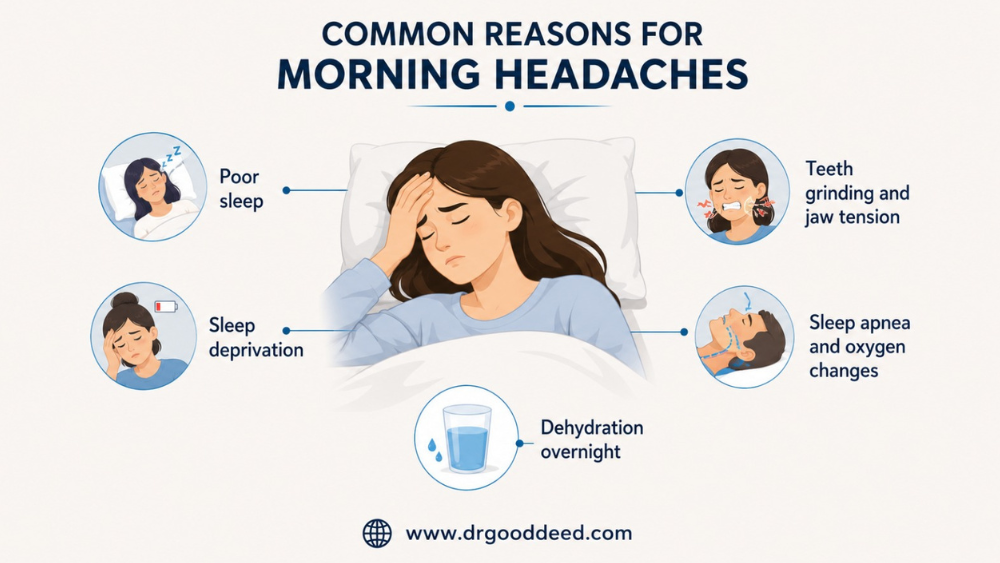
The main causes of morning migraines are sleep loss, poor sleep quality, dehydration, grinding the teeth, and sleep apnea. These problems often stack up, so one bad night can lead to a worse morning. The same person can have more than one trigger at the same time.
Poor sleep causing morning migraines
poor sleep causing morning migraines is one of the strongest links in headache care. Short sleep, broken sleep, and late nights all raise attack risk because the brain gets less recovery time.
Sleep deprivation and irregular schedules
Lying down late, waking late, shift work, and jet lag all disrupt the body clock. That shift can push an attack into the early morning or right after waking.
Dehydration overnight
People lose water through breathing and sweat during sleep. If dinner was salty, alcohol was used, or water intake was low, overnight fluid loss can tighten blood vessels and make the pattern worse.
Teeth grinding and jaw tension
Nighttime clenching strains the jaw, temples, and scalp muscles. That tension can turn into waking up with one sided migraine pain or a tight pain across the head.
Sleep apnea and oxygen changes
Sleep apnea stops breathing again and again during sleep. Many people wake with dry mouth, loud snoring, and morning headache. When this pattern repeats, it needs a doctor’s review.
Migraine After Waking Up Symptoms
Migraine after waking up symptoms usually include throbbing pain, nausea, light sensitivity, and sound sensitivity. The pain often feels worse with movement and can last hours. Some people also get neck pain, brain fog, or a brief warning phase before the headache.
- Throbbing pain on one side or both sides.
- Nausea or vomiting.
- Light, sound, or smell sensitivity.
- Blurry vision or an aura before pain starts.
Stress and Emotional Factors Behind Morning Migraines
Stress can leave the nervous system tense through the night. The body’s morning cortisol rise can add more pressure to that system. For some people, waking up with a migraine follows a rough day, poor sleep, or a long stretch of worry.
Cortisol spikes after waking
Cortisol is a stress hormone. It rises around waking time, and that shift can line up with headache timing in some people. This helps explain why attacks can start soon after sunrise.
Anxiety and overnight muscle tension
Anxiety keeps the jaw, neck, and shoulders tight. That tension can worsen migraine after waking up symptoms and make the pain feel sharper by morning.
Burnout and chronic migraine patterns
Long stress runs can turn occasional attacks into frequent ones. People with chronic migraine often notice that a bad sleep pattern becomes part of a repeat cycle.
Lifestyle Habits That May Trigger Morning Migraines
Daily habits shape the chance of a morning attack. Late caffeine, skipped meals, alcohol, heavy screen use, and irregular exercise can all disturb sleep and pain control. One trigger may be mild, but several together can set off an attack.
- Skipping dinner or sleeping after a very light meal.
- Drinking alcohol late in the evening.
- Taking pain medicine too often.
- Having caffeine too late or stopping it suddenly.
How to Prevent Morning Migraines
The best way to prevent morning migraines is to keep sleep, hydration, and stress levels steady for people who deal with waking up with a migraine. Prevention works best when the routine stays the same on weekdays and weekends. A headache diary helps connect the attack to a clear pattern.
Maintaining consistent sleep schedules
Go to bed and wake up at the same time each day. Regular timing helps the brain settle into a stable sleep rhythm and lowers risk from poor sleep.
Hydrating before and after sleep
Drink water through the day, then have a small glass in the evening if needed. This lowers the chance of overnight dehydration.
Creating a migraine-friendly bedtime routine
Stop heavy food, alcohol, and bright screens before bed. A calm routine lowers sleep disruption and helps the body settle before sleep.
Managing stress and screen exposure
Use a fixed wind-down time. Lower screen time, dim lights, and relax the jaw before sleep. These steps reduce the chance of waking with head pain.
Sleep Habits That May Support Migraine Prevention
Good sleep habits cut down on overnight strain. A dark, cool room, less blue light, and a pillow that supports the neck can all lower the risk of morning pain. They do not cure migraine, but they make attacks less likely.
Dark cool sleep environments
A dark room helps sleep stay deep. A cool room also reduces restlessness and lowers waking up with one sided migraine pain linked to poor sleep posture.
Limiting blue light exposure at night
Phones and tablets keep the brain alert. Less blue light before bed supports sleep by helping it start faster and stay steady.
Proper pillow and neck support
A pillow that keeps the neck neutral reduces muscle strain. That matters when waking up with a migraine is tied to jaw clenching, neck tightness, or poor sleep posture.
When Morning Migraines Need Medical Attention
Waking up with a migraine needs medical care when the pattern changes, gets worse, or comes with nerve signs. A sudden thunderclap headache, fever, stiff neck, weakness, confusion, vision loss, or head injury needs urgent attention. New morning headaches after age 50 also need review.
- Headache with weakness, numbness, speech trouble, or double vision.
- Sudden, severe, or “worst headache” pain.
- Headache with fever, stiff neck, confusion, or vomiting.
- Headache that wakes you from sleep again and again.
FAQs
Why do migraines commonly happen after waking up?
An early attack often follows sleep changes, low fluid intake, or breathing trouble at night. If the sleep cycle stays broken, the brain stays more sensitive at dawn.
Can poor sleep quality trigger morning migraines?
Yes. Poor sleep causing morning migraines is a well known trigger pattern. Short sleep, broken sleep, and sleeping at odd times all raise attack risk.
How does dehydration overnight contribute to headaches?
Yes. A few hours without water can matter, especially after alcohol, heavy sweating, or salty food. Overnight fluid loss can tighten blood vessels and make causes of morning migraines worse.
Can sleep apnea cause waking up with migraines?
Yes. Sleep apnea causes repeated breathing pauses, low oxygen dips, dry mouth, and morning headaches. If snoring, gasping, and daytime sleepiness come with waking up with a migraine, a sleep study is worth discussing.
Why are some morning migraines one-sided?
Migraine pain often stays on one side because migraine affects nerve pathways in one brain network more than the other. That pattern can show up as waking up with one sided migraine pain with throbbing and light sensitivity.
How does stress affect migraines during sleep and waking?
Stress keeps muscles tight and can raise headache risk before sleep and after waking. A stressed body sleeps lightly, then wakes into symptoms faster than a rested body.
What bedtime habits help?
A fixed sleep time, less screen use, water through the day, and no late alcohol help. These steps directly support preventing morning migraines by reducing sleep disruption and dehydration.
Can late-night screen time increase migraine risk?
Yes. Bright screens delay sleep and keep the brain alert. That can worsen the chance of a morning attack, especially when screen use happens in the last hour before bed.
When should morning headaches be medically evaluated?
Waking up with a migraine should be checked when it is new, frequent, severe, or paired with weakness, fever, vision changes, or confusion. Those signs are not routine migraine features.
How can migraine and sleep patterns be tracked effectively?
Use a simple diary. Write the bedtime, wake time, water intake, caffeine, stress level, and headache start time. This helps spot triggers faster than memory alone and helps track patterns.