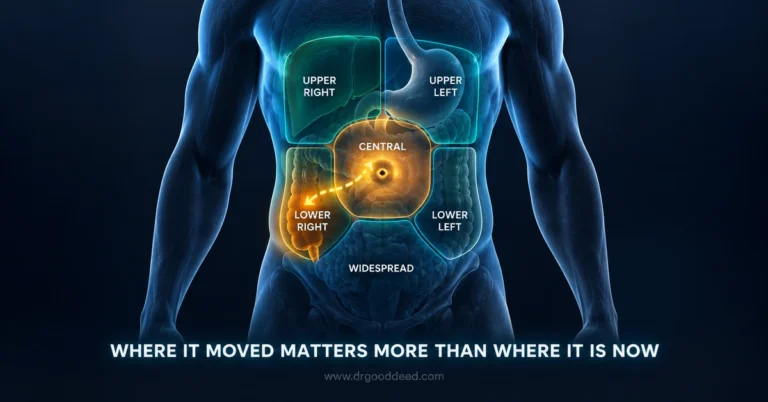

This article is for general information only. It does not replace advice from a doctor. If you have severe pain, heavy bleeding, or reduced fetal movement, contact your OB-GYN or go to the emergency room right away.
Abdominal pain in pregnancy is common and usually comes from your uterus stretching, ligaments pulling, or digestion slowing down. Most cases in the USA are mild and go away with rest, though some signal a complication needing urgent care. The World Health Organization lists abdominal pain among the top reasons pregnant women seek unplanned prenatal visits.
This guide covers the causes, trimester patterns, warning signs, and safe ways to ease abdominal pain in pregnancy at home. If you have searched causes of abdominal pain during pregnancy before, the breakdown below sorts every trigger by trimester and by how urgent it is.
Common Causes of Abdominal Pain During Pregnancy
Most causes of abdominal pain during pregnancy are harmless side effects of your body adjusting to a growing baby. The pain usually feels like pulling, cramping, or pressure rather than sharp stabbing. Knowing which cause matches your symptoms helps you tell normal discomfort apart from something that needs a checkup.
Round Ligament Pain
The round ligaments hold your uterus in place and stretch fast as your belly grows. Round ligament pain during pregnancy feels like a sharp, quick jab on one or both sides of your lower belly, often triggered by standing up, coughing, or rolling over in bed.
Growing Uterus
Your uterus goes from the size of a pear to filling most of your abdomen by the third trimester. This stretching pulls on surrounding muscles and organs, causing a dull, constant ache that most women notice by week 12. It’s one of the most consistent causes of abdominal pain during pregnancy across all three trimesters.
Gas, Constipation and Bloating
Pregnancy hormones slow down your digestive tract to help your body absorb more nutrients. That slowdown causes gas, bloating, and constipation, all of which create cramping pain that can feel alarming even though it’s harmless. This type of abdominal pain in pregnancy often eases within a day once you pass gas or have a bowel movement.
Braxton Hicks Contractions
These are practice contractions where your uterus tightens and releases, usually starting in the second trimester. They feel like a tightening band across your belly and fade with rest, unlike real labor contractions that get stronger over time.
Stretching of Abdominal Muscles
Your abdominal muscles separate slightly to make room for your growing uterus, a condition called diastasis recti. This stretching causes soreness similar to a muscle strain, especially after sitting up or twisting your torso. Doctors count it among the more overlooked causes of abdominal pain during pregnancy because it mimics ordinary muscle fatigue.
How Abdominal Pain Changes by Trimester
Abdominal pain in pregnancy doesn’t stay the same for nine months. Each trimester brings different physical changes, so the type and location of pain shift as your baby grows. Matching your symptoms to your trimester narrows down the likely cause fast, and it also helps you decide how urgently you need care.
First Trimester
Cramping in the first trimester often comes from implantation or your uterus starting to expand. Mild cramping is normal, but sharp one-sided pain with bleeding needs same-day evaluation to rule out an ectopic pregnancy.
Second Trimester
Round ligament pain peaks in the second trimester as your uterus grows quickly between weeks 14 and 27. This is also when Braxton Hicks contractions typically begin, so mild tightening starts to feel more common.
Third Trimester
By the third trimester, pain shifts toward pressure and stretching as the baby drops lower into your pelvis. Third-trimester abdominal pain in pregnancy also includes stronger Braxton Hicks contractions, and upper abdominal pain during pregnancy in this stage can point to preeclampsia, which needs immediate blood pressure checks.
Symptoms That Need Immediate Medical Attention
Not every ache during pregnancy is dangerous, but some symptoms mean you should stop waiting and call your doctor now. The seven warning signs below separate normal abdominal pain in pregnancy from emergencies that put you or your baby at risk.
Severe or Sudden Abdominal Pain
Pain that comes on suddenly, feels intense, or doesn’t ease with rest can signal placental abruption or another serious complication. This type of pain always needs same-day medical evaluation.
Vaginal Bleeding
Bleeding combined with cramping at any point in pregnancy needs immediate evaluation. It can range from a minor issue to a sign of miscarriage or placental abruption depending on the amount and timing.
Fever or Chills
A fever above 100.4°F paired with abdominal pain often points to an infection, such as a kidney infection or chorioamnionitis. Both need antibiotics started quickly to protect you and your baby.
Persistent Vomiting
Vomiting that won’t stop, especially past the first trimester, can cause dehydration and signal hyperemesis gravidarum or a liver problem. Combined with upper abdominal pain during pregnancy, it needs medical care to prevent complications for both mother and baby.
Fluid Leakage
Any fluid leaking from the vagina before your due date could mean your water has broken early. This requires immediate evaluation to check for infection risk and plan safe delivery timing.
Reduced Fetal Movement
A noticeable drop in your baby’s normal kicks and movements, especially after 28 weeks, needs prompt checking with a fetal heart rate monitor. Doctors recommend counting kicks daily in the third trimester.
Severe Headache With Upper Abdominal Pain
A bad headache combined with upper abdominal pain during pregnancy, blurred vision, or swelling in your hands and face can signal preeclampsia. This combination needs a blood pressure check within hours, not days.
How to Relieve Abdominal Pain During Pregnancy
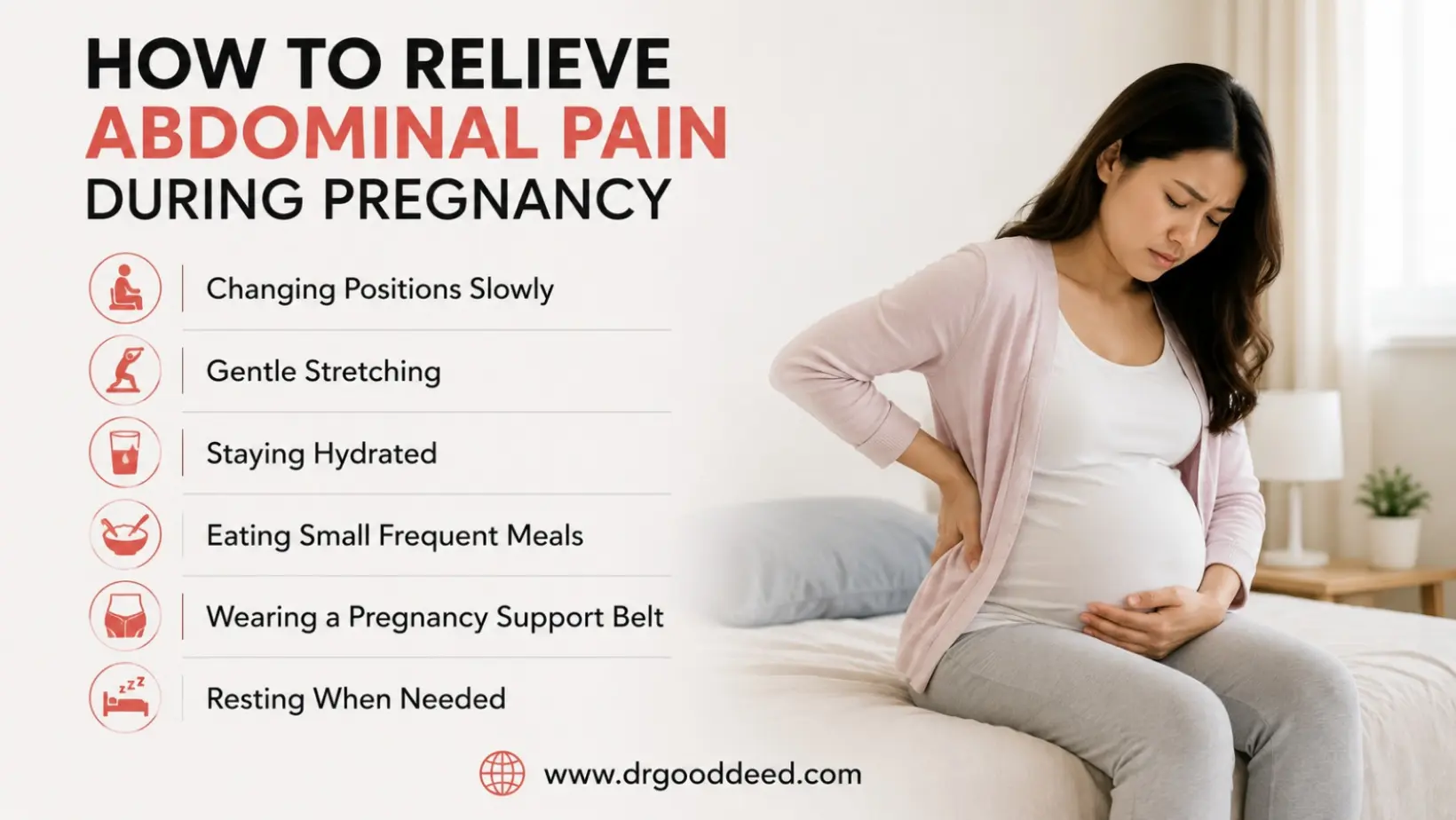
Once serious causes are ruled out, most mild abdominal pain in pregnancy responds well to simple home care. The six steps below cover safe home remedies for pregnancy abdominal pain that doctors commonly recommend for everyday discomfort.
Changing Positions Slowly
Moving from lying to sitting, or sitting to standing, slowly reduces sudden pulling on your round ligaments. Quick movements are the most common trigger for that sharp, jabbing pain.
Gentle Stretching
Light prenatal stretches or yoga poses ease muscle tension around your growing belly. This is one of the simplest ways to relieve abdominal pain during pregnancy without medication.
Staying Hydrated
Drinking enough water throughout the day softens stool and reduces constipation-related cramping. Dehydration can also trigger Braxton Hicks contractions, so water intake matters more than most people realize.
Eating Small Frequent Meals
Smaller meals spaced through the day ease pressure on your stretched stomach and reduce bloating. This is one of the easiest home remedies for pregnancy abdominal pain and also helps manage nausea alongside abdominal discomfort in early pregnancy.
Wearing a Pregnancy Support Belt
A support belt lifts your belly weight off your round ligaments and lower back. Many women find that this reduces pulling pain during long periods of standing or walking.
Resting When Needed
Lying on your side with a pillow between your knees relieves pressure on your uterus and ligaments. Rest remains one of the most effective home remedies for pregnancy abdominal pain, doctors recommend.
FAQs
Is abdominal pain during pregnancy normal?
Yes. Mild cramping, pulling, and pressure are normal parts of abdominal pain in pregnancy as your uterus and ligaments stretch. Sharp, severe, or bleeding-related pain is not normal and needs evaluation.
What is round ligament pain during pregnancy?
It’s a sharp, quick pain on one or both sides of your lower belly caused by stretching ligaments. It peaks in the second trimester and eases with slow movements and rest.
When should I worry about stomach pain during pregnancy?
Worry if pain is severe, sudden, or paired with bleeding, fever, fluid leakage, or reduced baby movement. These signs need same-day evaluation, not a wait-and-see approach at home.
Can constipation cause abdominal pain during pregnancy?
Yes. Pregnancy hormones slow digestion, causing gas and constipation that create cramping pain. Drinking more water and adding fiber usually eases this within a few days.
Is abdominal pain different in each trimester?
Yes. First trimester pain often comes from implantation, second trimester pain is mostly round ligament pulling, and third trimester pain shifts toward pressure and Braxton Hicks tightening.
Can Braxton Hicks contractions feel like abdominal pain?
Yes. They cause a tightening band across your belly that can feel like cramping pain. Unlike real labor, they fade with rest and don’t get progressively stronger or closer together.
What tests are used to evaluate abdominal pain in pregnancy?
Doctors use an ultrasound, urine test, blood pressure check, and fetal heart rate monitoring. Blood tests may also check for infection or preeclampsia depending on your specific symptoms.