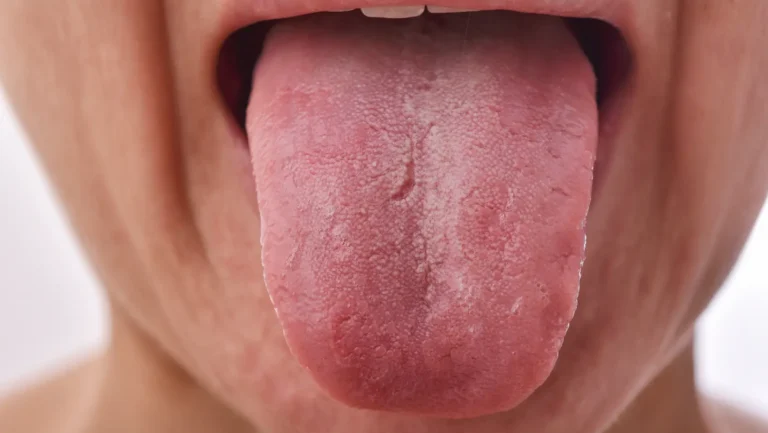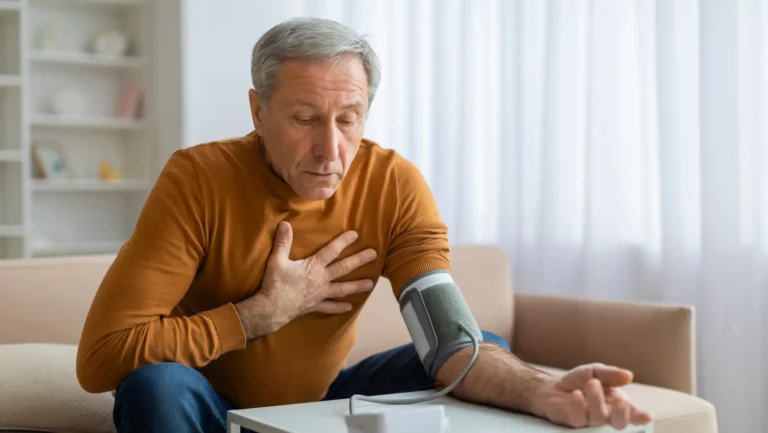

Sleep apnea symptoms in women differ substantially from the classic male presentation, which is exactly why women go undiagnosed for years longer than men. The American Academy of Sleep Medicine (AASM) estimates that 1 in 4 women in the USA has clinically significant sleep-disordered breathing, yet women remain underrepresented in sleep clinic referrals by nearly 2:1.
Women more often present with insomnia, fatigue, depression, and headaches rather than the loud snoring and gasping that clinicians typically associate with obstructive sleep apnea (OSA).
Sleep Apnea Symptoms in Women
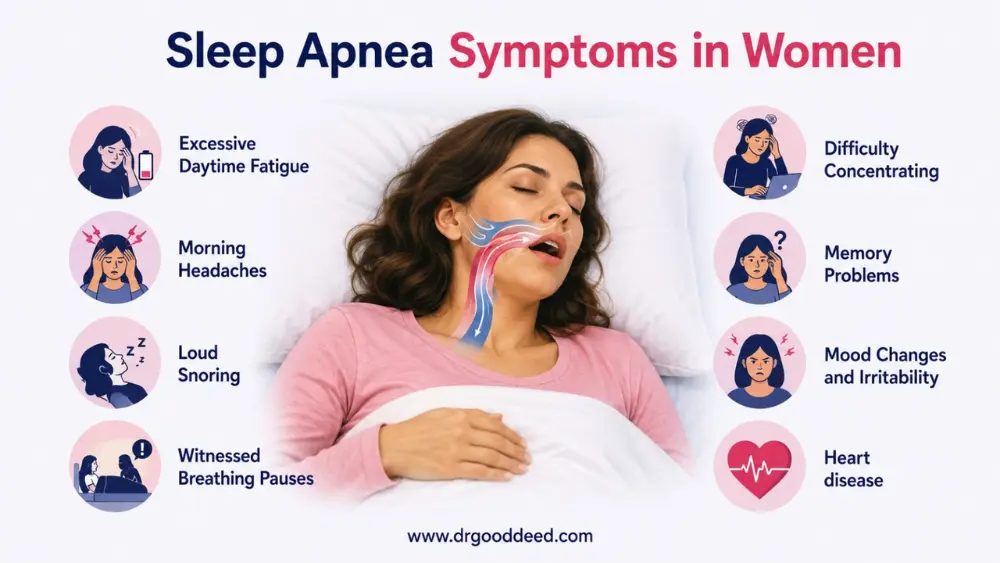
Sleep apnea symptoms in women present differently than in men. Women rarely report loud snoring as their main complaint. Instead, they lead with fatigue, mood changes, and insomnia, symptoms that overlap with depression, thyroid disorders, and anxiety. This overlap delays diagnosis by an average of 6.6 years in women, per research published in the Journal of Clinical Sleep Medicine (Wahner-Roedler et al.).
Excessive Daytime Fatigue
Fatigue is the most frequently reported symptom in women with OSA. It differs from ordinary tiredness; waking after 8 hours still feels exhausting. The sleep fragmentation from repeated micro-arousals prevents the brain from entering restorative slow-wave sleep. Women with OSA report fatigue scores significantly higher than men with equivalent AHI severity, per the Wisconsin Sleep Cohort.
Morning Headaches
Overnight oxygen drops cause blood vessels in the brain to dilate. This vasodilation produces a dull, bilateral headache that peaks within 30 minutes of waking and resolves within 2 hours. Morning headaches occur in approximately 29% of women with OSA, compared to 17% of men with matched AHI scores (Kristiansen et al., Sleep Medicine, 2021).
Loud Snoring
Women with OSA do snore, but less loudly and less consistently than men. A bed partner often reports irregular breathing or quiet gasping rather than classic loud snoring. Women are also less likely to describe their own snoring on intake forms, making snoring an unreliable screening criterion in female patients.
Witnessed Breathing Pauses
A partner observing breathing pauses during sleep remains a strong diagnostic indicator. Women with OSA have fewer complete apnea events per hour than men with the same disease severity, but produce more hypopnea events (partial airway narrowing). Polysomnography captures both, but partner reports of pauses specifically are less common in women.
Difficulty Concentrating
Cognitive fog, including reduced attention span, difficulty with word recall, and slower processing speed, is a direct neurological consequence of chronic intermittent hypoxia. MRI studies from the University of California Los Angeles (Macey et al.) confirmed structural brain changes in the prefrontal cortex and hippocampus in women with untreated OSA.
Memory Problems
Short-term memory loss in women with OSA is clinically documented. Hippocampal hypoxia during repeated apnea events impairs memory consolidation during sleep. Women in the Sleep Heart Health Study showed cognitive decline rates 1.4x higher over 5 years when OSA was untreated compared to matched controls.
Mood Changes and Irritability
Women with OSA are 2.1x more likely to carry a diagnosis of depression before receiving an OSA diagnosis, per data from the Cleveland Clinic Sleep Disorders Center. Chronic sleep fragmentation reduces serotonin synthesis and raises cortisol baselines, both of which directly drive mood instability and irritability.
Hormonal Changes and Sleep Apnea in Women
Hormonal changes and sleep apnea in women are bidirectional. Hormones protect airway stability at certain life stages and withdraw that protection at others.
The Role of Estrogen and Progesterone
Progesterone acts as a respiratory stimulant. It increases upper airway muscle tone and reduces hypercapnic ventilatory response thresholds, meaning the brain responds faster to rising carbon dioxide during sleep.
Estrogen maintains pharyngeal tissue elasticity. When both hormones drop at menopause, airway collapse risk rises sharply. Pre-menopausal women have OSA prevalence roughly half that of age-matched men, primarily because of this hormonal protection.
Sleep Apnea During Perimenopause
Perimenopause begins an average of 4 years before the final menstrual period. During this phase, progesterone levels fluctuate wildly and then trend downward. OSA prevalence in perimenopausal women rises to roughly 47% of the male age-matched rate, up from 25–30% in premenopausal women, per data from the Study of Women’s Health Across the Nation (SWAN).
Sleep Apnea After Menopause
Post-menopausal women have OSA at nearly the same rate as men the same age. The Wisconsin Sleep Cohort confirmed that post-menopausal women not using hormone replacement therapy (HRT) had 3.5x higher OSA odds than pre-menopausal women. HRT users had significantly lower OSA rates, though HRT is not prescribed for OSA treatment.
Pregnancy and Sleep-Disordered Breathing
OSA prevalence rises with each trimester. By the third trimester, 26% of pregnant women screen positive for OSA, per the Maternal-Fetal Medicine Units Network study (Louis et al., American Journal of Obstetrics and Gynecology, 2012).
Weight gain, fluid shifts, progesterone-driven mucosal swelling, and the growing uterus compressing the diaphragm all contribute. Untreated OSA in pregnancy raises preeclampsia risk by 2.4x and gestational diabetes risk by 1.8x.
Hormonal Factors Affecting Airway Stability
Testosterone increases upper airway collapsibility. Low estrogen does the same. Women who develop polycystic ovary syndrome (PCOS), which raises androgen levels, have OSA rates 9x higher than age-matched women without PCOS, per a meta-analysis in the Journal of Clinical Endocrinology and Metabolism (Kahal et al., 2020).
Signs of Sleep Apnea in Women at Different Life Stages
Signs of sleep apnea in women shift depending on age and hormonal status. Clinicians who treat all female OSA patients identically miss the clinical presentation differences by life stage.
Younger Women
Younger women with OSA (ages 18–35) typically present with PCOS, hypothyroidism, or obesity as comorbidities. Their symptoms lean toward insomnia, anxiety, and daytime fatigue rather than snoring. Jaw abnormalities and a high, arched palate are also more frequent structural contributors in this age group.
Pregnancy
During pregnancy, the key signs of sleep apnea in women are snoring that began in the second trimester, restless legs, frequent nocturia beyond expected pregnancy levels, and persistent morning headaches. New-onset snoring after week 20 warrants a screening referral, per AASM guidance.
Perimenopause
Hot flashes and night sweats in perimenopause fragment sleep independently of OSA. When both occur together, insomnia symptoms dominate the clinical picture. Women in this stage commonly report waking 3–5 times per night, not connecting it to breathing.
Postmenopausal Women
Post-menopausal women show higher AHI scores for equivalent body weight compared to premenopausal women. They also report more nocturia, morning confusion, and dry mouth than younger OSA patients.
Older Adults
In women over 65, sleep apnea symptoms in women overlap significantly with cognitive decline, atrial fibrillation, and hypothyroidism. OSA is present in roughly 56% of older women with treatment-resistant hypertension, per NHLBI data. Cognitive screening that reveals declining executive function should prompt sleep apnea evaluation.
Risk Factors for Sleep Apnea in Women
Sleep apnea in women in the USA disproportionately affects those with specific anatomical, hormonal, and lifestyle risk profiles. Unlike men, for whom obesity is the dominant single risk factor, women carry multiple lower-weight risk factors that compound each other.
Key risk factors:
- Menopause: Post-menopausal women have 3.5x higher OSA odds than pre-menopausal women (Wisconsin Sleep Cohort).
- PCOS: OSA prevalence is 9x higher in PCOS patients versus age-matched controls (Kahal et al., JCEM, 2020).
- Obesity: Each 10% increase in body weight raises OSA risk by approximately 32% in women.
- Hypothyroidism: Untreated hypothyroidism causes myxedema of pharyngeal tissue and reduces respiratory drive. OSA prevalence in hypothyroid women reaches 30%.
- Pregnancy: Third-trimester OSA prevalence reaches 26% (MFMU Network, 2012).
- Family history: A first-degree relative with OSA raises risk by 22–58%.
- Craniofacial anatomy: Retrognathia (recessed jaw), high palate, and enlarged tonsils increase collapsibility independent of weight.
- Sedative or opioid use: Both relax pharyngeal musculature and suppress the respiratory arousal response.
How Sleep Apnea Is Diagnosed in Women
Female sleep apnea symptoms are frequently attributed to depression, anxiety, or perimenopause before a sleep evaluation occurs.
Medical History and Symptom Assessment
Standard OSA questionnaires like the STOP-BANG perform poorly in women because they weight snoring and witnessed apneas heavily. The Berlin Questionnaire and Epworth Sleepiness Scale perform marginally better. The most sensitive approach in women is to ask specifically about morning headaches, nocturia, fatigue unresponsive to adequate sleep, and cognitive complaints.
Sleep Apnea Screening Tools
The STOP-BANG cutoff of 3+ is less sensitive in women; a cutoff of 2+ increases sensitivity to 87% in female populations, per a 2019 validation study (Boynton et al., Anesthesiology). Modified screening tools specifically validated for women are not yet standard in most USA primary care settings.
Home Sleep Apnea Testing
Home sleep apnea tests (HSATs) record oxygen saturation, airflow, respiratory effort, and heart rate. HSATs are validated for adult OSA diagnosis in the absence of significant comorbidities, per AASM 2017 guidelines.
They underestimate AHI by 10–20% compared to in-lab polysomnography, which matters more in women who tend toward lower AHI scores. A negative HSAT in a symptomatic woman warrants a full in-lab study.
Overnight Sleep Studies
In-lab polysomnography captures REM-related OSA, which is more common in women. Women have disproportionately more apnea events during REM sleep when muscle tone is lowest. HSATs include less REM sleep time by default, so REM-predominant OSA is frequently missed outside the lab.
Why Accurate Diagnosis Is Important
Untreated OSA in women raises cardiovascular event risk by 3x (Marin et al., Lancet, 2005). Women with untreated OSA develop atrial fibrillation, hypertension, and type 2 diabetes at rates comparable to untreated OSA in men, despite having lower average AHI scores. The damage is not proportional to AHI severity alone.
CPAP Treatment for Female Sleep Apnea
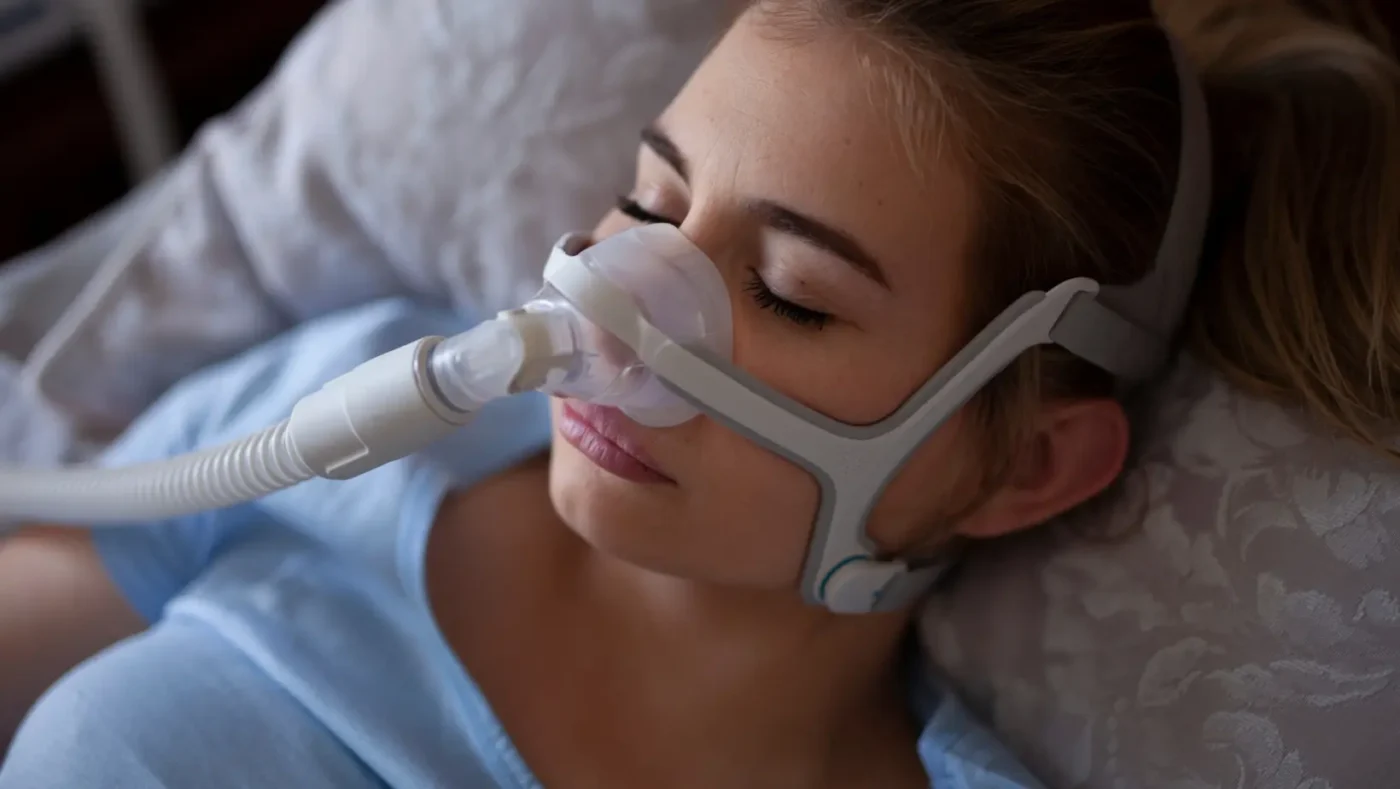
CPAP treatment for female sleep apnea is effective and produces measurable improvements in fatigue, mood, and cognitive function within 4–8 weeks. Women report higher CPAP intolerance rates than men, primarily from mask fit and pressure comfort issues, but solutions exist for each barrier.
Women-specific CPAP considerations:
- Lower starting pressures: Women on average require lower therapeutic CPAP pressures than men. Auto-titrating CPAP (APAP) adjusts nightly and performs better than fixed pressure in female patients.
- Mask fit: Standard adult masks are designed around male facial geometry. Women-specific mask sizes produce better seal with less air leak and less skin pressure.
- Heated humidification: Women report nasal dryness and congestion from CPAP at higher rates than men. Integrated heated humidifiers resolve this in most cases.
- Bilevel PAP (BiPAP): For women who cannot tolerate CPAP exhalation pressure, BiPAP delivers lower pressure on exhalation. This improves comfort and adherence substantially.
- Outcomes at 3 months: Women who use CPAP 4+ hours per night on 70%+ of nights show depression score improvements equivalent to antidepressant therapy in RCT data (Dempsey et al., Journal of Sleep Research, 2018).
- Oral appliance therapy: For mild-to-moderate female sleep apnea symptoms, custom mandibular advancement devices are AASM-recommended and produce comparable AHI reductions to CPAP with higher long-term adherence in women.
FAQs
1. What are the most common sleep apnea symptoms in women?
The most common sleep apnea symptoms in women are excessive daytime fatigue, morning headaches, mood changes, poor concentration, and insomnia. Loud snoring and witnessed apneas are less common than in men, causing frequent misdiagnosis as depression.
2. How do signs of sleep apnea in women differ from those in men?
Signs of sleep apnea in women center on fatigue, insomnia, and mood changes rather than loud snoring. Women have more REM-predominant and hypopnea-dominant events. Men present with louder snoring, witnessed apneas, and gasping as primary complaints.
3. Can insomnia be a symptom of sleep apnea in women?
Yes. Insomnia and sleep apnea symptoms coexist in 39–58% of women with OSA. Repeated micro-arousals from apnea events fragment sleep architecture, causing difficulty staying asleep that gets labeled primary insomnia without a sleep study.
4. Why is sleep apnea often missed in women?
Female sleep apnea symptoms mimic depression, anxiety, and perimenopause. The STOP-BANG questionnaire scores women systematically lower. Women are also less likely to report snoring to a doctor, and bed partners less frequently report pauses in female patients.
5. How do hormonal changes affect sleep apnea in women?
Hormonal changes and sleep apnea in women are mechanistically linked. Progesterone stimulates breathing and tones upper airway muscles. Estrogen maintains pharyngeal elasticity. Both drop at menopause, removing airway protection. PCOS raises androgens that increase airway collapsibility 9x above baseline.
6. Does menopause increase the risk of sleep apnea?
Yes. Post-menopausal women have 3.5x higher OSA odds than pre-menopausal women (Wisconsin Sleep Cohort). The risk rises further without hormone replacement therapy. OSA prevalence after menopause reaches nearly the same rate as age-matched men.
7. Can sleep apnea cause anxiety and depression in women?
Yes. Women with OSA are 2.1x more likely to carry a depression diagnosis before OSA is identified (Cleveland Clinic data). Chronic sleep fragmentation drops serotonin and raises cortisol. Treating OSA with CPAP produces depression score reductions equivalent to antidepressant therapy within 12 weeks.
8. What are the warning signs of sleep apnea during pregnancy?
New-onset snoring after week 20, morning headaches, nocturia exceeding 3x per night, and persistent fatigue after adequate sleep are the main warning signs of sleep apnea in women during pregnancy. Third-trimester OSA prevalence reaches 26% and raises preeclampsia risk 2.4x.
9. How is sleep apnea diagnosed in women?
Sleep apnea symptoms in women are assessed via an Epworth Sleepiness Scale, medical history focusing on fatigue and cognitive complaints, and either a home sleep test or in-lab polysomnography. In-lab testing is preferred when REM-predominant OSA is suspected.
10. Does CPAP treatment work for female sleep apnea?
Yes. CPAP treatment for female sleep apnea reduces AHI by 50%+ in most patients and improves fatigue, mood, and cognition within 4–8 weeks. Women-specific mask sizing, APAP mode, and heated humidification significantly improve adherence rates versus standard male-calibrated CPAP setups.
References
- Wisconsin Sleep Cohort, University of Wisconsin, OSA and hormonal risk data
- Wahner-Roedler DL et al. Journal of Clinical Sleep Medicine, sex differences in OSA diagnosis delay
- Kahal H et al. PCOS and OSA meta-analysis. Journal of Clinical Endocrinology and Metabolism, 2020
- Louis JM et al. OSA in pregnancy. American Journal of Obstetrics and Gynecology, 2012
- Boynton G et al. STOP-BANG validation in women. Anesthesiology, 2019
- Marin JM et al. Cardiovascular outcomes in OSA. Lancet, 2005
- Macey PM et al. Brain structural changes in OSA. UCLA, published in Sleep
- National Heart, Lung, and Blood Institute (NHLBI), Sleep Apnea
- Study of Women’s Health Across the Nation (SWAN), sleep and hormonal data