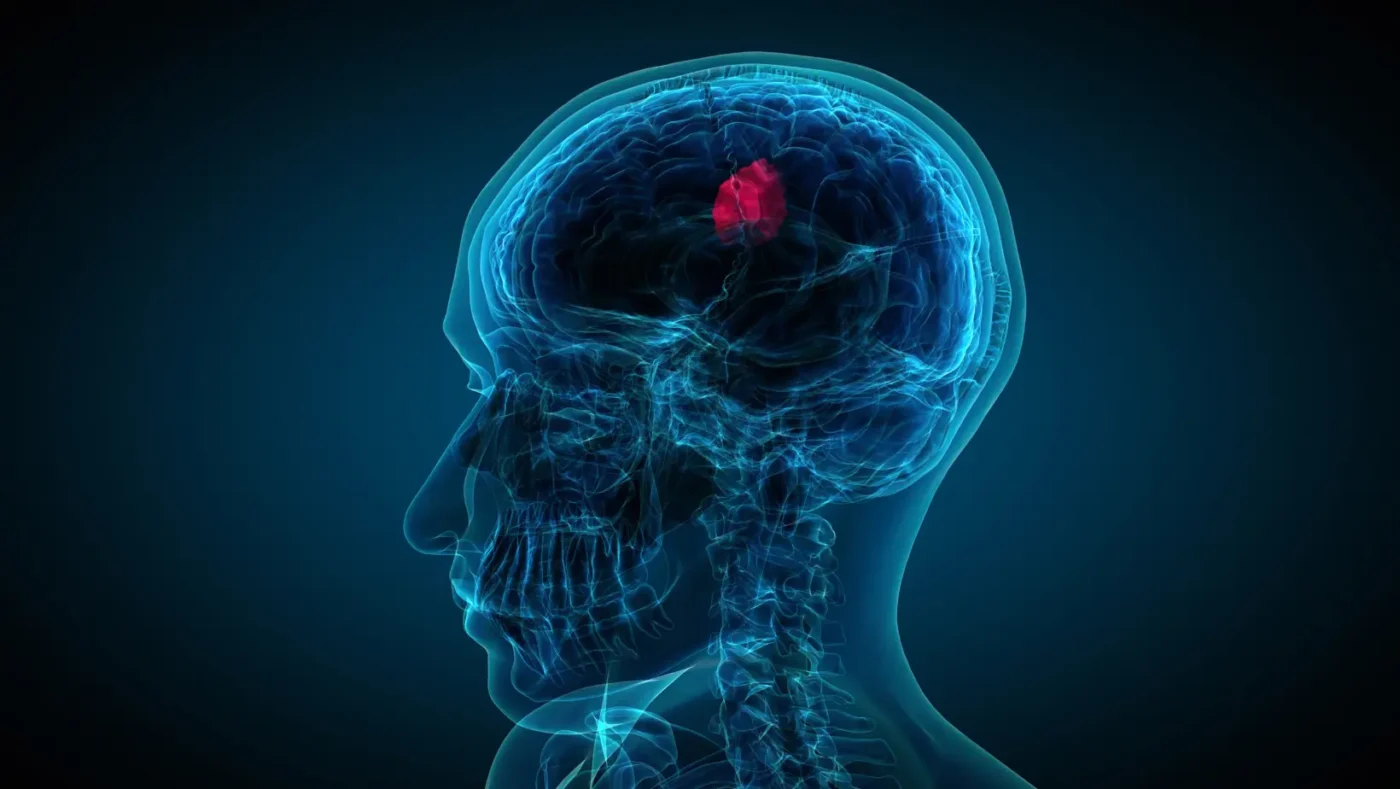

Early signs of brain tumor include persistent morning headaches, new-onset seizures in adults, sudden vision changes, and one-sided weakness. A brain tumor is an abnormal cell growth inside or around the brain.
The American Brain Tumor Association estimates over 700,000 Americans currently live with a primary or metastatic brain tumor. Symptoms vary by tumor location, size, and growth rate.
A neurology consultation with gadolinium-enhanced MRI is the appropriate and low-risk starting point when symptoms are new, unexplained, and progressively worsening over days or weeks.
Common Early Brain Tumor Symptoms
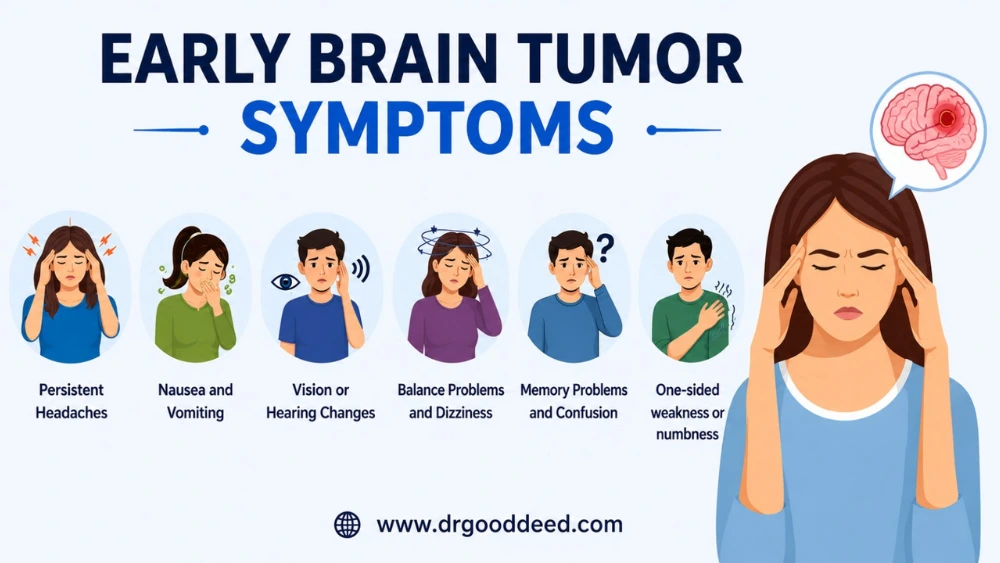
Common early brain tumor symptoms depend on exactly where the tumor sits. A frontal lobe tumor causes personality and memory changes. An occipital lobe tumor causes vision problems. A cerebellar tumor causes balance loss. The National Cancer Institute confirms that no single symptom points exclusively to a brain tumor; the pattern and progression of symptoms together raise clinical concern.
Persistent Headaches or Worsening Headaches
Brain tumor headaches differ from tension headaches. They worsen progressively over weeks, peak in the morning, and sometimes improve briefly after vomiting. A headache that someone is lying down or is described as “the worst ever” needs immediate evaluation.
Nausea and Vomiting Without Clear Cause
Projectile vomiting without preceding nausea, especially in the morning, signals raised intracranial pressure. It differs from food-related nausea because no stomach cause exists and it typically accompanies headache.
Vision or Hearing Changes
Tumors near the optic pathway cause blurred vision, double vision, or loss of peripheral (side) vision. Acoustic neuroma, a benign tumor on the vestibulocochlear nerve, causes gradual one-sided hearing loss and ringing (tinnitus).
Balance Problems and Dizziness
Cerebellar tumors cause loss of coordination and unsteady walking. This balance problem does not improve when the eyes are open, which distinguishes it from inner-ear dizziness.
Memory Problems and Confusion
Temporal or frontal lobe tumors disrupt short-term memory. Patients repeat questions, forget recent conversations, or feel persistently confused. This differs from normal aging because it appears suddenly and worsens over weeks, not years.
Unexplained Weakness or Numbness
One-sided weakness or numbness (hemiparesis) is a key warning sign. Tumors in the motor cortex cause weakness in the opposite arm or leg. This symptom mirrors stroke and requires emergency imaging to distinguish the two.
Pressure Inside Skull Causing Symptoms
Pressure inside skull causing symptoms occurs when a tumor, surrounding brain swelling (cerebral edema), or blocked cerebrospinal fluid raises intracranial pressure (ICP). Normal ICP in adults is 7 to 15 mmHg. When a tumor pushes this above 20 mmHg, the brain compresses against the skull, producing a specific and recognizable symptom cluster. These are among the most clinically significant early signs of brain tumor that physicians look for during examination.
- Morning headaches that worsen when lying flat (gravity increases fluid pressure toward the head)
- Vomiting without nausea (brainstem compression triggers the vomiting center directly)
- Papilledema: swelling of the optic disc visible during an eye exam, caused by optic nerve pressure
- Sudden decrease in alertness or responsiveness
- Cushing’s triad: rising blood pressure, slowing heart rate, and irregular breathing (a late-stage emergency sign requiring immediate neurosurgical care)
Neurological Symptoms That May Appear Early
How brain tumor symptoms start varies by person and tumor type. Symptoms often begin as mild, intermittent episodes that gradually worsen over weeks or months. Many patients attribute early symptoms to stress or poor sleep. A 2016 analysis in Neuro-Oncology found the average time from first symptom to brain tumor diagnosis in adults is 3 to 6 months.
Seizures and Sudden Neurological Events
New-onset seizures in an adult with no prior seizure history require immediate brain imaging. The American Epilepsy Society reports that 20% to 40% of brain tumor patients experience a seizure as their first symptom. Brain tumor seizures often begin in one limb or one side of the face before spreading.
Speech and Language Difficulties
Tumors near Broca’s area (speech production) or Wernicke’s area (speech understanding) cause aphasia, which is difficulty finding words, speaking in incomplete sentences, or failing to understand spoken language. Aphasia from a tumor appears suddenly over days, not gradually over years.
Personality or Mood Changes
Frontal lobe tumors produce personality changes that family members notice before the patient does. These include increased impulsivity, socially inappropriate behavior, sudden emotional flatness, or loss of empathy. These changes emerge without a psychological trigger or life stressor.
Difficulty Concentrating and Mental Confusion
Cognitive slowing from a brain tumor produces specific deficits: inability to complete familiar multi-step tasks, getting lost in known places, or struggling to follow simple instructions. This is distinct from stress-related brain fog.
Headaches and Brain Tumor Symptoms
Early signs of brain tumor involving headaches carry specific characteristics that separate them from migraines or tension headaches. Not all brain tumor headaches are severe; some patients describe them as dull daily pressure rather than sharp pain.
- Brain tumor headaches worsen progressively over weeks; migraines follow a start-peak-resolve cycle within hours
- They are worst in the morning and often improve 30 to 60 minutes after standing (ICP drops with upright posture)
- Coughing, sneezing, or bending forward intensifies them due to brief ICP spikes
- They are regularly accompanied by nausea, vomiting, or neurological changes like vision disturbance
- They rarely respond to ibuprofen, acetaminophen, or standard migraine medications
Risk Factors for Brain Tumors
Risk factors for brain tumors are more limited than for most cancers. Lifestyle factors such as diet and smoking have no confirmed link to primary brain tumors.
Family History and Genetics
Inherited syndromes including neurofibromatosis type 1 and 2, tuberous sclerosis, and Li-Fraumeni syndrome raise brain tumor risk. These syndromes account for fewer than 5% of all brain tumors, per the National Cancer Institute.
Radiation Exposure Risks
Therapeutic cranial radiation (used to treat childhood leukemia or other head-region cancers) is the only confirmed environmental cause of brain tumors. Risk rises with higher doses and younger age at exposure.
Age-Related Risk Patterns
Brain tumor incidence peaks in two age groups: children aged 0 to 14 (commonly medulloblastoma or ependymoma) and adults aged 55 to 64 (commonly glioblastoma or meningioma). The American Brain Tumor Association identifies glioblastoma as the most common malignant primary brain tumor in US adults.
Environmental and Occupational Factors
Long-term exposure to vinyl chloride (used in plastics manufacturing) links to higher rates of brain angiosarcoma. Cell phone radiofrequency radiation is classified by the WHO International Agency for Research on Cancer as “possibly carcinogenic to humans” (Group 2B), but no confirmed causal link to brain tumors exists in current peer-reviewed data.
Tests Used to Diagnose Brain Tumors
Tests used to diagnose brain tumors follow a structured sequence from clinical examination to imaging to tissue analysis.
Neurological Examination
A neurologist tests vision, hearing, reflexes, coordination, balance, and cognitive function. Deficits in specific areas guide imaging to the right brain region and reduce unnecessary broad scanning.
MRI and CT Scan Imaging
MRI with gadolinium contrast is the gold standard for brain tumor detection. It identifies tumors as small as 1 to 2 mm, shows surrounding edema, and reveals blood-brain barrier breakdown. CT scans are used in emergency settings because they are faster and detect acute bleeding within minutes.
Brain Function and Reflex Testing
Electroencephalogram (EEG) identifies abnormal electrical activity linked to seizure risk. Visual field testing maps peripheral vision gaps caused by tumors pressing on the optic pathway.
Biopsy and Tumor Classification
Stereotactic biopsy uses imaging guidance to remove a small tissue sample. The WHO 2021 CNS Tumor Classification grades tumors from Grade 1 (slow-growing) to Grade 4 (aggressive, such as glioblastoma). Molecular markers including IDH mutation status and MGMT promoter methylation now guide treatment decisions beyond tissue appearance alone.
Conditions That Can Mimic Brain Tumor Symptoms
Migraine Headaches
Migraines cause visual aura, severe unilateral head pain, nausea, and light sensitivity. The distinction: migraines follow a consistent personal pattern over years. Brain tumor headaches are new, worsen progressively over weeks, and come with neurological signs.
Anxiety and Panic Symptoms
Anxiety produces dizziness, tingling, brain fog, and headaches, all of which overlap with early signs of brain tumor. The key difference is that anxiety symptoms fluctuate with stress; tumor symptoms worsen regardless of mood or activity.
Inner Ear Balance Disorders
Benign paroxysmal positional vertigo (BPPV) and Meniere’s disease cause spinning-type vertigo. BPPV improves with the Epley repositioning maneuver. Cerebellar tumor balance problems do not respond to any repositioning maneuver.
Stroke and Neurological Conditions
Stroke produces sudden weakness, speech loss, and vision changes that mirror brain tumor signs. The defining difference: stroke symptoms peak within seconds to minutes. Brain tumor symptoms build over days or weeks. CT imaging in an emergency department distinguishes the two within minutes.
When Symptoms Become Medical Emergencies
Early signs of brain tumor that escalate to the following require an immediate 911 call or emergency department visit. Delayed treatment in these scenarios causes permanent neurological damage.
- Thunderclap headache: sudden, severe head pain reaching maximum intensity within 60 seconds
- First-ever seizure in any adult over 18 with no prior seizure history
- Sudden inability to speak or understand spoken language
- Acute loss of vision in one or both eyes
- One-sided facial drooping combined with arm weakness (stroke protocol applies)
- Loss of consciousness or sudden unresponsiveness
- Cushing’s triad (rising blood pressure, slowing heart rate, irregular breathing): a sign of brain herniation
These signs represent intratumoral bleeding, acute hydrocephalus, or herniation, all of which need neurosurgical intervention within minutes.
FAQs
What are the most common early signs of a brain tumor?
The most consistently reported early signs of brain tumor are new morning headaches worsening over weeks, adult-onset seizures with no prior history, and progressive one-sided weakness. Vision changes and sudden personality shifts are the earliest signs for tumors in the occipital and frontal lobes respectively.
How do brain tumor symptoms usually begin?
How brain tumor symptoms start depends on tumor location. Frontal lobe tumors begin with personality changes. Temporal lobe tumors begin with memory loss. Cerebellar tumors begin with balance problems. Most progress gradually over 3 to 6 months before a neurologist becomes involved.
Why can pressure inside the skull cause headaches and nausea?
Pressure inside skull causing symptoms occurs because the skull is a fixed, rigid space. When ICP exceeds 20 mmHg, brain tissue compresses against the skull walls and brainstem. The brainstem contains the vomiting center (area postrema), which triggers nausea and vomiting independently of the stomach.
What type of headaches may be linked to brain tumors?
Brain tumor headaches are worst in the morning, worsen progressively over weeks, intensify with coughing or bending forward, and do not respond to ibuprofen or standard migraine medication. This pattern, especially combined with nausea or neurological symptoms, is clinically distinct from migraine or tension headaches.
Can brain tumors cause personality or memory changes?
Yes. Frontal lobe tumors disrupt the prefrontal cortex, causing impulsivity, aggression, or emotional flatness. Temporal lobe tumors impair memory encoding in the hippocampus. These are structural changes, not psychological ones, and they worsen over weeks without treatment intervention.
What tests are commonly used to diagnose brain tumors?
Tests used to diagnose brain tumors include MRI with gadolinium contrast (gold standard for tumor detection), CT scan (emergency bleeding assessment), EEG (seizure activity), and stereotactic biopsy (tissue diagnosis). WHO 2021 CNS classification adds IDH mutation and MGMT methylation status to histology for full tumor grading.
Are seizures always a warning sign of a neurological problem?
Yes. A first-ever seizure in an adult always requires immediate brain MRI. The American Epilepsy Society reports 20% to 40% of brain tumor patients have a seizure as their first symptom. Adult seizures with no prior diagnosis are never normal and always need neurological investigation.
Which conditions can mimic early brain tumor symptoms?
Migraines, BPPV, anxiety disorder, and stroke all produce symptoms overlapping with early signs of brain tumor. MRI with contrast and a formal neurological exam reliably distinguish brain tumors from these conditions. Stroke symptoms peak instantly; brain tumor symptoms build progressively over days to weeks.
What risk factors are linked to brain tumors?
Risk factors for brain tumors include prior therapeutic cranial radiation (the only confirmed environmental cause), inherited genetic syndromes (neurofibromatosis types 1 and 2, Li-Fraumeni syndrome), and age over 55. Diet, smoking, and cell phone use have no confirmed causal link to primary brain tumors per WHO data.
When should neurological symptoms become a medical emergency?
Call 911 immediately for thunderclap headache, first adult seizure, sudden speech loss, acute vision loss, or one-sided face drooping with arm weakness. These signs indicate possible intracranial bleeding or herniation, requiring neurosurgical intervention within minutes to prevent irreversible brain damage.
Research Sources Cited in This Article
- American Brain Tumor Association. “Brain Tumor Statistics and Facts.” American Brain Tumor Association
- National Cancer Institute. “Adult Brain and Spinal Cord Tumors Treatment (PDQ).” National Cancer Institute (NCI)
- American Epilepsy Society. “Seizures as a Presenting Symptom of Brain Tumors.” American Epilepsy Society
- Shankar, A., et al. (2016). “Symptomatic Duration Before Diagnosis in Adult Brain Tumor Patients.” Neuro-Oncology, Oxford University Press.
WHO Classification of Tumours Editorial Board. (2021). “WHO Classification of Tumours of the Central Nervous System, 5th Edition.” International Agency for Research on Cancer (IARC)