


The best milk for gut health is kefir, a fermented dairy drink containing 15 to 25 billion CFUs of live bacteria per 250ml serving, significantly outperforming regular milk, yogurt drinks, and most plant-based alternatives in measurable microbiome impact.
According to the National Institute of Diabetes and Digestive and Kidney Diseases, approximately 36% of Americans experience lactose intolerance, and millions more deal with IBS, acid reflux, and always bloating triggered or worsened by the wrong milk choices. Not all milk is equal for the gut.
Regular cow’s milk feeds no bacteria. Kefir feeds and introduces them. Oat milk adds prebiotic beta-glucan fiber. Flavored milk drinks with added sugar actively disrupt gut bacterial balance within 24 hours.
Milk Options That Support Gut Health
Milk options that support gut health work through three distinct mechanisms: delivering live probiotic bacteria, providing prebiotic fiber, or removing the lactose that causes digestive distress in sensitive individuals. Choosing the right option depends entirely on your digestive profile.
Kefir Milk for Gut Health Benefits
Kefir milk for gut health benefits stands apart from every other milk option because of its bacterial diversity. Kefir contains 12 or more distinct bacterial and yeast strains including Lactobacillus kefiri, Lactobacillus acidophilus, Bifidobacterium lactis, and Saccharomyces cerevisiae. Regular yogurt contains 2 to 3 strains. Most probiotic supplements contain 1 to 5.
A 2017 randomized trial published in Nutrients found that 4 weeks of daily kefir consumption reduced Helicobacter pylori bacterial load by 48% in infected patients. H. pylori causes stomach ulcers and chronic gastritis. No other milk type produces this effect.
Full-fat kefir outperforms low-fat versions because dietary fat buffers stomach acid during transit, protecting bacteria before they reach the intestine.
Lactose-Free Milk and Easier Digestion
Lactose-free cow’s milk undergoes enzymatic treatment with lactase, which pre-digests lactose into glucose and galactose before consumption. The result is milk that delivers the same calcium (300mg per cup), protein (8g per cup), and vitamin D as regular milk, without triggering the gas, bloating, and diarrhea that lactose intolerance causes.
Lactose-free milk does not contain probiotics. It improves digestion by removing the trigger, not by adding beneficial bacteria.
Yogurt-Based Dairy Drinks and Probiotics
Drinkable yogurt products like Lifeway Kefir (marketed as kefir but produced through commercial culture methods) and Activia drinkable yogurt deliver Bifidobacterium animalis DN-173 010, a strain with strong clinical evidence for reducing IBS symptoms and improving bowel transit time. A 2007 randomized trial in Alimentary Pharmacology and Therapeutics confirmed this strain reduced IBS symptom severity scores after 4 weeks of daily consumption.
The critical variable: always check that the label states “live and active cultures.” Pasteurized-after-fermentation products contain zero live bacteria regardless of their probiotic marketing.
Plant-Based Milk Alternatives for Sensitive Digestion
Plant-based milks vary significantly in their gut health value:
| Milk Type | Probiotic Bacteria | Prebiotic Fiber | Low-FODMAP | Typical Additives |
| Kefir (dairy) | Yes (12+ strains) | No | Yes (lactose-reduced) | None |
| Oat milk | No | Yes (beta-glucan) | No (contains gluten) | Often carrageenan |
| Almond milk | No | Minimal | Yes (unsweetened) | Often carrageenan |
| Soy milk | No | Yes (oligosaccharides) | No (high FODMAP) | Varies |
| Coconut milk (beverage) | No | No | Yes | Often guar gum |
| Hemp milk | No | Minimal | Yes | Minimal |
Best Milk for IBS and Gut Health
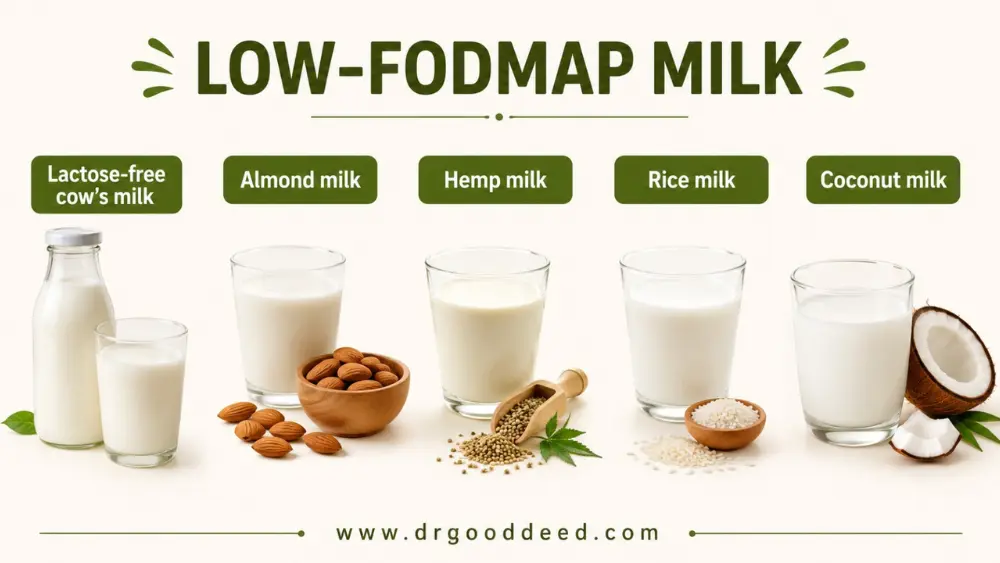
The best milk for IBS and gut health must satisfy two conditions simultaneously: it cannot contain high-FODMAP ingredients that ferment in the colon and cause IBS symptoms, and ideally it provides some digestive benefit beyond basic nutrition.
Low-FODMAP Milk Options Explained
FODMAP stands for Fermentable Oligosaccharides, Disaccharides, Monosaccharides, and Polyols. Lactose is a disaccharide that qualifies as high-FODMAP. For IBS patients, Monash University (the institution that developed and validates the low-FODMAP diet) lists these milks as low-FODMAP safe:
- Lactose-free cow’s milk (any fat level)
- Almond milk (unsweetened, up to 1 cup per serving)
- Hemp milk (up to 1 cup per serving)
- Rice milk (up to half a cup; larger amounts contain excess fructose)
- Coconut milk beverage (not canned coconut cream; up to half a cup)
Oat milk and soy milk made from whole soybeans are high-FODMAP and commonly trigger IBS symptoms.
Lactose Intolerance and IBS Symptoms
Lactose intolerance and IBS are separate conditions but frequently overlap. Approximately 70% of IBS patients report worsening symptoms after dairy consumption, per the American Journal of Gastroenterology.
However, a 2013 study in Gut found that only 37% of IBS patients who believed they were lactose intolerant actually had confirmed lactase deficiency on hydrogen breath testing. Many self-diagnosed lactose-intolerant patients actually have fructose malabsorption or IBS visceral hypersensitivity reacting to the volume of liquid, not lactose specifically.
Almond Milk and Oat Milk Considerations
Almond milk is low-FODMAP and gut-neutral for most IBS patients. It contains no lactose, minimal fiber, and no significant probiotic content. Its main gut benefit is what it lacks, not what it provides.
Check labels for carrageenan, an additive derived from seaweed that a 2017 review in Frontiers in Pediatrics linked to intestinal inflammation in animal models. Many commercial almond milk brands have since removed carrageenan, but some still include it.
Oat milk contains beta-glucan, a soluble fiber that feeds Bifidobacterium specifically. However, oat milk also contains fructans that make it high-FODMAP. IBS patients who tolerate oat milk at small amounts (under half a cup) may benefit from its fiber. Those who react to fructans should avoid it entirely.
Avoiding Trigger Ingredients in Flavored Milk
Flavored milk drinks, including chocolate milk, vanilla oat milk, strawberry dairy drinks, and sweetened nut milks, contain added sugars, artificial sweeteners, and carrageenan. A single 240ml serving of chocolate-flavored milk contains up to 24 grams of added sugar. That single dose feeds Candida albicans and Firmicutes while suppressing Lactobacillus populations within 24 hours.
Best Time to Drink Milk for Digestion
The best time to drink milk for digestion depends on the type of milk, the presence of probiotic bacteria, and whether digestive symptoms like acid reflux or bloating occur at specific times of day.
Milk With Meals vs Empty Stomach
Probiotic-containing milks like kefir perform best when consumed 30 minutes before a meal or alongside food. Stomach acid peaks at pH 1.5 in a fasted state. Consuming kefir before food, when pH rises to 3.5 to 4.5, allows more bacteria to survive transit through the stomach. Eating kefir with a fat-containing meal (eggs, avocado, nuts) further protects bacterial membranes through lipid buffering.
Plain cow’s milk and lactose-free milk have no timing requirement from a probiotic standpoint. Drink them whenever they fit the meal.
Nighttime Milk and Digestion
Warm milk before bed is a widely practiced habit. The digestive rationale is modest but real. Milk contains tryptophan, an amino acid that converts to serotonin and then to melatonin. One 250ml cup of whole milk provides approximately 82mg of tryptophan. Melatonin supports sleep quality, and sleep below 6 hours per night measurably reduces Lactobacillus populations in the gut.
People with acid reflux (GERD) should avoid milk within 2 hours of lying down. Milk temporarily neutralizes stomach acid but then stimulates more acid production 20 to 40 minutes later, worsening nighttime reflux in GERD patients.
Pairing Milk With Fiber-Rich Foods
Kefir paired with oats, berries, or ground flaxseed amplifies gut health outcomes. The kefir delivers live bacteria while the fiber provides prebiotic fuel for those bacteria to ferment in the colon. This pairing produces more butyrate (short-chain fatty acid that fuels the colon lining) than kefir or fiber alone.
Timing Based on Digestive Comfort
The best time to drink milk for digestion for IBS patients is specifically not on an empty stomach. An empty stomach allows lactose or FODMAP ingredients to reach the small intestine rapidly, producing faster and more intense fermentation and symptom onset. Drinking low-FODMAP milk options alongside a balanced meal slows gastric emptying and reduces symptom severity.
Milk Options That May Worsen Digestive Symptoms
High-Sugar Flavored Milk Drinks
Flavored milk drinks are among the worst milk choices for gut health. Chocolate milk (regular dairy version) contains 24g of sugar per 240ml. Sweetened oat milks contain 7 to 19g of added sugar per cup. These sugar loads shift gut bacterial balance toward Firmicutes and Candida within 24 hours, per research from Cell (Wastyk et al., 2021).
Full-Fat Dairy and Reflux Symptoms
Full-fat dairy slows gastric emptying by increasing fat content in the stomach. For people with GERD, slower gastric emptying increases intragastric pressure, which forces stomach acid upward through the lower esophageal sphincter. Full-fat milk is not inherently bad for the gut, but it worsens acid reflux symptoms specifically in GERD patients. Low-fat or lactose-free options reduce this effect.
Artificial Additives and Gut Irritation
Carrageenan (found in many plant milks), polysorbate-80 (an emulsifier in some flavored dairy drinks), and artificial sweeteners like sucralose (found in some light milk products) all disrupt gut bacteria or increase intestinal inflammation.
A 2015 study in Nature (Chassaing et al.) confirmed that polysorbate-80 at dietary doses reduced gut mucus thickness and increased intestinal permeability in animal models.
Excess Dairy Intake and Bloating
More than 500ml of cow’s milk daily exceeds the lactose tolerance threshold of most adults with partial lactase deficiency, even those who consider themselves lactose-tolerant. Bloating, gas, and loose stools at that intake level indicate that lactase enzyme production cannot keep pace with lactose load.
Signs Your Body May Not Tolerate Certain Milk Types
Bloating and Excessive Gas
Bloating within 30 to 90 minutes of drinking cow’s milk specifically (not kefir or lactose-free milk) signals lactose intolerance. Bloating from oat milk or soy milk signals FODMAP sensitivity. The timing distinction helps identify which component causes the reaction.
Diarrhea or Abdominal Discomfort
Loose stools within 2 hours of milk consumption indicate lactose reaching the colon undigested, where bacteria ferment it and draw water into the intestine osmotically. Switching to lactose-free milk or kefir (which is 99% lactose-free due to bacterial fermentation) resolves this within 2 to 3 days.
Acid Reflux After Dairy Intake
Acid reflux appearing 20 to 40 minutes after drinking regular milk reflects the acid rebound effect. Milk neutralizes stomach acid briefly, then the stomach overcompensates with increased acid production. People with GERD who experience this should try lactose-free, low-fat options or switch to almond milk, which has no acid-stimulating effect.
IBS Flare-Ups Linked to Milk Products
IBS flare-ups consistently appearing after oat milk, soy milk, or regular cow’s milk point to FODMAP sensitivity. The best milk for IBS and gut health in this case is unsweetened almond milk, hemp milk, or lactose-free dairy milk, all confirmed low-FODMAP by Monash University testing.
Other Foods That Support Gut Health Alongside Milk
Fiber-Rich Fruits and Vegetables
Berries (blueberries, raspberries), Jerusalem artichokes, and green bananas provide prebiotic fiber that amplifies the benefit of probiotics in fermented dairy drinks like kefir. The bacteria in kefir ferment these fibers more efficiently than they ferment simple sugars, producing 30 to 40% more butyrate per gram of fiber consumed.
Fermented Foods and Probiotics
Rotating kefir with sauerkraut, kimchi, miso, and plain live-culture yogurt introduces more bacterial strain diversity than any single fermented milk alone. The 2021 Stanford Cell trial (Wastyk et al.) used varied fermented foods, not one repeated source, to achieve 19% microbiome diversity increases over 10 weeks.
Hydration and Bowel Regularity
Each gram of dietary fiber consumed requires approximately 100ml of additional water to function without causing constipation. If adding kefir or oat milk (for its beta-glucan fiber) increases daily fiber intake, increase water intake proportionally to prevent bloating or hardened stool from insufficient hydration.
Anti-Inflammatory Whole Foods
Turmeric, ginger, and omega-3-rich foods (walnuts, flaxseeds, salmon) reduce intestinal inflammation through NF-kB pathway suppression. Combining these foods with daily kefir, the best milk for gut health, creates complementary effects: kefir restores bacteria while anti-inflammatory foods reduce the intestinal inflammation that dysbiosis causes.
Lifestyle Habits That Influence Gut Health
Stress and Digestive Symptoms
Cortisol from psychological stress increases intestinal permeability within hours. Drinking kefir daily during chronic stress periods provides less benefit if cortisol continuously disrupts tight junction proteins in the gut lining. Stress management directly supports whatever milk and dietary choices are made for gut health.
Sleep and Microbiome Balance
Sleep below 6 hours per night reduces Lactobacillus populations measurably, per Benedict et al. (Molecular Metabolism, 2016). Consuming kefir daily while chronically sleep-deprived produces weaker microbiome improvement than the same consumption alongside 7 to 9 hours of sleep.
Exercise Supporting Digestion
Moderate aerobic exercise (150 minutes per week) increases gut microbiome diversity independently of diet, per a 2019 study in Medicine and Science in Sports and Exercise. Regular walkers who consume kefir daily show faster microbiome diversity recovery after antibiotic treatment than sedentary individuals on the same kefir intake.
Processed Foods and Gut Inflammation
Ultra-processed foods containing emulsifiers (carboxymethylcellulose, polysorbate-80) thin the gut mucus layer that houses beneficial bacteria. Drinking kefir while consuming a diet high in UPFs partially offsets the benefit. Milk choice matters, but the overall dietary pattern determines whether gut bacteria can sustain the improvements that fermented milk introduces.
FAQs
What is considered the best milk option for gut health?
The best milk for gut health is full-fat, unsweetened kefir. It delivers 15 to 25 billion CFUs from 12 or more bacterial strains per 250ml serving, reduces H. pylori load by 48% in 4 weeks (per a 2017 Nutrients trial), and is 99% lactose-free due to bacterial fermentation. No other milk type matches this combination of probiotic density and digestive tolerability.
How does kefir support the gut microbiome?
Kefir milk for gut health benefits come from Lactobacillus kefiri, a strain unique to kefir that directly inhibits Salmonella and H. pylori adhesion to the gut lining. Kefir also increases Bifidobacterium populations, produces butyrate that fuels the colon lining, and reduces intestinal permeability markers within 3 to 4 weeks of daily consumption.
Which milk options are best for IBS and lactose intolerance?
The best milk for IBS and gut health is unsweetened almond milk, hemp milk, or lactose-free cow’s milk, all confirmed low-FODMAP by Monash University. Soy milk (whole soybean-based) and oat milk are high-FODMAP and trigger IBS symptoms. Kefir is also IBS-safe because fermentation removes 99% of its lactose content.
Are fermented dairy drinks better for digestion than regular milk?
Yes. Probiotics in fermented dairy drinks like kefir and drinkable yogurt deliver live bacteria that regular milk cannot. Regular cow’s milk provides calcium and protein but introduces no beneficial bacteria and often causes bloating in the 36% of Americans with lactose intolerance. Fermented dairy addresses both nutrition and microbiome support simultaneously.
Can flavored milk drinks worsen bloating and digestive symptoms?
Yes. Flavored milk drinks contain 7 to 24 grams of added sugar per serving. That sugar load feeds Candida albicans and Firmicutes while suppressing Lactobacillus within 24 hours. Carrageenan, present in many flavored plant milks, increases intestinal inflammation. fat food is among the worst food for gut health options regardless of its dairy or plant base.
What is the difference between dairy milk and plant-based milk for gut health?
Dairy kefir provides live probiotic bacteria (12+ strains). Regular dairy milk provides calcium and protein but no gut bacteria benefit. Oat milk provides prebiotic beta-glucan fiber but no live bacteria and is high-FODMAP. Almond milk is gut-neutral and low-FODMAP. No plant-based milk naturally contains probiotic bacteria unless specifically fermented with live cultures.
When is the best time to drink milk for digestion support?
The best time to drink milk for digestion, for kefir specifically, is 30 minutes before a meal or alongside fat-containing food. Stomach pH rises from 1.5 (fasted) to 3.5 to 4.5 pre-meal, improving bacterial survival through the stomach. For GERD patients, avoid all milk within 2 hours of lying down to prevent acid rebound effects.
How do probiotics in kefir and yogurt drinks help digestion?
Probiotics in fermented dairy drinks produce bacteriocins (natural antimicrobials), lactic acid (lowers gut pH to inhibit pathogens), and butyrate (fuels colon lining cells). Bifidobacterium animalis DN-173 010 in drinkable yogurt reduces IBS symptom severity and improves bowel transit time within 4 weeks, confirmed by a 2007 Alimentary Pharmacology and Therapeutics trial.
Which plant-based milk options are low-FODMAP friendly?
Unsweetened almond milk (up to 240ml), hemp milk (up to 240ml), rice milk (up to 120ml), and coconut milk beverage (up to 120ml) are confirmed low-FODMAP by Monash University. Oat milk, soy milk from whole soybeans, and cashew milk are high-FODMAP and consistently trigger bloating and cramping in IBS patients.
When should digestive symptoms related to milk intake be medically evaluated?
See a gastroenterologist when bloating, diarrhea, or abdominal pain persists beyond 2 weeks after switching to low-FODMAP milk options, when blood appears in stool, when unintended weight loss accompanies digestive symptoms, or when acid reflux occurs more than twice weekly despite eliminating full-fat dairy. These signs need clinical testing, not further milk switching.