The best foods for gut health in summer are not the same ones that work for you in winter. Heat changes how your digestive system works. It slows gut motility, shifts the bacterial balance inside your intestines, and pulls water away from your colon faster than your body can replace it.
Research published in Cell Host & Microbe confirms that the human gut microbiome shifts seasonally, with diversity dropping in warmer months when diets become more processed and fluid intake stays too low.
The best foods for gut health in summer work because they address dehydration, bacterial imbalance, and slow gastric emptying at the same time. Add yogurt, papaya, coconut water, and leafy greens consistently. Keep meals small and spaced out. The gut responds faster to dietary changes than most people expect.
Why Gut Health Needs Special Attention in Summer
Summer quietly disrupts digestion in ways most people don’t connect to their diet. Bloating, constipation, and acid reflux spike during hot months, and food choices are usually the cause.
Dehydration Slowing Digestion
The colon absorbs water from waste material before it exits the body. When overall fluid intake drops in summer, the colon pulls more water than usual, and stool hardens. That’s constipation, and it gets worse the more dehydrated you get. Most adults in the US drink less than 2 liters per day. In summer, that’s not enough.
Heat Affecting Gut Microbiome Balance
High ambient temperatures increase intestinal permeability, sometimes called “leaky gut,” by stressing the epithelial lining of the gut. Heat also promotes the growth of gram-negative bacteria, which cause inflammation, while reducing beneficial Lactobacillus populations. Eating the right foods actively counters this shift.
Increased Risk of Bloating and Acidity
Gastric emptying slows slightly in high heat. Food sits longer in the stomach. Stomach acid production stays the same but food transit time increases, which creates the conditions for acid reflux and gas buildup. Eating heavy, oily meals in summer makes this significantly worse.
Summer Foods That Improve Digestion
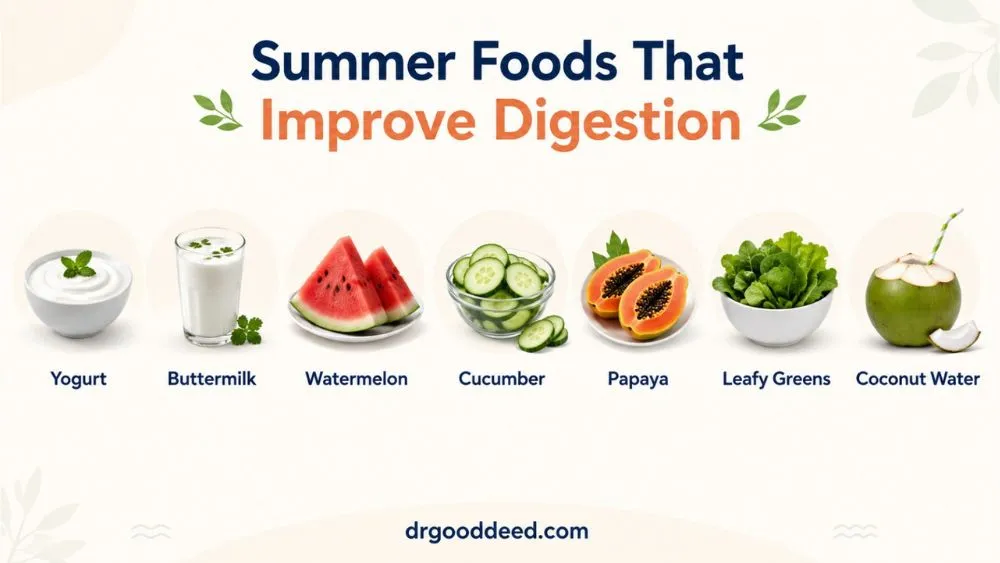
Summer foods that improve digestion are high in water, fiber, or beneficial bacteria. Any food that hits two of those three qualities belongs in a summer diet.
Yogurt and Buttermilk (Probiotic Foods for Summer Gut Health)
Full-fat plain yogurt contains Lactobacillus acidophilus and Bifidobacterium lactis. Both strains reduce gut inflammation and improve stool regularity. One cup of plain yogurt daily is enough. Buttermilk is even easier to digest than yogurt because it’s already partially fermented and lower in fat.
Watermelon and Cucumber (Hydrating Foods)
Watermelon is 92% water and contains citrulline, an amino acid that supports blood flow to the intestinal lining. Cucumber is 95% water and has mild anti-inflammatory compounds. Both prevent the colonic dehydration that leads to constipation.
Papaya (Digestive Enzymes)
Papaya contains papain, a proteolytic enzyme that breaks down protein faster than stomach acid alone. It also contains chymopapain, which reduces gut inflammation. Eating half a cup of papaya after a heavy meal measurably speeds up protein digestion.
Leafy Greens (Fiber-Rich Foods)
Spinach, kale, and arugula feed the beneficial bacteria in your colon. They contain prebiotic fiber that Lactobacillus strains use as fuel. Without prebiotics, probiotics have limited effect. The two work together.
Coconut Water (Electrolyte Balance)
Coconut water replaces potassium and magnesium lost through sweat. Both minerals are required for smooth muscle contraction in the intestinal wall. Without them, peristalsis (the wave-like motion that moves food through the gut) slows down.
Probiotic Foods for Summer Gut Health
Probiotic foods for summer gut health restore the Lactobacillus populations that heat and processed food strip away. Not all probiotic foods are equal in summer.
Yogurt and Curd
Plain curd made from whole milk contains 10 to 100 million CFUs (colony-forming units) of beneficial bacteria per serving. Flavored yogurts often have added sugar, which feeds pathogenic bacteria more than beneficial ones. Stick to plain, unsweetened versions.
Buttermilk
Traditional buttermilk (not the store-bought cultured version) is the liquid left after churning butter. It’s high in lactic acid bacteria and digests faster than regular milk. A glass with lunch reduces post-meal bloating better than antacids for mild cases.
Fermented Foods
Kimchi and sauerkraut add Lactobacillus strains not found in yogurt. Even a small serving, around 2 tablespoons, provides measurable microbial diversity benefits. Miso soup, served warm (not hot), preserves live cultures and also contributes to fluid intake.
Easy to Digest Foods in Hot Weather
Easy-to-digest foods in hot weather have three things in common: low fat content, high water content, and simple fiber. The gut doesn’t work as hard to process them.
Light Soups
Broth-based soups with vegetables provide electrolytes and fiber without the processing load of heavy meals. Avoid cream-based soups in summer. They slow gastric emptying and increase reflux risk.
Steamed Vegetables
Steaming breaks down cell walls in vegetables without destroying water-soluble vitamins. Steamed zucchini, carrots, and green beans are soft enough to pass through the digestive tract quickly and cause minimal gas.
Soft Grains Like Rice
White rice digests faster than brown rice because it has less insoluble fiber. For people with summer diarrhea or an irritated gut, white rice is specifically recommended. It absorbs excess water in the intestines and stabilizes bowel movements.
Foods for Constipation Relief in Heat
Foods for constipation relief in heat work by adding bulk to stool or drawing water into the colon.
High-Fiber Fruits
- Pears: 5.5 grams of fiber per medium fruit, including sorbitol, which draws water into the colon
- Kiwi: Contains actinidin, an enzyme that speeds colonic transit
- Prunes: Contain dihydroxyphenyl isatin, a natural compound that stimulates intestinal muscle contractions
Hydrating Vegetables
Celery, lettuce, and bell peppers are over 90% water. They add both fluid and insoluble fiber to the gut simultaneously, which is what constipation needs most.
Natural Laxative Foods (Like Papaya)
Papaya is the most effective natural laxative for summer constipation. It softens stool through its enzyme content and hydrates the colon through its water content. Two cups in the morning on an empty stomach produces results within 4 to 6 hours for most people.
Diet Tips for Gut Health in Summer
Diet tips for gut health in summer come down to timing and volume, not just food choice.
Eat Smaller, Frequent Meals
Large meals slow gastric emptying in any season. In summer, they also raise core body temperature after eating, a process called diet-induced thermogenesis. Eating 4 to 5 small meals instead of 2 to 3 large ones keeps digestion moving without adding heat stress.
Stay Hydrated Throughout the Day
The US National Academies recommend 3.7 liters of total water daily for men and 2.7 liters for women in normal conditions. In summer with physical activity, add 500 mL per hour of sweat. Gut tissue needs consistent hydration to function correctly.
Avoid Heavy and Oily Foods
Fried foods delay gastric emptying by 2 to 4 hours compared to lean protein or vegetables. worst food for gut health , this compounds with natural heat-related slowing. The result is bloating and acid reflux that lasts well into the evening.
Common Summer Gut Problems
| Problem | Main Cause | Quick Fix |
| Bloating | Slow gastric emptying, carbonated drinks | Buttermilk, smaller meals |
| Constipation | Dehydration, low fiber | Papaya, pears, more water |
| Indigestion | Heavy meals, heat stress | Light soups, steamed food |
| Acid reflux | Fatty food, late eating | Eat 3 hours before bed |
Daily Summer Diet Plan for Gut Health
Morning Hydration and Fruits
Start with 16 oz of room-temperature water before anything else. Follow with half a papaya or a kiwi. This combination starts peristalsis and hydrates the colon before the day’s heat sets in.
Light Lunch Options
- Curd rice or yogurt with cucumber
- Lentil soup with steamed vegetables
- A small salad with leafy greens, cherry tomatoes, and a lemon dressing
Avoid meat-heavy lunches. Protein takes longer to digest and adds heat load.
Easy Dinner Choices
Dinner should be the lightest meal in summer. Vegetable soup, steamed rice with miso, or a small bowl of plain curd with fruit works well. Stop eating 2.5 to 3 hours before bed to allow gastric emptying before sleep.
FAQs
What are the best fruits for gut health during summer?
Papaya, kiwi, and pears are the strongest choices. Papaya’s papain enzyme speeds protein digestion. Kiwi’s actinidin accelerates gut transit by up to 50% per a 2010 study in Advances in Food and Nutrition Research. Pears add sorbitol, which pulls water into the colon.
Can heat slow down digestion or cause gut issues?
Yes. Heat above 95°F increases intestinal permeability and slows gastric emptying. This raises the risk of bloating, constipation, and bacterial imbalance. The gut’s smooth muscle responds to heat stress by contracting less efficiently, which stalls digestion at multiple points.
How do probiotics help maintain gut balance in hot weather?
Probiotic foods for summer gut health restore Lactobacillus strains that decline in summer heat. These strains produce lactic acid, which lowers gut pH and prevents overgrowth of pathogenic gram-negative bacteria. Results appear within 7 to 14 days of consistent daily intake.
What are the signs of poor digestion in summer?
Bloating after small meals, hard or pellet-shaped stool, acid rising into the throat after eating, and fatigue 30 to 60 minutes after meals. These four symptoms together signal that gastric emptying is impaired and gut bacteria are out of balance.
Is buttermilk better than yogurt for summer digestion?
Yes, for most people. Buttermilk has a lower fat content than yogurt and a higher lactic acid concentration. It digests faster and reduces post-meal bloating more quickly. For people with mild lactose sensitivity, buttermilk is the better choice because fermentation breaks down most of the lactose.
Can dehydration lead to constipation in summer?
Yes. The colon extracts water from stool before elimination. When fluid intake is low, the colon absorbs too much water, and stool becomes hard and difficult to pass. Drinking less than 2 liters of water daily in summer is enough to cause constipation within 24 to 48 hours.
What should I eat if I feel bloated in hot weather?
Eat half a cup of plain curd, a tablespoon of fennel seeds steeped in hot water, or a cup of ginger tea. Skip carbonated drinks, raw onions, and beans. These three cause more gas in the gut than any other summer foods.
Are cold foods good or bad for gut health in summer?
Cold foods are fine but ice-cold foods slow gastric motility slightly. A smoothie at room temperature digests faster than the same smoothie served with ice. Extreme cold can trigger cramping in people with irritable bowel syndrome. Mildly cool is better than ice-cold.
How often should I eat to maintain digestion in summer?
Eat every 3 to 4 hours. This keeps gastric acid from sitting in an empty stomach and prevents the large meal-related heat spikes that slow digestion. Four smaller meals outperform three large ones, specifically tips for gut health in summer.
Can summer diet changes improve gut microbiome health?
Yes, within 3 to 4 days. A 2015 study in Nature found that dietary changes alter gut bacterial populations within 24 hours. Switching to best foods for gut health in summer, specifically fermented foods, high-fiber fruits, and hydrating vegetables, measurably shifts microbiome composition within one week.