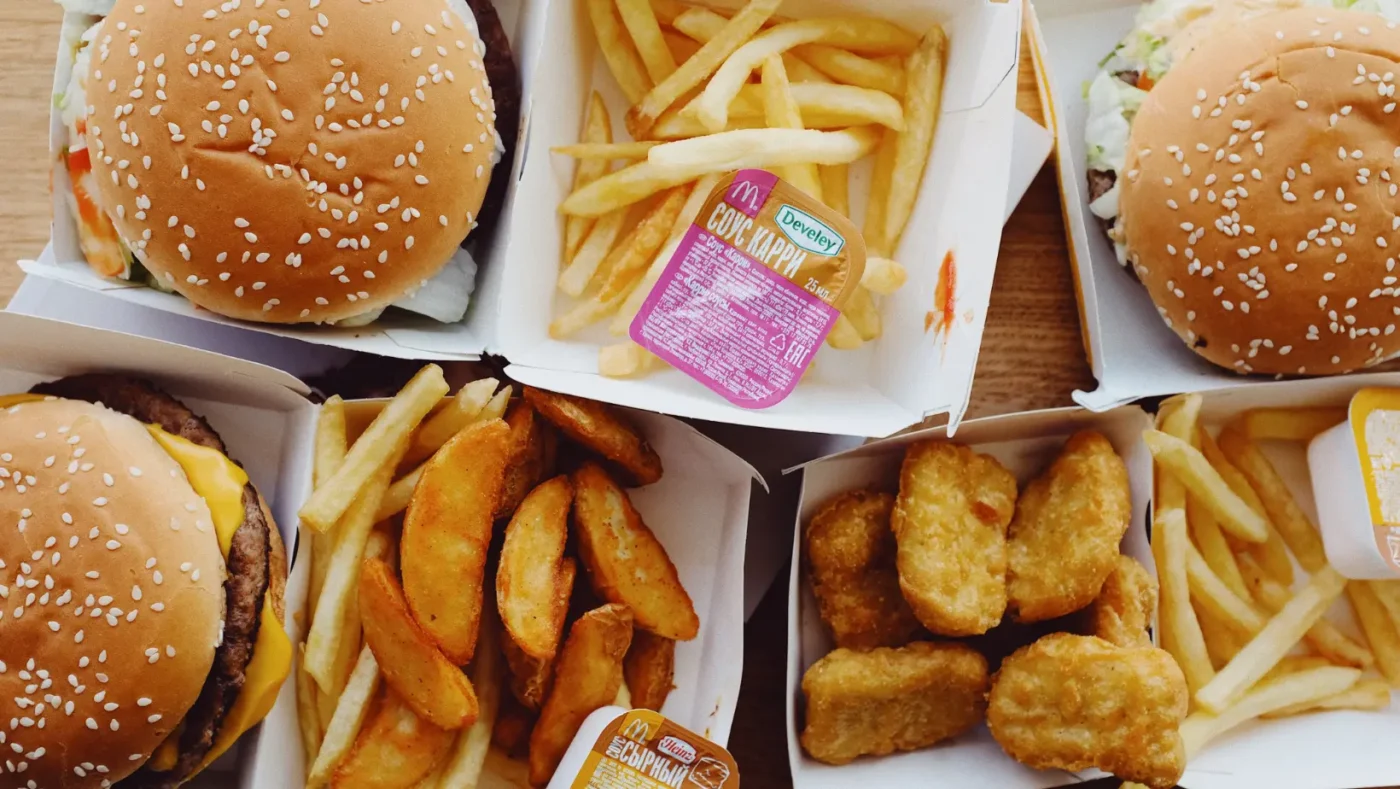

The worst foods for gut health are ultra-processed foods, excess added sugar, artificial sweeteners, fried foods, and refined carbohydrates, all of which directly disrupt the trillions of bacteria living in your digestive tract.
The human gut microbiome contains roughly 38 trillion microbial cells, and according to a 2019 review in Cell, dietary patterns are the single strongest modifiable factor shaping that ecosystem.
In the United States, more than 60% of daily calories come from ultra-processed foods, which is a dietary pattern clinically associated with reduced microbial diversity, increased intestinal inflammation, and higher rates of irritable bowel syndrome (IBS).
Why Gut Health Matters
The gut microbiome regulates digestion, immune response, serotonin production, and intestinal barrier integrity. When the microbial balance tips toward harmful bacteria, a condition called dysbiosis, the consequences extend well beyond the stomach.
Dysbiosis connects to irritable bowel syndrome, inflammatory bowel disease, type 2 diabetes, depression, and autoimmune conditions.
- The gut produces 90% of the body’s serotonin, the chemical that regulates mood and sleep
- 70% of the immune system operates within gut-associated lymphoid tissue (GALT)
- A damaged gut lining (leaky gut or intestinal hyperpermeability) allows bacterial toxins into the bloodstream, triggering systemic inflammation
- Gut bacteria produce short-chain fatty acids (SCFAs) like butyrate, which fuel the colon lining and reduce colorectal cancer risk
What you eat determines which bacteria thrive. The worst foods for gut health feed harmful strains like Clostridium difficile and Fusobacterium while starving beneficial bacteria like Lactobacillus and Bifidobacterium.
Foods That Damage Gut Health
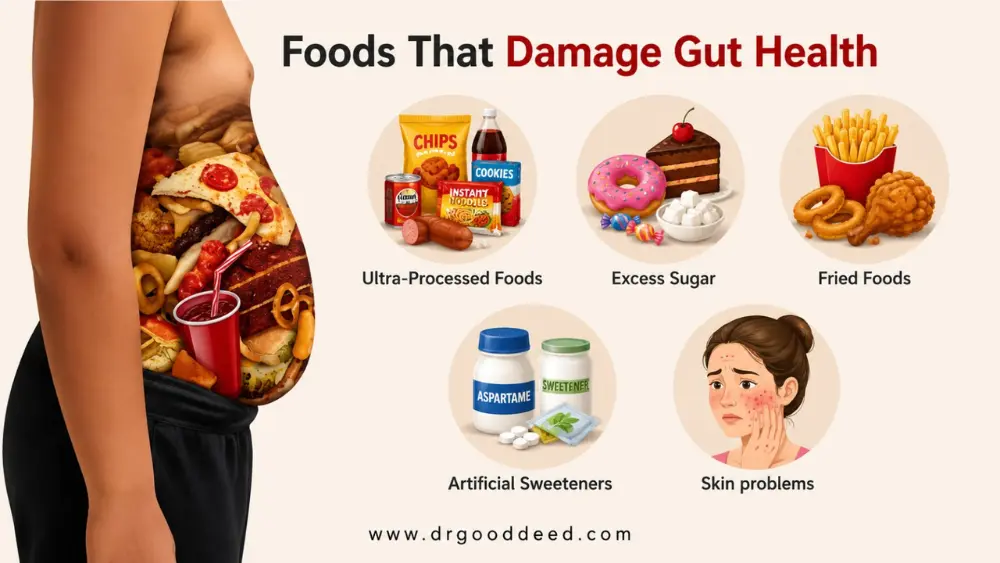
Foods that damage gut health work through three main mechanisms: feeding harmful bacteria, reducing bacterial diversity, and directly irritating the intestinal lining.
Ultra-Processed Foods and Additives
Ultra-processed foods (UPFs) contain emulsifiers like carboxymethylcellulose (CMC) and polysorbate-80. A 2015 study in Nature (Chassaing et al.) found that these two emulsifiers at doses comparable to typical human consumption disrupted gut mucus layers in mice, increased intestinal permeability, and promoted low-grade inflammation. The gut lining is only one cell thick. When emulsifiers thin the protective mucus layer, bacteria get direct access to that single-cell barrier.
UPFs also contain preservatives like sodium benzoate and BHA (butylated hydroxyanisole), which research published in the Journal of Nutritional Biochemistry (2019) linked to reduced Lactobacillus populations in the gut.
Excess Sugar and Gut Bacteria Imbalance
Added sugar selectively feeds Firmicutes bacteria and Candida albicans, a yeast that overgrows when sugar is abundant. High-sugar diets reduce Bacteroidetes populations, and the ratio of Firmicutes to Bacteroidetes is a clinical marker for gut health and metabolic disease.
A 2021 randomized controlled trial in Cell (Wastyk et al., Stanford) compared high-fiber to high-fermented food diets and found that gut microbiome diversity dropped measurably in participants consuming diets high in refined sugar within just two weeks.
Fried Foods and Digestive Inflammation
Fried foods contain advanced glycation end products (AGEs), compounds formed when food is cooked at high heat. AGEs activate inflammatory receptors (RAGE receptors) in the intestinal wall, increasing cytokine production. Chronically elevated intestinal cytokines damage tight junction proteins, the molecular “locks” that keep the gut lining sealed.
Fried foods also slow gastric emptying. Food that sits in the stomach longer triggers acid reflux, which brings stomach acid into the esophagus and worsens symptoms for people with gastroesophageal reflux disease (GERD).
Artificial Sweeteners and Microbiome Changes
Sucralose, saccharin, and aspartame are among the worst foods for gut health in terms of microbiome impact relative to calorie count. A 2022 randomized controlled trial in Cell (Suez et al., Weizmann Institute) tested four common sweeteners in healthy adults. Saccharin and sucralose both significantly altered gut microbiome composition and impaired glycemic response within two weeks of consumption at FDA-acceptable daily intake levels.
Stevia showed the least disruption. This is a meaningful clinical distinction that most content on sweeteners misses.
Foods Worsening IBS Symptoms
Foods worsening IBS symptoms share a common mechanism: they either ferment rapidly in the colon, stimulate excessive gut contractions, or alter the gut-brain signaling axis.
High-Fat Meals and Digestive Discomfort
High-fat meals trigger the gastrocolic reflex, a nerve-driven gut contraction that starts when fat enters the small intestine. In healthy adults, this reflex moves food forward. In people with IBS, the same reflex causes cramping, urgency, and diarrhea because their gut’s pain receptors (visceral hypersensitivity) are abnormally sensitized.
Trigger Foods Causing Bloating and Cramps
FODMAP foods (Fermentable Oligosaccharides, Disaccharides, Monosaccharides, and Polyols) are among the most clinically documented foods worsening IBS symptoms:
- Onions and garlic (high in fructooligosaccharides)
- Wheat and rye (fructans)
- Apples, pears, and mangoes (excess fructose)
- Milk and soft cheeses (lactose)
- Legumes (galactooligosaccharides)
- Stone fruits like peaches and plums (sorbitol and mannitol)
The low-FODMAP diet, developed by Monash University researchers, reduces IBS symptoms in 52 to 76% of patients (Gibson et al., Gastroenterology, 2018).
Artificial Sweeteners and IBS Flare-Ups
Sorbitol and mannitol, sugar alcohols found in sugar-free gums, candies, and some medications, ferment rapidly in the colon. They draw water into the intestine through osmosis and cause diarrhea-dominant IBS flares. Even 10 grams of sorbitol (found in about five sticks of sugar-free gum) produces symptoms in IBS patients.
Stress and Food Sensitivity Interactions
The gut-brain axis runs bidirectionally through the vagus nerve. Psychological stress increases intestinal permeability and speeds colonic transit. Foods that cause no symptoms during calm periods trigger full IBS flares during stress because the gut’s sensitivity threshold drops. This explains why IBS symptoms often worsen during major life stressors independently of dietary changes.
Sugar and Gut Health Problems
Sugar and gut health share a destructive relationship. Added sugars (sucrose, high-fructose corn syrup, glucose syrup) feed Clostridium and Streptococcus species in the gut while suppressing SCFA-producing bacteria. SCFAs, particularly butyrate, are the primary fuel for colonocytes (colon lining cells). Without adequate butyrate, the colon lining weakens.
- The average American consumes 77 grams of added sugar daily, nearly three times the American Heart Association’s recommended limit (25g for women, 36g for men)
- A high-sugar diet reduces gut bacterial diversity within 3 to 7 days, per research from King’s College London (2021)
- Fructose in excess of 25 grams per sitting reaches the colon unabsorbed, where it ferments and causes bloating
- High sugar intake is independently associated with non-alcoholic fatty liver disease (NAFLD), which alters bile acid composition and impairs fat digestion
The worst foods for gut health by sugar content per serving: commercial fruit juices (up to 36g per cup), flavored yogurts (up to 29g per serving), sweetened breakfast cereals (up to 22g per cup), and bottled smoothies (up to 50g per bottle).
How Poor Diet Affects the Gut Microbiome
Reduced Diversity of Healthy Bacteria
Dietary diversity directly predicts microbial diversity. The American Gut Project (McDonald et al., mSystems, 2018), the largest citizen science study on gut microbiomes, found that people who ate more than 30 different plant species per week had significantly more diverse gut bacteria than those eating fewer than 10. Eating the same worst foods for gut health repeatedly compounds microbial loss.
Inflammation and Digestive Discomfort
Dysbiosis increases intestinal levels of lipopolysaccharide (LPS), a toxin from gram-negative bacteria. LPS crossing into the bloodstream triggers systemic low-grade inflammation, clinically linked to metabolic syndrome, depression, and autoimmune flares.
Changes in Bowel Movement Patterns
Low-fiber diets reduce stool bulk and slow transit time. Stool sitting in the colon longer allows bacteria to extract more water, hardening it and causing constipation. Processed foods causing constipation do so because they lack the dietary fiber that feeds the bacteria responsible for producing gas and water in the colon, the exact process that keeps stool soft.
Gut-Brain Connection and Mood Effects
The gut produces 90% of serotonin through enterochromaffin cells. Dysbiosis disrupts this production. A 2019 study in Nature Microbiology found that people with depression had significantly lower levels of Coprococcus and Dialister gut bacteria, regardless of antidepressant use. Diet-driven gut changes directly affect mood, not just digestion.
Signs Your Diet May Be Affecting Gut Health
When the worst foods for gut health dominate your daily intake, the gut sends clear signals. Most people misattribute these signs to stress or aging.
- stomach hurts after eating (especially after sugar or high-fat meals)
- Loose stools or constipation alternating without an obvious cause
- Constant low-grade fatigue not explained by sleep deprivation
- Skin problems like acne or eczema worsening after dietary changes
- Increased frequency of colds and infections (gut immune dysfunction)
- Brain fog, poor concentration, or irritability after meals
- Acid reflux or heartburn occurring more than twice per week (possible GERD)
- Foul-smelling gas with a distinctly different odor than usual (signals bacterial overgrowth)
Any combination of three or more of these symptoms lasting longer than 4 weeks warrants a clinical evaluation, not just a diet change.
How to Heal Gut Health Naturally
Healing gut health naturally requires systematic changes, not single-food swaps. The gut microbiome responds measurably within 48 to 72 hours of dietary change, per research from the University of California San Francisco (David et al., Nature, 2014).
Increasing Fiber Gradually
Add 5 grams of fiber per week rather than all at once. Sudden high-fiber intake causes gas and bloating as bacteria adjust. Target 25 to 38 grams daily (USDA Dietary Guidelines). Prebiotic-rich sources like Jerusalem artichokes, leeks, and green bananas feed Bifidobacterium specifically.
Eating Probiotic and Fermented Foods
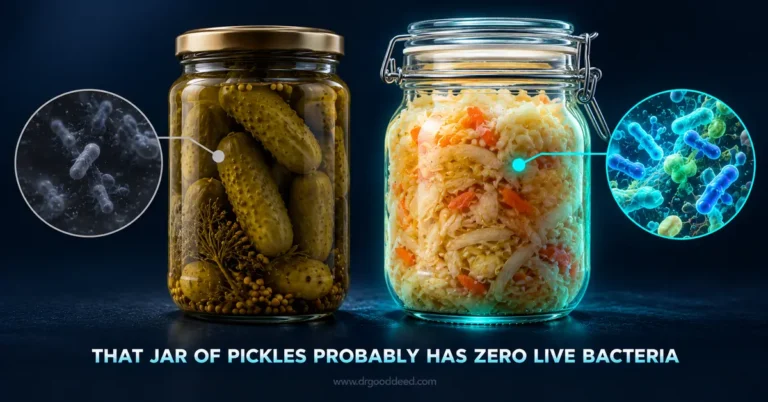
Kimchi, kefir, plain yogurt with live cultures, sauerkraut, and miso introduce live bacteria directly. The Stanford Cell trial (2021) showed that six servings of fermented foods daily increased microbiome diversity by 19% over ten weeks, an improvement that no single supplement matched.
Hydration and Bowel Regularity
Water keeps intestinal mucus layers hydrated. Mucus is the habitat for beneficial bacteria. Dehydration hardens stool and slows transit. Adults need 2.7 to 3.7 liters of total water daily (National Academies of Medicine), including water from food.
Reducing Ultra-Processed Foods Slowly
Cutting UPFs abruptly causes cravings that often result in overcorrection. Replace one UPF per week with a whole-food alternative. Replacing chips with roasted chickpeas adds fiber and reduces emulsifier exposure simultaneously.
Managing Stress and Sleep Quality
Cortisol, the stress hormone, directly increases intestinal permeability. Chronic sleep deprivation below 6 hours per night reduces Lactobacillus populations and increases inflammatory gut markers (Benedict et al., Molecular Metabolism, 2016). Sleep and stress are not secondary factors for gut health. They are primary ones.
FAQs
What foods are considered the worst for gut health?
The worst foods for gut health are ultra-processed foods containing emulsifiers (carboxymethylcellulose, polysorbate-80), added sugars above 25 grams daily, artificial sweeteners (saccharin, sucralose), fried foods with AGEs, and refined white flour products. These five categories directly reduce beneficial bacteria and increase intestinal inflammation.
How do processed foods contribute to constipation and bloating?
Processed foods causing constipation lack dietary fiber, which colon bacteria ferment to produce the gas and moisture that keep stool soft. A diet under 10 grams of fiber daily slows transit time by 30 to 40 hours. Emulsifiers in UPFs also thin gut mucus, increasing bloating-related bacterial overgrowth.
Why can sugary foods negatively affect gut bacteria balance?
Added sugar feeds Firmicutes and Candida albicans while starving Bifidobacterium and Lactobacillus. This imbalance reduces butyrate production, weakening the colon lining. The Stanford Cell (2021) trial showed measurable microbiome diversity loss within two weeks of a high-sugar diet.
Which foods commonly worsen IBS symptoms?
Foods worsening IBS symptoms include onions, garlic, wheat, apples, milk, legumes, and stone fruits. These high-FODMAP foods ferment in the colon, producing excess gas. Additionally, sorbitol in sugar-free gum (as little as 10 grams) triggers diarrhea-dominant IBS flares through osmotic water draw.
How do fried foods and caffeine trigger acid reflux?
Fried foods slow gastric emptying, keeping food in the stomach longer and increasing pressure on the lower esophageal sphincter. Caffeine directly relaxes that sphincter muscle. Foods that trigger acid reflux do so by combining stomach pressure with a weakened valve, allowing acid backflow into the esophagus.
Can stress and poor sleep affect digestion and gut health?
Yes. Cortisol from chronic stress increases intestinal permeability within hours, allowing bacterial toxins into the bloodstream. Sleep under 6 hours per night measurably reduces Lactobacillus populations. Both factors worsen the damage caused by the worst foods for gut health by lowering the gut’s resilience threshold.
What foods may help restore healthy gut bacteria naturally?
Kefir, kimchi, plain live-culture yogurt, sauerkraut, and miso introduce live beneficial bacteria. Prebiotic foods like Jerusalem artichokes, leeks, and green bananas feed existing Bifidobacterium. The Stanford 2021 Cell trial showed six daily servings of fermented foods increased microbiome diversity by 19% in ten weeks.
How does hydration support digestive health and bowel movements?
Water maintains the mucus layer lining the gut, which is the habitat for beneficial bacteria. Dehydration reduces mucus thickness by up to 15%, exposing the intestinal wall. Adequate hydration (2.7 to 3.7 liters daily) keeps stool soft, supports transit speed, and preserves the bacterial environment that digestion depends on.
What are common signs of poor gut health?
Bloating within 60 minutes of eating, alternating constipation and loose stools, chronic fatigue, skin flare-ups, brain fog after meals, more than two acid reflux episodes per week, and foul-smelling gas with an unusual odor. Three or more of these lasting beyond 4 weeks signal active dysbiosis.
When should digestive symptoms be medically evaluated?
See a doctor when symptoms persist beyond 4 weeks, when blood appears in stool, when unintended weight loss exceeds 5% of body weight in 30 days, or when abdominal pain wakes you from sleep. These signs go beyond dietary gut imbalance and require clinical evaluation for IBD, colorectal disease, or infection.