

Medical Disclaimer : This article is for informational purposes only and does not replace professional medical advice, diagnosis, or treatment. Seek urgent medical care for unexplained or severe chest pain.
Migraine Headache and sore chest Pain together is more common than most people expect, and the connection is not coincidental. The American Migraine Foundation estimates that over 39 million Americans live with migraines, and a significant portion report chest-related symptoms during or after an attack.
The link runs through shared neurological pathways, vascular changes, medication side effects, and anxiety responses triggered by severe head pain. This article covers every major cause, how to tell what is serious, and what doctors actually check when both symptoms show up together.
Can Migraines Cause Chest Pain?
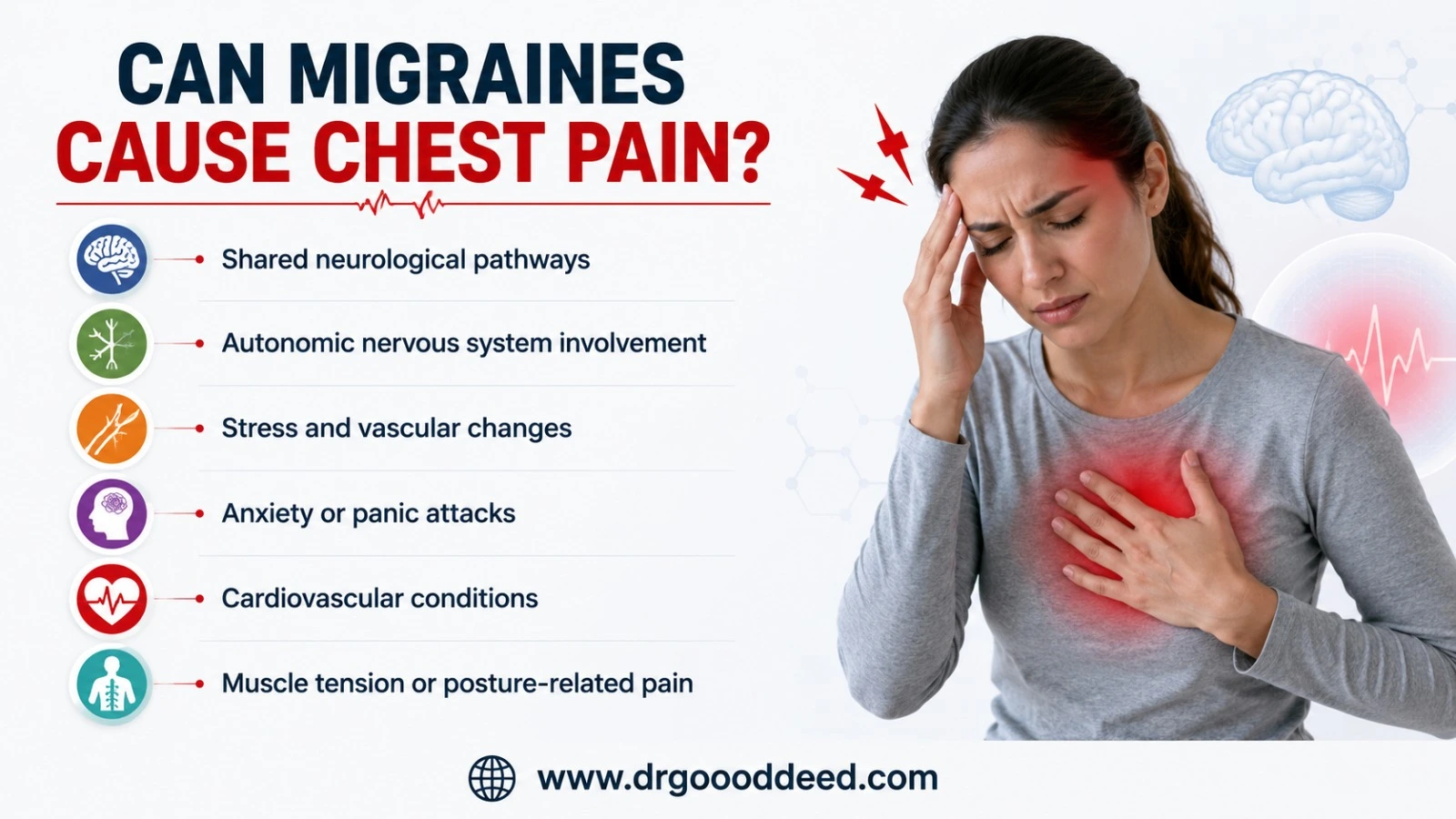
Migraines chest pain have several distinct mechanisms, not just one. The brain and chest share overlapping nerve pathways, meaning signals during a migraine do not stay confined to the head.
Shared neurological pathways (brain-body link)
The trigeminal nerve, which drives migraine pain, has connections that extend beyond the skull. During a chest pain and a headache, neurogenic inflammation spreads along these pathways and triggers sensations in the chest wall, throat, and upper body.
Autonomic nervous system involvement
Migraines activate the autonomic nervous system, which controls heart rate, blood pressure, and breathing. This activation can cause chest tightness, palpitations, and shortness of breath even without any structural heart problem.
Stress and vascular changes
Migraine attacks cause blood vessels to dilate and then constrict. This vascular shift affects circulation across the body, including the chest. Reduced blood flow to the chest wall muscles produces tightness and discomfort.
Anxiety or panic attacks
Severe head pain triggers anxiety in many migraine sufferers. Anxiety then produces its own chest tightness through hyperventilation and muscle tension. The result is chest pain that is real and physically measurable.
Cardiovascular conditions (rare but serious)
In rare cases, chest tightness and headache together signal a cardiovascular event. Migraine with aura carries a higher stroke risk, particularly in women under 45 who smoke or use hormonal contraceptives. This is not the norm, but it is clinically documented.
Muscle tension or posture-related pain
During a migraine, people often hunch forward, clench their jaw, and tense their shoulders. This posture tightens the chest muscles and produces referred pain across the sternum.
Migraine With Chest Tightness Symptoms
Migraine with chest tightness symptoms follow a predictable pattern in most cases. The chest symptoms appear during the headache phase or in the 30 to 60 minutes following it.
Head pain with chest pressure or discomfort
The chest pressure feels dull and squeezing, not sharp. It coincides with or follows the throbbing head pain.
Sensitivity to light, nausea, and fatigue
These migraine hallmarks appear alongside chest discomfort. Nausea alone can create a tightening sensation in the upper chest and throat. It is not cardiac; it is a vagal nerve response.
Chest tightness during or after migraine episode
Migraine with chest tightness symptoms that appear after the headache resolves is often linked to the body’s recovery from an adrenaline surge during the pain phase. Blood pressure normalizing rapidly can cause chest heaviness that lasts 20 to 40 minutes post-attack.
Chest Pain During Migraine Attacks
Chest pain during migraine attacks has three primary drivers. Each one produces a different type of chest sensation.
Vascular changes affecting blood flow
During a migraine, cerebral and peripheral blood vessels dilate rapidly before constricting. This vascular instability reduces oxygen delivery to chest wall tissues temporarily, causing an aching or squeezing sensation.
Muscle tension and stress response
The body interprets severe head pain as a threat. Cortisol and adrenaline spike. Chest muscles tighten in response. The pain feels muscular and worsens when the person takes a deep breath or presses on the sternum.
Anxiety triggered by migraine pain
Fear of the migraine getting worse, fear of vomiting in public, and the general distress of severe pain all activate the anxiety response. Anxiety-driven chest pain during migraine attacks feels like pressure or a band tightening around the chest. It resolves once the migraine subsides.
Medication Side Effects: Migraine, Chest Pain Link
Medication side effects, such as migraine and chest pain, are one of the least-discussed but most clinically important topics in migraine management.
Triptans and chest tightness sensation
Triptans, including sumatriptan and rizatriptan, are the most commonly prescribed migraine medications in the US. Up to 15% of triptan users report chest tightness, pressure, or heaviness within 30 minutes of taking a dose. This is called “triptan sensations” and is distinct from a heart attack.
Vasoconstriction effects
Triptans work by narrowing blood vessels in the brain. They also narrow coronary arteries slightly. In healthy patients this causes only mild chest discomfort. In patients with pre-existing coronary artery disease, this narrowing can be dangerous.
When medication-related chest pain is concerning
Medication side effects, such as migraine, chest pain, become a serious concern when the chest pain is severe, radiates to the arm or jaw, and comes with sweating or shortness of breath. These symptoms require stopping the medication and calling 911, not waiting to see if the migraine resolves.
Using triptans, chest tightness is a side effect, such as vasoconstriction. The threshold for concern is symptom severity combined with cardiac risk factors, not the presence of chest pain alone.
When Migraine and Chest Pain May Be Serious
Migraine headaches and chest pain together require emergency evaluation in specific situations. Do not wait.
Call 911 immediately if:
- Chest pain is crushing or radiating to the left arm, jaw, or back
- The migraine is the worst headache of your life and started suddenly
- Chest pain came before the headache started, not during or after
- You have a history of heart disease, stroke, or clotting disorders
- You experience weakness on one side of the body or slurred speech, alongside migraine headaches and chest pain
- Shortness of breath is severe and does not resolve within a few minutes
Migraine with aura in women under 45 who use combined oral contraceptives carries a documented 8-fold increase in ischemic stroke risk according to the American Heart Association. Chest pain in this population during a migraine needs immediate assessment.
How to Manage Migraine With Chest Pain
Managing migraine with chest pain depends on identifying which part of the problem you are treating: the migraine, the chest component, or both.
Treating migraine effectively
Effective migraine treatment reduces chest symptoms by addressing the root neurological cause. NSAIDs like ibuprofen, triptans (with physician guidance), and CGRP antagonists like rimegepant are all used depending on migraine severity and frequency.
Stress and anxiety management
Cognitive behavioral therapy (CBT) shows measurable reduction in both migraine frequency and anxiety-related chest tightness. The American Headache Society includes CBT as a first-line non-pharmacological treatment.
Monitoring medication effects
Anyone on triptans should track chest symptoms after each dose. Report any pattern of chest pressure to the prescribing physician. Do not self-adjust triptan dosing.
Lifestyle adjustments
Managing migraine with chest pain long-term includes consistent sleep schedules (7 to 8 hours), hydration (at least 2 liters of water daily), and limiting caffeine to under 200 mg per day. These reduce migraine frequency, which directly reduces chest symptom episodes.
Preventing Chest Pain During Migraine Attacks
Identifying triggers
Common migraine triggers in US adults include: red wine, nitrate-rich processed meats, skipped meals, bright or flickering lights, and hormonal shifts. Keeping a headache diary for 4 weeks identifies personal triggers with reasonable accuracy.
Regular sleep and hydration
Dehydration is a direct migraine trigger. Even mild dehydration (1 to 2% body weight fluid loss) increases migraine risk. Sleep disruption, especially sleeping fewer than 6 hours or more than 9 hours, elevates migraine frequency.
Avoiding medication overuse
Using any pain reliever, including triptans and OTC analgesics, more than 10 to 15 days per month causes medication-overuse headache. This increases the overall pain burden and adds to the chest-related stress response during attacks.
Diagnosis: What Doctors Check
Neurological evaluation
The neurologist reviews migraine frequency, aura presence, and duration. Migraine with aura, migraine headaches and chest pain together prompt additional cardiovascular screening.
Heart tests (if needed)
An ECG is ordered when chest pain during migraine is severe, exercise-related chest pain, or accompanied by palpitations. A stress echocardiogram is added if coronary artery disease is suspected. Troponin blood tests rule out cardiac muscle damage.
Medication review
The doctor reviews all current migraine medications and checks for triptan overuse, drug interactions with vasoconstrictors, and any contraindications related to blood pressure or cardiac history.
Symptom history
Timing matters. Chest pain that predates the migraine headache is more likely cardiac. Chest pain that begins during or after head pain is more likely neurological, vascular, or medication-related.
FAQs
Can migraines cause chest pain or tightness?
Yes. Migraines can cause chest pain. Trigeminal nerve activation, autonomic system involvement, and vascular constriction all produce real chest tightness during attacks. This is documented in peer-reviewed neurology literature and is not imagined. The chest sensation typically lasts 20 to 60 minutes.
What causes chest pain during migraine attacks?
Chest pain during migraine attacks has three direct causes: vascular constriction reducing oxygen to chest wall tissues, cortisol-driven muscle tension, and anxiety triggering hyperventilation. All three produce measurable physical symptoms. Cardiac involvement is rarely the cause in patients under 45 with no risk factors.
Are migraine medications linked to chest pain?
Yes. Medication side effects migraine chest pain, are most commonly caused by triptans. Sumatriptan and rizatriptan narrow coronary arteries slightly through vasoconstriction. Up to 15% of users feel chest pressure within 30 minutes of a dose. This is distinct from a heart attack unless pain is severe and radiates to the arm or jaw.
What are migraine with chest tightness symptoms?
Migraine with chest tightness symptoms include dull chest pressure starting during or after head pain, nausea-driven upper chest tightness, and post-attack chest heaviness from the body’s adrenaline recovery. Sharp stabbing chest pain is not typical of migraine and warrants cardiac evaluation.
How to manage migraine with chest pain effectively?
Manage migraine with chest pain: treat the migraine early with prescribed medication, use CBT for anxiety-related chest tightness, hydrate consistently (2 liters daily), limit triptan use to under 10 days per month, and report any new or worsening chest symptoms to your neurologist immediately.
When should chest pain during migraine be serious?
Chest pain during migraine attacks is serious when it begins before the headache, radiates to the jaw or left arm, comes with sweating, or occurs in someone with coronary artery disease. Call 911 in these situations. Do not wait for the migraine to resolve first.
How to tell if chest pain is migraine-related or heart-related?
Migraine-related chest pain starts during or after head pain, feels dull or squeezing, and resolves with the migraine. Heart-related pain starts independently, radiates to the arm or jaw, worsens with activity, and does not follow the migraine’s timeline. An ECG and troponin test confirm the difference.
Can anxiety during migraines cause chest pain?
Yes. Anxiety from severe pain triggers hyperventilation and sustained muscle tension. This produces genuine, measurable chest tightness. It is physiologically real, not psychosomatic. Migraine headaches and chest pain linked to anxiety typically resolve within 15 to 30 minutes of the panic subsiding.
Should I stop medication if I feel chest pain?
Stop the triptan and seek emergency care if the chest pain is severe, worsens rapidly, or radiates to the arm or jaw. For mild triptan-related chest pressure that resolves within 30 minutes, report it to your doctor before the next dose. Do not self-discontinue without medical guidance.
What tests are needed for migraine and chest pain?
The standard workup for migraine headaches and chest pain includes an ECG to check heart rhythm, a troponin blood test to rule out cardiac muscle damage, a chest X-ray if pleuritis is suspected, and a full neurological history review. In women with migraine with aura, clotting risk assessment is added.
Source link
American Heart Association – Heart Attack Warning Signs
CDC – Signs and Symptoms of Stroke
MedlinePlus – Medical Encyclopedia: Chest Pain