

Medical Disclaimer : This article is for informational purposes only and does not replace professional medical advice, diagnosis, or treatment. Chest pain can indicate a serious heart condition. Seek emergency medical care for severe or unexplained chest pain, especially when accompanied by other warning signs.
Chest pain and diarrhea appearing together is more common than most people expect, and the gut is almost always involved. According to the American College of Gastroenterology, the digestive tract and the chest share nerve pathways close enough that gut distress regularly produces chest sensations.
The combination can signal anything from a stomach bug to a cardiac event. This guide covers every major cause, how to tell them apart, and when to seek care immediately.
Key Takeaways
- Chest pain and diarrhea can occur together due to infections, food poisoning, acid reflux, or food intolerance.
- Dehydration and electrolyte imbalances caused by diarrhea may lead to weakness, palpitations, and abnormal heart rhythms.
- Digestive problems can cause chest discomfort, but heart-related causes must not be overlooked.
- Drink fluids and use an oral rehydration solution (ORS) to help replace fluids and electrolytes lost through diarrhea.
- Seek emergency medical care for chest pain with shortness of breath, sweating, fainting, or pain spreading to the arm, jaw, or back.
Why Chest Pain and Diarrhea Occur Together
Chest pain and diarrhea often appear at the same time because the gut and chest communicate through shared nerve systems, particularly the vagus nerve, which runs from the brainstem all the way down to the colon.
When the digestive system is inflamed or irritated, that signal travels upward and registers as chest discomfort. Stomach issues causing chest discomfort are not a rare anomaly. It is a direct result of anatomy.
Stomach Issues Causing Chest Discomfort (Gut-Esophagus Link)
The esophagus sits directly behind the heart in the chest cavity. When the stomach is inflamed or distended, pressure builds against the esophagus and produces a pain that feels cardiac. Stomach issues causing chest discomfort account for a significant portion of emergency room visits that turn out to be gastrointestinal, not cardiac, in origin.
Acid Reflux Triggered by Digestive Upset
When diarrhea-causing infections or food reactions irritate the stomach lining, acid production increases. That excess acid pushes into the lower esophagus and creates burning chest pain. The two symptoms, burning chest and loose stools, appear within hours of each other.
Electrolyte Imbalance Chest Discomfort Diarrhea
Diarrhea depletes sodium, potassium, and magnesium fast. All three are required for normal heart muscle function. Electrolyte imbalance chest discomfort diarrhea happens when potassium drops below 3.5 mEq/L, a level reached after just 3 to 4 hours of severe diarrhea in some cases. Low potassium causes muscle cramps, irregular heartbeat, and chest tightness.
Stress Response Affecting Both Gut and Chest
Acute psychological stress activates the hypothalamic-pituitary-adrenal axis, which simultaneously speeds up gut motility, causing diarrhea, and tightens chest muscles. This is why people with anxiety disorders frequently report chest pain and diarrhea together, especially before high-stress events.
Common Causes of Chest Pain and Diarrhea
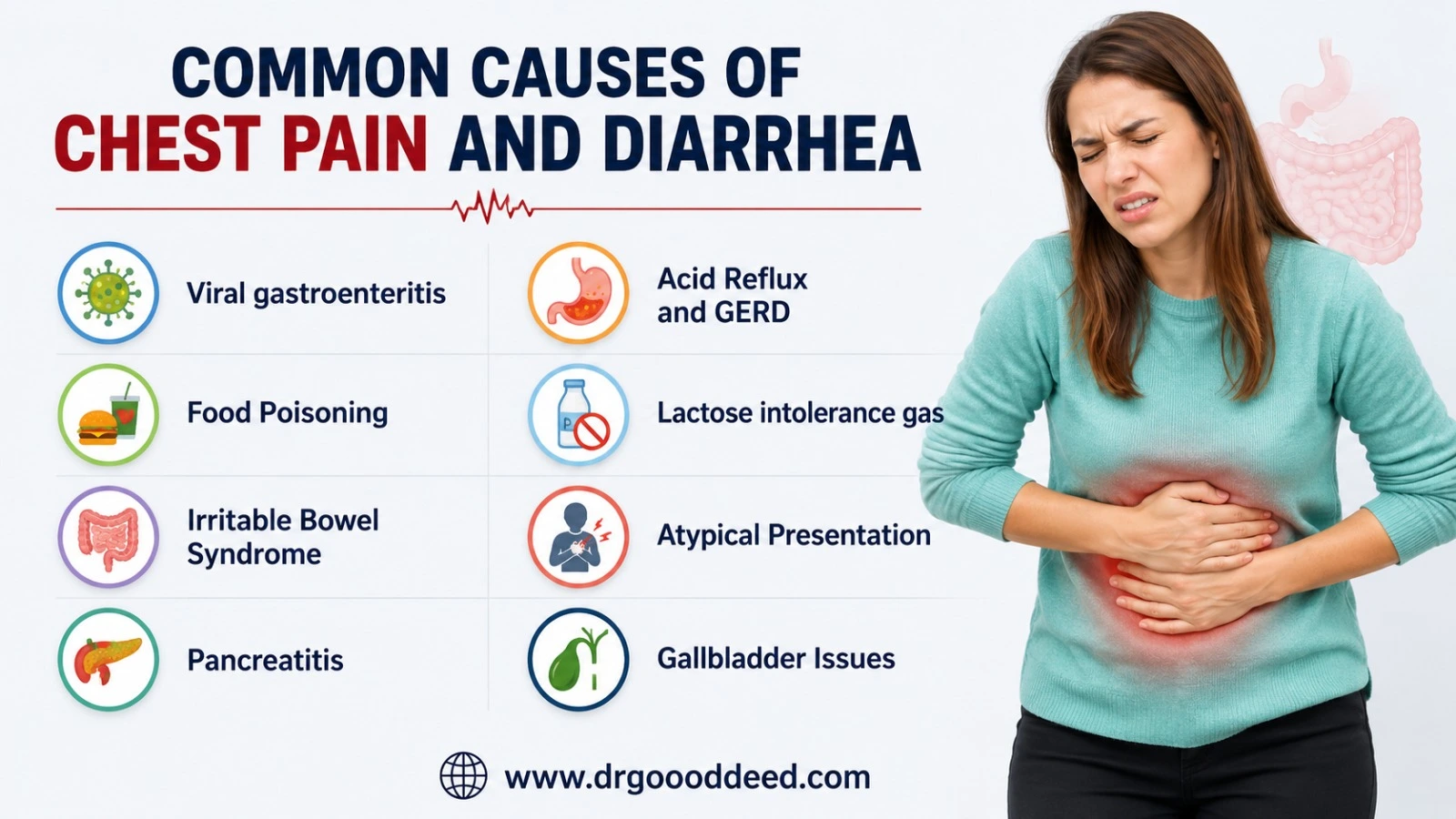
Gastroenteritis (Viral or Bacterial Infection)
Viral gastroenteritis, caused by norovirus or rotavirus, is the most common reason chest pain and diarrhea appear together in otherwise healthy adults. The gut inflammation raises intra-abdominal pressure, and that pressure radiates into the lower chest.
Food Poisoning
Salmonella, E. coli, and Campylobacter infections irritate the entire gastrointestinal tract within 6 to 48 hours of eating contaminated food. Chest discomfort from abdominal cramping is standard in moderate-to-severe food poisoning cases.
Acid Reflux and GERD
Gastroesophageal reflux disease produces burning chest pain that worsens after meals. When GERD overlaps with a stomach infection or food trigger, diarrhea follows within hours, making both symptoms simultaneous.
Food Intolerance Chest Pain Diarrhea (Lactose, Gluten)
Food intolerance chest pain diarrhea are frequently missed. Lactose intolerance causes gas, bloating, diarrhea, and referred chest pressure within 30 minutes to 2 hours of consuming dairy. Gluten intolerance, including non-celiac gluten sensitivity, produces similar chest tightness and loose stools after consuming wheat, barley, or rye.
Irritable Bowel Syndrome (IBS)
IBS affects roughly 10 to 15% of U.S. adults, according to the American College of Gastroenterology. IBS-D (the diarrhea-predominant subtype) is strongly linked to chest discomfort through visceral hypersensitivity, a condition where gut nerves overreact to normal sensations.
Heart Conditions (Atypical Presentation)
Heart attacks in women, diabetics, and older adults frequently present without classic left-arm chest pain. Nausea, diarrhea, and vague chest discomfort are documented atypical presentations of acute myocardial infarction. This is the reason chest pain and diarrhea together should never be assumed to be purely digestive without ruling out cardiac causes.
Pancreatitis or Gallbladder Issues
Inflammation of the pancreas or a gallbladder attack produces pain that starts in the upper abdomen and radiates into the chest. Diarrhea follows in both conditions because bile flow and enzyme secretion are disrupted. Pancreatitis pain typically radiates to the back, which distinguishes it from cardiac pain.
Burning Chest Pain and Loose Stools
Burning chest pain and loose stools together point directly to acid-related digestive pathology in most cases. This combination is the hallmark of GERD complicated by gastritis or infection.
Acid Irritation of the Esophagus
When stomach acid reaches the lower esophagus, it triggers a burning sensation that patients describe as identical to heart attack pain. The esophagus lacks protective mucus. Acid contact causes immediate irritation.
Increased Stomach Acid Production
Certain infections, including H. pylori (which affects roughly 35% of the U.S. population), increase gastric acid secretion significantly. The result is burning chest pain and loose stools that persist for days until the infection clears or acid levels are controlled.
Pain Worsens After Meals
Reflux-related chest pain almost always intensifies within 30 to 60 minutes of eating. Cardiac chest pain does not follow a meal pattern. That distinction alone eliminates cardiac causes in the majority of cases.
Symptoms That Require Immediate Attention
Some combinations of chest pain and diarrhea need emergency care, not a wait-and-see approach.
Call 911 immediately if you notice:
- Chest pain spreading to the left arm, jaw, neck, or back
- Chest pressure with sweating and nausea at the same time
- Diarrhea with blood (bright red or black, tarry stools)
- Rapid or irregular heartbeat alongside chest discomfort
- Fainting or near-fainting with chest pain
- Fever above 103°F with chest tightness
- Severe dehydration signs: no urination for 8+ hours, extreme dizziness
These symptoms do not resolve with antacids or rest. In the U.S., chest pain is the second leading cause of emergency room visits. When diarrhea accompanies it and neither symptom improves in 2 hours, that warrants an ER visit.
How to Tell If It’s Digestive or Heart-Related
Timing (After Food vs. Sudden Onset)
Digestive chest pain develops gradually, usually within 20 to 60 minutes of eating. Cardiac chest pain arrives suddenly and without a food trigger. If symptoms started while resting after a heavy meal, the gut is the more likely source.
Burning vs. Pressure-Type Pain
Acid reflux and gastritis produce a burning sensation in the mid-chest or upper stomach. Cardiac pain is almost always described as pressure, tightening, or squeezing, not burning. That difference in pain quality is the first clinical filter doctors use.
Associated Symptoms Comparison
| Digestive Cause | Cardiac Cause |
| Bloating, belching | Sweating |
| Worsens after eating | No food relationship |
| Improves with antacid | Does not improve with antacid |
| Diarrhea or nausea | Shortness of breath at rest |
| Burning, sharp | Pressure, heaviness |
How to Relieve Chest Pain With Diarrhea
Relieving chest pain with diarrhea depends on the root cause, but these steps work for most digestive-based cases.
Hydration and Electrolyte Replacement
Diarrhea causes rapid fluid loss. Plain water is not enough because it does not replace sodium or potassium. Use an oral rehydration solution (ORS), like Pedialyte or WHO-formulated ORS packets, which replenish the electrolytes responsible for electrolyte imbalance, chest discomfort, and diarrhea. Drink 200 to 400 mL after each loose stool.
Light, Bland Diet
The BRAT diet (bananas, rice, applesauce, toast) reduces gut irritation and slows motility. Avoid dairy, greasy food, caffeine, and alcohol for at least 48 hours after symptoms start.
Antacids for Acid Reflux
Over-the-counter antacids like calcium carbonate (Tums) neutralize stomach acid within 5 minutes. H2 blockers like famotidine (Pepcid) reduce acid production for 8 to 12 hours. These work well for burning chest pain and loose stools tied to reflux or GERD.
Rest and Avoiding Trigger Foods
Lying flat worsens reflux. Elevate the head of the bed by 6 to 8 inches or sleep on the left side, which reduces acid exposure to the esophagus. Avoid the food that triggered the episode for at least 72 hours.
Preventing Chest Pain and Diarrhea
Avoiding Contaminated or Trigger Foods
Wash hands before eating. Cook meat to safe internal temperatures: 165°F for poultry, 145°F for beef. Avoid unpasteurized dairy products.
Managing Food Intolerances
If food intolerance, chest pain, or diarrhea is recurring, eliminate the suspected food for 2 weeks and monitor symptoms. A registered dietitian can structure an elimination protocol without causing nutritional deficiency.
Maintaining Hydration and Gut Health
Chronic mild dehydration weakens the gut lining and reduces mucus protection in the stomach. Drinking 2 to 2.5 liters of water daily is the minimum for adults who want to reduce recurring digestive flares.
Diagnosis: What Doctors Check
Physical Examination
Doctors assess abdominal tenderness, bowel sounds, and hydration status. Rebound tenderness in the abdomen suggests inflammation that may need imaging.
Blood and Stool Tests
A complete metabolic panel checks potassium, sodium, and kidney function. Stool culture identifies bacterial infections. C-reactive protein levels indicate inflammation severity.
Imaging If Needed
An abdominal ultrasound checks for gallstones or pancreatic swelling. A CT scan of the abdomen and pelvis rules out appendicitis, bowel obstruction, or colitis.
Heart Evaluation (If Symptoms Unclear)
An ECG takes less than 5 minutes and immediately identifies electrical changes tied to cardiac events. Troponin blood tests confirm or rule out heart muscle damage within 1 to 3 hours.
When to See a Doctor
Chest pain and diarrhea together need a doctor’s evaluation if:
- Symptoms last more than 48 hours without improvement
- There is visible blood in the stool
- Chest pain does not improve with antacids after 30 minutes
- Symptoms appeared after international travel (suggests parasitic infection)
- The person is over 60 or has diabetes (higher risk of atypical cardiac presentation)
- Diarrhea exceeds 6 episodes in 24 hours (severe dehydration risk)
FAQs
What causes chest pain and diarrhea together?
Chest pain and diarrhea together are most commonly caused by gastroenteritis, food poisoning, acid reflux, or IBS. The vagus nerve connects the gut and chest, so intestinal inflammation directly generates chest discomfort. Electrolyte loss from diarrhea also triggers chest muscle cramps and irregular heartbeat.
Can stomach issues cause chest discomfort?
Yes. Stomach issues causing chest discomfort are well-documented. A distended, inflamed, or acid-irritated stomach presses against the esophagus, which sits directly behind the heart. Acid reflux, gastritis, and H. pylori infection all generate chest pain indistinguishable from cardiac pain without an ECG.
Why do I have burning chest pain and loose stools?
Burning chest pain and loose stools together almost always indicate acid reflux or GERD combined with a stomach infection or food reaction. Excess acid irritates the esophageal lining, producing burning, while simultaneously speeding up gut motility and causing loose stools. H. pylori worsens both symptoms.
Can food intolerance cause chest pain and diarrhea?
Yes. Food intolerance, chest pain, and diarrhea are most common with lactose intolerance and non-celiac gluten sensitivity. Both trigger gas, bloating, and diarrhea within 30 minutes to 2 hours of eating the trigger food. The trapped gas and abdominal pressure radiate into the lower chest as discomfort.
How does electrolyte imbalance cause chest discomfort?
Electrolyte imbalance, chest discomfort, and diarrhea happens because potassium controls heart muscle contractions. Severe diarrhea drops potassium below 3.5 mEq/L within hours. Below that threshold, the heart beats irregularly, and chest tightness or palpitations follow. Magnesium loss compounds this by causing muscle spasms, including in chest wall muscles.
How to relieve chest pain with diarrhea quickly?
To relieve chest pain with diarrhea, take calcium carbonate antacids for burning chest pain, drink oral rehydration solution (ORS) immediately to fix electrolyte loss, eat bananas to restore potassium, and lie on your left side to reduce acid reflux. Symptoms tied to acid reflux improve within 20 to 30 minutes using this approach.
When should chest pain and diarrhea be serious?
Chest pain and diarrhea become a medical emergency when chest pain spreads to the jaw or left arm, when stools contain blood, or when the person sweats heavily alongside chest pressure. These signs indicate a possible cardiac event or severe GI bleed, both requiring 911, not an antacid.
Can dehydration cause chest pain?
Yes. Dehydration from diarrhea reduces blood volume, forcing the heart to pump harder. That increased cardiac workload causes chest tightness and palpitations. Potassium and sodium loss worsen this by disrupting electrical signals in heart muscle. Severe dehydration, defined as more than 5% body weight loss in fluids, can trigger arrhythmias.
How to tell if chest pain is digestive or heart-related?
Digestive chest pain burns, worsens after eating, and improves with antacids within 30 minutes. Cardiac chest pain squeezes or presses, has no food relationship, and does not respond to antacids. If an antacid does not reduce chest pain and diarrhea within 30 minutes, go to an ER.
Should I see a doctor for chest pain and diarrhea?
See a doctor if chest pain and diarrhea persist beyond 48 hours, if stools are bloody, if the chest pain radiates to the arm or jaw, or if the person is over 60. Mild cases tied to food poisoning or reflux resolve within 24 to 48 hours with rest, bland diet, and ORS.
Source Link