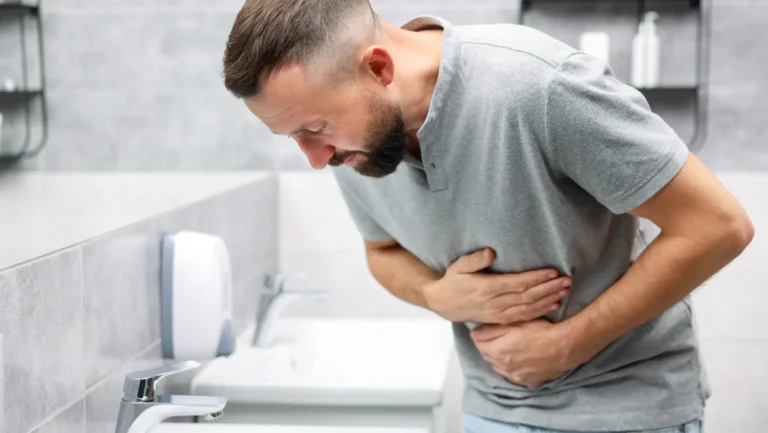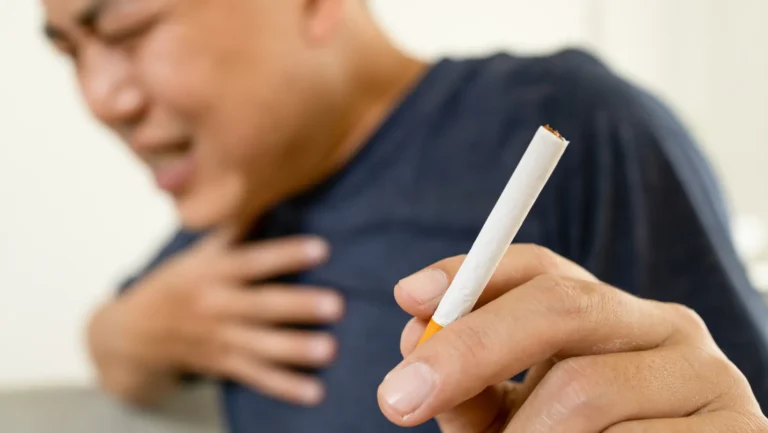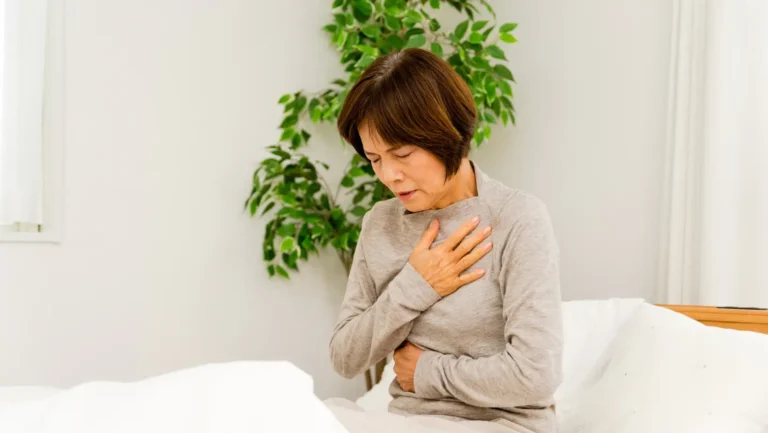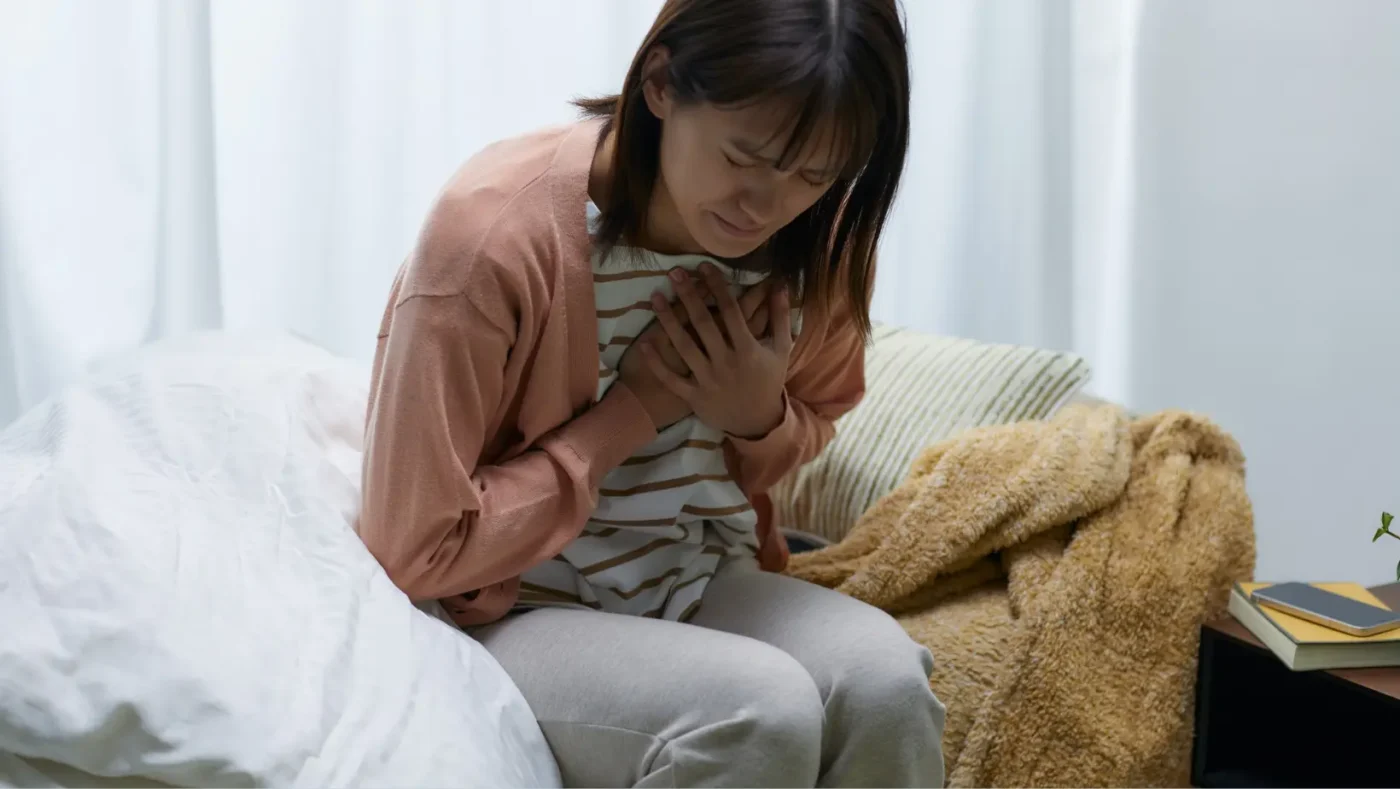

Yes, lack of sleep can cause chest pain. Sleep deprivation triggers a measurable stress response in the body, raises cortisol and adrenaline levels, and activates the sympathetic nervous system. All three mechanisms directly produce chest tightness, muscle tension, and heart palpitations.
In the US, the CDC reports that 1 in 3 adults gets less than the recommended 7 hours of sleep per night, making sleep-related chest pain far more common than most people realize. This article covers every biological cause, how to differentiate it from cardiac pain, and what actually provides relief.
How Lack of Sleep Affects the Body
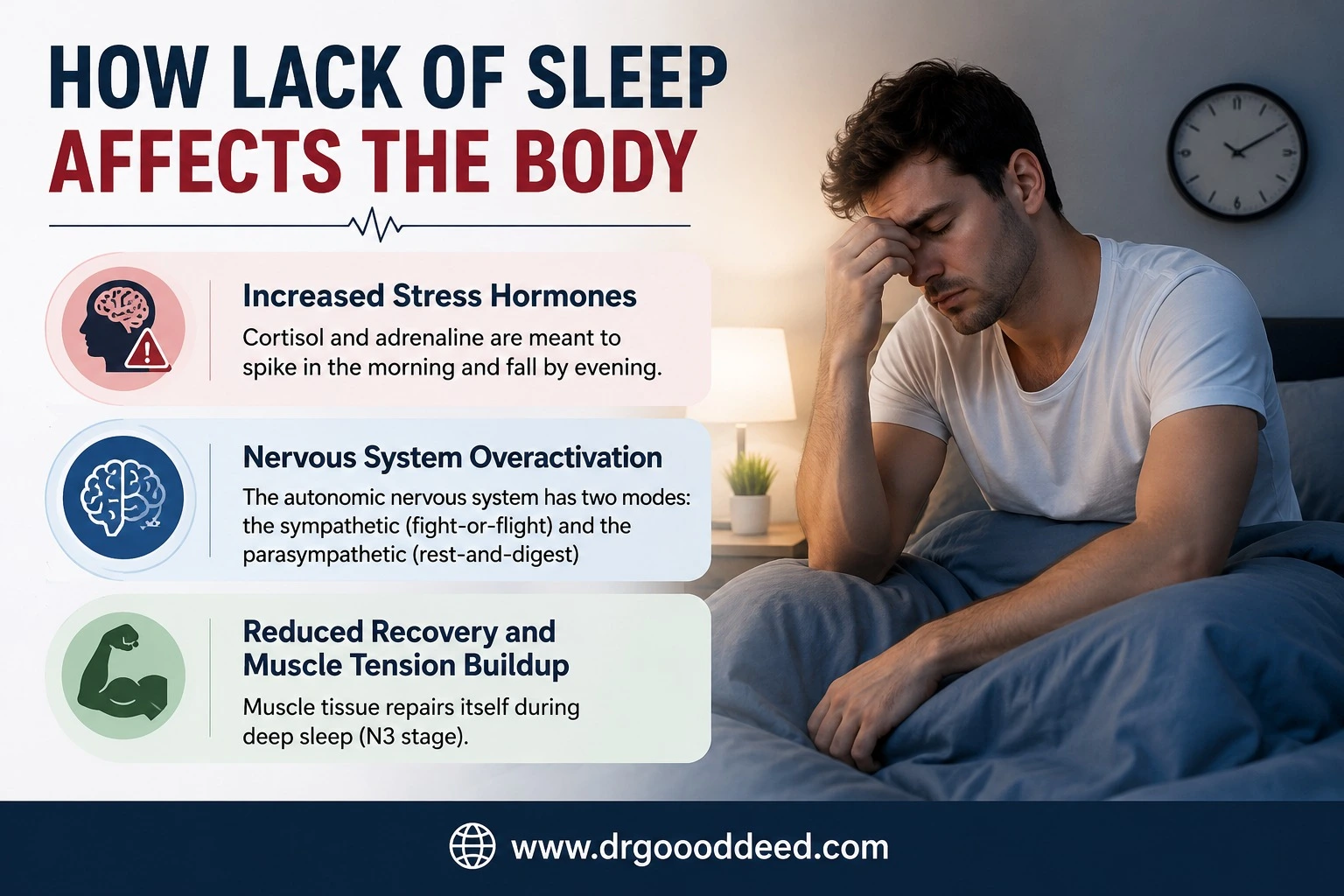
Lack of sleep can cause chest pain through direct biological pathways, and the mechanism is specific. Sleep deprivation does not just make the body tired. It actively disrupts hormone regulation, nervous system balance, and pain sensitivity in ways that set the stage for chest pain.
Increased Stress Hormones (Cortisol and Adrenaline)
Cortisol and adrenaline are meant to spike in the morning and fall by evening. Sleep deprivation breaks this cycle. After just one night of poor sleep, cortisol levels remain elevated throughout the following day. Chronically elevated cortisol constricts blood vessels, raises heart rate, and increases muscle tension across the chest wall.
A 2019 study published in the Journal of Sleep Research found that adults sleeping fewer than 6 hours per night had significantly higher 24-hour cortisol profiles compared to those sleeping 7 to 9 hours.
Nervous System Overactivation
The autonomic nervous system has two modes: the sympathetic (fight-or-flight) and the parasympathetic (rest-and-digest). Sleep is the primary recovery window for the parasympathetic system. Without it, the sympathetic system stays dominant. This produces a sustained state of physical tension, including tightness in the chest, increased breathing rate, and heightened cardiac sensitivity.
Reduced Recovery and Muscle Tension Buildup
Muscle tissue repairs itself during deep sleep (N3 stage). Without adequate N3 sleep, intercostal muscles and pectoral muscles accumulate micro-tension without relief. Over consecutive poor nights, this tension compounds, and chest tightness on waking becomes a daily experience.
Why Chest Pain Happens When You Don’t Sleep Enough
Muscle Strain and Tension
The chest wall muscles do not relax fully when the nervous system stays activated overnight. This creates a sustained low-grade contraction that feels like pressure or tightness by morning. It is the same mechanism as a tension headache, but located in the chest.
Increased Sensitivity to Pain
Sleep deprivation lowers the pain threshold. The scientific term is central sensitization. After poor sleep, the nervous system amplifies pain signals that it would normally filter out. Mild chest tightness that a rested person would not notice becomes uncomfortable chest pain in a sleep-deprived one.
Anxiety-Related Chest Discomfort
Sleep deprivation increases amygdala reactivity (the brain’s fear center) by up to 60%, according to research from UC Berkeley. This heightened anxiety state directly causes chest tightness through muscle bracing, shallow breathing, and increased heart rate.
When Chest Pain from Lack of Sleep Is Serious
Lack of sleep can cause chest pain that signals a dangerous condition when these specific combinations appear. Sleep deprivation-related chest pain is typically dull, diffuse, and improves with rest. Chest pain from a cardiac cause behaves very differently.
Seek emergency care immediately if sleep-related chest pain includes:
- Squeezing or pressure-type pain radiating to the left arm, jaw, or upper back
- Sudden shortness of breath that does not resolve within a few minutes
- Sweating, nausea, or dizziness alongside the chest pain
- Heart palpitations and lack of sleep combined with chest pain lasting more than 10 minutes
- Pain that does not change at all with position, movement, or breathing pattern
These combinations indicate possible cardiac involvement and require an ECG, not just rest.
How to Relieve Chest Pain from Lack of Sleep
Relieving chest pain from lack of sleep starts with addressing the direct physiological triggers. These steps work for tension-based and anxiety-driven chest pain specifically.
Rest and Sleep Recovery
The most direct treatment is recovery sleep. A single full night of 7 to 9 hours of sleep significantly reduces cortisol levels and sympathetic nervous system activity. Chest tightness from pure sleep deprivation resolves within 24 to 48 hours of adequate rest in most cases.
Hydration and Relaxation
Dehydration worsens muscle tension and amplifies the body’s stress response. Drinking 16 ounces of water on waking reduces cortisol faster than caffeine. Avoid coffee for the first 90 minutes after waking; it spikes cortisol when levels are already high from sleep debt.
Gentle Stretching and Posture Correction
A doorway chest stretch, where you place both forearms on a doorframe and lean forward gently, decompresses the pectoral muscles in 30 seconds. Cat-cow stretches release intercostal tension. These are not cures. They provide immediate short-term relief while the body recovers.
Reducing Stress Triggers
Identify the specific stressor disrupting sleep. Unresolved workplace stress, financial anxiety, and relationship conflict are the three most reported sleep disruptors in US adults. Addressing the stressor directly resolves both the sleep problem and the downstream chest symptoms faster than treating the chest pain alone.
Relaxation Techniques for Sleep-Related Chest Pain
Relaxation techniques for sleep-related chest pain work by directly lowering sympathetic nervous system activation. These are evidence-backed, not general wellness advice.
Deep Breathing Exercises
Box breathing (4 counts in, 4 counts hold, 4 counts out, 4 counts hold) activates the vagus nerve and shifts the body from sympathetic to parasympathetic mode. Blood pressure drops measurably within 3 to 5 minutes. Chest tightness from tension and anxiety reduces within the same window.
Progressive Muscle Relaxation
Progressive muscle relaxation (PMR) involves tensing and releasing each muscle group from feet to head. A 2018 meta-analysis in Sleep Medicine Reviews found PMR reduced sleep onset time by an average of 10 minutes and decreased pre-sleep cortisol levels. It also directly reduces chest wall tension accumulated during the day.
Mindfulness and Grounding Techniques
The 5-4-3-2-1 grounding method (name 5 things you see, 4 you hear, 3 you can touch, 2 you smell, 1 you taste) interrupts the anxiety loop that keeps the sympathetic system active. It works by redirecting attention from internal physical sensations to external sensory data, which reduces chest tightness within minutes in anxiety-driven cases.
How to Prevent Chest Pain Caused by Sleep Deprivation
Improving Sleep Hygiene
Sleep hygiene is not just about going to bed earlier. The temperature of the room matters. 65 to 68 degrees Fahrenheit is the clinically optimal sleep temperature. Complete darkness matters. Light exposure, including phone screens, suppresses melatonin for up to 90 minutes after viewing.
Reducing Caffeine and Screen Exposure
Caffeine has a half-life of 5 to 6 hours. A coffee at 2 PM still has 50% of its stimulant effect at 8 PM. Combined with screen blue light, these two habits alone account for a large share of disrupted sleep in American adults.
Maintaining a Consistent Sleep Schedule
The circadian rhythm is a biological clock, not a preference. Going to bed and waking at the same time every day, including weekends, stabilizes cortisol rhythm and reduces sympathetic nervous system baseline activity within 2 weeks.
How to Tell If It’s Sleep-Related or Heart-Related
This is the most practically useful distinction in this entire topic.
Timing of Symptoms
Sleep-related chest pain appears after a pattern of poor sleep and improves after rest. Cardiac chest pain appears during exercise, after meals, or in the early morning hours and does not improve with rest alone.
Trigger Patterns (Fatigue vs Exertion)
Sleep-deprivation chest pain correlates with consecutive bad nights. Cardiac pain correlates with physical exertion, emotional stress, cold temperatures, or heavy meals. If chest pain appears after a run but not after a sleepless night, the origin is cardiac, not sleep-related.
Associated Symptoms Comparison
- Sleep-deprivation chest pain: diffuse tightness, fatigue, brain fog, improves after sleep
- Anxiety chest pain: racing heart, sweating, shortness of breath, improves with box breathing
- Cardiac chest pain: pressure, squeezing, radiation to arm or jaw, no relief from rest or position changes
Diagnosis: What Doctors Check
Heart Evaluation (ECG, Tests)
A 12-lead ECG is the first test for any chest pain with unclear cause. It rules out arrhythmia, ischemia, and pericarditis within minutes. If ECG results are normal but symptoms persist, a stress test or echocardiogram provides the next level of detail.
Sleep History Assessment
Doctors assess sleep duration, quality, and consistency using validated tools like the Pittsburgh Sleep Quality Index (PSQI). Asking about sleep is not standard in most chest pain evaluations, but a thorough internist or cardiologist includes it.
Anxiety and Stress Evaluation
The GAD-7 (Generalized Anxiety Disorder scale) and PHQ-9 (depression screen) identify whether chronic psychological stress is driving both the sleep disruption and the chest symptoms simultaneously.
When to Seek Medical Help
Lack of sleep can cause chest pain serious enough to need a doctor visit in these specific cases:
Go to the ER immediately if:
- Chest pain is severe and sudden
- Pain radiates to the jaw, arm, or back
- Breathing becomes labored within minutes of pain onset
- Heart palpitations and lack of sleep appear together with sweating or dizziness
Schedule a doctor’s appointment within 48 hours if:
- Chest tightness has occurred on 3 or more consecutive mornings
- Does insomnia cause chest tightness that disrupts daily activities
- Known anxiety disorder symptoms are worsening alongside poor sleep
Do not self-manage repeatedly occurring chest pain, even if it feels mild.
FAQs
Can lack of sleep cause chest pain and tightness?
Yes. Lack of sleep can cause chest pain and tightness through three mechanisms: elevated cortisol constricts chest muscles, sympathetic nervous system overactivation raises baseline muscle tension, and lowered pain threshold amplifies sensations. After 3 or more nights of under 6 hours of sleep, these effects compound measurably.
Does insomnia cause chest tightness?
Yes. Insomnia causes chest tightness by keeping the sympathetic nervous system in an elevated state overnight. Chronic insomnia (defined as 3 or more disrupted nights per week for 3 months) raises resting heart rate and cortisol baseline, both of which produce persistent chest wall tension.
Why do heart palpitations happen with lack of sleep?
Heart palpitations and lack of sleep occur because sleep deprivation increases sympathetic nervous system tone, which raises heart rate variability in a destabilizing direction. Just 24 hours of sleep deprivation measurably increases ectopic heartbeats (irregular beats) in otherwise healthy adults, according to cardiology research.
How does lack of sleep affect heart health?
The effects of lack of sleep on heart health include a 48% higher risk of developing or dying from coronary heart disease in adults sleeping fewer than 6 hours, according to a 2011 European Heart Journal meta-analysis covering 475,000 participants. It raises blood pressure, increases arterial inflammation, and disrupts heart rhythm regulation.
How to relieve chest pain from lack of sleep quickly?
How to relieve chest pain from lack of sleep quickly: drink 16 ounces of water, do 5 minutes of box breathing (4-4-4-4 counts), and do a 30-second doorway chest stretch. These three steps lower cortisol, reduce sympathetic tone, and release chest muscle tension within 10 minutes.
What relaxation techniques help sleep-related chest pain?
The most evidence-supported relaxation techniques for sleep-related chest pain are box breathing, progressive muscle relaxation, and the 5-4-3-2-1 grounding method. PMR specifically reduces pre-sleep cortisol and chest wall muscle tension. Box breathing lowers blood pressure within 3 to 5 minutes by activating the vagus nerve.
Can sleep deprivation mimic heart attack symptoms?
Yes. Lack of sleep can cause chest pain that mimics a heart attack. Severe sleep deprivation triggers chest pressure, shortness of breath, palpitations, and sweating, which are the four hallmark heart attack symptoms. The key difference: sleep-deprivation symptoms are diffuse, shift with breathing or position, and do not radiate to the jaw or left arm.
When should chest pain from lack of sleep be serious?
Lack of sleep can cause chest pain serious enough for the ER when pain radiates to the arm or jaw, lasts more than 15 minutes, or comes with sweating and difficulty breathing. These signs override the sleep-deprivation explanation. Treat it as cardiac until an ECG says otherwise.
How to prevent chest pain caused by poor sleep?
Keep the bedroom at 65 to 68 degrees Fahrenheit, cut off caffeine by 2 PM, and maintain the same wake time every day including weekends. These three changes stabilize cortisol rhythm within 2 weeks and reduce sleep-deprivation chest symptoms in most adults without medication.
Should I see a doctor for chest pain after poor sleep?
Yes, if it happens on 3 or more consecutive mornings, lasts more than 20 minutes, or does not improve after recovery sleep. A doctor will order an ECG first to rule out cardiac causes, then assess sleep quality using the Pittsburgh Sleep Quality Index.