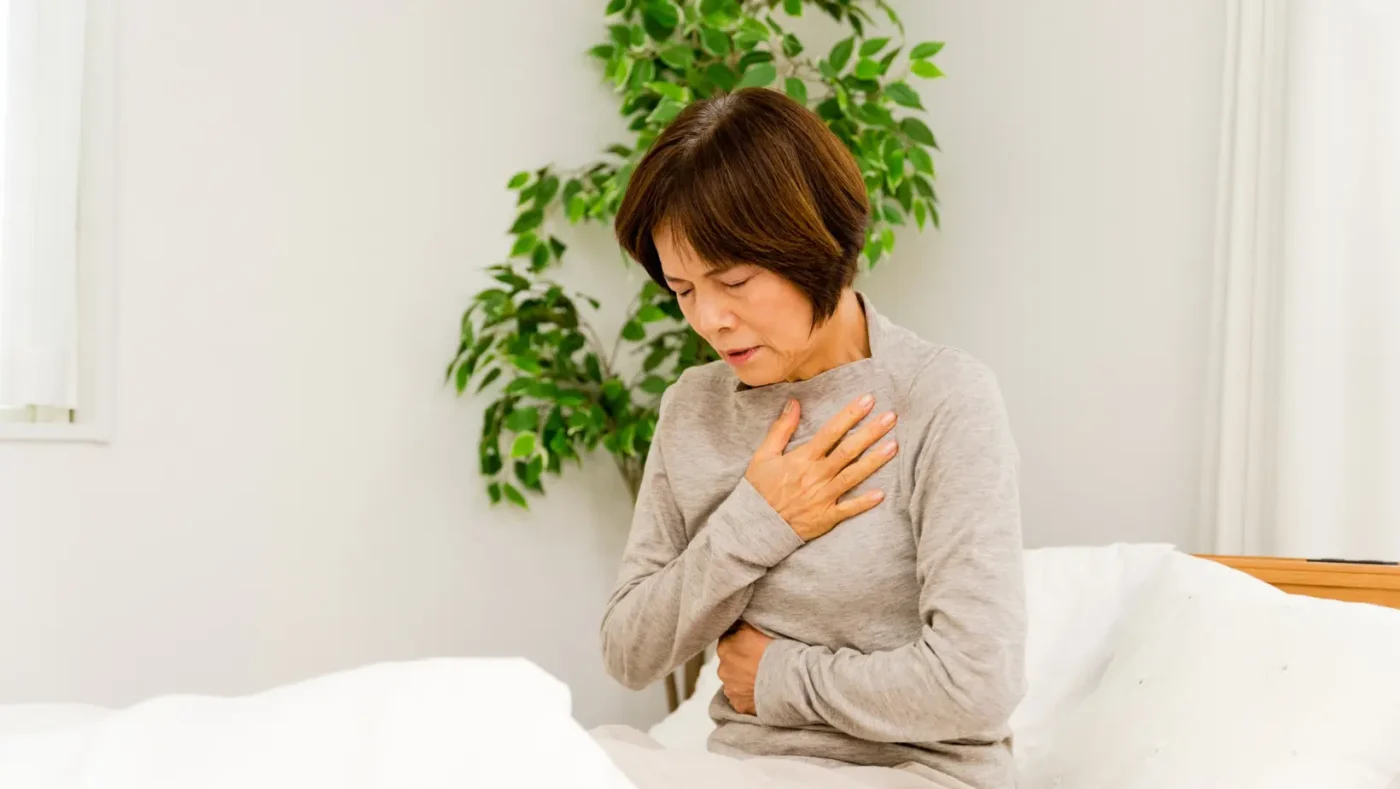

Waking up with chest pain is one of the top reasons Americans visit emergency rooms each morning, with cardiac-related chest pain peaking between 6 AM and 12 PM according to the American Heart Association. The cause ranges from acid reflux to a heart attack. Most cases are benign, but some are not. This guide covers every clinically recognized cause, how to tell them apart, and exactly when to act.
Waking Up With Chest Pain
Waking up with chest pain is not random. The body undergoes specific physiological changes during sleep, and many of them create the right conditions for chest pain to develop or worsen. Acid pools in the esophagus when lying flat. Muscles stiffen without movement. Breathing slows and becomes shallow. All of this happens before the alarm goes off.
The location, character, and timing of the pain are the three details that matter most to a diagnosing physician.
Chest Pain After Waking Up From Sleep
Chest pain after waking up from sleep has a specific biological explanation that most online articles skip entirely. Four distinct sleep-related mechanisms trigger or worsen chest pain.
Body Position During Sleep
Lying flat for 6 to 8 hours removes gravity from the equation. Acid from the stomach slides upward into the esophagus without resistance. Fluid can shift toward the lungs in people with early-stage heart failure. Pressure on chest structures increases depending on sleep position.
Reduced Swallowing and Acid Buildup
Swallowing frequency drops by about 50% during sleep. Saliva production also decreases. Both functions normally neutralize stomach acid in the esophagus. Without them working overnight, acid sits on esophageal tissue for hours, creating a burning or tight chest sensation by morning.
Overnight Muscle Stiffness
Chest wall muscles, including the intercostals and pectorals, tighten with inactivity, which may contribute to waking up with a sore chest. Anyone with existing costochondritis or a prior chest muscle strain wakes up with amplified pain because the muscles had no chance to move and decompress overnight.
Breathing Pattern Changes During Sleep
During deep sleep (N3 and REM stages), breathing becomes slower and more irregular, which can contribute to waking up with tight chest if you have with airway problems. For people with asthma or obstructive sleep apnea, this triggers airway narrowing and chest tightness that is worst at the moment of waking.
Acid Reflux Causing Morning Chest Pain
Acid reflux causing morning chest pain accounts for the largest share of non-cardiac chest pain cases in the US. GERD (gastroesophageal reflux disease) affects an estimated 20% of American adults, and nighttime reflux is its most damaging form.
GERD and Nighttime Acid Reflux
Nighttime acid reflux causes more tissue damage than daytime reflux because acid stays in contact with the esophagus longer without swallowing to clear it. The lower esophageal sphincter, which acts as a valve between the stomach and esophagus, relaxes more during sleep.
Burning Pain in the Chest After Waking
GERD-related chest pain feels like burning behind the breastbone. It often worsens within an hour of waking and improves after standing, drinking water, or taking an antacid. It does not worsen with movement or pressing on the chest wall.
Why Lying Down Worsens Symptoms
Gravity keeps stomach acid down when upright. Lying flat lets acid flow freely into the esophagus. People who eat dinner within 2 to 3 hours of sleeping have significantly worse morning symptoms because the stomach is still digesting.
Sleep Position and Chest Discomfort
Sleep position and chest discomfort are directly connected, and the research is specific about which positions cause problems.
Sleeping on Side vs Back Impact
Sleeping on the right side worsens GERD because it positions the stomach above the esophageal junction, making acid reflux easier. Sleeping on the left side reduces acid reflux. However, stomach sleeping compresses the chest wall and strains the pectorals and intercostal muscles, creating musculoskeletal chest pain by morning.
Pressure on Chest Muscles
Stomach sleepers place prolonged downward pressure on the ribcage and chest muscles for hours. This compresses the costal cartilage and can trigger costochondritis flares. People who sleep with one arm tucked under the chest create similar localized muscle compression.
Poor Posture Leading to Tight Chest
A forward head posture or hunched sleeping position shortens the pectoral muscles and can contribute to morning chest tightness. Over months, this creates chronic morning tightness that feels like chest pressure without any cardiac or gastrointestinal cause.
Tight Chest in the Morning Symptoms
Tight chest in the morning symptoms vary depending on the cause, but four patterns consistently show up across different conditions.
Pressure or Heaviness in the Chest
This feeling suggests cardiac involvement, significant acid reflux, or anxiety. It is diffuse rather than pinpoint. Cardiac pressure typically radiates to the left arm, jaw, or back.
Sharp or Dull Pain
Sharp pain that worsens with breathing points to pleurisy or a musculoskeletal cause. Dull, persistent pain with no movement-related change is more concerning for cardiac or esophageal causes.
Stiffness That Improves with Movement
If the chest tightness improves within 15 to 30 minutes of moving around, the cause is almost always musculoskeletal or postural. Cardiac pain does not improve with stretching.
Pain with Deep Breathing
Pain that sharpens specifically on full inhalation suggests pleural irritation, a lung infection, or costochondritis. GERD pain does not change with breathing.
Other Causes of Waking Up With Chest Pain
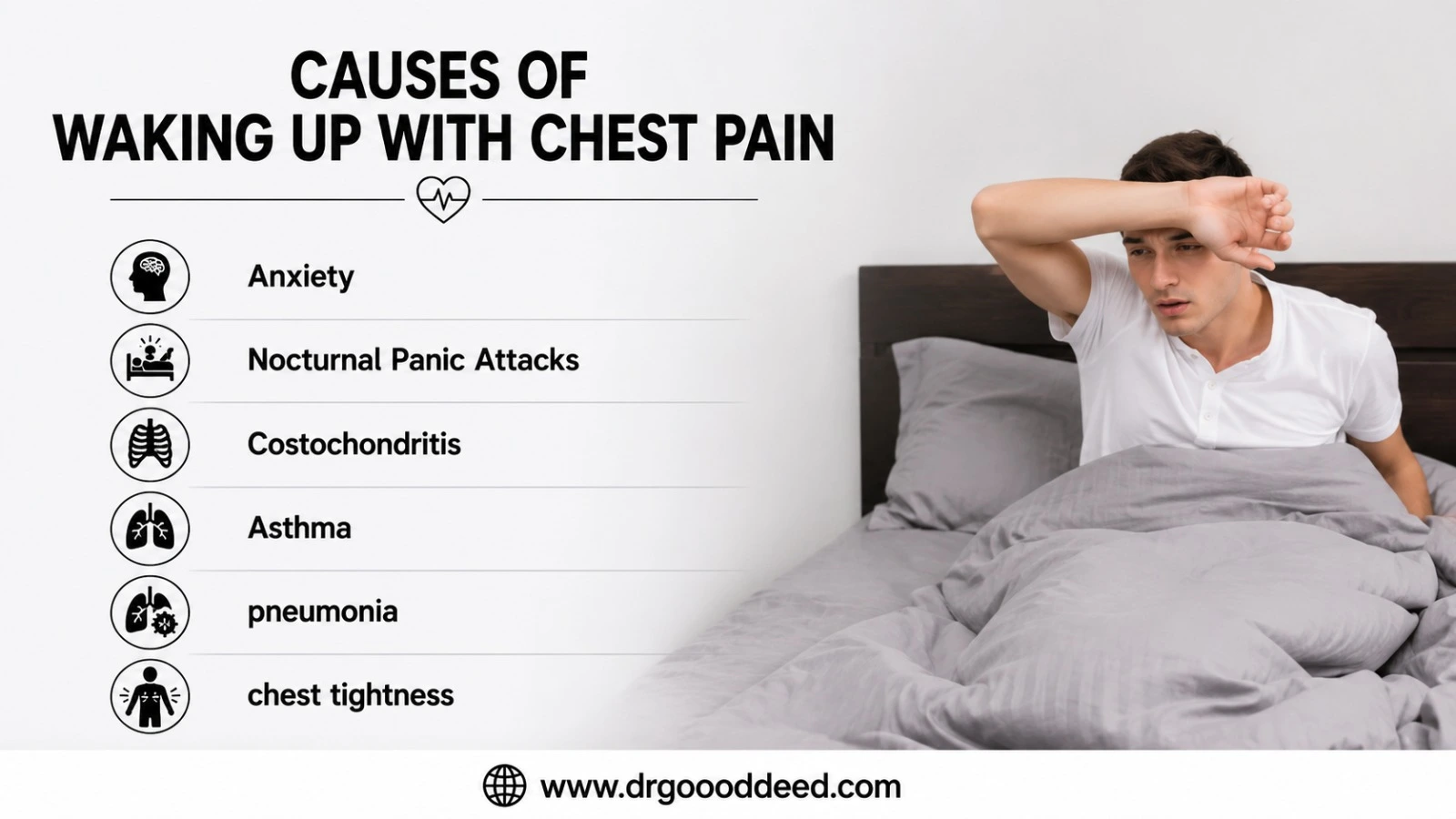
Anxiety or Nocturnal Panic Attacks
Nocturnal panic attacks wake people from sleep with sudden chest tightness, rapid heartbeat, and shortness of breath. They occur during non-REM sleep, so the person was not having a nightmare. About 18% of panic disorder patients experience nighttime attacks. The pain is real, not imagined, but it is not cardiac.
Costochondritis (Rib Inflammation)
Costochondritis inflames the cartilage connecting the ribs to the breastbone. The pain is sharp, localized, and reproducible when pressed. It worsens after lying still for hours and often improves within 20 minutes of movement. NSAIDs like ibuprofen provide reliable relief.
Lung Conditions
Asthma, pneumonia, and pleurisy all cause of chest pain. Asthma tightness peaks in early morning hours due to circadian dips in cortisol and airway tone. Pneumonia pain comes with fever and productive cough. Pleurisy pain sharpens with each breath.
Heart-Related Causes
Stable angina, unstable angina, and early-stage heart attack all produce morning chest pain. Angina pain from stable coronary artery disease typically follows exertion, but early morning is a high-risk window because platelet aggregation is naturally higher at that time of day.
When Morning Chest Pain Is Serious (Red Flags)
Waking up with chest pain requires immediate emergency attention when these signs appear:
- Chest pressure or tightness radiating to the left arm, jaw, neck, or upper back
- Pain lasting more than 15 minutes that does not ease with rest
- Sudden shortness of breath without exertion
- Sweating, nausea, or dizziness alongside the chest pain
- Chest pain in someone over 45 with known smoking, hypertension, diabetes history
- Pain that started at rest and is not relieved by sitting up or antacids
These combinations indicate possible myocardial infarction (heart attack) or unstable angina. Call 911. Do not drive.
How to Tell If It’s Acid Reflux, Muscle Pain, or Heart-Related
This is the most clinically useful distinction most articles avoid making directly.
Burning vs Pressure-Type Pain
Burning pain behind the breastbone that improves with antacids is GERD. Pressure or squeezing pain that does not respond to antacids or position changes is cardiac until proven otherwise.
Pain with Movement vs Constant Pain
Pain that worsens when pressing on the chest or twisting the torso is musculoskeletal. Pain that stays constant regardless of position or movement is more likely cardiac or esophageal.
Associated Symptoms Comparison
- GERD: Sour taste, burping, burning throat, worsens after eating
- Musculoskeletal: Tender spot, improves with movement, no other symptoms
- Cardiac: Sweating, shortness of breath, radiating pain, nausea
How to Relieve Chest Pain in the Morning (Non-Emergency Cases)
Relieving chest pain in the morning depends entirely on the cause, but these steps work for the most common non-emergency situations.
Sitting Upright and Hydration
Sitting upright immediately uses gravity to move acid back down. Drinking 8 ounces of cold water neutralizes mild esophageal acid and reduces burning within 5 to 10 minutes.
Antacids for Acid Reflux
Calcium carbonate antacids (Tums, Rolaids) work within 5 minutes for GERD-related morning pain. H2 blockers like famotidine (Pepcid) provide 10 to 12 hours of acid suppression when taken before bed.
Stretching and Posture Correction
For musculoskeletal morning tightness, a doorway chest stretch held for 30 seconds on each side decompresses the pectoral muscles. Cat-cow stretches release intercostal tension within minutes.
Breathing and Relaxation Techniques
For anxiety-related chest tightness, box breathing (4 counts in, 4 counts hold, 4 counts out, 4 counts hold) activates the parasympathetic nervous system and reduces chest constriction within 2 to 3 minutes.
Preventing Chest Pain After Waking Up
Adjusting Sleep Position
Sleep on the left side to reduce acid reflux. Elevate the head of the bed by 6 to 8 inches using bed risers, not extra pillows, since pillows bend the torso and increase abdominal pressure.
Avoiding Late-Night Heavy Meals
Stop eating 3 hours before sleep. High-fat meals delay stomach emptying the most, increasing overnight acid production.
Managing Stress and Anxiety
Untreated anxiety disorder increases nocturnal panic attack frequency. CBT (cognitive behavioral therapy) reduces panic attack recurrence by 70 to 80% in clinical trials.
Improving Sleep Quality
Obstructive sleep apnea is a direct cause of morning chest tightness. A formal sleep study (polysomnography) diagnoses it. CPAP therapy resolves OSA-related chest symptoms in most patients within weeks.
Diagnosis: What Doctors Check for Morning Chest Pain
Heart Tests (ECG, Stress Test)
A 12-lead ECG takes 5 minutes and detects arrhythmias, ischemia, and pericarditis patterns. A stress test (exercise ECG or nuclear imaging) assesses coronary artery blood flow under exertion.
Acid Reflux Evaluation
A 24-hour pH monitoring study measures acid exposure in the esophagus over a full day, including sleep hours. An upper endoscopy visualizes direct tissue damage from GERD.
Imaging (X-ray, CT Scan)
A chest X-ray identifies pneumonia, pleural effusion, and cardiomegaly. A CT pulmonary angiography diagnoses pulmonary embolism.
Physical Examination
Pressing on the chest wall distinguishes costochondritis from cardiac pain immediately. Listening with a stethoscope detects pleural friction rubs and abnormal heart sounds.
Real Impact: Why You Should Not Ignore Morning Chest Pain
Waking up with chest pain repeatedly without investigation carries real consequences. Nighttime GERD left untreated causes Barrett’s esophagus in about 10% of chronic sufferers, a precancerous condition. Undiagnosed sleep apnea raises the risk of hypertension and atrial fibrillation over time. Stable angina, dismissed as acid reflux or stress, progresses to unstable angina and heart attack in a measurable percentage of cases.
Morning is the highest-risk window for cardiac events. Ignoring pain that occurs consistently at this time is not a low-risk decision.
When to Seek Immediate Medical Help
Call 911 for waking up with chest pain if:
- The pain is severe and came on suddenly
- It radiates to the left arm, jaw, or upper back
- Breathing becomes difficult within minutes
- Sweating or nausea accompanies the pain
- The person is over 40 with any cardiovascular risk factor
Drive to urgent care (not the ER) if:
- The pain is mild, localized, and improves within 20 minutes of movement
- You have a known GERD diagnosis and symptoms match your usual pattern
- Pain is reproducible with chest wall pressure
Final Takeaway
Waking up with chest pain is not something to dismiss based on age or general health. The morning hours carry the highest biological risk for cardiac events, and the overlap between GERD, musculoskeletal pain, and cardiac symptoms makes self-diagnosis unreliable. Three factors separate a manageable cause from an emergency: the nature of the pain, what makes it better or worse, and what comes with it. Track those three things before calling a doctor or 911. They will ask.
FAQs
Why am I waking up with chest pain in the morning?
Chest pain on waking is most often caused by overnight acid reflux, chest muscle stiffness from sleep position, or nocturnal angina. Acid reflux accounts for roughly 40% of non-cardiac chest pain cases. The morning window, 6 AM to noon, also sees the highest rate of cardiac events due to elevated platelet activity.
Can acid reflux cause chest pain after waking up?
Yes. Acid reflux causing morning chest pain happens because swallowing drops 50% during sleep, so acid sits in the esophagus for hours unchecked. GERD-related pain burns behind the breastbone and improves within 10 minutes of taking a calcium carbonate antacid or drinking cold water.
What causes tight chest in the morning symptoms?
Tight chest in the morning symptoms come from four main sources: overnight acid pooling, chest muscle stiffness from inactivity, sleep apnea-related airway narrowing, and nocturnal asthma triggered by circadian cortisol drops around 4 AM. Stiffness that resolves within 30 minutes of movement is musculoskeletal. Tightness that lingers needs evaluation.
How does sleep position affect chest discomfort?
Sleep position and chest discomfort are directly linked. Right-side sleeping worsens GERD. Stomach sleeping compresses chest wall muscles for hours. Left-side sleeping with the head elevated 6 to 8 inches is the most clinically supported position for reducing both acid reflux and chest muscle strain overnight.
How to relieve chest pain in the morning quickly?
Relieving chest pain in the morning depends on the cause. For GERD, take Tums and sit upright; relief comes in 5 to 10 minutes. For muscle stiffness, do a doorway chest stretch for 30 seconds per side. For anxiety-driven tightness, box breathing (4-4-4-4 counts) reduces symptoms in 2 to 3 minutes.
When should morning chest pain be serious?
Waking up with chest pain becomes an emergency when pain radiates to the jaw, left arm, or upper back, lasts more than 15 minutes, or comes with sweating and shortness of breath. These combinations indicate possible myocardial infarction. Call 911; do not drive yourself.
Can anxiety cause chest pain after waking up?
Yes. Nocturnal panic attacks cause chest pain after waking up from sleep during non-REM sleep stages, not during nightmares. The pain is real muscle and nerve-driven tension, not imagined. It comes with rapid heartbeat, sweating, and shortness of breath. About 18% of panic disorder patients experience this pattern regularly.
Is chest pain after sleep related to heart problems?
Sometimes. Stable angina pain can occur at rest in the early morning due to higher platelet aggregation. If waking up with chest pain is squeezing, pressure-type, radiates outward, and does not improve after 15 minutes, cardiac causes are the priority diagnosis until an ECG rules them out.
What tests diagnose chest pain after waking up?
A 12-lead ECG detects ischemia and arrhythmias in minutes. A 24-hour pH study confirms nighttime GERD. A sleep study diagnoses obstructive sleep apnea. If cardiac disease is suspected, a stress test or coronary CT angiography confirms or rules out blockages.
How to prevent chest pain in the morning?
Stop eating 3 hours before bed to reduce overnight acid. Elevate the head of the bed 6 to 8 inches using risers. Sleep on the left side. Treat diagnosed sleep apnea with CPAP. For anxiety-related chest pain, CBT reduces nocturnal panic frequency by 70 to 80% based on clinical trial data.