


Dementia can be reversed in some cases. But the answer depends entirely on what is causing the cognitive decline in the first place. More than 50 conditions can mimic dementia symptoms in adults across the US, according to Harvard Health Publishing.
Knowing which category applies can change everything for a patient and their family. This guide covers the reversible causes of dementia, what conditions sit in a gray zone, how doctors diagnose them, and what treatment options are available.
Reversing Dementia Depends on the Cause
Reversing dementia depends on the root cause. Some causes of cognitive decline from reversible conditions clear up completely with the right treatment. Others improve only partially. And diseases like Alzheimer’s and dementia do not reverse at all. The table below gives a clear picture.
| Condition | Can Symptoms Improve? | Can It Be Fully Reversed? |
| Vitamin B12 deficiency | Yes | Often |
| Depression-related cognitive impairment | Yes | Often |
| Sleep apnea | Yes | Sometimes |
| Medication side effects | Yes | Often |
| Normal pressure hydrocephalus | Sometimes | Sometimes |
| Alzheimer’s disease | Limited | No |
| Lewy body dementia | Limited | No |
| Vascular dementia | Partial | Usually No |
Not every case of memory loss is a brain disease. A large portion of people who present with dementia-like symptoms turn out to have a treatable medical condition. That is why a full medical evaluation before any dementia diagnosis is essential.
Reversible Causes of Dementia
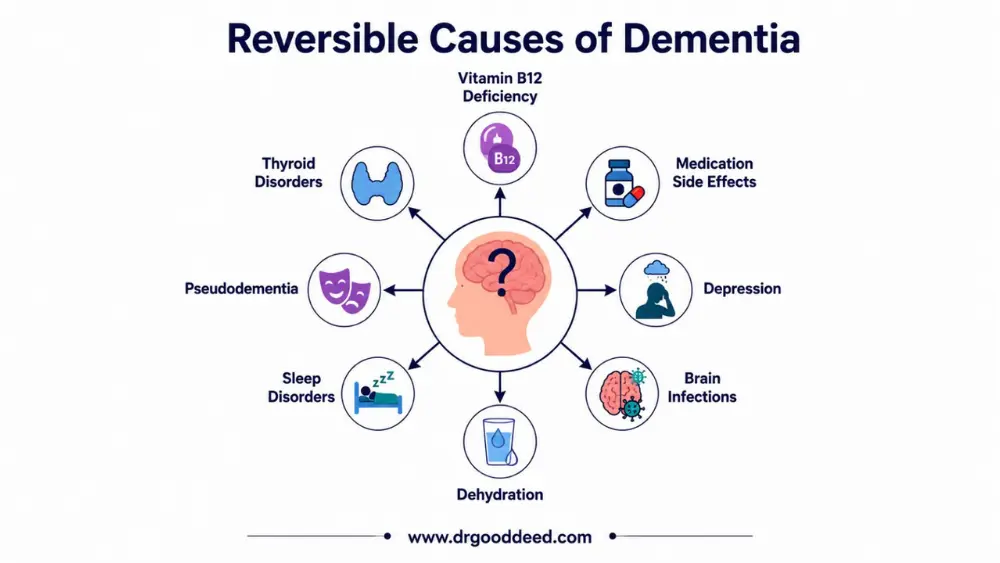
The reversible causes of dementia are more common than most people realize. They often go undetected because the symptoms look exactly like Alzheimer’s or another progressive disease.
Vitamin B12 Deficiency
Vitamin B12 is essential for building and protecting nerve cells in the brain. Without enough of it, the myelin sheath around nerves breaks down. This leads to memory problems, confusion, slow thinking, and even personality changes. These are classic early signs of reversible dementia, and B12 deficiency is one of the most common reasons they appear.
A 2016 case report published in Cureus documented a 53-year-old patient who presented with acute dementia-like symptoms. After intramuscular B12 injections, cognitive function improved dramatically within weeks. When B12 deficiency is the cause, dementia can be reversed with a B12 shot. If treated early, B12 deficiency is one of the most documented reversible causes of dementia in older adults.
Good B12 sources include meat, eggs, dairy, and fortified cereals. Older adults, people on metformin, and those who have had gastric surgery are at particular risk for deficiency.
Thyroid Disorders
An underactive thyroid (hypothyroidism) slows almost every body function, including brain function. Patients often show up with memory loss, foggy thinking, depression, and slowed speech. These are also classic early signs of reversible dementia.
A 2022 study published in Neurology (the journal of the American Academy of Neurology) found that older adults with hypothyroidism had a measurably higher risk of developing dementia. But when hypothyroidism is the cause of cognitive symptoms rather than the trigger for a separate neurodegenerative process, treating it with levothyroxine (thyroid hormone replacement) can restore cognitive function significantly.
Medication Side Effects
Many older adults take multiple medications at once. Some medications, or combinations of them, directly impair memory and thinking. For many patients, dementia can be reversed by stopping the drug that is causing it.
Common culprits include:
- Benzodiazepines (like diazepam or lorazepam)
- Anticholinergic drugs (used for bladder control, allergies, and depression)
- Opioid pain medications
- Certain blood pressure medications
- Sleep aids like diphenhydramine (Benadryl)
When a doctor reviews and adjusts the medication list, many patients see rapid cognitive improvement. Sometimes stopping a single drug is all it takes.
Depression and Pseudodementia
Depression does not just affect mood. It affects memory, concentration, and processing speed. When cognitive impairment stems from severe depression, clinicians call it pseudodementia.
A large systematic review found that among 284 patients diagnosed with pseudodementia, 53% no longer met criteria for dementia after treatment. A 2023 study published in Frontiers in Psychiatry confirmed that pseudodementia is reversible in most cases when depression is treated with antidepressants, psychotherapy, or both. Up to 80% of patients regain baseline cognitive function after 6–12 weeks of adequate treatment.
A key difference: people with true dementia often deny memory problems. People with pseudodementia are usually very aware of them and very distressed.
Sleep Disorders
Untreated obstructive sleep apnea (OSA) is a significant but under-recognized cause of cognitive decline from reversible conditions. During apnea episodes, the brain is starved of oxygen repeatedly through the night. Over time, this disrupts memory consolidation, slows thinking, and impairs attention.
Treating OSA with CPAP therapy has been shown to improve cognitive symptoms in many patients. The improvement is not always complete, but measurable gains in memory and executive function are well-documented in clinical literature from 2021 to 2024.
Chronic sleep deprivation also impairs the brain’s glymphatic system, which clears waste products including amyloid beta during sleep. Missing this nightly cleaning cycle consistently has real consequences for brain health over time.
Brain Infections
Certain infections directly affect the brain and cause acute cognitive symptoms that can look like dementia:
- Bacterial meningitis causes rapid cognitive decline and confusion
- Neurosyphilis (a late-stage syphilis infection) can cause memory loss and personality changes
- Lyme disease affecting the nervous system (Lyme neuroborreliosis) can impair memory and thinking
- Viral encephalitis causes brain inflammation and cognitive disruption
- COVID-19-related encephalopathy has been documented as a cause of reversible cognitive decline, particularly in hospitalized patients
When treated early with appropriate antibiotics or antivirals, cognitive function from infection-related decline can recover substantially.
Dehydration and Nutritional Deficiencies
Dehydration causes confusion, especially in older adults, and is frequently confused with dementia episodes. Even mild dehydration reduces concentration and recall. It is one of the fastest-reversible causes of cognitive symptoms.
Beyond B12, other nutritional deficiencies that cause dementia-like symptoms include:
- Vitamin B1 (thiamine) deficiency: Causes Wernicke’s encephalopathy, a serious neurological emergency
- Vitamin D deficiency: Linked to increased cognitive decline risk in multiple studies from 2020 to 2023
- Folate deficiency: Associated with depression and cognitive impairment in older adults
- Low magnesium: Affects neurotransmitter function and memory
The Condition That Sits in the Gray Zone: Normal Pressure Hydrocephalus
Normal pressure hydrocephalus (NPH) is one of the most under-diagnosed conditions in older adults. It occurs when excess cerebrospinal fluid (CSF) builds up inside the brain’s fluid chambers (ventricles). This fluid presses on brain tissue and causes a distinctive triad of symptoms:
- Gait disturbance (a slow, shuffling walk sometimes called a “magnetic gait”)
- Urinary incontinence
- Cognitive decline
These three symptoms together make NPH stand out from other dementias. NPH is commonly misdiagnosed as Parkinson’s disease or Alzheimer’s. In May 2025, singer Billy Joel publicly disclosed his NPH diagnosis, bringing wide attention to this condition.
The treatment is a surgical procedure called a ventriculoperitoneal (VP) shunt. This small tube drains the excess fluid from the brain into the abdomen. Research published in the Journal of Clinical Medicine (2022) tracked 181 NPH patients who underwent shunt surgery. Gait and balance scores improved significantly within months. However, cognitive improvement was more variable.
According to UT Southwestern Medical Center, shunting improves symptoms in 50% to 84% of NPH patients. That range depends on how long symptoms have been present before treatment and whether other brain diseases co-exist. Early diagnosis gives the best outcome.
Can Brain Function Improve Even When Dementia Cannot Be Reversed?
Even in conditions like Alzheimer’s and vascular dementia, there are still meaningful ways to improve daily function and slow decline.
- Structured exercise, particularly aerobic activity, improves blood flow to the brain and has been shown to slow hippocampal shrinkage in older adults
- Cognitive engagement, such as learning new skills, reading, and social interaction, builds cognitive reserve
- Sleep improvement and treatment of sleep apnea reduce one major driver of accelerated decline
- Tight cardiovascular control (blood pressure, blood sugar, cholesterol) directly reduces vascular damage in the brain
- The 2020 Lancet Commission identified 12 modifiable risk factors that together account for 40% of dementia cases. Addressing them does not reverse dementia, but it slows how fast it moves
How Doctors Determine Whether Dementia Might Be Reversible
Can dementia be reversed for a specific patient? Doctors find the answer through a structured diagnostic process. Here is how clinicians work through it:
- Full blood panel: Checks B12, folate, thyroid function (TSH and free T4), blood glucose, liver function, kidney function, and vitamin D
- Cognitive testing: Mini-Mental State Examination (MMSE) or Montreal Cognitive Assessment (MoCA) to measure the extent of impairment
- Medication review: Identifies drugs with known anticholinergic or sedating effects
- Depression screening: Uses validated tools like the Geriatric Depression Scale (GDS)
- Brain imaging: MRI or CT to detect NPH, strokes, tumors, or infections
- Sleep study: Rules out obstructive sleep apnea
- Lumbar puncture: Sometimes used to test for infections or NPH (a trial CSF drainage for NPH can itself be diagnostic)
Doctors should complete these tests before giving a diagnosis of irreversible dementia. Missing a reversible cause means the patient never gets the treatment that could change everything.
Treatment Options for Reversible Dementia
Can dementia be cured when a reversible cause is found? Often, yes, especially with early treatment. Here is how each cause is managed.
Correcting Nutritional Deficiencies
B12 deficiency is treated with intramuscular injections of cobalamin, particularly when absorption is the issue (which is common in older adults). Oral high-dose B12 (1,000–2,000 mcg daily) works in some cases. Results can appear within weeks, but full recovery may take months.
Vitamin D, folate, and thiamine deficiencies are corrected with targeted supplementation under medical supervision.
Treating Thyroid Disorders
Hypothyroidism is treated with levothyroxine, a synthetic thyroid hormone taken daily. TSH levels are monitored every 6–8 weeks until stable. Cognitive symptoms often begin to improve within 3–6 months of reaching optimal thyroid levels.
Adjusting Medications
A pharmacist or geriatrician performs a medication reconciliation to identify drugs that impair cognition. Stopping or substituting these drugs can produce rapid improvement. Anticholinergic burden, a measure of how heavily a person’s medications block brain acetylcholine signaling, is now a standard clinical concern in geriatric care.
Managing Depression
Treating pseudodementia means treating the underlying depression aggressively. SSRIs (like sertraline or escitalopram) are first-line options in older adults. Psychotherapy, particularly cognitive behavioral therapy (CBT), adds further benefit. Electroconvulsive therapy (ECT) is considered in severe, treatment-resistant cases and has strong evidence for both depression and associated cognitive symptoms.
Treating Underlying Infections
Bacterial infections affecting the brain are treated with IV antibiotics. Viral encephalitis requires antivirals. Neurosyphilis is treated with high-dose IV penicillin G over 10–14 days. COVID-related cognitive decline is managed with symptom support, and recovery timelines vary.
How to Slow Dementia Progression
Even when dementia can be reversed, slowing down dementia progression is always possible. These steps have solid clinical backing:
- Aerobic exercise 150 minutes per week: The 2022 EXERT trial showed exercise preserves brain volume in MCI patients
- Mediterranean or MIND diet: Associated with slower cognitive decline across multiple cohort studies
- Blood pressure below 130/80 mmHg: The SPRINT-MIND trial showed intensive blood pressure control reduced risk of mild cognitive impairment
- Social engagement: Isolation accelerates cognitive decline; regular interaction protects brain function
- Quality sleep: 7–9 hours allows amyloid clearance via the glymphatic system
- No smoking: Smoking doubles dementia risk and accelerates vascular damage
- Hearing aid use: Untreated hearing loss is one of the most significant modifiable dementia risks per the 2020 Lancet Commission report
FAQs
Can dementia be reversed completely?
Sometimes. B12 deficiency, medication side effects, hypothyroidism, and depression-related cognitive impairment (pseudodementia) often reverse fully when caught early. Alzheimer’s, Lewy body, and vascular dementia do not reverse. Over 50 conditions mimic dementia, making full evaluation critical.
Can vitamin deficiencies cause dementia-like symptoms?
Yes. B12, thiamine, folate, and vitamin D deficiencies all cause memory loss, confusion, and slowed thinking. B12 deficiency can produce symptoms identical to early Alzheimer’s. Intramuscular B12 injections can restore full cognitive function if treated before permanent nerve damage occurs.
Can depression cause symptoms similar to dementia?
Yes. Severe depression causes a condition called pseudodementia, where memory loss, confusion, and slowed thinking mimic Alzheimer’s. A 2023 Frontiers in Psychiatry study confirmed 53% of pseudodementia patients fully recovered with depression treatment within 6–12 weeks.
Is Alzheimer’s disease reversible?
No. Alzheimer’s disease is not reversible. The two FDA-approved disease-modifying therapies (lecanemab and donanemab) slow early-stage progression by roughly 27–35% but do not reverse existing damage. No current treatment restores lost Alzheimer’s neurons.
Can thyroid problems cause memory loss and confusion?
Yes. Hypothyroidism (underactive thyroid) slows brain function directly. A 2022 Neurology study confirmed it raises dementia risk. When hypothyroidism is the direct cause of cognitive symptoms, levothyroxine treatment typically improves memory within 3–6 months.
How can I slow dementia progression?
How to slow dementia progression starts with controlling blood pressure below 130/80 mmHg, exercising 150 minutes weekly, treating sleep apnea, maintaining social connections, and using hearing aids if needed. The 2020 Lancet Commission identified 12 modifiable factors covering 40% of dementia risk.
Are there lifestyle changes that help protect brain health?
Yes. Regular aerobic exercise, the MIND diet, quality sleep, not smoking, and social engagement all reduce dementia risk. The cognitive decline from reversible conditions caused by poor lifestyle is also addressable. Combining these habits has a cumulative protective effect on the aging brain.
When should memory loss be evaluated by a doctor?
Memory loss warrants medical evaluation when it disrupts daily life, when it comes on suddenly, or when it involves getting lost in familiar places, forgetting recent events repeatedly, or changes in personality. Any new cognitive symptom in someone over 60 should be evaluated promptly.
What conditions can be mistaken for dementia?
Depression, B12 deficiency, hypothyroidism, medication side effects, sleep apnea, urinary tract infections (especially in older women), dehydration, normal pressure hydrocephalus, and brain infections are the most common. These are all early signs of reversible dementia that doctors should rule out before diagnosing a progressive disease.
Sources
- Harvard Health Publishing. What’s Causing Your Memory Loss? HelpGuide, updated 2026.
- MedlinePlus. Dementia due to metabolic causes. Updated January 2026.
- Weng CH, et al. Thyroid problems linked to increased risk of dementia. Neurology, July 2022.
- Mouta R, et al. Depression and Pseudodementia. Frontiers in Psychiatry, 2023. PMC10452733.
- Trungu S, et al. Clinical Outcomes of Shunting in Normal Pressure Hydrocephalus. Journal of Clinical Medicine, February 2022. PMC8911143.
- UT Southwestern Medical Center. NPH: A misunderstood form of dementia that can be reversed, 2025.
- Almoallim H, et al. Reversible Vitamin B12 Deficiency Presenting with Acute Dementia. Cureus, 2016. PMC5187480.
- Livingston G, et al. Dementia prevention, intervention, and care: 2020 Lancet Commission report. The Lancet, 2020.
- Alzheimer’s Research UK. Other causes of memory and thinking problems, updated 2026.
- StatPearls / NCBI Bookshelf. Depressive Cognitive Disorders (Pseudodementia). Updated September 2025.