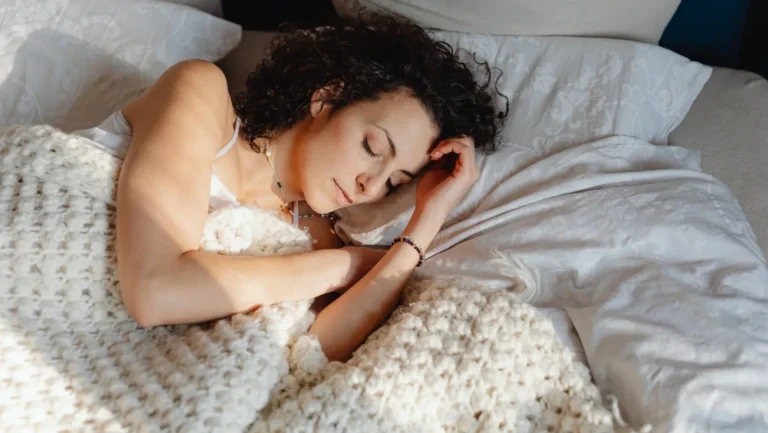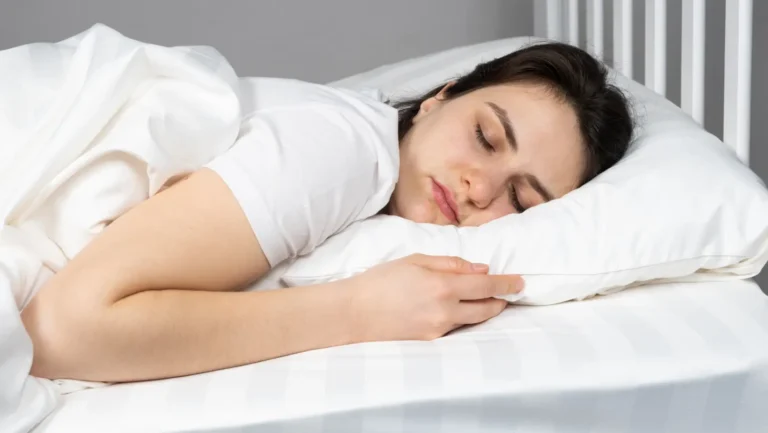

You can sleep with your eyes open, and about one in five people do it without knowing. Doctors call this nocturnal lagophthalmos, a term for eyelids that fail to seal shut during sleep. The main risk is corneal exposure, since the clear front surface of the eye dries out when air reaches it all night. This guide covers why it happens, warning signs to watch for, and the exact fixes eye doctors recommend.
What Does “Sleeping With Your Eyes Open” Actually Mean?
Most people picturing this condition imagine eyes wide open like a cartoon character, but the reality looks different. In true nocturnal lagophthalmos, eyelids close most of the way, leaving only a thin gap along the lower lid. This gap is often small enough that a partner or roommate would miss it in dim light, yet it is enough to dry out the eye by morning.
There are a few versions of this that get mixed up:
- A visible gap between the eyelids. The most common form. The eyelid muscle relaxes too far during sleep.
- Eyelids that look closed but do not seal. Skin covers the eye, but a microscopic opening still lets air reach the cornea.
- Eyes that appear open briefly during REM sleep. This is usually harmless and different from ongoing nocturnal lagophthalmos.
- Rare nerve-related cases where the eye stays visibly open. These need a doctor’s evaluation right away.
Most people are sleeping with a small, often invisible gap that still causes damage over time.
Why Do Some People Sleep With Their Eyes Open?
Some people sleep with their eyes open due to six main triggers, ranging from harmless anatomy to nerve damage that needs treatment. About 20% of people show some degree of nighttime eyelid opening, and most never notice until dry eye symptoms show up. Identifying your specific cause changes what treatment will actually work.
Natural Variation
Some people simply have looser eyelid skin or a shorter distance between the upper and lower lid. This alone can create a small nightly gap with no underlying disease at all.
Facial Nerve Problems
Bell’s palsy and other facial nerve issues weaken the muscle that closes the eyelid. This is one of the most common medical causes of lagophthalmos, day or night.
Eyelid Anatomy
Eyelid retraction, scarring from an old injury, or skin that has lost elasticity with age can physically hold the lid from closing fully, even when the muscle works fine.
Previous Eye Surgery
Blepharoplasty and other eyelid procedures sometimes remove slightly more skin than the eye needs for a full seal, leading to a lasting gap during sleep.
Thyroid Eye Disease
Thyroid conditions can cause the eyes to bulge forward, called proptosis. When the eyeball pushes out further than the eyelid can cover, the lid cannot close completely.
Other Neurological Conditions
Parkinson’s disease and similar conditions can reduce blink strength and eyelid muscle control, both while awake and during sleep.
Symptoms of Sleeping With Your Eyes Open
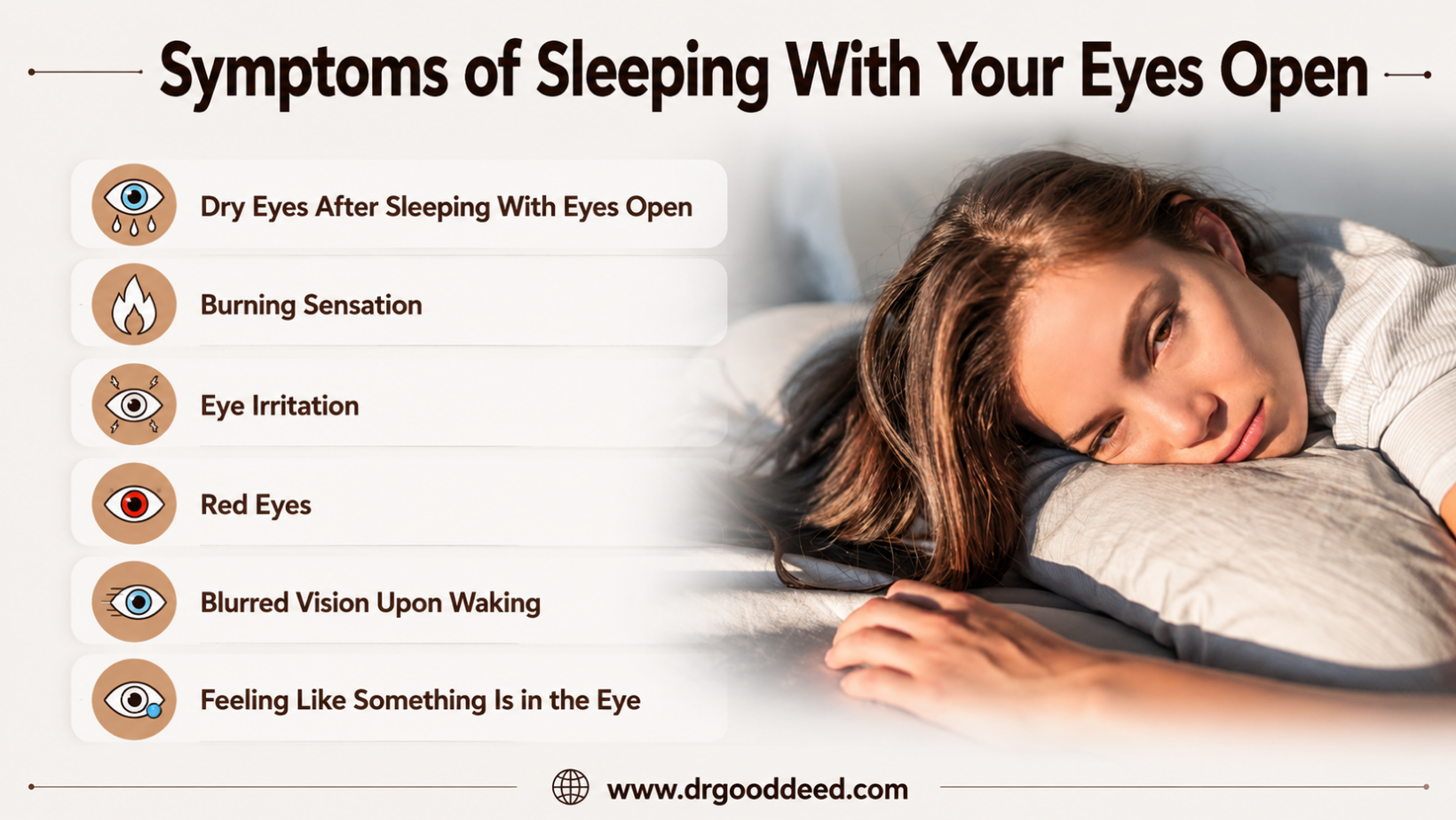
Morning symptoms are the biggest clue, since the damage builds up overnight and shows up as soon as you wake. These symptoms often get blamed on allergies or a dry bedroom, when the real cause is eyelid closure. Here are the signs to track.
Dry Eyes After Sleeping With Eyes Open
A gritty, sandy feeling right when you open your eyes is the clearest sign. This happens because tears evaporated from the exposed area overnight.
Eye Irritation
A stinging or scratchy feeling that fades within an hour of waking often points to overnight air exposure rather than a daytime irritant.
Burning Sensation
Burning that is worse in one eye than the other can mean that side has a larger nightly gap, which is common with one-sided facial nerve weakness.
Red Eyes
Redness that clears by midday, but returns every morning, follows a pattern typical of nighttime corneal drying rather than infection.
Blurred Vision Upon Waking
Temporary blur that clears after a few blinks happens because the dried surface needs fresh tears to smooth back out. Blur that lasts longer needs medical attention.
Feeling Like Something Is in the Eye
This sensation, called foreign body sensation, often comes from tiny rough spots on a cornea that dried out overnight.
Risks of Sleeping With Your Eyes Open
Left untreated, nightly corneal exposure can move from mild irritation to lasting eye damage. The risk grows the longer the gap goes unnoticed and untreated. These are the outcomes doctors watch for most closely.
Dry Eye Disease
Repeated overnight drying can turn into chronic dry eye disease, a condition where the eye no longer produces or holds enough tear film during the day either.
Corneal Damage
The cornea can develop small scratches called punctate erosions from repeated dryness. Left alone, these can deepen into exposure keratopathy.
Eye Infections
A dry, damaged corneal surface has less natural defense against bacteria, which raises the risk of infection compared to a healthy, moist eye.
Vision Problems
Scarring from repeated corneal damage can affect how light enters the eye, sometimes causing lasting blur that does not clear with blinking.
Chronic Eye Discomfort
Some people develop ongoing sensitivity to light, wind, and screens, since the corneal surface never fully recovers between nights of exposure.
How to Stop Sleeping With Your Eyes Open
Matching the fix to the actual cause works far better than trying random remedies, since a CPAP leak and a nerve problem need completely different solutions. This table breaks down what tends to help most for each cause.
| Cause | Most Helpful Solution |
| Mild eyelid gap | Lubricating ointment before bed |
| Dry bedroom | Humidifier |
| CPAP mask leak | Mask refitting |
| Bell’s palsy | Eye protection plus medical treatment |
| Thyroid eye disease | Specialist evaluation |
| Persistent lagophthalmos | Ophthalmologist-directed treatment |
Artificial Tears
Preservative-free artificial tears used right before bed add a thin layer of moisture that can last part of the night, though they alone rarely solve a real eyelid gap.
Lubricating Eye Ointments
Thicker than drops, ointments coat the eye for hours and are the first-line option most eye doctors suggest for stopping sleeping with your eyes open symptoms that show up every morning.
Moisture Chamber Goggles
These clear goggles trap humidity around the eyes overnight. They are especially useful for people with facial nerve damage who cannot fully close the lid on their own.
Eyelid Tape (Only Under Medical Guidance)
Special medical eyelid tape, applied under a doctor’s direction, can hold the lid closed enough to reduce exposure. This is not the same as regular household tape.
Treating the Underlying Cause
For thyroid eye disease, nerve palsy, or scarring, fixing the root condition, sometimes through medication or surgery, is the only path to a lasting fix.
What NOT to Do If You Sleep With Your Eyes Open
Some common home fixes actually make nocturnal lagophthalmos worse instead of better. Avoid these mistakes even if they seem like a quick solution.
- Do not tape eyelids shut with regular household tape. It can pull on delicate skin and does not create a safe seal.
- Do not repeatedly use redness-relief eye drops. These shrink blood vessels but do not treat the underlying dryness.
- Do not ignore recurring morning blurred vision. This is a sign of corneal stress that needs an eye exam.
- Do not keep sleeping in direct fan airflow if symptoms persist. Moving air speeds up tear evaporation on an exposed cornea.
- Do not wear contact lenses overnight unless a doctor specifically prescribed them for that use. This raises infection risk on an already dry surface.
FAQs
Is sleeping with your eyes open dangerous?
Yes, over time. Occasional mild exposure rarely causes harm, but nightly, untreated lagophthalmos can lead to corneal scratches, infection, and lasting vision changes if ignored.
What causes nocturnal lagophthalmos?
Facial nerve weakness, eyelid scarring, thyroid eye disease, prior eyelid surgery, and natural eyelid looseness are the leading causes. Bell’s palsy is the single most common medical trigger.
Can sleeping with your eyes open damage your vision?
Yes, in severe or long-term cases. Repeated corneal scratches can scar the surface, and scarring in the eye’s clear front layer can permanently blur vision.
Why are my eyes dry when I wake up?
Overnight tear evaporation from an incomplete eyelid seal is the top cause. A dry bedroom, CPAP mask leaks, and ceiling fans pointed at your face make it worse.
Do artificial tears help with nocturnal lagophthalmos?
Yes, for mild cases. They add short-term moisture, but a thicker overnight ointment or moisture chamber goggles usually works better for a true eyelid gap.
Can children sleep with their eyes partially open?
Yes. Children can have nocturnal lagophthalmos too, often from looser eyelid anatomy. A pediatric eye doctor should evaluate any child with morning eye redness or complaints.
Is surgery ever needed for nocturnal lagophthalmos?
Yes, in persistent cases tied to nerve damage or scarring. Procedures can include eyelid weights, tightening surgery, or correcting the underlying facial nerve issue.
Sources
- American Academy of Ophthalmology: Lagophthalmos Evaluation and Treatment
- Cleveland Clinic: Lagophthalmos, Types, Causes and Treatment
- NCBI StatPearls: Lagophthalmos
- ScienceDirect: Nocturnal Lagophthalmos, An Overview and Classification
- PubMed: Nocturnal Lagophthalmos, An Overview and Classification
- Ophthalmology Breaking News: What Causes Nocturnal Lagophthalmos
- Facial Paralysis Institute: Lagophthalmos Causes and Treatment Options
- PMC: Effect of Mask Usage on Dry Eye Symptoms in OSAS Patients
- ScienceDirect: Bubbling Test for Retrograde Air Escape During Positive Airway Pressure Therapy
- EyesOnEyeCare: CPAP Dry Eye, How to Recognize It and What to Do About It