
Home remedies for postnasal drip work by thinning thick mucus and calming the irritated tissue in your nose and throat. Postnasal drip happens when your nose and throat glands make more mucus than usual, and it drips down your throat instead of draining quietly. It affects almost everyone at some point, often from allergies, colds, dry air, or acid reflux. This guide covers ten remedies you can try today, plus honest answers to the questions people search for most.
10 Home Remedies for Postnasal Drip
Home remedies for postnasal drip work best when they target two problems at once: mucus that is too thick to drain, and airways that are too dry or irritated to clear it. The ten methods below cover both angles. Try two or three together rather than one at a time for faster relief.
1. Drink Plenty of Fluids
Water thins mucus so it flows instead of pooling in your throat. Aim for 8 to 10 glasses of water a day when you have drainage. Thin mucus clears out on its own. Thick mucus sits and irritates your throat, which triggers coughing.
● Warm water works faster than cold water at loosening mucus
● Broth and herbal tea both count toward your fluid total
● Add fluids gradually if plain water upsets your stomach
2. Use a Saline Nasal Spray
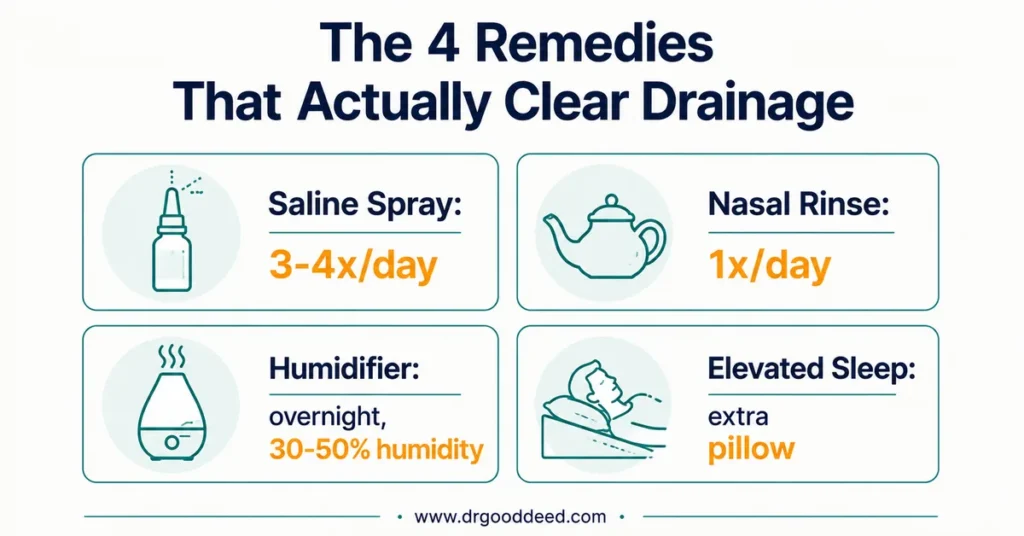
A saline spray moistens dry nasal tissue and washes out irritants sitting in your nose. Mayo Clinic notes that saline sprays remove thick secretions and let your sinuses drain properly. Use it 3 to 4 times a day, especially in dry indoor air. Over-the-counter saline sprays contain only salt and water, so you can use them as often as you need without side effects.
3. Try a Saline Nasal Rinse
A nasal rinse, using a neti pot or squeeze bottle, flushes mucus and allergens straight out of your nasal passages instead of just moistening them. Research on nasal irrigation shows it reduces the need for antibiotics and decongestants by clearing infectious material and allergens directly. Use distilled, boiled and cooled, or sterile water only, never tap water, to avoid introducing bacteria into your sinuses.
- Mix half a teaspoon of salt with a quarter teaspoon of baking soda in 8 ounces of warm sterile water
- Lean over a sink and rinse one nostril at a time
- Rinse your device with hot soapy water after every use
4. Use a Humidifier
Dry air thickens mucus and makes your throat feel raw. A humidifier adds moisture back into the air, which keeps mucus loose enough to drain. Run it in your bedroom overnight, especially during winter or in air-conditioned rooms. Keep the humidity level between 30 and 50 percent, since higher levels can encourage mold growth inside your home.
5. Take a Warm Shower
Steam from a hot shower loosens thick mucus almost instantly and opens up your nasal passages. Stand in the steam for 5 to 10 minutes and breathe through your nose. This works well right before bed, since it also relaxes your throat muscles and makes it easier to fall asleep without constant throat clearing.
6. Drink Warm Tea With Honey
Honey coats an irritated throat and calms coughing linked to drainage. A Cochrane review found honey reduces cough frequency and severity better than no treatment at all, and Mayo Clinic lists it as a helpful option for adults and children over age one. Stir a tablespoon into warm tea and sip it slowly. Skip honey entirely for infants under 12 months, since it carries a risk of botulism at that age.
7. Sleep With Your Head Elevated
Lying flat lets mucus pool in the back of your throat all night, which is why coughing often gets worse after dark. Prop your head up with an extra pillow or a wedge pillow so gravity pulls drainage forward instead. This position also helps if acid reflux is contributing to your symptoms, since it keeps stomach acid from creeping upward while you sleep.
8. Avoid Smoke and Other Irritants
Cigarette smoke, strong perfume, and chemical fumes all inflame your nasal lining and trigger extra mucus production. Even secondhand smoke counts. Stay away from smoking areas, switch to fragrance-free cleaning products, and avoid vaping indoors. Irritant exposure is one of the few causes of postnasal drip you can control completely just by changing your surroundings.
9. Keep Your Home Free From Allergens
Dust mites, pet dander, mold, and pollen all trigger the histamine response that floods your nose with mucus. Home remedies for postnasal drip work far better once you reduce this daily allergen load.
- Wash bedding weekly in hot water to kill dust mites
- Run a HEPA air purifier in your bedroom
- Keep windows closed on high pollen count days
- Bathe pets weekly if you are allergic to dander
10. Stay Hydrated and Limit Dehydrating Drinks
Alcohol and caffeinated drinks pull water out of your body and thicken your mucus, which makes drainage worse rather than better. Swap your second or third coffee for water or herbal tea while symptoms last. This is different from general fluid intake. It means actively cutting the drinks that dry you out, not just adding more water on top.

FAQs
What is the fastest way to stop postnasal drip?
A saline nasal rinse gives the fastest relief because it physically flushes mucus and allergens out within minutes. Follow it with a humidifier at night to keep drainage from building back up.
What is the best home remedy for postnasal drip?
Saline nasal irrigation ranks as the single best home remedy for postnasal drip, since research links it to reduced congestion and less need for antibiotics or decongestants.
How do you get rid of postnasal drip naturally?
Combine a saline rinse, a humidifier, warm fluids, and an elevated sleeping position. These four steps address both thick mucus and dry, irritated airways at the same time.
What should you drink for postnasal drip?
Drink warm water, herbal tea, or tea with honey. Avoid alcohol and limit caffeine, since both drinks pull moisture from your body and thicken mucus further.
How long does postnasal drip usually last?
Most cases from a cold clear within 1 to 2 weeks. See a doctor if drainage lasts beyond 10 days, worsens, or comes with fever or facial pain.
Sources
- Cleveland Clinic: Postnasal Drip Symptoms and Causes link
- Mayo Clinic Press: Nasal Polyps Treatment Options, Saline Rinse Instructions link
- Mayo Clinic News Network: Sinusitis and Treatment Options link
- Mayo Clinic: Honey, An Effective Cough Remedy? link
- Cochrane: Honey for Acute Cough in Children link
- PMC: Nasal Irrigations, A 360-Degree View in Clinical Practice link
- Cleveland Clinic: Rhinorrhea (Runny Nose) Causes and Treatment link
- Cleveland Clinic: Postnasal Drip and Nausea link
- PubMed: Effectiveness of Honey for Symptomatic Relief in Upper Respiratory Tract Infections link
- ClinicalTrials.gov: Capsaicin Cough Threshold in Chronic Cough Due to Postnasal Drip, Mayo Clinic link