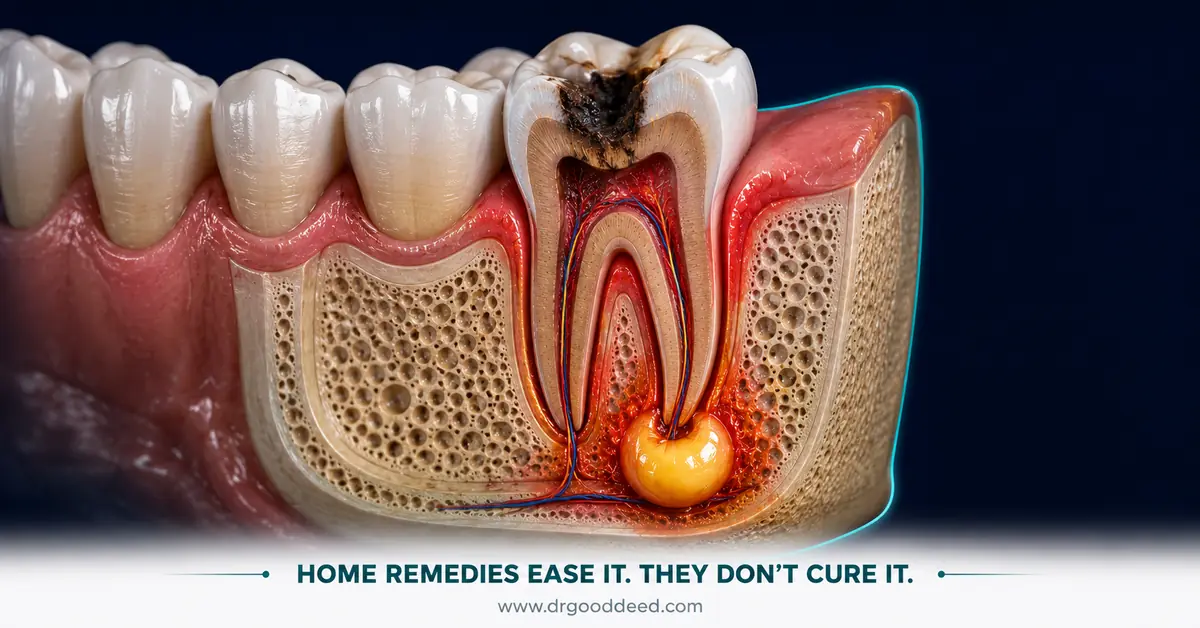

Home remedies for a tooth abscess cannot cure the infection, but they can dull the pain until a dentist sees you. A tooth abscess is a pocket of pus caused by bacteria that reach the inner tooth or gum tissue, and it needs professional drainage plus antibiotics in most cases. In the USA, urgent care dentists and emergency rooms treat thousands of abscess cases every week, especially when pain flares up at night or on a weekend.
This guide covers ten safe at-home steps for pain control, plus answers to the questions people search for most before they can reach a dentist.
10 Home Remedies for a Tooth Abscess
The fastest home remedies for a tooth abscess combine a warm salt rinse, a cold compress, and an over-the-counter pain reliever used together, not one at a time. Each remedy below targets a different part of the pain cycle: bacteria, swelling, or nerve irritation. None of them drain the abscess or stop the infection from spreading, so pair every step with a same-day or next-day dental appointment.
Rinse With Warm Salt Water
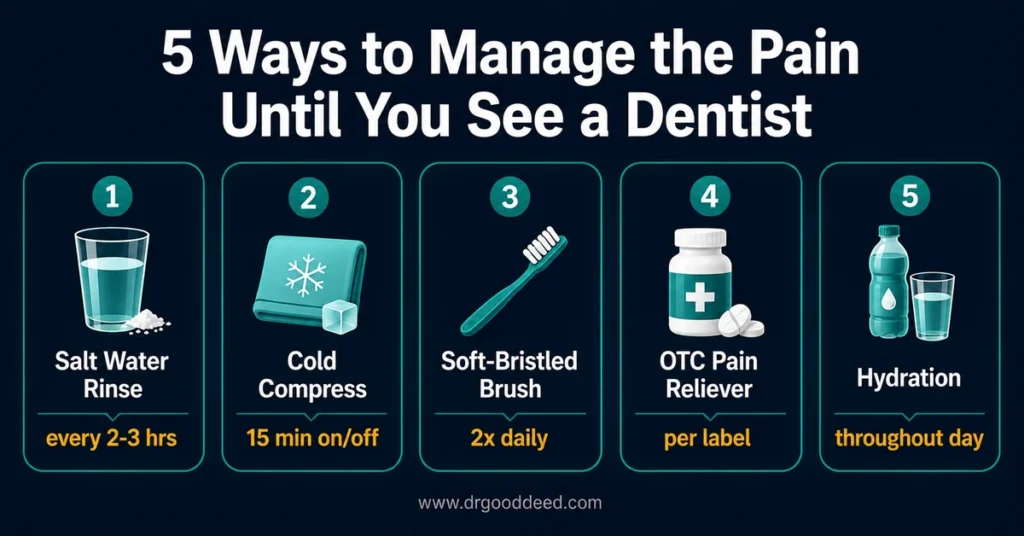
Salt water pulls fluid out of swollen gum tissue through osmosis, and this lowers pressure around the infected tooth. Mix half a teaspoon of table salt into a cup of warm water. Swish it around the sore area for 30 seconds, then spit it out. Do this every two to three hours. Among home remedies for a tooth abscess, a salt rinse is the one dentists recommend most because it also flushes out food debris that feeds the bacteria.
Apply a Cold Compress
A cold compress narrows blood vessels near the skin, which slows swelling and numbs the nerve endings close to the surface. Wrap ice in a thin towel and hold it against your cheek, over the sore tooth, for 15 minutes. Take a 15-minute break, then repeat. Never place ice directly on your skin or on the tooth itself. Cold works best in the first 48 hours, right when swelling starts to build.
Keep the Area Clean
Bacteria multiply fastest in a mouth full of trapped food particles. Floss gently around the sore tooth once a day, moving slowly so you don’t push debris deeper into the gum. Skip mouthwash with alcohol, since it dries out already irritated tissue. A soft, alcohol-free rinse keeps bacterial counts down without adding sting to an area that already hurts.
Rinse Your Mouth After Eating
Food particles that sit near an abscess feed the same bacteria that caused it. Swish plain water around your mouth for 20 seconds after every meal or snack. This single habit reduces the bacterial load between your regular salt rinses. Skip harsh swishing motions near the swollen side, since force alone can bruise tender gum tissue.
Use a Soft-Bristled Toothbrush
A firm or medium brush can tear inflamed gum tissue around an abscess and let more bacteria in through the break. Switch to a soft-bristled brush and use short, gentle strokes near the sore spot. Brush the rest of your mouth as usual. This small swap protects the area while you wait for treatment, and most people keep the softer brush even after the infection clears.
Stay Hydrated
Saliva carries natural antibacterial enzymes that fight off oral bacteria around the clock. Dehydration cuts saliva flow, which lets bacteria build up faster near the abscess. Drink water steadily through the day, aiming for small sips rather than large gulps that jar the sore tooth. Avoid sports drinks and juice, since sugar feeds the same bacteria you’re trying to control.
Choose Soft Foods
Chewing puts direct pressure on an infected tooth, and that pressure can spike your pain within seconds. Stick to foods like yogurt, mashed potatoes, scrambled eggs, and broth-based soups until you see a dentist. Cut solid foods into small pieces and chew on the opposite side of your mouth. Soft foods also lower the risk of trapping debris in the infected pocket.
Avoid Very Hot or Cold Foods
An abscessed tooth often exposes irritated nerve tissue, and temperature extremes trigger sharp, sudden pain in that tissue. Room-temperature or lukewarm foods and drinks cause far less discomfort. Skip ice water, hot coffee, and frozen treats until the infection is treated. Even a few seconds of contact with hot soup can set off pain that lasts for several minutes.
Avoid Sugary Foods and Drinks
Sugar feeds the same oral bacteria responsible for the abscess, and each exposure gives them fuel to keep multiplying. Cut back on soda, candy, and desserts while you’re managing symptoms at home. Choose water or unsweetened tea instead. This step won’t shrink an existing abscess, but it stops the bacterial colony from growing any larger before your appointment.
Take Over-the-Counter Pain Relief as Directed
Among all home remedies for a tooth abscess, an OTC pain reliever taken exactly as the label directs offers the most reliable relief. Ibuprofen reduces both pain and swelling, since it targets inflammation directly. Acetaminophen works well for people who can’t take ibuprofen due to stomach or kidney issues. Never exceed the dose printed on the package, and check with a pharmacist before combining two different pain relievers.
| Remedy | Main Benefit | How Often |
| Salt water rinse | Draws out fluid, flushes bacteria | Every 2-3 hours |
| Cold compress | Reduces swelling, numbs nerves | 15 min on, 15 min off |
| Soft-bristled brush | Protects inflamed gum tissue | Twice daily |
| OTC pain reliever | Controls pain and inflammation | Per package label |
| Hydration | Boosts natural saliva defenses | Throughout the day |
FAQs
What is the fastest way to relieve a tooth abscess at home?
A cold compress held for 15 minutes brings the fastest relief, usually within 10 to 20 minutes. Follow it with a warm saltwater rinse. Together they cut swelling and pain faster than either remedy alone.
Can a tooth abscess go away on its own?
No. A tooth abscess does not resolve without dental treatment. The infection can spread to your jaw, neck, or bloodstream within days, so schedule dental care even if the pain temporarily fades.
What can I do to drain a tooth abscess at home?
Nothing safely drains a tooth abscess at home. Popping or cutting the swelling spreads bacteria into deeper tissue and raises infection risk. Only a dentist can drain it safely, usually through the tooth or a small gum incision.
How can I reduce swelling from a tooth abscess?
A cold compress applied in 15-minute intervals reduces facial swelling fastest. Sleeping with your head elevated on two pillows also limits fluid buildup overnight. Ibuprofen, taken per label directions, adds extra swelling control.
How long can you leave a tooth abscess untreated?
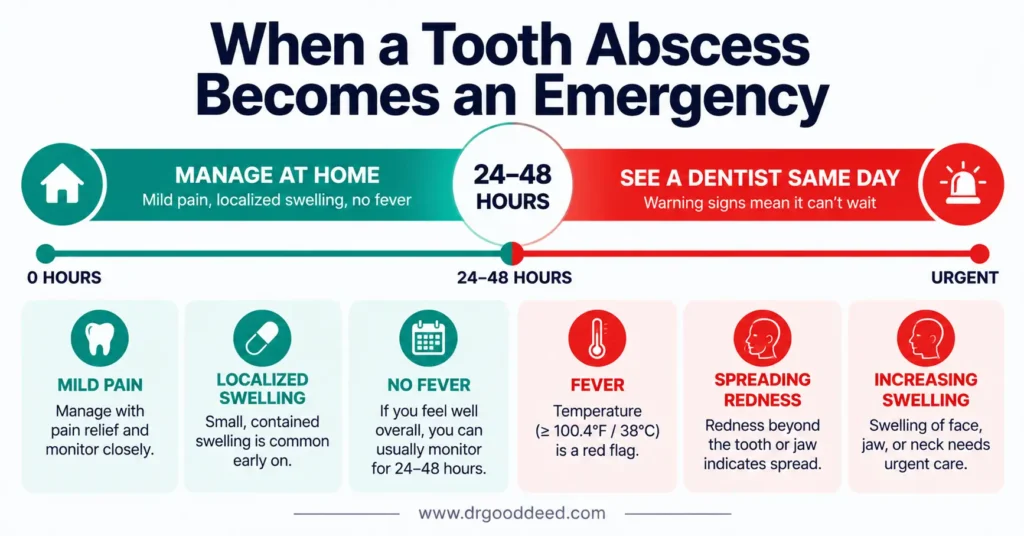
You should never leave a tooth abscess untreated past 24 to 48 hours once you notice fever, facial swelling, or spreading pain. Untreated infections can progress to sepsis, a life-threatening body-wide response, within days.