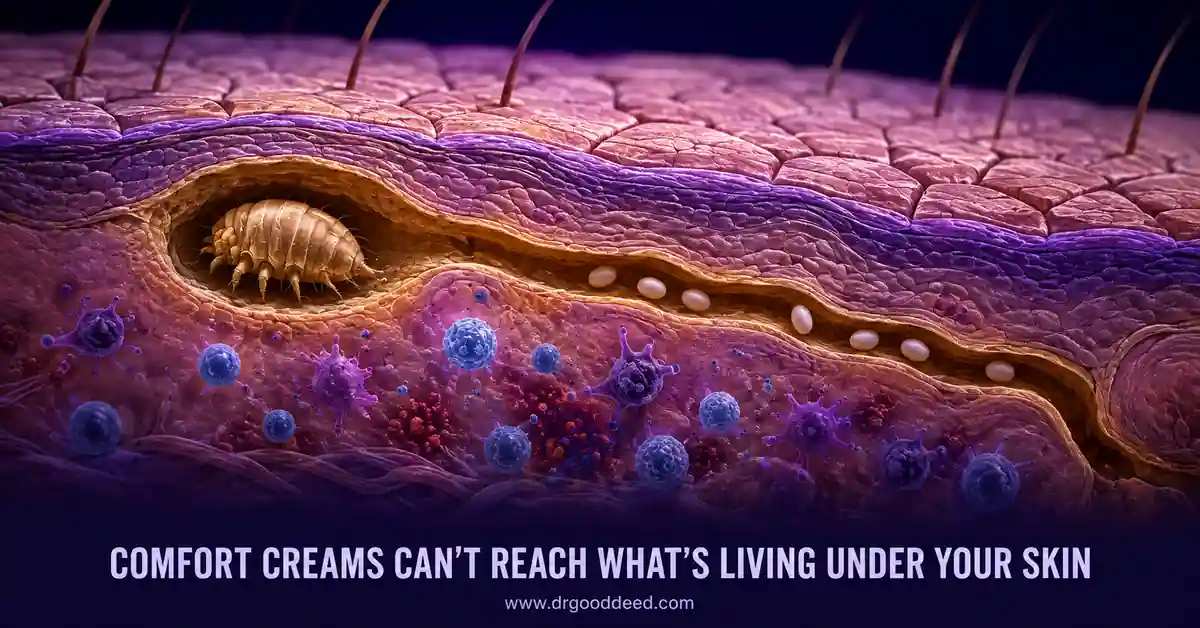

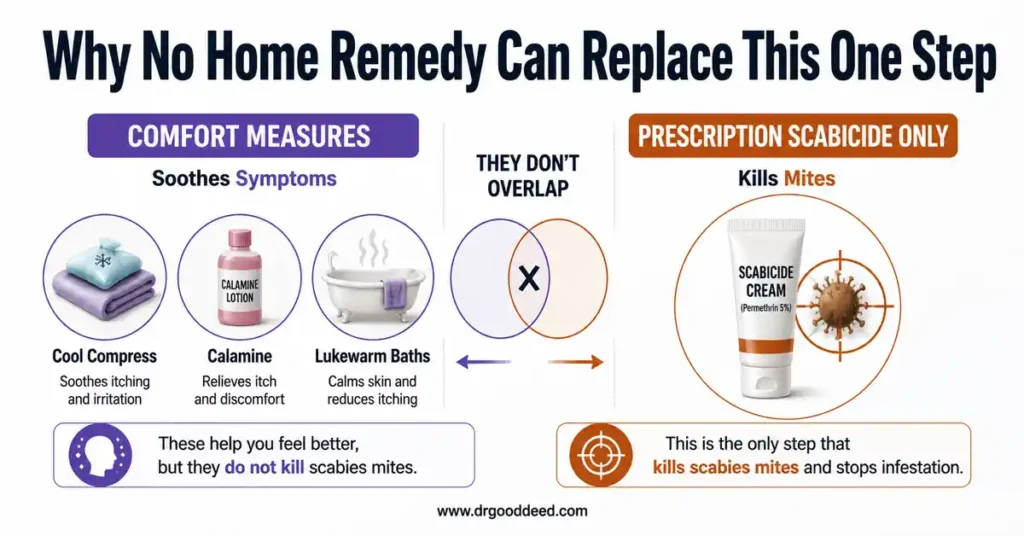
Home remedies for scabies can calm the itching and protect irritated skin, but they cannot kill the mites causing the infestation. Scabies is a skin condition caused by a tiny mite called Sarcoptes scabiei that burrows under the skin and lays eggs there. No over-the-counter product has been tested and approved to treat human scabies. A prescription scabicide is the only way to clear the infestation itself.
This guide covers ten practical comfort measures for the itching, redness, and sleep loss that scabies causes. It also explains what actually gets rid of the mites, why your whole household may need treatment at once, and how long the itch can last even after the mites are gone.
1. Apply a Cool, Damp Compress When Itching Becomes Intense
A cool compress is one of the fastest home remedies for scabies itching because it works in minutes and needs nothing but a clean cloth and water. It will not touch the mites hiding under your skin. It only calms the nerve signals that make you want to scratch.
How Cooling Makes an Itchy Rash Feel More Comfortable
Wet a clean cloth with cool water and press it gently against the itchy skin. Do not rub. Hold it there for a few minutes, especially before bed when itching tends to spike. This is one of the simplest ways to relieve scabies itching without any product at all.
Avoid Scratching Right After You Remove the Compress
The relief from a cold compress is temporary, and scratching right after can restart the cycle. Itching leads to scratching, scratching breaks the skin, and broken skin itches and stings even more. Breaking this pattern matters more than chasing every itch.
2. Moisturize the Skin After Treatment to Reduce Dryness
Once a doctor-prescribed scabicide has been used, moisturizing is one of the most overlooked scabies home remedies for calming skin that stays irritated long after the mites are dead. Persistent itching after treatment does not always mean live mites remain. Your immune system keeps reacting to dead mites and their waste for weeks.
Why Scabies Treatment Itself Can Leave Skin Irritated
Scabicide creams and lotions are strong enough to kill mites, and that strength can dry out or sting already-inflamed skin. This is normal and expected. It is not a sign that the medicine failed.
How to Moisturize Without Irritating Damaged Skin
Choose a plain, fragrance-free moisturizer and apply it with light strokes rather than rubbing it in. Skip anything with alcohol, menthol, or added fragrance, since these can sting broken skin. A consistent home treatment for scabies itching routine like this helps skin heal while the allergic reaction settles down.
Moisturizer Does Not Treat the Infestation
Lotion soothes skin. It does not kill a single mite. Keep using the prescribed scabicide exactly as directed even if your skin feels softer.
3. Use Calamine or a Pharmacist-Recommended Anti-Itch Product
For itching that lingers after treatment, calamine lotion is a practical scabies itch relief option that pharmacists commonly recommend. It cools the skin and reduces the urge to scratch, but like every remedy on this list, it treats symptoms only.
When an Anti-Itch Lotion Can Help
Calamine works well for the days and weeks after treatment when the rash itself remains but active mites are gone. Some people also use over-the-counter antihistamines such as cetirizine at a doctor’s suggestion to ease itching and improve sleep.
Check With a Pharmacist Before Adding New Products
Ask first if:
- The skin is broken or oozing
- A young child is affected
- You are pregnant or breastfeeding
- You are already using a prescribed steroid cream or scabicide
4. Keep Fingernails Short So Scratching Does Less Damage
Trimming your nails sounds too simple to matter, yet the CDC specifically recommends keeping fingernails closely trimmed during scabies treatment. It will not stop the itch. It stops the itch from turning into an infection.
Why Controlling Scratching Matters More Than Eliminating Every Itch
Long nails tear the skin more deeply when you scratch, and torn skin can pick up bacteria and become infected. Short nails limit how much damage a scratching episode can do, which lowers your risk of needing antibiotics on top of scabies treatment.
5. Use Lukewarm Water Instead of Very Hot Water When Bathing
Hot water can feel good for a second, then leave scabies-irritated skin itchier than before. Switching to lukewarm water is a small but effective way to relieve scabies itching without any extra product or cost.
Why Hot Showers Can Worsen an Irritated Rash
Heat opens blood vessels near the skin’s surface and can intensify histamine release, the same chemical behind allergic itching. That is why itching often feels worse right after a hot shower or on a warm night.
How to Make Bathing Less Irritating
- Use lukewarm, not hot, water
- Skip vigorous scrubbing or rough washcloths
- Pat skin dry instead of rubbing it
- Moisturize right after, while skin is still slightly damp
Do not use extreme heat on your skin to try to kill mites. That approach only burns skin. Hot laundry, covered separately below, is for washing items, not for treating your body.
6. Build a Nighttime Itch-Interruption Routine
Nighttime is when scabies itching hits hardest, and a short pre-bed routine is one of the more effective home treatment for scabies itching strategies people rarely hear about. Nighttime itching is a classic scabies symptom, and understanding why it spikes after dark helps you plan around it.
Why Scabies Itching Gets Worse at Night
Body temperature rises slightly under blankets, and there are fewer daytime distractions to compete with the itch. Both factors combine to make bedtime the hardest part of the day for most people with scabies.
A 10-Minute Pre-Bed Routine
- Apply a cool compress to the itchiest areas
- Use calamine lotion or your prescribed anti-itch product
- Put on loose, clean sleepwear
- Keep the bedroom cool rather than warm
- Keep nails short and consider light cotton gloves for young children
Nighttime Itching After Treatment Does Not Mean Treatment Failed
The allergic reaction behind the itch can continue for two to four weeks, and sometimes up to six weeks, after the mites and eggs are dead. Contact your doctor if itching has not started improving by then.
7. Wash Recently Used Clothes, Towels, and Bedding Correctly
You do not need to disinfect your entire house to stop scabies, and doing so wastes time better spent on real home remedies for scabies rash and skin care. Wash only the items that touched your skin in the three days before treatment.
Which Items Actually Need Attention
- Clothing worn in the past three days
- Towels and washcloths
- Bedsheets, pillowcases, and blankets
- Stuffed toys used by children
Wash these in hot water above 122°F (50°C) and dry on a hot cycle for at least 10 minutes. That temperature kills mites and eggs on contact.
What to Do With Items That Cannot Be Washed
Seal them in a closed plastic bag for several days to a week. Scabies mites generally do not survive more than two to three days away from human skin, so time alone finishes the job.
You Do Not Need to Fumigate or Throw Out Mattresses
The CDC specifically advises against insecticide sprays, fogs, and fumigants for ordinary scabies. Routine steam cleaning or discarding furniture is not necessary either.
8. Treat Household and Close Contacts at the Same Time
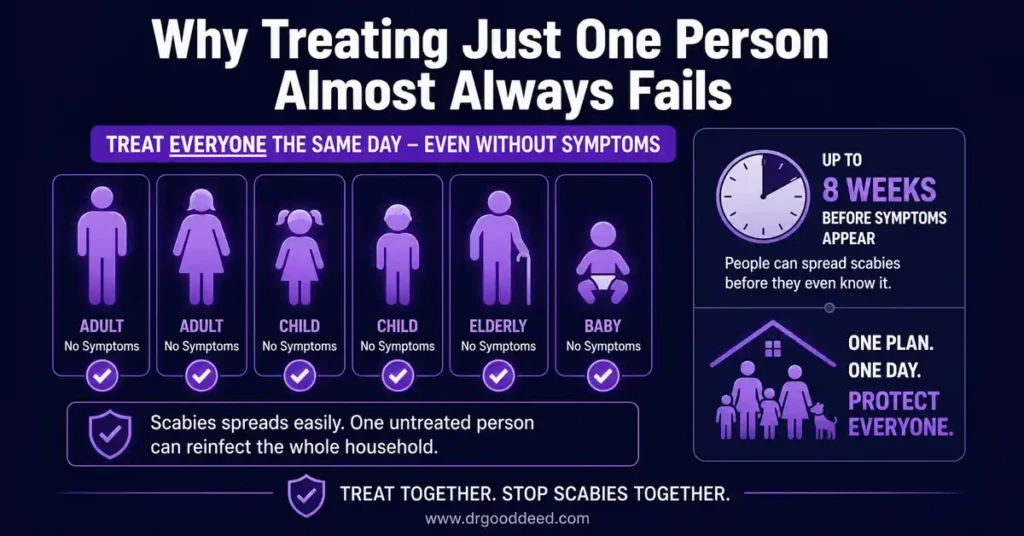
Skipping this step is the single biggest reason home remedies for scabies feel like they stop working. Treat all household members and close contacts on the same day as the infested person, even those without symptoms, to prevent reinfestation.
Why Treating Only the Itchy Person Can Fail
A person can spread scabies before any rash or itch shows up, since symptoms can take up to eight weeks to appear after first contact. That means someone without symptoms can still be carrying and spreading mites right now.
Which Contacts Need Treatment
- Everyone living in the household
- Anyone with prolonged skin-to-skin contact in recent weeks
- Sexual partners from the past eight weeks
Symptoms Are Not the Rule for Who Gets Treated
Wait for a rash before treating a contact, and you risk restarting the whole cycle. Treat exposed people on the same schedule, symptoms or not.
9. Avoid Skin-to-Skin Contact Until Treatment Is Complete
Feeling less itchy is not the same as being free of mites, which is why timing matters for this step as much as any natural remedies for scabies itching you might try. Avoid direct skin-to-skin contact until treatment is finished.
What to Avoid Temporarily
- Prolonged hugging or hand-holding with others
- Sharing a bed, towels, or clothing
- Sexual contact until both partners complete treatment
Most people can return to work, school, or childcare the day after their first treatment, once the scabicide has been applied as directed.
10. Do Not Replace Treatment With Essential Oils or Vinegar
Tea tree oil, coconut oil, and vinegar show up constantly in searches for natural remedies for scabies itching, but none of them are proven scabicides. Feeling soothing on the skin is not the same as killing a mite living under it.
Why “Natural” Does Not Mean Mite-Killing
The real question for any product is whether it kills Sarcoptes scabiei and its eggs, not whether it feels pleasant on the skin. Most kitchen-cabinet remedies have never been tested for this in humans.
Can Tea Tree Oil Cure Scabies?
Some lab studies show tea tree oil affects mites in a petri dish, but that is not the same as a tested, dosed, human treatment. The CDC states plainly that no over-the-counter product has been tested and approved to treat human scabies. Relying on it alone leaves live mites and eggs on your skin.
Delayed Treatment Has Real Costs
The bigger risk is not that a home trick fails quietly. It is that mites keep multiplying, spread to others in your household, and cause deeper skin damage while you wait to see if the remedy works.
What Is the Practical Home Plan for Relieving Scabies Itching?
Knowing how to soothe scabies rash and clear the actual infestation both matter, and combining them is what separates a smooth recovery from weeks of frustration. Below is a simple three-stage plan built from the steps above.
The First 24 Hours
- Apply the scabicide your doctor prescribed, following instructions exactly
- Treat household members and close contacts on the same day
- Wash clothing, towels, and bedding used in the past three days
- Avoid prolonged skin-to-skin contact with others
The Next Several Days
- Use cool compresses when the itch spikes
- Apply calamine or your recommended anti-itch product
- Keep fingernails trimmed short
- Choose lukewarm baths over hot ones
- Skip unproven DIY products entirely
The Following Weeks
Expect itching to ease gradually rather than stop overnight. A downward trend over two to four weeks is normal and expected. New burrows, a spreading rash, or itching that has not improved after six weeks are reasons to call your doctor for a recheck.
FAQs
What is the fastest way to relieve scabies itching?
A cool, damp compress applied to the skin gives relief within minutes. It calms surface nerves that trigger the urge to scratch, though it does not touch mites living under the skin.
Can scabies go away on its own?
No. Scabies does not clear without a prescription scabicide. Mites keep reproducing under the skin indefinitely without treatment, and the itching typically worsens rather than fading over time.
What kills scabies mites at home?
Nothing sold over the counter is approved to kill scabies mites, per CDC guidance. Only prescription scabicides, like permethrin cream or oral ivermectin, are proven to eliminate the infestation.
How do you get rid of scabies permanently?
Apply the full prescribed scabicide course, treat all household contacts simultaneously, and wash recently used bedding and clothing in hot water. Skipping any one step commonly causes reinfestation.
How long does scabies itching last after treatment?
Itching commonly lasts two to four weeks after mites are dead, sometimes up to six weeks. This reflects a lingering immune reaction, not treatment failure, unless new burrows appear.
Sources
- CDC: About Scabies link
- CDC: Treatment of Scabies link
- CDC: Clinical Care of Scabies link
- CDC: Preventing Scabies link
- NHS inform: Scabies link
- Mayo Clinic Connect: Scabies link
- Nottinghamshire APC: Scabies Guidance link
- East Sussex Healthcare NHS Trust: Scabies Infection Control Guidance link
- Los Angeles County Public Health: Scabies Prevention and Control Guidelines link
- Whittington Health NHS Trust: Scabies Patient Guide link
Medical Disclaimer: This article is for general information only. It does not replace medical advice. Scabies needs a prescription scabicide to cure it. Talk to a doctor or pharmacist before starting any treatment, especially for children, pregnant or breastfeeding people, or anyone with broken skin.