
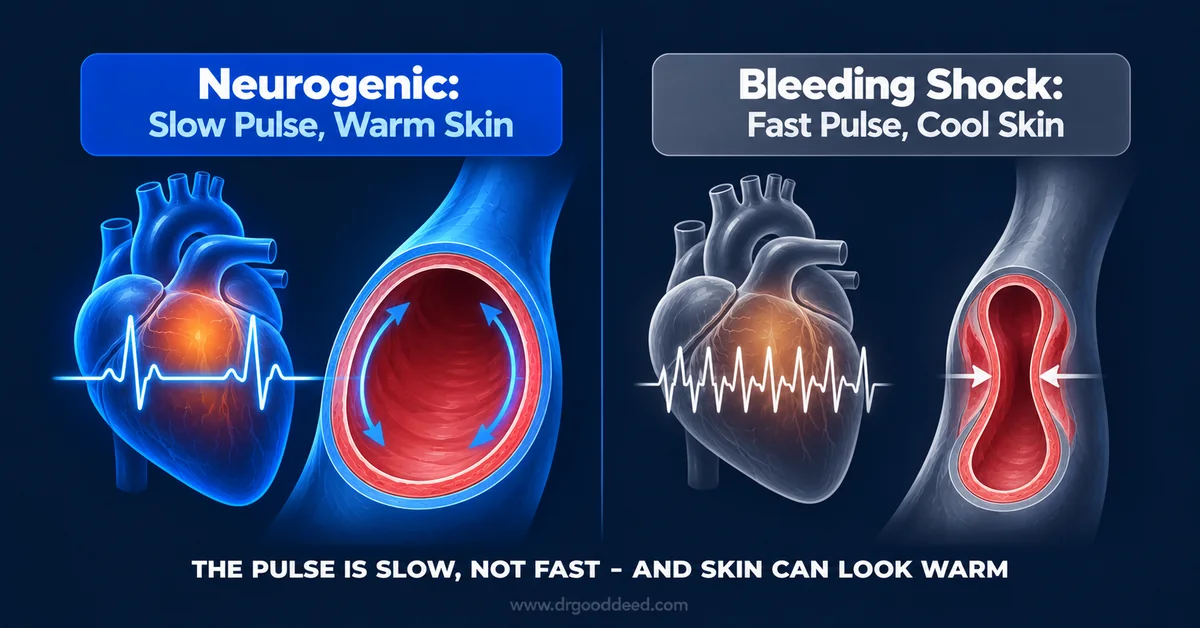

Neurogenic shock symptoms are a drop in blood pressure, a slow pulse, and warm, flushed skin, usually after a serious injury to the neck or upper back. They appear when damaged nerves stop controlling the body’s blood vessels and heart. It is a medical emergency: call 911 in the US or 999 in the UK. This guide covers neurogenic shock symptoms, causes, diagnosis, and hospital care.
Key Takeaways
- Neurogenic shock symptoms include low blood pressure, a slow heart rate, and warm, flushed skin, usually after a spinal cord injury.
- It is a medical emergency: call 911 or 999.
- It differs from bleeding shock: the skin is warm and the pulse slow, not cool and fast.
- Do not move someone with a suspected spine injury unless they are in danger.
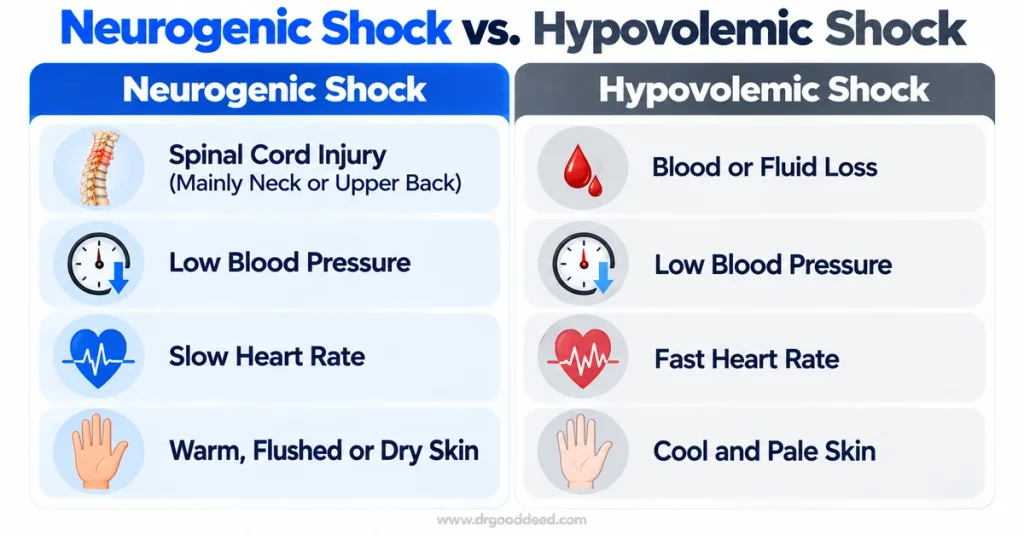
| Feature | Neurogenic shock | Hypovolemic shock |
| Usual cause | Spinal cord injury, mainly neck or upper back | Blood or fluid loss |
| Blood pressure | Low | Low |
| Heart rate | Slow | Fast |
| Skin | Warm, flushed or dry | Cool and pale |
What Are Neurogenic Shock Symptoms?
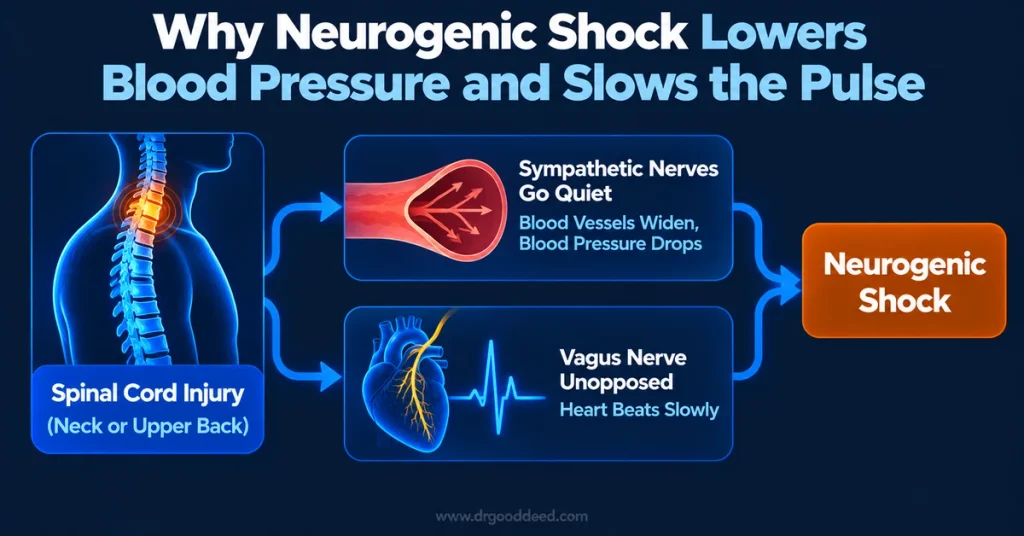
Neurogenic shock symptoms center on low blood pressure and a slow heart rate because injured nerves lose control of the blood vessels and the heart. Skin often looks warm, flushed, or dry, and body temperature may be hard to regulate.
- Why pressure falls: Sympathetic nerves (the nerves that tighten blood vessels) go quiet after the injury. The vessels widen and blood pressure drops.
- Why the pulse slows: The vagus nerve (the nerve that slows the heart) is left working without its usual counterbalance, so the heart beats slowly.
- Blood pressure threshold: Medical News Today and Flint Rehab use a systolic pressure under 90 mm Hg.
- Heart rate threshold: Flint Rehab and WebMD use under 60; Medical News Today suggests under 80 but says no clear guidelines exist.
- Temperature: Struggling to stay warm or cool is part of the pattern, because the nerves that manage it are affected.
A normal reading does not rule the condition out, and you should not use these figures to diagnose yourself or someone else.
Other Neurogenic Shock Symptoms to Know
Other neurogenic shock symptoms are less specific and overlap with many illnesses, which is why the injury history matters more than any single sign.
- Everyday warning signs: Dizziness, weakness, confusion, nausea, vomiting, blurred vision, and anxiety.
- Fainting: An emergency sign, because it suggests the brain is not getting enough blood.
- Shortness of breath or chest pain: Emergency signs. Call for help at once.
- Bluish lips or fingers and a faint pulse: Emergency signs seen in severe cases.
- Skin color: Warm, flushed, dry skin, pale skin, or sweating, and the person may turn cold later.
Skin alone cannot tell you which kind of shock is happening, so treat any of these signs after a spine injury as urgent.
What Causes Neurogenic Shock?
A spinal cord injury in the neck or upper back, especially above the T6 level (the sixth bone of the upper back), is the main cause of neurogenic shock. Damage that high cuts off the nerve signals that manage blood vessels and heart rate.
- Injury routes: Car crashes, falls, sports injuries and gunshot wounds to the spine.
- Reported rates: Medical News Today reports that about 19.3% of neck (cervical) and 7% of upper back (thoracic) spine injuries lead to it.
- Spinal anesthesia: A rare cause, when the numbing medicine affects nerves higher than intended.
- Guillain-Barre syndrome: An immune attack on the nerves.
- Transverse myelitis: Inflammation across the spinal cord.
- Autonomic toxins: Poisons that interfere with the nerves controlling blood vessels.
- Single-source causes: WebMD also lists stroke, blood clots, some medicines and meningitis.
Neurogenic Shock vs Spinal Shock
Neurogenic shock is a blood pressure and heart problem, while spinal shock is a temporary loss of movement, feeling, and reflexes below the injury, and hypovolemic shock from blood loss causes a fast heart rate and cool, pale skin. The three get confused because they can appear together after trauma.
- Neurogenic shock: Affects circulation. Blood vessels widen and the pulse slows.
- Spinal shock: a temporary loss of movement, feeling, and reflexes below the injury
- Hypovolemic (Bleeding shock): The body races to compensate for lost blood, so the heart speeds up and the skin turns pale and cool.
- Why order matters: Bleeding is more common after trauma and needs different treatment, so doctors rule it out first.
| Expert Insight: After trauma, doctors treat bleeding as the likelier cause of low blood pressure, so neurogenic shock is a diagnosis of exclusion. A slow pulse with warm skin fits it, but only once bleeding has been ruled out. Nobody can sort these apart at home. |
How Is Neurogenic Shock Diagnosed?
Doctors diagnose neurogenic shock in a hospital by examining the patient while keeping the spine still, then imaging and ruling out other causes. A patient cannot arrange this alone.
- Exam and vital signs: Blood pressure, pulse, skin, and movement are checked without moving the spine.
- CT scan first: It shows bone damage quickly.
- MRI next: It gives detail on ligaments and the spinal cord.
- Ruling out other causes: Doctors check for bleeding and other reasons for shock.
- Urinary catheter: It may be used to track fluid and urine output.
Neurogenic Shock Treatment in Hospital
Neurogenic shock treatment happens in the hospital, and there is no home treatment. The aim is to protect the spine, support breathing, and restore blood flow. This list is for context only, since doctors choose treatment case by case.
- Keep the spine still: This prevents further injury.
- Secure the airway and breathing.
- IV fluids first: Given into a vein to support blood volume.
- Blood vessel medicines: Added if fluids are not enough to raise blood pressure.
- Heart rate medicine: Given if the pulse becomes very slow.
- Surgery: Considered if the spine needs decompression (relief of pressure on the cord).
Neurogenic Shock Outlook and Recovery
Neurogenic shock can be fatal if untreated and can cause irreversible tissue damage, though prompt hospital care helps restore blood flow. Outcome depends on injury severity, response to treatment, and other injuries.
- Duration: Symptoms may last up to 4 to 5 weeks or 1 to 6 weeks, and low pressure may persist for several weeks.
- Complications: Blood pressure staying low for long periods, autonomic dysreflexia (sudden surges in blood pressure), blood clots in the leg veins and electrolyte problems (mineral imbalances in the blood).
- Prediction: The doctors treating the injury are best placed to explain what to expect.
What to Do If You Suspect Neurogenic Shock
If you suspect neurogenic shock after a spine injury, call emergency services immediately. Call 911 and go to an emergency room if dizziness, nausea or chest pain follow a recent spine injury.
- US: Call 911. UK: Call 999. Do not drive the person yourself.
- Keep still: Hold the head and neck steady and do not move them unless they are in immediate danger.
- Stay with them: Tell responders what happened.
- No food or drink.
| Pro Tip: Tell responders how the injury happened (for example, a crash or the height of a fall) and roughly when. This helps the emergency team treat the neck and back as injured from the first minute, even if the person can still move. |
FAQs
Why is the skin warm in neurogenic shock?
Blood vessels widen and blood pools near the surface, so skin looks flushed, warm and dry. In bleeding shock the body narrows vessels instead, so skin turns cool and pale.
Can neurogenic shock happen without a spinal injury?
Yes, but rarely. Spinal anesthesia, Guillain-Barré syndrome, transverse myelitis and some toxins are listed causes. One source adds stroke, blood clots, certain medicines, and meningitis.
Is neurogenic shock fatal?
Yes, it can be if untreated. Prompt hospital care restores blood flow, and outcome depends on injury severity and organ damage. Untreated, it can also cause irreversible tissue damage.
Can neurogenic shock be prevented?
No proven prevention exists, but lowering spine injury risk helps: wear seatbelts and helmets, avoid impaired driving, prevent falls, and store firearms locked.
Sources
- StatPearls: Neurogenic Shock link
- Medical News Today: What Is Neurogenic Shock? link
- Healthline: Neurogenic Shock link
- WebMD: What You Should Know About the Symptoms of Neurogenic Shock link
- Flint Rehab: Understanding Neurogenic Shock link
Medical Disclaimer: This article is for general information only and is not medical advice. It does not replace a diagnosis, treatment plan, or guidance from a qualified healthcare professional. Always talk to your doctor about your own symptoms and before starting, stopping, or changing any treatment. If you think you may be having a medical emergency, call 911 or go to your nearest emergency room.