
Throat irritation is one of those problems that starts small and gets more troubling by the hour. It can come from dry air, a viral infection, acid reflux, allergies, or just talking too much. Most cases resolve within a few days. Home remedies for throat irritation handle the majority of mild to moderate cases without any medication.
Severe symptoms, including white patches at the back of the throat, breathing difficulty, or fever above 101°F, need a doctor. If the throat is still irritated after 10 days, or if fever and white patches appear, that moves beyond home care. A rapid strep test takes 5 minutes at any clinic and tells you exactly whether antibiotics are needed.
Can Throat Irritation Be Treated at Home?
Yes, mild throat irritation from dryness, allergies, or a viral infection responds well to home care. Warm fluids, saltwater gargles, steam inhalation, and rest handle most cases without prescription medication.
Medical evaluation is needed if:
- Fever is above 101°F with a sore throat
- White or grey patches appear at the back of the throat
- Swallowing becomes painful enough to prevent eating or drinking
- Symptoms are still present after 10 days
For anything below that threshold, home remedies for throat irritation are the right first step.
10 Throat Irritation Home Remedies for Relief
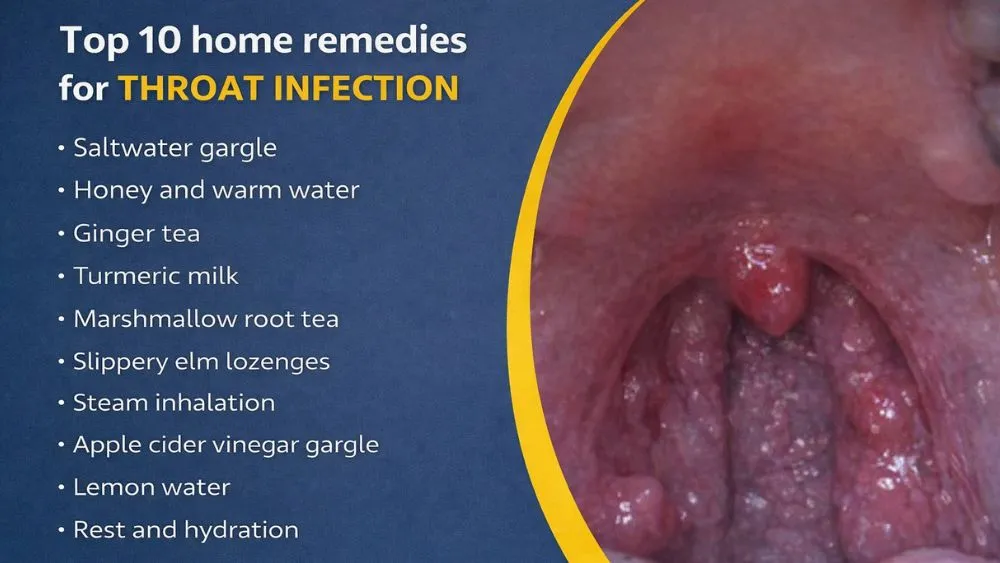
These 10 throat irritation home remedies for relief target dryness, inflammation, and the underlying causes of throat pain. Use them together for the best results.
1. Warm Saltwater Gargle
Dissolve half a teaspoon of salt in a glass of warm water. Gargle for 30 seconds, then spit. Repeat 3 to 4 times daily.
Salt creates a high-osmotic environment. This pulls excess fluid out of inflamed throat tissue, reducing swelling. It also disrupts the cell membranes of bacteria and loosens mucus at the back of the throat.
Saltwater gargling reduces upper respiratory tract infections and throat irritation significantly in regular gargler groups. This is the most cost-effective home remedy for throat irritation available. It takes 2 minutes and works.
2. Honey
Honey coats the throat lining and physically reduces friction that triggers the cough reflex. It also contains hydrogen peroxide and methylglyoxal, both of which inhibit bacterial growth.
A landmark 2012 study published in Pediatrics found that buckwheat honey outperformed dextromethorphan (a common cough medicine ingredient) in reducing nighttime cough frequency and improving sleep quality in children. For adults, one tablespoon of raw honey in warm water or taken directly before bed works well. Never give honey to children under 1 year old because of the botulism risk.
3. Ginger Tea
Ginger contains compounds called gingerols and shogaols. These block the production of prostaglandins, the chemicals responsible for throat inflammation and pain. Fresh ginger is significantly more effective than dried ginger powder for this purpose.
Slice 4 to 5 pieces of fresh ginger. Boil in 2 cups of water for 10 minutes. Add honey. Drink warm twice daily. Ginger tea also helps with throat irritation caused by coughing, because it reduces bronchial spasm mildly. It is one of the home remedies for throat irritation that addresses both the symptom and the inflammatory driver.
4. Chamomile Tea
Chamomile contains apigenin, a compound with anti-inflammatory and mild analgesic properties. It reduces throat tissue inflammation and helps with muscle relaxation in the throat and chest area. Two cups daily, ideally one mid-afternoon and one before bed, provides consistent benefit. Chamomile is also safe for children over 5 in small amounts.
Chamomile is an antihistamine by nature. It blocks histamine receptors mildly, making it especially useful for throat irritation triggered by allergies.
5. Steam Inhalation or Humidifier
Dry throat irritation worsens sharply when indoor air is dry. Heated rooms in winter, air conditioning in summer, and office environments with recycled air all strip moisture from the throat lining. Steam inhalation adds immediate moisture to the throat and nasal passages.
Lean over a bowl of hot water with a towel over your head for 8 to 10 minutes. Do this twice daily. A cool-mist humidifier in the bedroom set between 40 and 50% humidity is more practical for ongoing relief. Clean it every 48 hours. A dirty humidifier spreads mold spores, which trigger more throat irritation than the original problem.
6. Warm Broth or Soup
Warm chicken broth keeps the throat lubricated, delivers sodium and electrolytes, and goes down without causing pain. The warmth increases blood flow to the throat lining, which speeds tissue repair. Clear soups are better than creamy ones because dairy can thicken mucus in some people and worsen the feeling of a coated throat.
7. Slippery Elm or Licorice Root
Slippery elm contains mucilage, a gel-like substance that coats the throat lining and forms a protective barrier against irritants. It is available as throat lozenges or as a powder mixed into warm water. The effect is immediate and lasts for about 30 to 45 minutes per dose.
Licorice root (deglycyrrhizinated form, or DGL) soothes throat tissue and has mild antiviral properties. It is available as chewable tablets. Regular licorice, not the DGL form, raises blood pressure with prolonged use and should be avoided by people with hypertension. DGL has the problematic compound removed and is safe for most people.
8. Stay Hydrated
Dehydration thickens mucus and dries the throat mucosa (the inner lining). This increases friction, which triggers more irritation and coughing. Drink 8 to 10 glasses of water daily. Warm water is more soothing than cold water during active irritation.
Breathing through the mouth dries the throat extremely fast. People with nasal congestion alongside throat irritation dehydrate locally much faster than usual and need to drink more water than normal to compensate.
9. Avoid Irritants
Cigarette smoke, including secondhand smoke, is the most common non-infectious cause of persistent throat irritation. Smoke strips the mucous layer from the throat lining in a single exposure.
Strong perfumes, cleaning sprays, paint fumes, and outdoor pollution all cause similar direct tissue irritation. During throat irritation, avoid all of these. Even short exposures slow recovery.
10. Rest Your Voice
Speaking strains the vocal cords and the surrounding throat muscles. When the throat is inflamed, excessive talking extends recovery time. This is especially relevant for teachers, call center workers, and anyone who speaks for hours daily.
Rest the voice for at least 24 to 48 hours during active throat irritation. Whispering is not voice rest. Whispering actually creates more tension in the throat muscles than normal speech. If you must communicate, speak at a normal volume in short sentences rather than whispering at length.
How to Calm Throat Irritation Overnight
How to calm throat irritation overnight matters because the throat often feels worse in the morning due to two specific nighttime problems: dry bedroom air and acid reflux.
Dry air dries the throat during 7 to 8 hours of breathing at night. Acid reflux sends stomach acid into the throat while lying flat, causing burning and worsening existing irritation.
Steps for overnight relief:
- Drink warm honey water 20 minutes before bed. The honey coats the throat lining and the coating persists through the first few hours of sleep.
- Run a cool-mist humidifier in the bedroom set at 45% humidity.
- Elevate the head of the bed by 6 to 8 inches using a wedge pillow if reflux is suspected. Standard pillows only raise the head, not the full upper body, and do not prevent acid from traveling upward.
- Avoid eating within 2 hours of bedtime. Spicy, fatty, or citrus foods within this window increase reflux activity.
- Keep a glass of warm water on the nightstand. If you wake from throat discomfort, a few sips of warm water reset the throat lining immediately.
Calming throat irritation overnight largely comes down to moisture and reflux management, two causes that home remedies for throat irritation clearly connect.
Best Drinks for Throat Irritation Relief
Best drinks for throat irritation relief come down to temperature, pH, and coating ability.
Recommended:
- Warm water with honey: Neutral pH, coats the throat, hydrates without triggering more irritation
- Ginger-honey tea: Anti-inflammatory, coats the throat, reduces cough reflex
- Warm lemon water: Vitamin C supports immune response. Use only if lemon does not cause burning. Dilute well.
- Chamomile tea: Mild antihistamine effect, anti-inflammatory, works for allergy-related irritation
- Clear warm broth: Electrolytes, warmth, and lubrication in one drink
- Coconut water (room temperature): Natural electrolytes, gentle on the throat, slightly alkaline pH
Avoid:
- Carbonated drinks: The fizz irritates the throat lining physically
- Alcohol: Dries throat tissue and suppresses immune response
- Very cold drinks during active pain: Cold causes vasoconstriction in the throat lining and slows the immune response locally
- Coffee in excess: Mildly dehydrating. One cup is usually fine. Three cups during a throat infection is counterproductive.
Dry Throat Irritation With Cough Remedies
Dry throat irritation with cough remedies requires a different approach from plain throat irritation because the cough itself causes additional trauma to the throat with each episode.
The cough-irritation cycle works like this: the dry throat triggers a cough reflex. Each cough further irritates and dries the throat lining. This triggers more coughing. Breaking the cycle requires addressing both the dryness and the cough reflex simultaneously.
Effective dry throat irritation with cough remedies:
- Honey: Reduces cough frequency by coating nerve endings in the throat that trigger the cough reflex. One tablespoon before bed is clinically relevant.
- Steam inhalation: Adds moisture directly to the dry tissue that is triggering the reflex.
- Warm fluids every 30 minutes: Keeps the throat continuously lubricated.
- Lozenges with menthol: Menthol activates cold receptors in the throat, which temporarily suppress the cough reflex. This is not treatment, but it provides 20 to 30 minutes of relief per lozenge.
- Address postnasal drip: Mucus dripping from the sinuses down the back of the throat is a major cause of dry, tickly, persistent coughs. A saline nasal rinse twice daily clears postnasal drip effectively.
If the cough persists beyond 3 weeks after other symptoms clear, allergies or acid reflux are the most common culprits, not a lingering infection.
Itchy Throat and Mild Pain Home Remedies
Itchy throat and mild pain home remedies address a presentation that is almost always allergy-related. The itchy, tickly sensation is the classic sign of histamine release in the throat tissue in response to an allergen like pollen, pet dander, or dust mites.
Most common cause: seasonal or year-round allergic rhinitis.
Best itchy throat and mild pain home remedies:
- Warm fluids throughout the day to dilute and flush allergens from the throat surface
- Oral antihistamines (cetirizine or loratadine, available without prescription) if allergen exposure is confirmed
- Saltwater gargle to physically remove allergen particles from the throat lining
- Avoid the trigger: stay indoors on high pollen count days, use air purifiers with HEPA filters indoors
- Chamomile tea: Provides mild natural antihistamine effect alongside hydration
Showering and washing hair before bed during allergy season removes pollen from the scalp and hair, which otherwise transfers to the pillow and causes prolonged exposure throughout the night. This directly reduces morning itchy throat symptoms.
When Is Throat Irritation Serious?
Stop using home remedies for throat irritation and see a doctor if:
- Fever rises above 101°F alongside the sore throat
- White or grey patches appear on the tonsils or the back of the throat (possible strep or mono)
- Swallowing saliva becomes painful or difficult
- Breathing feels restricted or uncomfortable
- Symptoms have not improved after 10 days
- A rash appears on the body alongside throat pain (possible scarlet fever from strep)
How Long Does Throat Irritation Last?
- Viral cause: 3 to 7 days. Most viral throat irritation peaks at day 2 to 3 and gradually improves.
- Allergy-related: Lasts as long as allergen exposure continues. Resolves within 24 to 48 hours of removing the trigger.
- Reflux-related: Improves within 1 to 2 weeks of dietary modification and sleeping position changes. Does not resolve without addressing the reflux itself.
- Voice overuse: Resolves in 24 to 48 hours with complete voice rest.
FAQs
Can throat irritation go away on its own?
Yes. Viral and dryness-related throat irritation clears on its own in 3 to 7 days without treatment. Allergy-related irritation clears within 48 hours of removing the allergen. Reflux-related throat irritation does not clear on its own without dietary and lifestyle changes. The cause determines whether it resolves independently.
Is honey effective for throat irritation?
Yes. Honey works through two mechanisms: it physically coats the throat lining, reducing the nerve sensitivity that triggers coughing, and it contains antimicrobial compounds including hydrogen peroxide and methylglyoxal. Buckwheat honey reduces cough frequency better than dextromethorphan syrup in children aged 2 to 18.
Does cold water worsen throat irritation?
Yes, during active inflammation. Cold water causes vasoconstriction, which reduces blood flow to the already inflamed throat lining and slows immune activity locally. It also increases tissue sensitivity temporarily. Warm or room-temperature water keeps the throat lubricated without triggering this response. Ice cream provides a brief numbing, but the cold effect follows immediately after.
Can stress cause throat irritation?
Yes, indirectly. Stress activates the sympathetic nervous system, which reduces saliva production and dries the throat. Chronic stress also suppresses the immune system through elevated cortisol, making viral throat infections more likely and slower to resolve. Stress itself does not inflame throat tissue directly, but it creates conditions where irritation starts faster and lasts longer.
When do I need antibiotics for throat irritation?
Only when bacterial infection is confirmed. Strep throat, diagnosed by a rapid strep test, requires a 10-day course of penicillin or amoxicillin. Antibiotics do not help viral throat irritation, dryness-related throat pain, or allergy-related symptoms. Roughly 80% of sore throats are viral. Prescribing antibiotics for all sore throats creates resistance and adds no benefit in most cases