
Itchy nipples during pregnancy are normal and affect the majority of pregnant women in the United States, particularly during the first and third trimesters. The primary drivers are estrogen surges, rapid breast tissue expansion, and reduced skin moisture, all of which begin as early as week 6 of gestation.
Most cases carry no medical risk. A small percentage signal conditions like intrahepatic cholestasis or fungal infection that require clinical evaluation. This article covers the exact causes, what symptoms to monitor, and safe, evidence-based relief options, including what most pregnancy sites leave out.
Causes of Breast Itching in Pregnancy
Causes of breast itching in pregnancy fall into three separate physiological categories. Each one triggers itching through a different mechanism. Most pregnant women experience all three at the same time, which is why the itching can feel intense even when nothing is medically wrong.
Hormonal Changes Causing Itchy Nipples
Hormonal changes causing itchy nipples start almost immediately after conception. Estrogen rises sharply in the first trimester, and this triggers mammary gland growth inside the breast. The glands multiply and expand faster than the overlying skin can adapt. That mismatch creates tension in the dermis, and tension in skin produces itch signals through sensory nerve fibers called C-fibers.
Prolactin also climbs steadily throughout pregnancy to prepare breast tissue for milk production. Research published in the journal Obstetrics and Gynecology confirms that prolactin-driven glandular tissue growth contributes directly to nipple sensitivity and itching between weeks 8 and 12. This specific window is when itchy nipples during pregnancy tend to be most intense.
Hormonal changes causing itchy nipples also reduce the skin’s natural oil production. Sebaceous glands around the areola slow down under hormonal shifts, leaving the nipple surface drier and more prone to irritation.
Skin Stretching and Dryness Pregnancy Itching
Skin stretching and dryness, pregnancy itching occurs because breast volume increases by an average of 200 to 400 milliliters by the end of the first trimester. Collagen fibers in the dermis stretch to accommodate this growth. When collagen stretches faster than it can remodel, the skin surface becomes tight, thin, and moisture-deficient, which activates itch receptors directly.
This is the same biological process that produces stretch marks, but itching appears before visible stretch marks do. The itch is the warning sign that the skin barrier is under stress.
Increased Blood Flow to Breast Tissue
Blood volume increases by roughly 50% during a healthy pregnancy. Much of that extra blood flow is directed to the breasts. The resulting engorgement causes the capillaries near the skin surface to dilate, warming the skin and activating temperature-sensitive itch receptors. This explains why itchy nipples during pregnancy often feel worse at night, when body temperature naturally rises during sleep.
Skin Stretching and Dryness Pregnancy Itching
Pregnancy skin stretching and dryness, as well as itching, are the most persistent causes and the most responsive to direct treatment.
Rapid Breast Enlargement
Breasts can increase by one to three cup sizes before the second trimester ends. This growth is not gradual. Hormonal spikes cause rapid cell proliferation inside the breast, and the skin over the chest cannot keep pace with internal expansion. The result is mechanical stretching of the dermis, which damages the skin barrier and triggers itch.
Loss of Skin Moisture
During pregnancy, blood flow redirects toward the uterus and developing placenta. The skin, especially the thinner skin over the nipple and areola, receives less direct moisture support. Transepidermal water loss (the rate at which skin loses moisture to the air) increases. Skin that loses moisture faster than it can retain it becomes dry, flaky, and itchy.
Tightness Leading to Irritation
When the skin over the breast reaches its stretching limit, the feeling shifts from mild itching to a burning tightness. Fabric rubbing against this already-stressed skin, especially synthetic bra materials, worsens irritation significantly. This is why itchy nipples in pregnancy often flare after a full day of wearing a bra.
Dry Itchy Nipples Pregnancy Symptoms
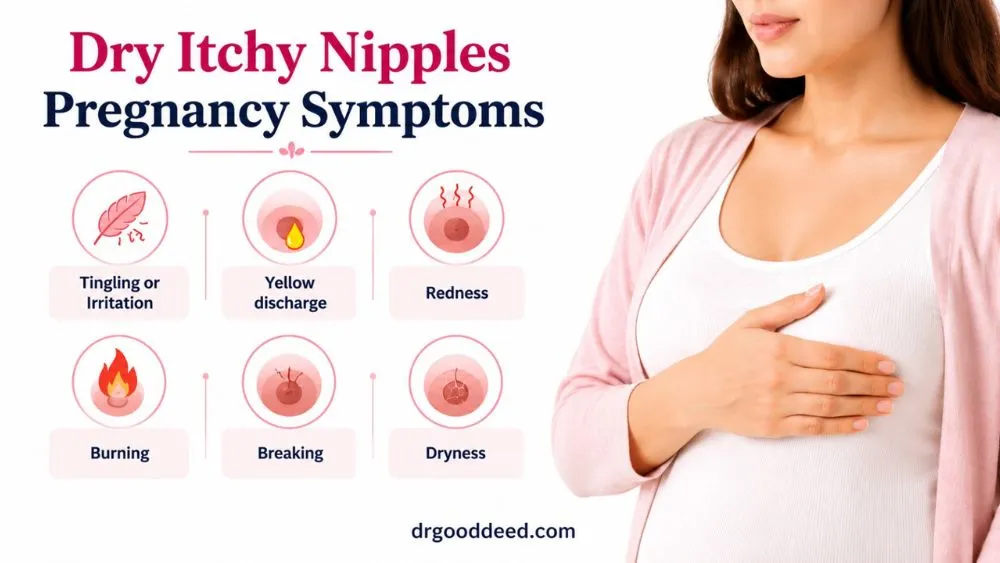
Dry itchy nipples pregnancy symptoms that follow a recognizable pattern. Knowing which symptoms are normal and which ones require a doctor’s attention changes the outcome.
Tingling or Irritation
Mild tingling around the areola is one of the earliest pregnancy signs, often appearing before a missed period. It results from nerve sensitivity caused by hormonal changes. The tingling is distinct from itching; it feels like a low-grade electrical sensation rather than the urge to scratch.
Flaky or Dry Skin
Visible skin flaking around the nipple is a dry itchy nipples pregnancy symptom tied directly to moisture loss. The outer layer of skin sheds faster when the barrier function is compromised. This does not indicate infection. It indicates the skin needs topical support.
Mild Redness or Sensitivity
The areola darkens in color during pregnancy due to increased melanin production. Mild surface redness distinct from this darkening, particularly redness that appears only on one side or is accompanied by warmth, needs evaluation. Unilateral redness with warmth sometimes indicates mastitis, even in non-nursing pregnant women.
Dry itchy nipples pregnancy symptoms that require a doctor visit include:
- Intense itching across the entire body alongside nipple itching, which can signal intrahepatic cholestasis of pregnancy (ICP), a liver condition affecting 1 in 1,000 US pregnancies
- Yellow discharge from the nipple before the third trimester
- Hard, painful lumps beneath the itchy skin
- Itching that does not respond to moisturizer after 5 to 7 days
How to Relieve Itchy Nipples During Pregnancy
Relieving itchy nipples pregnancy safely starts with addressing the two most controllable causes: moisture loss and skin barrier damage.
Using Gentle Moisturizers
Apply fragrance-free emollient cream or ointment to the nipple and areola immediately after bathing, while skin is still slightly damp. This traps moisture inside the skin before it evaporates. Products containing ceramides restore the skin’s natural barrier function. Eucerin Original Healing Cream and CeraVe Moisturizing Cream are both fragrance-free, ceramide-rich, and safe for use during pregnancy.
Wearing Soft, Breathable Fabrics
Cotton bras reduce friction against sensitive nipple skin. Seamless bras eliminate ridge pressure entirely. Wearing a soft bra to bed during the third trimester reduces overnight itching caused by fabric movement during sleep.
Avoiding Harsh Soaps or Chemicals
Antibacterial soaps and body washes with sulfates strip the skin’s natural protective oil layer, called the acid mantle. Once that layer is gone, moisture escapes faster and itch intensifies. Use plain, unperfumed soap on the breast and nipple area only when genuinely needed.
Keeping Skin Hydrated
Drinking at least 10 cups (80 ounces) of water daily, as recommended by the American College of Obstetricians and Gynecologists for pregnant women, supports skin hydration from the inside. Dehydration worsens transepidermal water loss and makes itchy nipples during pregnancy significantly harder to manage with topical products alone.
Natural Oils (Coconut, Almond)
Cold-pressed coconut oil contains lauric acid, a fatty acid with documented antimicrobial properties. Applied to the areola, it moisturizes the skin and reduces surface bacterial load simultaneously. Sweet almond oil is lighter and absorbs faster, making it a better choice for women whose skin feels oily during pregnancy. Both are safe for topical use and safe if transferred to a nursing infant later, which matters for women beginning to express colostrum in the third trimester.
Lukewarm Compress
A soft cloth soaked in lukewarm water and held against the nipple for 5 to 10 minutes reduces local inflammation and temporarily numbs itch receptors. Cold compresses work faster but can trigger a rebound itch response as the skin warms back up. Lukewarm is the clinical recommendation for skin-based itch relief.
What to Avoid During Pregnancy
Strong Chemical Products
Avoid products containing retinoids, salicylic acid, and high-concentration benzoyl peroxide on the breast and nipple area. Retinoids are teratogenic at systemic doses, and the thin skin of the areola absorbs topical agents more readily than other body areas. Steroid creams should not be applied to the nipple unless a dermatologist prescribes them specifically, because prolonged steroid use on nipple skin can thin the tissue and cause lasting damage.
Excessive Scratching
Scratching itchy nipples during pregnancy creates micro-tears in already-stressed skin. Those tears introduce bacteria into the dermis and increase infection risk. Scratching also triggers the itch-scratch cycle: scratching activates more C-fiber itch receptors, which intensifies the urge to scratch again. Breaking this cycle requires addressing moisture first, not the scratching behavior itself.
Tight or Synthetic Clothing
Polyester and nylon trap heat and moisture against the skin, creating a warm, moist environment that worsens itch and raises the risk of fungal growth. Tight bra underwires compress breast tissue and restrict the lymphatic drainage that helps reduce local inflammation.
FAQs
Why do I have itchy nipples during pregnancy?
Itchy nipples during pregnancy result from three simultaneous changes: estrogen-driven glandular growth stretches the overlying skin, prolactin suppresses sebaceous gland activity, and increased breast blood flow warms the skin surface. All three activate itch-sensing C-fibers in the dermis. Hormone levels causing this peak between weeks 8 and 16.
Are dry itchy nipples pregnancy symptoms normal?
Yes, dry nipples pregnancy symptoms affect more than 70% of pregnant women. The itching is a direct response to skin stretching and moisture loss caused by rapid breast growth. It is not a sign of infection or allergy. It becomes abnormal only when accompanied by whole-body itching, visible rash spreading beyond the breast, or yellow nipple discharge.
How to relieve itchy nipples during pregnancy safely?
Apply a ceramide-based, fragrance-free moisturizer immediately after bathing, switch to a seamless cotton bra, and drink at least 80 ounces of water daily. Cold-pressed coconut oil applied to the areola twice daily provides additional relief within 48 hours. These steps address the root cause, which is skin barrier breakdown, not just the surface symptom.
Can hormonal changes cause itchy nipples?
Yes. Hormonal changes causing itchy nipples begin as early as week 6. Estrogen and prolactin drive glandular tissue growth faster than the skin can expand, and simultaneously reduce the areola’s natural oil production. The result is tight, dry, itch-prone nipple skin with no external cause required.
Is skin stretching pregnancy itching common?
Yes. Skin stretching and dryness and pregnancy itching affects the majority of pregnancies in the US. Breast volume increases by up to 400 milliliters in the first trimester alone. Skin cannot stretch fast enough to match that growth without experiencing collagen fiber stress, which directly activates itch receptors. Moisturizing early, before itching begins, reduces severity.
When should I see a doctor for nipple itching?
See a doctor if itching spreads across the abdomen and palms alongside nipple itching during pregnancy; this combination is the primary warning sign for intrahepatic cholestasis of pregnancy (ICP), which affects the liver and requires medical management to prevent fetal complications. Also seek care for one-sided breast warmth, pus-like discharge, or a hard lump beneath the itchy skin.
Can itchy nipples indicate a problem?
Itchy nipples alone, without other symptoms, do not indicate a problem. Itchy nipples during pregnancy become a concern when they appear alongside whole-body itching, elevated bile acids in blood tests, jaundice, or unusual nipple discharge. These specific combinations point to ICP or early mastitis, both of which need clinical diagnosis.
What creams are safe for itchy nipples in pregnancy?
Ceramide-based moisturizers like CeraVe Moisturizing Cream, Eucerin Original Healing Cream, and Aquaphor Healing Ointment are safe. Avoid hydrocortisone cream without a prescription, and avoid any product containing retinol, fragrance, or salicylic acid. Lanolin is also safe and specifically approved for nipple use during and after pregnancy.
How long does nipple itching last during pregnancy?
Itchy nipples during pregnancy typically peak between weeks 8 and 16, then reduce as the body adjusts to elevated hormone levels. Itchy nipples third trimester flares commonly occur as the breasts prepare for milk production and breast size increases again. With consistent moisturizing, most women report significant reduction within 5 to 7 days of starting a routine.