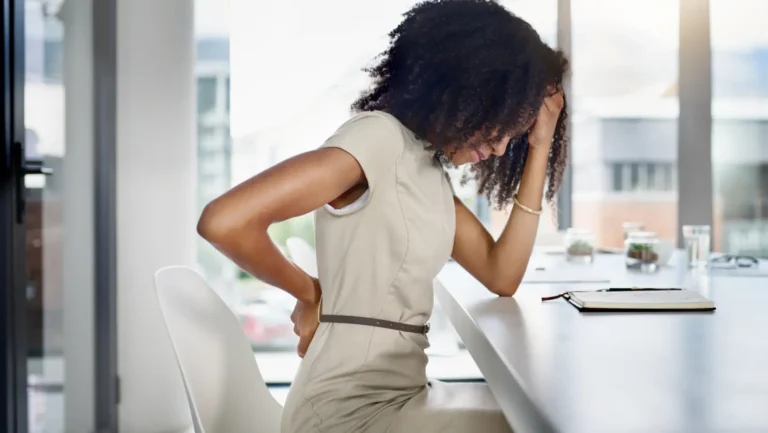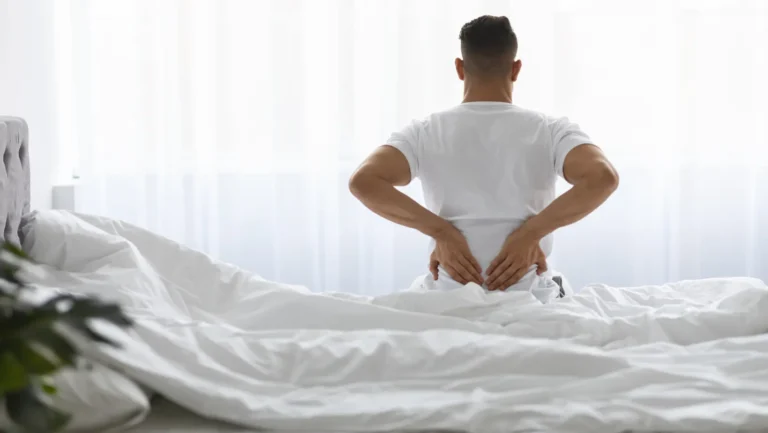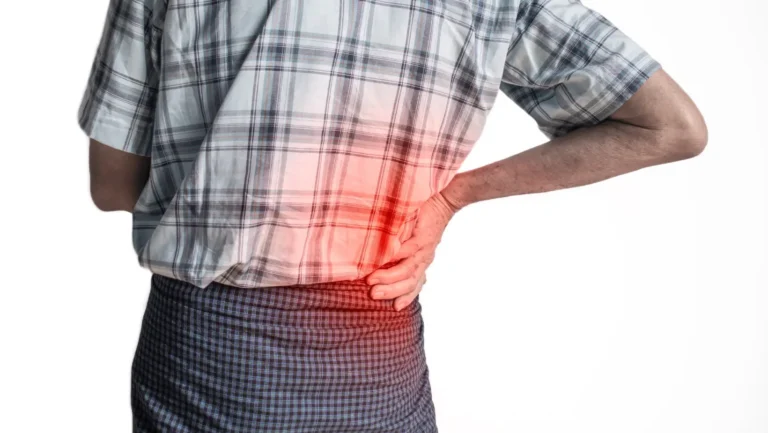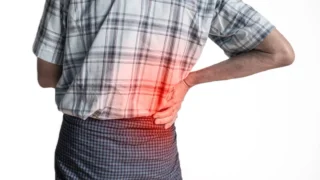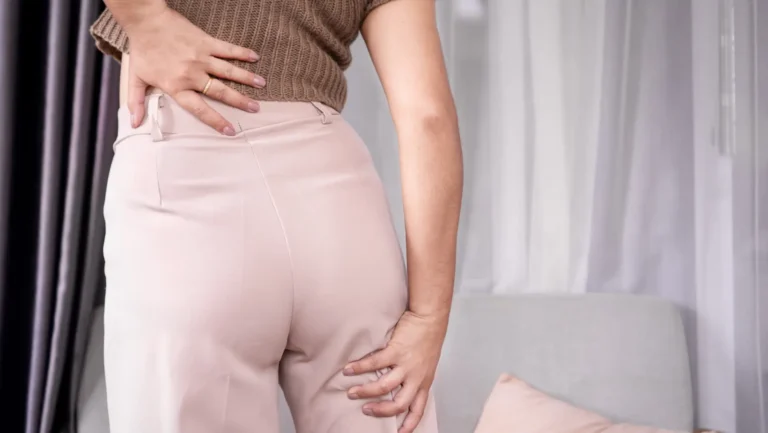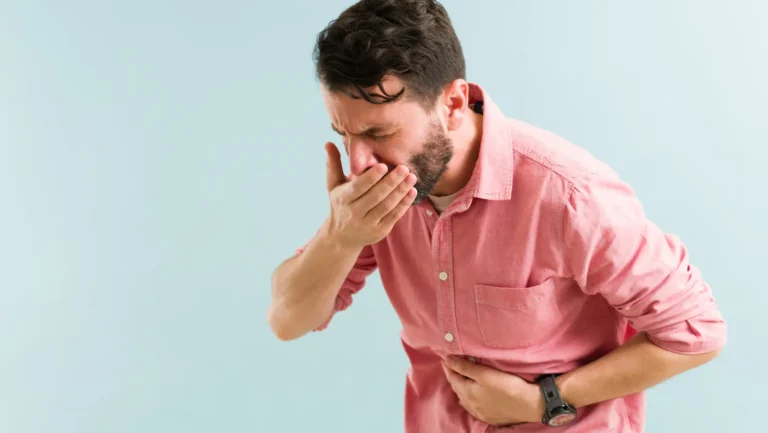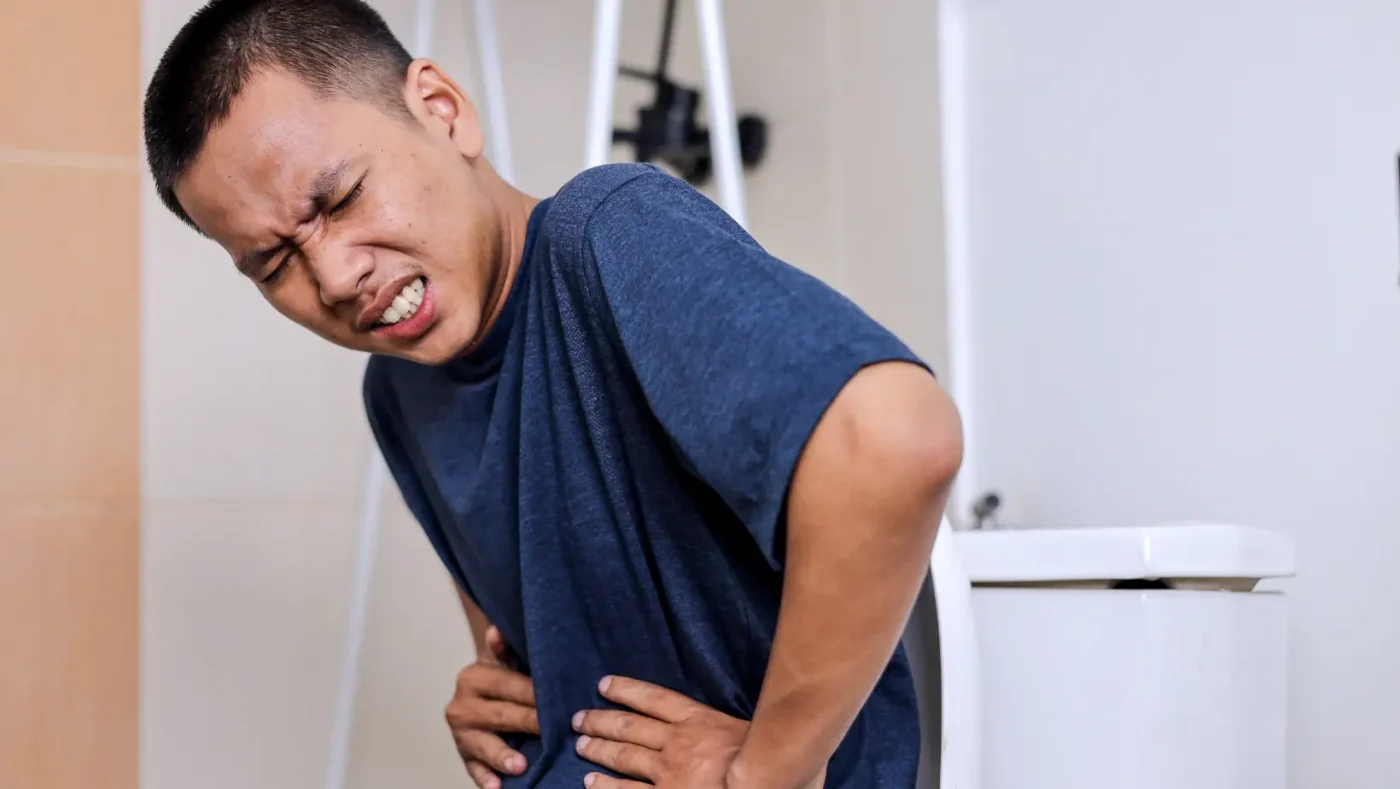

Constipation and back pain occurring together is more common than most people realize.
The American Gastroenterological Association estimates that 16% of all US adults experience chronic constipation, and a significant portion report concurrent lower back pain as part of the symptom.
The colon sits directly anterior to the lumbar spine, sharing the same limited abdominal cavity. When stool accumulates and pressure builds, it presses against the posterior abdominal wall, the sacral nerves, and the lumbar muscles simultaneously.
Why Constipation Causes Back Discomfort
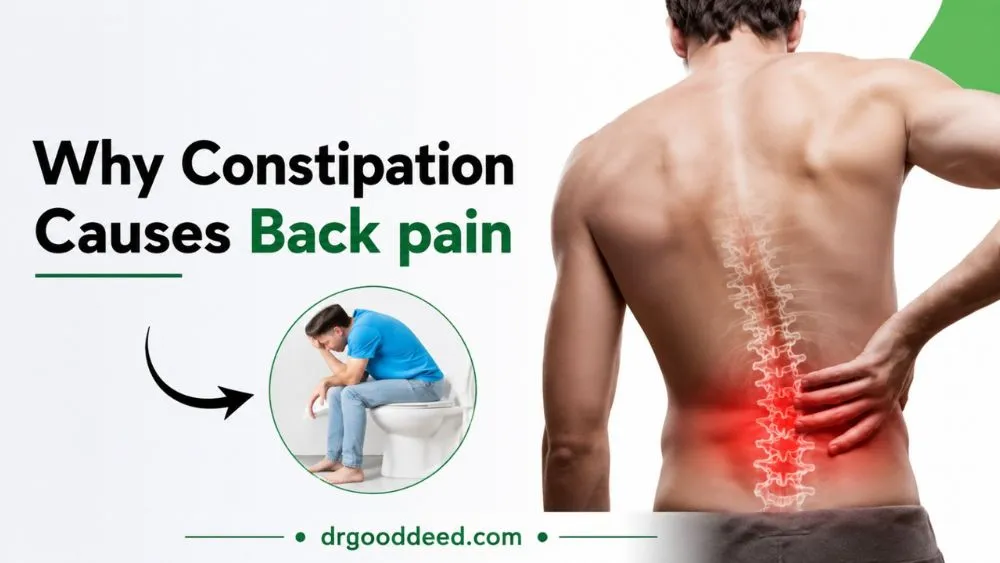
Constipation causes back discomfort, which is a direct pressure and nerve irritation issue. The descending colon and sigmoid colon run along the left side back pain of the lumbar spine. When filled with retained stool, they expand and press backward into the posterior abdominal wall, creating mechanical pressure that registers as lower back aching.
Pressure Buildup in the Intestines
The large intestine normally holds 200 to 400 grams of stool in transit. In severe constipation, this increases to 1 to 2 kilograms of retained fecal matter. That volume exerts measurable pressure on surrounding structures, including the lumbar vertebral bodies, the sacrum, and the iliopsoas muscle that runs alongside the lumbar spine. The result is a dull, constant ache across the lower back that worsens as retention increases.
Straining Affecting Lower Back Muscles
Straining during a bowel movement increases intra-abdominal pressure sharply, sometimes exceeding 200 mmHg. This pressure spike loads the lumbar discs and the posterior spinal ligaments simultaneously.
Repeated straining over multiple days causes microtrauma to the lumbar facet joint capsules and erector spinae muscles. The back pain from straining persists even after the bowel movement because the muscular microtrauma requires 24 to 48 hours to resolve.
Nerve Irritation From Severe Constipation
The sacral nerve plexus (S2 to S4) controls both bowel function and sensation in the lower back, buttocks, and inner thighs. Significant rectal distension from retained stool activates stretch receptors in the rectal wall that send signals through these same sacral nerve branches.
This produces referred pain into the lower back and sacral region. Some people experience this as a deep, heavy ache in the tailbone area that no spinal treatment resolves until constipation clears.
The mesentery, the connective tissue that suspends the intestines from the posterior abdominal wall, transmits mechanical tension from a distended colon directly to the lumbar fascia (the connective tissue covering the lumbar muscles). A loaded sigmoid colon literally pulls on the lower back’s connective tissue through this mesenteric attachment.
Lower Back Pain From Constipation
Lower back pain from constipation follows a characteristic pattern that distinguishes it from disc herniation, muscle strain, or kidney problems.
Dull Aching Lower Back Pain
The pain is bilateral (both sides), constant rather than sharp, and does not change with movement the way disc or muscle pain does. It correlates with bowel habits. On days without a bowel movement, the pain worsens. After a bowel movement, it partially or fully resolves. This cycle is the clearest diagnostic indicator that back pain is constipation-related.
Pelvic Pressure and Bloating
Gas accumulation alongside retained stool distends the colon in multiple segments. This creates a feeling of fullness and downward pressure in the pelvis that radiates into the lower back and hips.
The pressure increases after meals because the gastrocolic reflex (the colon’s natural contraction response to eating) stimulates bowel activity that cannot complete against an impacted colon.
Pain Worsening During Bowel Movements
Lower back pain from constipation intensifies during straining because Valsalva maneuver (bearing down) increases intradiscal pressure in the lower lumbar spine by 40 to 50% compared to standing. For people with pre-existing disc issues, constipation straining may trigger or worsen disc-related symptoms alongside the constipation-related back pain.
Severe Constipation Pressure on Lower Back
Severe constipation pressure on lower back occurs when fecal impaction develops. Fecal impaction is a hard, immovable mass of stool in the rectum or sigmoid colon that cannot pass without medical intervention.
Stool Impaction and Abdominal Pressure
Fecal impaction affects primarily elderly adults, people on narcotic pain medications, and those with long-term constipation. The impacted mass can be palpated (felt) in the lower left abdomen in many cases. It produces severe, constant lower back and pelvic pressure that does not respond to dietary changes or mild laxatives. Disimpaction requires either manual removal or enema administration under medical supervision.
Compression Affecting Surrounding Tissues
A large fecal impaction in the sigmoid colon presses directly on the left ureter (the tube from the left kidney to the bladder), potentially causing urinary retention or left flank discomfort on top of the back pain.
It also compresses the left iliac vessels, reducing blood flow to the left leg and sometimes causing numbness or heaviness in the left leg. These additional symptoms signal impaction rather than simple constipation.
Reduced Mobility and Muscle Stiffness
Severe constipation pressure on lower back causes people to adopt rigid, guarded postures to avoid worsening their discomfort. This postural guarding leads to secondary lumbar muscle stiffness within 24 to 48 hours. The muscle stiffness persists after the constipation resolves because the lumbar paraspinal muscles spent days in sustained contraction.
Poor Diet and Digestive Issues Back Pain
Poor diet and digestive issues back pain develops gradually over weeks and months of consistently low-fiber, low-fluid eating patterns.
Low Fiber Intake
The average American consumes 15 grams of fiber daily. The recommended intake is 25 grams for women and 38 grams for men. Below 20 grams daily, stool transit time slows from a normal 24 to 48 hours to 72 hours or more.
Stool sitting in the colon for 72 hours loses water progressively, becoming harder and more difficult to pass. Every additional day of retention increases the pressure exerted on the lumbar structures.
Dehydration and Hard Stools
The colon absorbs water from stool as its primary function. Below 1.5 liters of daily water intake, it extracts water aggressively, reducing stool moisture from the normal 75% to below 65%.
At that moisture level, stool requires straining force 3 to 4 times greater than normal to pass. This straining drives the lumbar muscle microtrauma and intradiscal pressure increases described above.
Processed Foods Slowing Digestion
Processed foods high in refined flour, saturated fat, and low in fiber slow gastric emptying and reduce colonic motility. Red meat takes 24 to 72 hours to fully transit the gut; plant foods take 12 to 24 hours.
A diet heavy in processed and animal products without fiber balance consistently produces slower transit, harder stools, and the back pain that accompanies poor diet and digestive issues.
Symptoms That May Occur With Constipation
Constipation and back pain rarely appear in isolation. Additional symptoms help confirm constipation as the source of back pain.
Bloating and Abdominal Cramps
Retained stool ferments in the colon, producing hydrogen, methane, and carbon dioxide gas. This gas distends the colon further, producing abdominal bloating and cramping. The bloating typically worsens throughout the day and partially resolves overnight when the body is horizontal and colonic gas redistributes.
Nausea or Reduced Appetite
Severe constipation triggers the enteric nervous system to send signals that suppress appetite and produce mild nausea, particularly after meals. This is a protective gut mechanism to prevent additional food load from entering an already-overloaded colon.
Feeling of Incomplete Bowel Emptying
The rectum contains stretch receptors that signal the brain when it is full. In constipation, these receptors stay partially activated even after a partial bowel movement. This produces a persistent sensation of fullness and the urge to strain again even when the rectum is mostly empty, contributing to repeated muscular loading of the lumbar spine.
Exercises and Stretches for Constipation Relief
Exercises and stretches for constipation relief directly stimulate peristalsis (the rhythmic muscle contractions that move stool through the colon) while simultaneously relieving back tension.
Walking and Light Movement
A 20 to 30-minute brisk walk increases colon transit speed by stimulating the gastrocolic reflex and reducing transit time by an average of 30 minutes per day compared to sedentary behavior. Walking also activates the lumbar paraspinal muscles rhythmically, reducing the static tension that constipation-related guarding creates.
Knee-to-Chest Stretch
Lie on the back and pull both knees toward the chest. Hold for 30 to 60 seconds. This position compresses the ascending and descending colon against the posterior abdominal wall, mechanically stimulating stool movement. It simultaneously decompresses the lumbar facet joints, providing immediate back pain relief. Perform 3 repetitions, twice daily.
Gentle Twisting Yoga Poses
Supine spinal twist: lie on the back, extend arms to the sides, and drop both knees to the left while turning the head right. Hold 30 seconds, then switch. This movement compresses and releases the sigmoid colon and descending colon alternately with each side.
Yoga research from the International Journal of Yoga confirms that regular twisting postures reduce constipation frequency by stimulating parasympathetic activity in the gut.
How to Relieve Constipation and Back Pain
Increasing Water Intake
Drink 500 ml of water immediately on waking. The stomach’s sudden fluid load triggers the gastrocolic reflex within 20 to 30 minutes, stimulating a bowel movement. Total daily intake should reach 2 to 2.5 liters. Adding a small amount of lemon juice to morning water increases gastric acid production, further stimulating bowel activity.
Eating Fiber-Rich Foods
Add fiber gradually. Increasing from 15 to 38 grams too quickly causes gas and bloating that worsens abdominal discomfort. Add 5 grams per week over 4 to 5 weeks. Soluble fiber (oats, apples, flaxseeds) softens stool by absorbing water. Insoluble fiber (wheat bran, whole grains, vegetable skins) adds bulk and speeds transit. Both types are needed; neither works adequately without sufficient water intake.
Using Proper Toilet Posture
Squatting straightens the anorectal angle from 90 degrees (sitting) to 126 degrees (squatting), reducing the muscular effort needed to pass stool by approximately 30%.
A squatting stool (foot stool raising knees above hip level while seated) replicates this angle without changing the toilet. This reduces straining force, directly lowering the lumbar muscle and disc loading that produces back pain during bowel movements.
Foods That Support Better Digestion
| Food | Benefit | Recommended Amount |
| Prunes | Sorbitol + fiber; stimulates peristalsis | 3 to 5 per day |
| Flaxseeds | Soluble and insoluble fiber; lubricates stool | 1 tablespoon daily, ground |
| Oats | Beta-glucan softens stool | Half cup cooked daily |
| Kiwi | Actinidin enzyme speeds gastric emptying | 2 per day |
| Yogurt with live cultures | Lactobacillus increases transit speed | 200 ml daily |
| Spinach | Magnesium relaxes colon muscles | 1 to 2 cups cooked per week |
| Water | Maintains stool moisture | 2 to 2.5 liters daily |
Fruits and Vegetables
Kiwi fruit outperforms prunes in clinical trials for constipation relief. A 2021 American Journal of Gastroenterology study showed 2 kiwis daily reduced constipation symptoms more effectively than 12 grams of psyllium fiber in adults with chronic constipation. Kiwi contains actinidin, a protease enzyme that accelerates gastric emptying and increases small intestine transit speed.
Whole Grains and Fiber-Rich Foods
Wheat bran added to meals increases stool weight and reduces transit time. A 10-gram daily increase in wheat bran reduces colonic transit time by approximately 12 hours in adults with slow transit constipation. This directly reduces the duration of colonic pressure on the lumbar spine.
Probiotic Foods for Gut Health
Bifidobacterium lactis (found in certain yogurts and kefir) increases stool frequency from 3 per week to 5 per week in adults with constipation after 4 weeks of daily consumption. Lactobacillus reuteri reduces transit time by 12 to 24 hours. Both strains are found in plain yogurt with live cultures and kefir.
FAQs
Can trapped stool create pressure that affects the lower back?
Yes. The sigmoid colon runs directly anterior to the L4 to S1 vertebral levels. A stool-loaded sigmoid colon in constipation presses backward against the posterior abdominal wall and lumbar fascia. Research confirms measurable lumbar pressure increases with colonic distension. The pressure resolves within 12 to 24 hours of successful bowel evacuation.
Why does bloating sometimes make back pain feel worse?
Colonic gas from fermented retained stool distends the colon in multiple segments simultaneously, increasing pressure on the posterior abdominal wall and the mesenteric attachments to the lumbar fascia. Gas-driven distension increases intra-abdominal pressure by 15 to 20 mmHg above baseline.
Can dehydration contribute to both constipation and muscle pain?
Yes. Below 1.5 liters of daily water intake, the colon extracts excess water from stool, hardening it. Simultaneously, dehydrated muscles fatigue faster and accumulate lactic acid more rapidly, producing cramping and soreness. Both effects compound within 24 to 48 hours of inadequate fluid intake, producing constipation cause lower back pain together without any structural cause.
How do bowel habits affect spinal and pelvic discomfort?
Every episode of straining above 200 mmHg intra-abdominal pressure increases lumbar intradiscal pressure by 40 to 50%. Over 3 to 5 constipated days with repeated straining, lumbar disc and facet joint loading accumulates into measurable inflammation. Restoring bowel frequency to once daily eliminates this repeated pressure loading within 3 to 5 days.
Is sharp lower back pain normal during severe constipation?
Sharp lower back pain during constipation is not typical. Dull, constant aching is the normal pattern. Sharp pain suggests nerve root irritation from a severely distended sigmoid colon pressing on sacral nerves, or a pre-existing disc herniation aggravated by straining. Sharp pain during constipation that does not resolve after bowel movement warrants evaluation.
What sleeping position helps reduce constipation-related back discomfort?
Sleep on the left side with knees bent. The descending and sigmoid colon run along the left side of the body. Left-side sleeping uses gravity to move stool from the transverse colon into the descending colon and toward the rectum overnight. This position also reduces lumbar facet joint compression compared to lying flat. Morning bowel movement likelihood increases with consistent left-side sleep.
Can stress worsen digestive problems and lower back tension?
Yes. Cortisol from chronic stress reduces parasympathetic gut activity, slowing colonic motility and increasing transit time. The same cortisol elevation keeps lumbar paraspinal muscles in partial contraction. Both effects worsen within 72 hours of sustained stress. This produces constipation and back pain without dietary changes, explaining why both symptoms cluster during high-stress periods on back pain.
How quickly can hydration improve constipation symptoms?
Drinking 500 ml of water on waking produces measurable gastrocolic reflex stimulation within 20 to 30 minutes. Sustained hydration of 2.5 liters daily softens stool enough to restore normal passage within 24 to 48 hours in mild constipation. Severe constipation with transit times above 72 hours requires 3 to 5 days of consistent hydration before stool softening becomes clinically significant.
Are probiotics helpful for preventing constipation-related pain?
Yes. Bifidobacterium lactis increases stool frequency from 3 to 5 bowel movements per week after 4 weeks of daily use. Lactobacillus reuteri reduces colonic transit time by 12 to 24 hours. Both reduce the duration of colonic distension, directly lowering the pressure on lumbar structures that drives constipation and back pain. Effects are maintained with consistent daily intake.
When should constipation and back pain become a medical concern?
Seek medical evaluation if constipation lasts more than 3 weeks despite dietary changes and increased water intake, if back pain is severe and does not improve after bowel movements, if blood appears in or on stool, if abdominal bloating is visible and rigid to touch, or if leg numbness accompanies the back pain. These patterns suggest fecal impaction, bowel obstruction, or spinal pathology requiring clinical assessment.