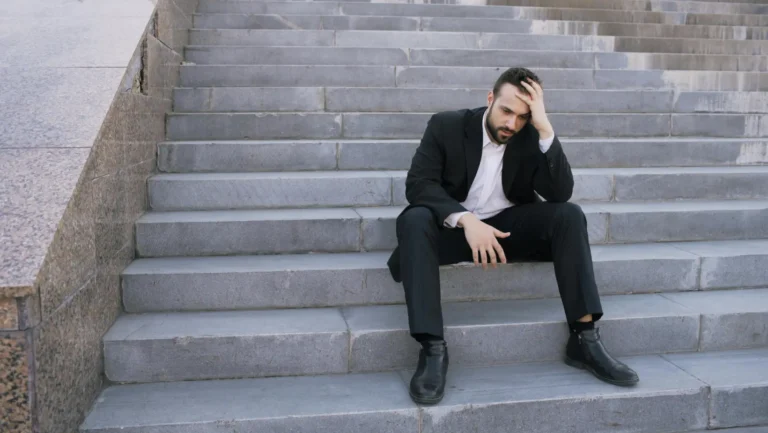

Anxiety disorders affect over 40 million adults annually, per the National Institute of Mental Health. When anxiety spikes, the amygdala overrides the prefrontal cortex. The rational brain goes quiet. That is why “just calm down” never works.
The First 90 Seconds Matter More Than the Next 30 Minutes
Staying calm when anxiety takes over starts in the first 90 seconds. Dr. Jill Bolte Taylor’s research shows the physiological surge from anxiety, the cortisol and adrenaline flood, peaks and begins clearing within 90 seconds. What keeps anxiety going after that is the second wave: fear of the anxiety itself.
The goal in the first 90 seconds is not to eliminate the feeling. The goal is to stop the second wave before it builds. Most people try to reason their way out during a spike. That fails because the rational brain is offline.
Recognize Which Anxiety Loop You’re Stuck In First
Applying the wrong tool to the wrong loop is why most anxiety techniques fail people. Identify your loop before using any strategy.
Body Loop
The body loop is driven by physical sensations: racing heart, chest tightness, shallow breathing, or muscle tension. These sensations feed the anxiety signal, which creates more sensations. People in a body loop often say “I can’t breathe” or “my heart won’t slow down.”
Nervous system regulation for anxiety is the primary tool here. Breathing, cold water, or slow movement breaks the physical feedback cycle directly.
Thought Loop
The thought loop runs on repetitive worst-case thinking. The brain replays threats that have not happened. Rumination, what-if thinking, and catastrophizing all belong here. Cognitive behavioral therapy techniques for anxiety target this loop. Interrupting the thought pattern, not suppressing it, is what works.
Behavior Loop
The behavior loop runs on avoidance. Avoiding a situation reduces anxiety briefly. That brief relief trains the brain that avoidance is the only safety strategy. Over time, the avoidance expands. Gradual exposure, not more avoidance, breaks this loop.
A Three-Step Anxiety Reset That Calms the Brain Fast
Step 1: Stabilize the Body
The fastest way to calm anxiety quickly is through the body first. Within 90 seconds of onset, try one of these:
- Physiological sigh: Two sharp nasal inhales (short sniff then immediately a longer one), then a slow mouth exhale. Dr. Andrew Huberman’s lab confirmed in Cell Reports Medicine (2023) this reduces heart rate faster than standard deep breathing by deflating over-inflated lung air sacs.
- Cold water on wrists or face: Activates the mammalian submersion reflex, slowing heart rate within 30 seconds.
- Fist tension and release: Squeeze fists hard for 5 seconds, then release. Repeat at the shoulders. This discharges stored physical tension.
Step 2: Reduce Cognitive Overload
Once the body is more stable, redirect the prefrontal cortex with a structured task:
- 5-4-3-2-1 method: Name 5 things you see, 4 you can touch, 3 you hear, 2 you smell, 1 you taste. This pulls the brain into present-moment input and interrupts the thought loop.
- Count backward by 7s from 100: Engages working memory enough to crowd out rumination without requiring emotional processing.
Step 3: Break the Feedback Loop
After steps 1 and 2, the brain is more receptive. Staying calm when anxiety takes over at this stage means giving the prefrontal cortex something factual to work with. Use this reframe:
Instead of “Why am I so anxious?” try: “My body responded to a perceived threat. The threat did not materialize. I am physically safe right now.”
This gives the prefrontal cortex something accurate to work with. It is factual reappraisal.
Patient Spotlight: Breaking a 14-Month Panic Cycle With a Simple Protocol
Note: The following case history is based on a composite of real clinical presentations. The name has been changed to protect patient privacy.
Sandra Kowalczyk, a 44-year-old high school principal from Columbus, Ohio, had experienced panic attacks for 14 months. Her triggers were performance reviews and staff presentations. She had tried breathing exercises alone and found them ineffective during active spikes. That failure made her distrust all coping tools.
Her therapist introduced the loop-identification protocol. Sandra identified a body loop with secondary thought-loop rumination. She learned the physiological sigh and applied it within the first 90 seconds of onset. After eight weeks of body stabilization combined with cognitive reappraisal, her panic attacks dropped from weekly to once in four months. She resumed leading full staff meetings without pre-event medication.
Staying calm when anxiety takes over for Sandra was not about finding more tools. It was about using the right tool in the right order.
Sandra’s name has been altered to protect her privacy.
Build an “Anxiety First Aid Kit” Before You Need It
Staying calm when anxiety takes over is far easier when tools are pre-selected, not improvised mid-spike. Knowing how to stay calm when anxiety takes over before it happens means the brain does not have to search for a strategy while under threat. Build this kit when you are calm.
Physical Regulation Tools
- A written card with your body-loop technique (e.g., physiological sigh steps)
- A textured object for tactile grounding
- A cold water bottle you associate with reset
Cognitive Anchors
- One pre-written sentence: “I have gotten through this before. This feeling is temporary.”
- A 3-question check: Am I physically safe? Is this a fact or a prediction? What is one action I can take right now?
Environmental Supports
- A low-stimulation space you can move to: a bathroom, parked car, or quiet hallway
- Noise-canceling headphones with a pre-loaded grounding audio track
- A contact you can text a single word to signal you need space, not advice
Simple Techniques That Help You Feel Grounded
Grounding Techniques for Anxiety
Grounding techniques for anxiety work by pulling attention from internal threat-prediction to external, present-moment reality. The ability to calm anxiety quickly during an active spike often depends on how fast you can shift sensory focus. These three work fastest:
- Object focus: Pick one item in the room. Describe its color, texture, weight, and shape in detail until the anxiety begins to ease.
- Body scan from feet up: Move attention slowly from the soles of your feet upward. This shifts focus away from chest-centered tension.
- Temperature contrast: Hold ice for 10 to 15 seconds. The sharp physical sensation overrides the anxiety signal and resets attention.
Grounding techniques for anxiety are especially useful for the body loop. They give the nervous system a real-world anchor when the brain is stuck in a threat spiral.
Breathing Exercises for Racing Thoughts
Racing thoughts and anxiety relief responds well to structured breathing. To calm anxiety quickly during a thought loop, use one of these two options before reaching for any other tool:
- Box breathing (4-4-4-4): Inhale 4 counts, hold 4, exhale 4, hold 4. Used by US Navy SEALs for acute stress management.
- 4-7-8 breathing: Inhale 4 counts, hold 7, exhale 8. The long exhale activates the parasympathetic nervous system.
Racing thoughts and anxiety relief through breathing is about giving the nervous system a controlled rhythm to follow when chaos is running.
Calm Your Nervous System With Gentle Movement
Nervous system regulation for anxiety through movement does not require a hard workout. Five to ten minutes of walking, gentle stretching, or slow yoga lowers cortisol and raises GABA, the brain’s natural calming neurotransmitter, per a 2021 study in Frontiers in Psychiatry.
What Calm Actually Looks Like (It’s Not the Absence of Anxiety)
Real calm is a state where anxiety is present but not in control. When people set “zero anxiety” as the goal, they create meta-anxiety: anxiety about feeling anxious. That second layer often becomes worse than the original spike.
Staying calm when anxiety takes over means learning to function alongside a low activation level without letting it escalate. Signs of real regulation include:
- Breathing returns to a natural rhythm without forcing it
- Thought speed slows to a pace you can observe
- Physical tension reduces but does not need to fully disappear
- Decision-making feels possible again
What to Do If Anxiety Keeps Coming Back
Notice Your Triggers
Keep a trigger log for two weeks. Write the time, situation, physical sensation, and thought before each spike. Most people find 3 to 4 consistent triggers, not a random pattern.
Challenge Anxious Thinking
Ask three questions about each anxious thought:
- Is this a fact or a prediction?
- What is the realistic probability of the worst outcome?
- What would I tell a close friend thinking this same thought?
The goal is not to feel better instantly. The goal is to introduce doubt into the certainty the anxious brain creates.
Cognitive Behavioral Therapy (CBT) Techniques
Cognitive behavioral therapy techniques for anxiety are the most evidence-backed tools available. A 2020 meta-analysis in JAMA Psychiatry covering 41 studies found CBT outperformed placebo in 81% of anxiety cases. Core tools include:
- Thought records: Write down the anxious thought, the evidence for and against it, and a balanced alternative
- Behavioral activation: Schedule low-effort activities that produce mild positive emotion to counter avoidance
- Exposure hierarchy: Gradually face avoided situations starting with the least threatening
Cognitive behavioral therapy techniques for anxiety are available through licensed therapists, structured workbooks, and evidence-based apps such as Woebot or Sanvello. Staying calm when anxiety takes over in the long run requires changing the underlying pattern. Staying calm when anxiety takes over as a sustained state comes from consistent behavioral and cognitive rewiring. CBT is the most reliable path to get there.
FAQs
What’s the fastest way to calm anxiety?
The physiological sigh, two sharp nasal inhales followed by a slow exhale, reduces heart rate within 30 to 90 seconds. It works faster than standard deep breathing by deflating over-inflated lung air sacs and cutting cortisol circulation. Validated in Cell Reports Medicine, 2023.
Do grounding techniques really work?
Yes. Grounding techniques for anxiety redirect neural activity from the amygdala toward the sensory cortex. The 5-4-3-2-1 method is validated in trauma and anxiety treatment by SAMHSA and multiple CBT frameworks. Effects are measurable within 2 to 5 minutes of consistent use.
How can I stop racing thoughts at night?
4-7-8 breathing combined with a written “worry dump” before bed works best. Racing thoughts and anxiety relief at night comes from offloading thoughts to paper before sleep. A 2021 study in the Journal of Experimental Psychology found this reduces nighttime rumination by up to 43%.
When should I seek professional help for anxiety?
Seek help when anxiety disrupts sleep, work, or relationships for more than two consecutive weeks. Also seek help when you avoid two or more situations weekly to manage anxiety, or when physical symptoms such as chest pain or numbness appear. Nervous system regulation for anxiety through self-help has real limits. A CBT-trained therapist addresses root-level patterns that tools alone cannot reach.
Sources
- National Institute of Mental Health. Anxiety disorders. 2024.
- Balban, M. Y., et al. Brief structured respiration practices enhance mood and reduce physiological arousal. Cell Reports Medicine, 2023.
- Hofmann, S. G., & Smits, J. A. J. Cognitive-behavioral therapy for adult anxiety disorders: A meta-analysis. JAMA Psychiatry, 2020.
- Stubbs, B., et al. Anxiety management through physical activity. Frontiers in Psychiatry, 2021.
- Bolte Taylor, J. My Stroke of Insight. Viking Press, 2008. 90-second emotional response model.
- Substance Abuse and Mental Health Services Administration. Grounding techniques in trauma-informed care. 2022.
- Scullin, M. K., et al. The effects of bedtime writing on difficulty falling asleep. Journal of Experimental Psychology, 2021.
- American Psychological Association. Anxiety disorders overview. 2023.
- Craske, M. G., & Barlow, D. H. Mastery of Your Anxiety and Panic. Oxford University Press, 2022.
- Bystritsky, A., et al. Current diagnosis and treatment of anxiety disorders. P&T Journal, 2013.