
Medical Disclaimer: Acupuncture may cause soreness, bruising, or dizziness. Rare complications can occur. Choose a qualified practitioner and consult your doctor if you have health concerns.
The disadvantages of acupuncture are real, and most articles skip them entirely. Acupuncture carries documented risks ranging from minor soreness to rare but serious complications like lung puncture and nerve injury.
In the US, over 14 million adults use acupuncture annually, yet fewer than 40% discuss it with their primary care doctor before starting. This guide covers every side effect, risk category, safety limitation, and red flag that anyone considering acupuncture should know before booking a session.
What Is Acupuncture and How It Works
The Acupuncture is a treatment that inserts thin needles into specific points on the body. Licensed practitioners use it to relieve pain, reduce stress, and treat conditions ranging from migraines to digestive disorders.
Traditional Chinese Medicine Principles
In Traditional Chinese Medicine (TCM), the body contains 14 main energy channels called meridians. Acupuncture stimulates 361 classical points along these channels to restore Qi flow (the body’s functional energy). Disrupted Qi is considered the root cause of pain and disease in TCM.
Role of Qi and Meridians
Qi isn’t a concept Western science has validated structurally, but the effects of needle stimulation are measurable. Needles at specific points trigger neurochemical responses, including endorphin release, changes in autonomic nervous system activity, and local inflammatory responses that the body then resolves.
Modern Scientific Explanation
Research from Harvard Medical School’s Osher Center found that acupuncture stimulates A-delta and C-fibers in connective tissue, which then signal the brain to release pain-modulating chemicals. The anti-inflammatory and analgesic effects are real. The meridian explanation for why they happen is still debated in clinical literature.
Common Side Effects of Acupuncture Therapy

The side effects of acupuncture therapy affect a significant portion of patients, though most are minor and temporary. A 2001 prospective study in the British Medical Journal tracked 34,407 acupuncture treatments and found that 43% of patients experienced at least one minor adverse event.
Pain or Soreness After Acupuncture
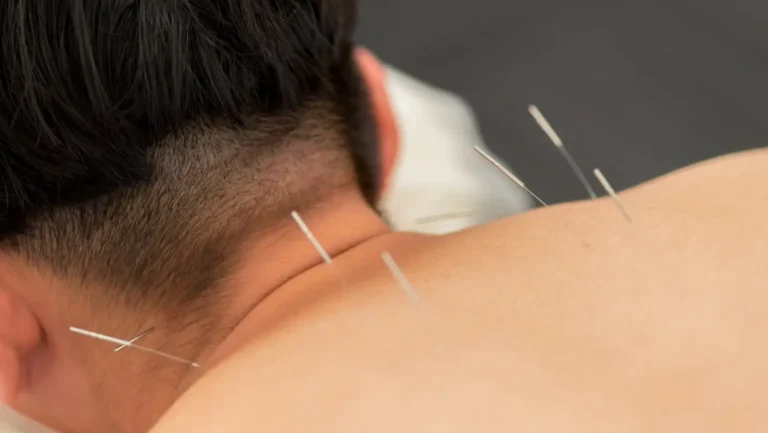
Pain or soreness after acupuncture is the most frequently reported complaint. The soreness feels similar to delayed-onset muscle soreness (DOMS) after exercise. It typically lasts 24 to 48 hours and concentrates around needle insertion sites, especially in tight muscle areas like the neck, upper back, and shoulders.
Minor Bleeding or Bruising
Small amounts of bleeding or bruising occur in roughly 3% of sessions. This happens when a needle grazes a superficial capillary. Bruising is more common in patients who take aspirin, ibuprofen, fish oil supplements, or blood thinners like warfarin.
Dizziness or Fatigue
Around 1 to 3% of first-time patients experience lightheadedness during or immediately after a session. This happens from a strong vasovagal response to needle insertion, where blood pressure temporarily drops. Patients who come in hungry, dehydrated, or highly anxious are most at risk.
Temporary Worsening of Symptoms
Some practitioners call this a “healing crisis.” In the first 1 to 3 sessions, symptoms sometimes intensify before improving. This isn’t universal. Patients with fibromyalgia and chronic fatigue syndrome report this pattern most often.
Improper Needle Technique Risks
Improper needle technique risks represent the most serious category of acupuncture complications. These aren’t theoretical. Documented cases exist in peer-reviewed literature for every complication listed below.
Nerve Irritation or Injury
Needles placed too close to a nerve can cause temporary or lasting nerve irritation. Symptoms include sharp radiating pain, tingling, or numbness extending from the needle site. The brachial plexus, sciatic nerve, and facial nerves carry the highest risk based on their proximity to commonly used acupuncture points.
Organ Puncture (Rare but Serious)
Organ puncture is rare but documented. A 2011 review in the Journal of Internal Medicine identified 86 cases of serious organ injuries from acupuncture globally, including cardiac tamponade (fluid around the heart), spinal cord injury, and bowel perforation. These occurred with untrained or inadequately trained providers.
Incorrect Needle Depth
Needle depth varies by body region. Points on the chest and upper back require shallow insertion because the lungs sit close to the surface. An inexperienced provider who inserts needles too deeply in thoracic points risks pneumothorax, which is a collapsed lung. This is the most serious improper needle technique risk associated with acupuncture.
Poor Hygiene and Infection Risk
All licensed US acupuncturists use single-use sterile disposable needles. The infection risk comes from unlicensed providers, acupuncture tourism in unregulated countries, or improperly stored needles. Bacterial infections, including Staphylococcus aureus and Pseudomonas, have been reported in the literature from non-sterile needle use.
Serious Risks and Complications
The disadvantages of acupuncture include rare but serious complications that require emergency medical attention when they occur.
Infection from Unsterile Needles
Reused or contaminated needles carry the risk of transmitting hepatitis B, hepatitis C, and in extreme cases HIV. The CDC documented acupuncture-related hepatitis B clusters in the US before mandatory single-use needle regulations. Today, this risk is essentially eliminated in licensed US clinics.
Pneumothorax (Lung Injury Risk)
Pneumothorax from acupuncture happens when a needle punctures the pleural space surrounding the lung. Symptoms include sudden chest pain, shortness of breath, and rapid heart rate after a session. A 2014 review in Acupuncture in Medicine documented 26 published pneumothorax cases linked to acupuncture, almost all from inadequately trained practitioners.
Allergic Reactions (Rare)
Some patients react to the metals used in needles. Most acupuncture needles contain surgical stainless steel. Patients with nickel allergies occasionally report contact dermatitis or localized inflammatory reactions at insertion points.
Fainting During Treatment
Needle-phobic patients or those with low blood sugar faint during sessions at a rate of approximately 0.1% per treatment. Licensed practitioners know to have patients lie down for the first session and monitor closely if any prior fainting history exists.
Limitations of Acupuncture
The limitations of acupuncture matter as much as the risks. Even when performed perfectly, acupuncture doesn’t work for every condition or every person.
- Acupuncture produces no structural repair. It won’t fix a herniated disc, heal a torn ligament, or remove scar tissue.
- Results are inconsistent. The same treatment protocol produces strong results in one patient and minimal results in another with the identical diagnosis.
- Evidence quality varies. The WHO recognizes acupuncture for 28 conditions, but high-quality randomized controlled trials support fewer than half of those applications.
- Sessions require time and cost. Most conditions need 8 to 12 sessions at $75 to $150 per visit in the US. Insurance coverage remains inconsistent.
- Placebo separation is difficult. Multiple meta-analyses show that sham acupuncture (needles in non-acupuncture points) produces similar results to real acupuncture for some conditions, making it hard to determine how much of the benefit is neurological vs expectation-based.
Who Should Avoid Acupuncture
Some patients carry higher risk and should get medical clearance before starting.
- Blood thinners: Warfarin, heparin, and high-dose aspirin increase bleeding and bruising risk significantly.
- Pacemaker users: Some dry needling and electroacupuncture devices use electrical stimulation that interferes with pacemaker function.
- Pregnancy: Specific points (SP6, LI4, BL60, BL67) stimulate uterine contractions. An untrained provider using these points in a pregnant patient creates real miscarriage risk.
- Active skin infections: Needling through infected or inflamed skin introduces bacteria into deeper tissue.
- Lymphedema: Needling in a limb affected by lymphedema increases swelling and infection risk.
- Bleeding disorders: Hemophilia and similar conditions make even minor capillary nicks dangerous.
How to Reduce Acupuncture Side Effects
To reduce acupuncture side effects starts with choosing the right provider and preparing your body properly.
- Eat a light meal 1 to 2 hours before your session. Fasting dramatically increases fainting and dizziness risk.
- Disclose every medication and supplement to your acupuncturist before treatment starts. Blood thinners, SSRIs, and diabetes medications all interact with acupuncture’s physiological effects.
- Verify your provider’s credentials. In the US, look for an L.Ac. (Licensed Acupuncturist) or a DAOM (Doctor of Acupuncture and Oriental Medicine). Board certification from the National Certification Commission for Acupuncture and Oriental Medicine (NCCAOM) is the gold standard.
- Avoid intense exercise, alcohol, and caffeine for 4 to 6 hours after a session.
- Stay hydrated before and after treatment to reduce soreness and fatigue.
- Start with fewer needles. Ask your practitioner to begin conservatively, especially for the first two sessions.
Acupuncture vs Other Treatments: Limitations Comparison
Compared to Physiotherapy
Physiotherapy repairs structural problems: muscle weakness, joint instability, post-surgical mobility loss. Acupuncture doesn’t. For rotator cuff tears, ACL rehabilitation, or post-stroke mobility recovery, physical therapy produces measurably better functional outcomes.
Compared to Medications
For acute severe pain (post-surgical pain, acute migraine attack, kidney stone pain), pharmaceutical analgesics work faster and more reliably than acupuncture. Acupuncture’s advantage is long-term pain reduction without medication dependency, not acute crisis management.
When Modern Medicine Is More Effective
Acupuncture should never replace medical treatment for infections, cancer, autoimmune disease flares, cardiac events, or any condition requiring structural repair or pharmaceutical management. The disadvantages of acupuncture become life-threatening when patients use it as a substitute for evidence-based medical care in serious conditions.
Is Acupuncture Safe Overall
Safety When Performed Correctly
Yes, acupuncture is safe when performed by a licensed, trained practitioner using sterile single-use needles. A large-scale UK study published in Acupuncture in Medicine (2001) found the rate of serious adverse events at 1 per 10,000 treatments, which is lower than most pharmaceutical interventions.
Importance of Regulation and Training
State regulations for acupuncture licensure vary in the US. California, New York, and Florida require 3,000+ hours of training. Some states allow medical doctors to perform acupuncture after only 200 to 300 hours of training. The training gap explains most documented serious complications.
Risk vs Benefit Analysis
For appropriate conditions (chronic pain, migraines, nausea, insomnia), the benefit-to-risk ratio strongly favors acupuncture when administered correctly. The disadvantages of acupuncture become significant only with unqualified providers or in contraindicated patients.
When to See a Doctor
Seek immediate medical attention if any of these occur after an acupuncture session:
- Sudden chest pain or shortness of breath (possible pneumothorax)
- Redness, warmth, swelling, or pus at a needle site lasting more than 48 hours (infection)
- Persistent numbness or tingling in a limb (nerve irritation)
- Fever above 101°F within 24 hours of treatment
- Severe or worsening pain, not mild soreness
Frequently Asked Questions
Is acupuncture painful?
Acupuncture isn’t painful in the way injections are. Most patients feel a dull pressure or mild ache called De Qi at the needle site. Sharp or shooting pain means the needle is near a nerve. Tell your practitioner immediately if that happens; they reposition the needle.
What are the most common side effects?
The most common side effects of acupuncture therapy are post-session soreness (reported in up to 43% of treatments), minor bruising (3%), and temporary fatigue. These resolve within 24 to 48 hours without treatment.
Can acupuncture cause nerve damage?
Yes, but rarely. Nerve damage from acupuncture occurs when a needle directly contacts a nerve trunk rather than surrounding tissue. Documented cases involve the facial nerve, sciatic nerve, and brachial plexus. Risk drops to near zero with a properly trained licensed acupuncturist.
Is acupuncture safe long-term?
Yes. No studies show cumulative harm from long-term acupuncture with sterile single-use needles. Patients in China receive acupuncture for decades without documented systemic adverse effects. The disadvantages of acupuncture don’t accumulate the way drug side effects do.
How long does soreness last after acupuncture?
Pain or soreness after acupuncture typically lasts 24 to 48 hours. Soreness in deep muscle points like the upper trapezius or gluteus sometimes lasts up to 72 hours. Applying a warm compress for 10 minutes reduces it faster.
Can acupuncture make symptoms worse?
Yes, temporarily. The first 2 to 3 sessions sometimes intensify symptoms before improvement appears. This is most documented in fibromyalgia, chronic fatigue syndrome, and autoimmune pain conditions. If worsening continues past session 4, the treatment protocol needs reassessment.
Who should not try acupuncture?
Patients with hemophilia, active skin infections, pacemakers, or first-trimester pregnancy should avoid acupuncture without specific medical clearance. People taking warfarin should inform their acupuncturist before every session because bleeding risk changes with dose adjustments.
Is infection common with acupuncture?
No. Infection is rare in licensed US clinics because all practitioners use disposable single-use needles. Infection clusters documented in the literature trace back to reused needles in unregulated settings, primarily outside the US.
How do I choose a safe practitioner?
Verify NCCAOM board certification at nccaom.org. Confirm your state license is current. Ask specifically whether the clinic uses only single-use sterile needles. Avoid providers who offer acupuncture as a side service without dedicated training, including some chiropractors and medical doctors with minimal acupuncture hours.
Are there alternatives to acupuncture?
Yes. For muscle pain, dry needling and physical therapy target trigger points more directly. For chronic pain management, cognitive behavioral therapy combined with medication produces comparable long-term results. For stress and anxiety, mindfulness-based stress reduction (MBSR) has stronger randomized controlled trial evidence than acupuncture for psychological outcomes specifically.