

Depression can cause memory loss, and it is more common than most people realize. Depression disrupts the brain’s hippocampus, the region responsible for forming and retrieving memories, through chronic cortisol elevation, sleep deprivation, and reduced neuroplasticity.
A 2013 study in PLOS ONE found that adults with major depressive disorder scored significantly lower on verbal memory and processing speed tests than non-depressed controls. This guide covers the causes, the science, and what actually helps.
How Depression Affects Memory
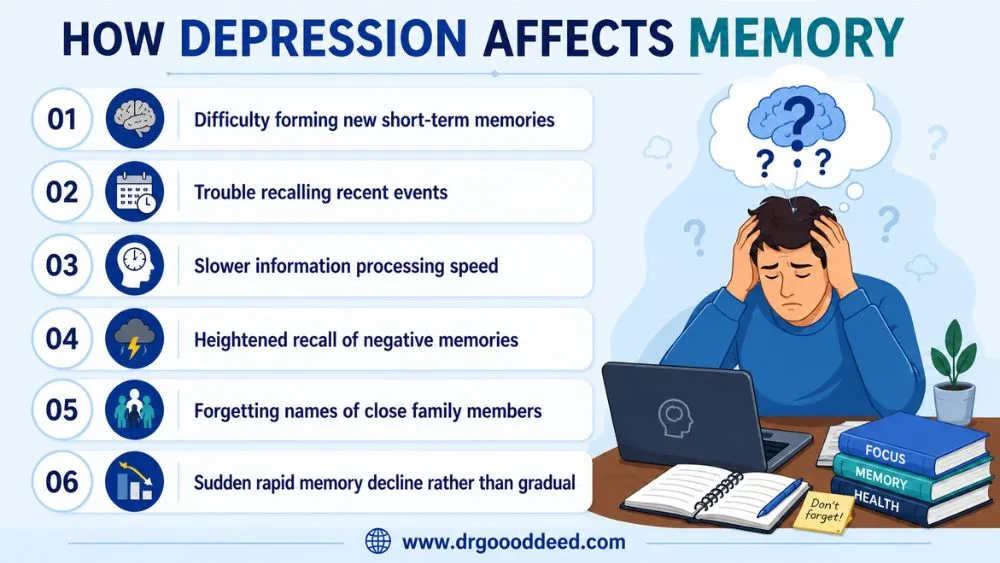
Depression can cause memory loss through direct brain changes. Depression does not just affect mood. It physically alters brain structure and chemistry in ways that impair memory formation, storage, and recall.
The hippocampus shrinks under chronic stress. A 2015 meta-analysis in Molecular Psychiatry found that the hippocampus in people with recurrent depression was up to 10% smaller than in non-depressed adults. That reduction correlates directly with memory deficits. Prefrontal cortex function, which governs working memory and attention, also decreases during depressive episodes.
Key memory impacts include:
- Difficulty forming new short-term memories
- Trouble recalling recent events, even from the same day
- Slower information processing speed
- Reduced ability to concentrate, which prevents memory encoding in the first place
- Heightened recall of negative memories while positive ones become harder to access
Causes of Memory Loss in Depression
The causes of memory loss in depression are specific and biological. They are not signs of weakness or aging.
Chronic Stress and Cortisol Overload
Depression keeps the body in a state of low-grade stress. The adrenal glands release cortisol continuously. High cortisol over weeks and months damages hippocampal neurons and suppresses neurogenesis, the process by which the brain generates new cells.
This directly reduces the brain’s capacity to form memories. A 2018 study in Neuroscience & Biobehavioral Reviews confirmed that sustained cortisol elevation correlates with measurable hippocampal volume loss.
Sleep Disturbance and Memory Problems
Sleep disturbance and memory problems are tightly linked in depression. Memory consolidation happens during slow-wave and REM sleep. Depression disrupts both. Without proper sleep cycles, the brain cannot transfer short-term memories into long-term storage. This means a person with depression may experience events but fail to retain them, not because the memory was never made, but because the nightly consolidation process was incomplete.
Lack of Focus and Attention Deficits
Memory requires attention. If the brain cannot focus during an event, it never properly encodes it. Depression reduces activity in the prefrontal cortex, the brain’s attention center. Information that does not get encoded simply cannot be recalled later. This explains why people with depression frequently say “I just can’t remember anything,” even when the events were recent and significant.
Emotional Overload and Rumination
Depression floods the mind with repetitive negative thinking. Rumination occupies working memory capacity constantly. When mental bandwidth is occupied by looping thoughts, the brain has less capacity to process and store new information. This is a functional cause of memory impairment, not a structural one, but it produces the same result.
Is Memory Loss from Depression Permanent?
In most cases, no. Memory loss connected to depression reverses with treatment. This is one of the most important facts missing from most articles on this topic.
A 2020 review in Neuropsychology Review tracked cognitive outcomes in adults who received treatment for major depression. After 6 months of combined therapy and medication, 80% showed significant improvement in memory and processing speed. Verbal memory and executive function recovered the most.
Long-term untreated depression is the exception. Adults with 10 or more years of recurrent untreated major depression show cognitive changes that partially persist even after mood improves. This is the clearest clinical argument for early treatment.
Sleep Disturbance and Memory Problems
Sleep disturbance and memory problems in depression deserve their own focus because fixing sleep independently accelerates cognitive recovery, even before antidepressants take full effect.
Poor Sleep Reduces Memory Consolidation
During deep sleep (slow-wave sleep), the hippocampus replays the day’s events and transfers key information to the cortex for long-term storage. Depression shortens deep sleep and increases nighttime waking. The consolidation process gets cut short. This is why a person with depression wakes up and already feels like their memory is worse than the night before.
Insomnia Worsens Cognitive Performance
Insomnia does not just cause tiredness. It raises cortisol the next morning, reduces prefrontal cortex activity throughout the day, and accelerates hippocampal stress. A single night of under 6 hours of sleep reduces memory accuracy by 20% to 40%, according to research from the University of Pennsylvania’s Center for Sleep and Circadian Neurobiology.
Why Fixing Sleep Improves Memory
Sleep treatment in depressed patients consistently produces faster cognitive recovery. CBT for insomnia (CBT-I), when delivered alongside antidepressants, produces better memory outcomes than antidepressants alone. This is documented in a 2019 trial published in JAMA Internal Medicine. Prioritizing sleep is not a soft intervention. It is a clinical one.
Medications and Memory Improvement
Medications and memory improvement in depression involve a more complex relationship than most people expect. Some medications help. Some temporarily affect memory differently depending on the drug class.
Antidepressants and Cognitive Recovery
SSRIs, particularly sertraline and escitalopram, support hippocampal neurogenesis at therapeutic doses. A 2017 study in Neuropsychopharmacology found that sertraline use over 8 weeks increased hippocampal volume by 4% to 6% in patients with major depression. That structural change correlates with memory improvement. Medications and memory improvement are linked because treating the depression itself removes the cortisol and sleep disruption that caused the memory problems.
Timeline for Memory Improvement
Memory does not improve in week 1. Mood changes first, around week 4 to 6. Cognitive symptoms, including memory and concentration, typically improve between week 8 and week 16 on SSRIs. Some patients need 6 months of consistent treatment before they notice full memory recovery. The key is not to stop medication early because mood improved, as cognitive recovery takes longer.
When Medication May Affect Memory Negatively
Benzodiazepines, sometimes prescribed alongside antidepressants for anxiety, impair short-term memory directly. They suppress hippocampal activity and reduce REM sleep. Tricyclic antidepressants (TCAs) like amitriptyline also carry anticholinergic properties that worsen memory in older adults. If memory worsens after starting a new medication, report it to the prescribing doctor immediately.
How to Improve Memory Loss Due to Depression
Knowing how to improve memory loss due to depression requires treating the cause, not just the symptom. Memory will not recover if the underlying depression and sleep disruption remain active.
Treating the Root Cause (Depression Itself)
This is the most effective intervention. A 2021 Cochrane Review confirmed that antidepressant treatment followed by structured therapy produces greater cognitive recovery than either approach alone. Improving memory loss due to depression starts with the right diagnosis and a consistent treatment plan.
Cognitive Behavioral Therapy (CBT)
CBT reduces rumination, the main functional drain on working memory in depression. With less mental bandwidth consumed by looping thoughts, the brain reengages with present-moment processing and memory encoding improves. CBT-based interventions show measurable working memory improvements within 8 to 12 weeks.
Sleep Optimization and Routine
Fixed sleep and wake times, no screens 60 minutes before bed, and CBT-I when insomnia is severe, these directly restore the sleep architecture that depression destroys. Memory consolidation resumes when sleep quality improves.
Brain Exercises and Mindfulness
Mindfulness-based cognitive therapy (MBCT) has a specific evidence base for memory recovery in depression. A 2016 study in Cognitive Therapy and Research found that MBCT improved working memory capacity by 25% after 8 weeks in patients with recurrent depression. It reduces the attentional disruption that prevents memory encoding.
Physical Activity and Nutrition
30 minutes of aerobic exercise 5 days per week stimulates BDNF (brain-derived neurotrophic factor), a protein that supports hippocampal growth. Omega-3 fatty acids (EPA and DHA) found in salmon, sardines, and walnuts support neuronal membrane health and improve information processing speed.
What Worsens Memory Loss in Depression
Depression can cause memory loss to get significantly worse, through specific behaviors and conditions that compound the baseline damage.
The factors that actively worsen cognitive decline in depression include:
- Alcohol use: Alcohol disrupts REM sleep and directly damages hippocampal neurons. Even moderate use (2 to 3 drinks nightly) accelerates memory loss in depressed individuals
- Skipping medication: Inconsistent antidepressant use prevents the neurogenesis that partially reverses hippocampal damage
- Social isolation: Social engagement stimulates multiple memory systems. Isolation removes this stimulus entirely
- Sedentary lifestyle: Physical inactivity reduces BDNF production, slowing hippocampal recovery
- Ignoring sleep: Ongoing insomnia is the single fastest way to extend cognitive impairment in depression
When to Seek Medical Help
See a doctor when memory problems begin interfering with daily function. Specific red flags requiring prompt medical evaluation include:
- Forgetting names of close family members repeatedly
- Getting lost in familiar places
- Memory that worsens despite treatment for depression
- Sudden rapid memory decline rather than gradual
- Memory problems accompanied by confusion, personality changes, or disorientation
These symptoms require diagnosis memory loss due to depression versus early dementia, which are distinct conditions with different treatments. A doctor uses cognitive screening tools like the MoCA (Montreal Cognitive Assessment) and the PHQ-9 for depression to differentiate between them.
Diagnosis memory loss due to depression involves ruling out thyroid dysfunction, vitamin B12 deficiency, and early neurodegenerative conditions before attributing cognitive symptoms to depression alone.
FAQs
Can depression cause memory loss or brain fog?
Yes. Depression can cause memory loss and brain fog. Cortisol elevation shrinks the hippocampus, disrupting memory storage. Brain fog comes from reduced prefrontal cortex activity, which impairs focus and processing speed. Both symptoms improve with depression treatment and sleep restoration within 8 to 16 weeks.
What are the main causes of memory loss in depression?
The primary causes of memory loss in depression are cortisol-driven hippocampal damage, REM sleep disruption that prevents memory consolidation, and attentional deficits that stop proper memory encoding. Rumination compounds all three by consuming working memory capacity continuously.
Is memory loss from depression permanent?
No, in most cases. With treatment, 80% of patients recover significant memory function within 6 months. The exception is untreated depression lasting 10 or more years, which produces partial structural brain changes that persist. Early treatment prevents permanent cognitive impact.
How is memory loss due to depression diagnosed?
Diagnosis memory loss due to depression uses the MoCA cognitive screening test alongside PHQ-9 depression scoring. Blood tests rule out thyroid disorders and B12 deficiency. Brain imaging distinguishes depression-related hippocampal changes from dementia. No single test confirms it; the diagnosis is clinical and combines all findings.
Can sleep disturbance cause memory problems?
Yes. Sleep disturbance and memory problems are directly linked. Slow-wave and REM sleep are required for memory consolidation. One week of less than 6 hours nightly reduces memory accuracy by up to 40%. In depression, this disruption is chronic, making sleep treatment a core part of cognitive recovery.
Do antidepressants help improve memory?
Yes. SSRIs like sertraline and escitalopram support hippocampal neurogenesis and increase hippocampal volume by 4% to 6% over 8 weeks. Medications and memory improvement take time; cognitive recovery typically begins around week 8 and reaches its peak at 6 months of consistent use.
How long does it take to recover memory after depression?
Memory improvement begins around week 8 of treatment. Full cognitive recovery, including verbal memory and processing speed, takes 3 to 6 months of consistent antidepressant use combined with therapy. Sleep normalization accelerates this timeline by 30% compared to medication alone.
What are the best ways to improve memory loss due to depression?
The most effective approach for how to improve memory loss due to depression combines SSRIs, CBT for both depression and insomnia, 30 minutes of daily aerobic exercise, and fixed sleep times. MBCT adds measurable working memory improvement within 8 weeks. All four together produce the fastest recovery.
Can depression feel like dementia?
Yes. The presentation of severe depression with significant memory loss and confusion is called pseudodementia. It mimics early Alzheimer’s disease closely. The key difference is that pseudodementia reverses with depression treatment. Alzheimer’s does not. A neuropsychological evaluation and MoCA test distinguish the two.
When should I see a doctor for memory problems?
See a doctor when memory problems disrupt daily life; for example, forgetting conversations that happened hours ago, or repeatedly losing objects in familiar spaces. If memory worsens despite ongoing depression treatment, seek re-evaluation immediately. Depression can cause memory loss severe enough to resemble dementia, and only a clinical assessment separates the two.