
Postmenstrual syndrome depression is a documented mood disorder that starts after your period ends, not before. Most people have heard of PMS. Fewer know that the days following menstruation can trigger a separate wave of depression and anxiety, emotional exhaustion.
This affects women across the US, yet most medical content online lumps it into PMS or ignores it entirely. This article covers the hormonal causes, symptoms, how long it lasts, what makes it worse, and how to manage it without guessing.
Why Depression Happen After Period
Depression after period causes are rooted in the sharp hormonal drop your body goes through at the end of the menstrual cycle. Estrogen and progesterone both fall. That fall doesn’t just affect your uterus; it hits your brain chemistry directly.
Hormonal Fluctuations: Estrogen and Progesterone Drop
Estrogen directly influences serotonin production. When estrogen drops at the end of your cycle, serotonin levels drop with it. Low serotonin is one of the clearest biological markers of depression. This isn’t a coincidence or sensitivity issue. It’s a chemical response.
Progesterone, which peaks during the luteal phase and then crashes before and during menstruation, has a sedating, calming effect through GABA receptors in the brain. When progesterone drops, that calming effect disappears. What’s left is a brain that’s running without its usual buffers.
Neurotransmitter Imbalance: The Serotonin Connection
Serotonin doesn’t just regulate mood. It controls sleep, appetite, and your ability to focus. When estrogen falls, the enzymes that help produce serotonin become less active. The result is low mood, poor sleep, and a foggy brain, all at the same time.
Dopamine is also affected. Lower estrogen reduces dopamine signaling, which is why motivation and interest in things you normally enjoy tend to drop after your period. This is different from ordinary sadness. It’s a neurochemical shift.
Stress and Menstrual Cycle Emotional Changes
Cortisol, the body’s main stress hormone, becomes harder to regulate when estrogen is low. Estrogen normally helps modulate the HPA axis, which is the system that controls cortisol output. With estrogen down, cortisol stays elevated longer in response to stress. So even minor stressors feel bigger in the days after your period ends.
Stress and emotional changes during the menstrual cycle work in a loop. Stress raises cortisol. High cortisol suppresses estrogen further. Lower estrogen worsens mood. This cycle doesn’t break on its own without intervention.
Nutrient Depletion During Menstruation
Blood loss during menstruation depletes iron. Iron deficiency causes fatigue and brain fog that often gets misread as emotional symptoms. Low iron also impairs dopamine synthesis. Magnesium, which helps regulate the nervous system, drops during menstruation too. Without magnesium, anxiety and irritability get worse in the days that follow.
Mood Swings After Period Symptoms
Mood swings after period symptoms are often dismissed as leftover PMS. They’re not the same thing. These symptoms appear after bleeding stops, sometimes 1 to 3 days after your period ends.
Persistent Sadness or Low Mood
This isn’t situational depression. There’s no obvious trigger. It’s a flat, heavy feeling that doesn’t lift even when things are going fine. Women often describe it as feeling “empty” or “disconnected” without knowing why.
Irritability and Emotional Sensitivity
Small things trigger a disproportionate response. A comment that wouldn’t normally bother you lands hard. This is tied directly to low progesterone and elevated cortisol. It’s not a personality issue.
Fatigue and Low Motivation
This goes beyond being tired. Getting out of bed feels harder than it should. Tasks that are normally easy feel heavy. Iron depletion from blood loss is one driver. Low dopamine is another.
Brain Fog and Poor Concentration
Difficulty concentrating, forgetting words mid-sentence, losing track of tasks. These are neurological symptoms, not laziness. Serotonin and dopamine both influence working memory loss and attention. When both are low, cognitive performance drops.
Anxiety or Restlessness
Some women experience post-menstrual syndrome depression as anxiety more than sadness. Racing thoughts, difficulty sleeping, a sense of unease without a clear cause. This pattern is tied to cortisol dysregulation and low progesterone.
How Long Post Menstrual Syndrome Depression Lasts
Post-menstrual syndrome depression typically lasts between 2 and 5 days after the period ends. In most cases, symptoms resolve once estrogen starts rising again in the follicular phase. If symptoms persist beyond 7 days or worsen each cycle, that signals a separate condition that needs clinical evaluation, such as PMDD or major depressive disorder.
Key timing facts:
- Symptoms usually start 1 to 3 days after bleeding stops
- Peak intensity is around days 1 to 3 post-period
- Resolution happens as estrogen begins its natural rise
- If it extends past 7 days every cycle, see a doctor
Stress and Menstrual Cycle Emotional Changes
Stress and menstrual cycle emotional changes are more connected than most people realize. Chronic stress doesn’t just affect your mood, it actively disrupts hormonal balance throughout your cycle.
Cortisol and Hormonal Interaction
Cortisol and estrogen are competing for the same regulatory system. High cortisol suppresses estrogen production. Lower estrogen means lower serotonin. This is why women under chronic stress tend to experience worse post-period mood crashes than women with lower baseline stress.
Emotional Sensitivity Post-Cycle
The post-period window is when emotional regulation is biologically at its weakest. The calming neurosteroids are low. Serotonin is low. Even people who normally handle stress well will notice they’re more reactive.
Why Stress Worsens Symptoms After Period
Sleep deprivation, overwork, and poor nutrition all amplify the hormonal drop. Women who sleep less than 6 hours during menstruation consistently report worse mood in the days following their period. This isn’t anecdotal. Sleep affects both cortisol regulation and serotonin recovery.
Diet and Supplements for Post Menstrual
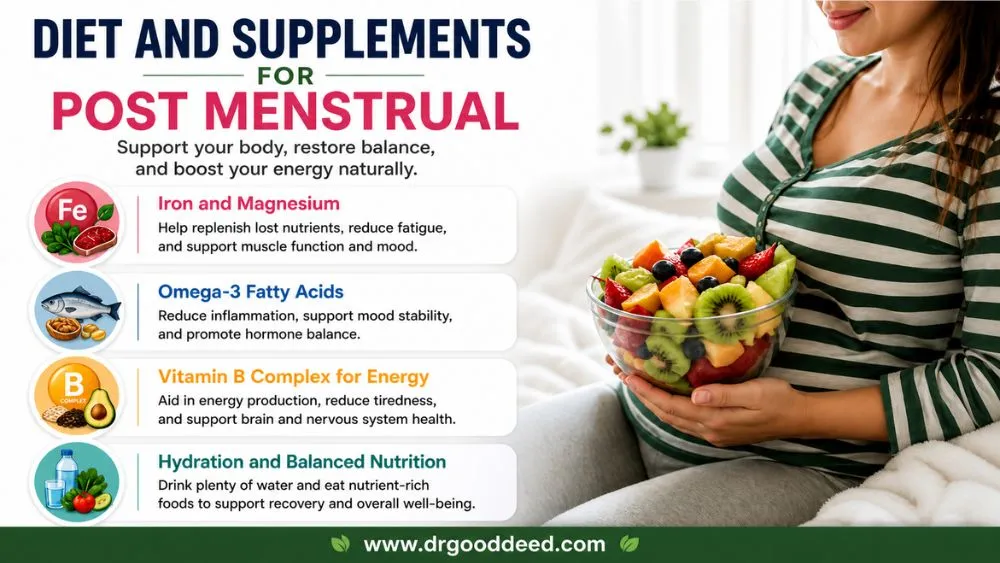
Diet and supplements for post-menstrual mood matter more than most health blogs acknowledge. The nutrient losses during menstruation are specific, and the recovery window after your period is when targeted nutrition has the most impact.
Iron and Magnesium Replenishment
Iron-rich foods like lean red meat, lentils, and spinach help restore what was lost during bleeding. Pairing them with vitamin C improves absorption. Magnesium glycinate (200 to 400 mg daily) reduces anxiety and improves sleep quality during the post-period window. This is one of the most under-discussed interventions for post-cycle mood.
Omega-3 Fatty Acids and Mood Regulation
Omega-3s reduce neuroinflammation and support serotonin receptor sensitivity. A 2022 meta-analysis in Nutritional Neuroscience found that women who supplemented with 1 to 2 grams of EPA daily reported significant mood improvements tied to their menstrual cycle. Fatty fish twice a week or a fish oil supplement does the same job.
Vitamin B Complex for Energy and Brain Function
B6 specifically supports serotonin and dopamine synthesis. B12 and folate support nerve function and reduce fatigue. The combination matters. A B-complex supplement taken daily, particularly in the week before and after your period, addresses the neurochemical deficits that drive postmenstrual syndrome depression.
Hydration and Balanced Nutrition
Dehydration worsens brain fog and irritability. During and after menstruation, the body loses fluids and electrolytes. Drinking at least 2 liters of water daily and reducing caffeine in the post-period window makes a measurable difference in how quickly mood stabilizes.
How to Manage Depression After Period
Managing depression after period depends on severity. Mild symptoms respond well to lifestyle changes. Moderate to severe symptoms need medical attention.
Managing depression after period with lifestyle:
- Prioritize 7 to 9 hours of sleep in the week after your period
- Exercise for 30 minutes daily; even walking raises serotonin
- Reduce alcohol; it suppresses serotonin and disrupts sleep
- Take magnesium glycinate and B6 supplements consistently
- Eat iron-rich foods in the 3 days after your period ends
- Track your symptoms monthly to identify patterns
Managing depression after period medically (when lifestyle isn’t enough):
- SSRIs like fluoxetine are approved for cycle-related mood disorders
- Hormonal therapy, including low-dose oral contraceptives, stabilizes estrogen levels
- A gynecologist or psychiatrist familiar with PMDD can assess whether medication is appropriate
What Worsens Post Menstrual Syndrome Depression
Post-menstrual syndrome depression gets significantly worse with specific triggers. Knowing them helps you avoid unnecessary flare-ups.
Factors that worsen symptoms:
- Chronic sleep deprivation (less than 6 hours a night)
- High caffeine intake, which raises cortisol and disrupts serotonin
- Alcohol consumption in the days after your period
- Skipping meals or low-carb dieting, which depletes serotonin precursors
- Unmanaged chronic stress
- Thyroid dysfunction (often overlooked; hypothyroidism mimics and worsens post-period mood crashes)
- History of anxiety or clinical depression makes symptoms more intense every cycle
FAQs
What is post menstrual syndrome depression?
Postmenstrual syndrome depression is a mood disorder that appears after menstruation ends, triggered by the drop in estrogen and progesterone. It causes sadness, fatigue, and anxiety lasting 2 to 5 days post-period. It’s distinct from PMS, which occurs before bleeding starts.
Why do I feel depressed after my period ends?
Estrogen drops sharply at the end of your cycle, which reduces serotonin production. Low serotonin directly causes low mood. Progesterone also falls, removing its calming effect on the body. These two drops together are the primary depression after period.
How long does post menstrual depression last?
2 to 5 days in most cases. Symptoms usually peak on day 1 or 2 after your period ends and resolve as estrogen rises in the follicular phase. Symptoms lasting beyond 7 days every cycle warrant a clinical evaluation.
What are mood swings after period symptoms?
Mood swings after period symptoms include flat mood, irritability, fatigue, brain fog, and anxiety. They begin 1 to 3 days after bleeding stops. Unlike PMS, there’s no cramping or physical discomfort involved; it’s primarily emotional and cognitive.
Can stress affect emotional changes after menstruation?
Yes. High cortisol from chronic stress suppresses estrogen production, which worsens the post-period hormonal drop. Stress and menstrual cycle emotional changes amplify each other. Women under consistent stress experience more intense and longer-lasting post-period mood symptoms.
What diet helps with post menstrual mood swings?
Iron-rich foods immediately after your period, omega-3 fatty acids daily, magnesium glycinate at 200 to 400 mg, and B6 supplements address the exact nutrient gaps that drive post-cycle mood drops. These are the most evidence-backed diet and supplements for post menstrual mood.
How to manage depression after a period naturally?
Sleep 7 to 9 hours, exercise daily, cut alcohol, take magnesium and B6, and eat iron-rich meals in the 3 days post-period. These steps directly address the hormonal and nutritional causes. If symptoms persist beyond a week, natural management alone isn’t sufficient.
Is post menstrual syndrome the same as PMS?
No. PMS occurs in the 1 to 2 weeks before your period, driven by rising then falling progesterone. Postmenstrual syndrome depression starts after bleeding ends, driven by low estrogen and low serotonin. They’re opposite phases of the cycle with different hormonal triggers.
When should I see a doctor for post-menstrual depression?
See a doctor if symptoms last more than 7 days, worsen each cycle, interfere with work or relationships, or include thoughts of self-harm. These patterns suggest PMDD or a comorbid mood disorder that needs clinical treatment, not just lifestyle changes.
Can supplements improve post-menstrual mood?
Yes. Magnesium glycinate reduces anxiety and improves sleep. B6 supports serotonin and dopamine synthesis. Omega-3 EPA supplementation at 1 gram daily improves mood tied to hormonal cycles. These three together target the exact neurochemical gaps that drive post-menstrual syndrome depression.