
The side effects of cucumber overdose are real, even though cucumber is one of the safest vegetables in the American diet. Cucumbers are 96% water, low in calories, and widely consumed across the United States, especially in salads, detox waters, and weight-loss diets.
But eating too much of anything, including cucumber, produces measurable physiological consequences. This guide covers digestive symptoms, electrolyte disruption, allergic reactions, and exactly when to see a doctor.
What Happens If You Eat Too Much Cucumber?
What happens if you eat too much cucumber depends on quantity and individual tolerance. Most healthy adults handle 1 to 2 cucumbers per day without any issues. Beyond that, the high water content and fiber load begin to strain the digestive system, and in rare cases, naturally occurring compounds in the skin create mild toxic effects.
High Water Content Affecting Digestion
One medium cucumber contains roughly 290ml of water. That is almost 10 fluid ounces from food alone. When consumed in large quantities, this excess water dilutes digestive enzymes in the stomach.
Digestive enzymes need a certain concentration to break down food properly. Diluting them slows digestion, causes bloating, and sometimes triggers loose stools. This is not a theoretical concern; it is basic gastrointestinal physiology.
Fiber Overload Leading to Discomfort
Cucumber contains both soluble and insoluble fiber. Insoluble fiber speeds up gut motility, meaning food moves faster through the intestines. When fiber intake increases suddenly, the colon gets more bulk than it can handle smoothly.
The result is cramping, excessive gas, and urgency in bowel movements. People who go from eating one cucumber a week to three or four daily will feel this within 24 to 48 hours.
Mild Toxicity From Compounds (Rare)
Cucumber skin and seeds contain cucurbitacins, bitter-tasting compounds belonging to the triterpenoid class. In small amounts, they are harmless. In very large quantities, cucurbitacins cause nausea and abdominal pain. Most commercial cucumbers in U.S. grocery stores are bred to have low cucurbitacin levels. Wild or bitter-tasting cucumbers carry a higher concentration and should be avoided.
Cucumber is a safe food. But eating 5 or more cucumbers daily, especially with the skin on, is where problems start showing up consistently.
Stomach Pain From Cucumber Overconsumption
Stomach pain cucumber overconsumption causes is often underreported because people rarely connect their digestive symptoms to cucumber specifically. The pain is real, and it follows a predictable pattern.
Bloating and Gas Formation
Cucumbers contain raffinose, a complex sugar that the small intestine cannot fully digest. When raffinose reaches the large intestine, gut bacteria ferment it and produce hydrogen and carbon dioxide gas. This gas accumulates, causing visible abdominal bloating and pressure. People with irritable bowel syndrome (IBS) are more sensitive to this process and feel it even at moderate cucumber intake.
Indigestion and Abdominal Discomfort
Large amounts of cucumber slow gastric emptying. The stomach holds food longer than normal, creating a full, heavy feeling. This leads to upper abdominal discomfort, sometimes confused with acid reflux. The discomfort typically starts 1 to 2 hours after eating and resolves within 4 to 6 hours without intervention.
Increased Bowel Movements
Insoluble fiber in cucumber accelerates transit time through the colon. Eating three or more cucumbers in a single day reliably increases bowel movement frequency in most adults. In people with pre-existing diarrhea or loose stools, this effect is more pronounced and sometimes requires stopping cucumber intake entirely until the gut stabilizes.
Cucumber Side Effects on the Body
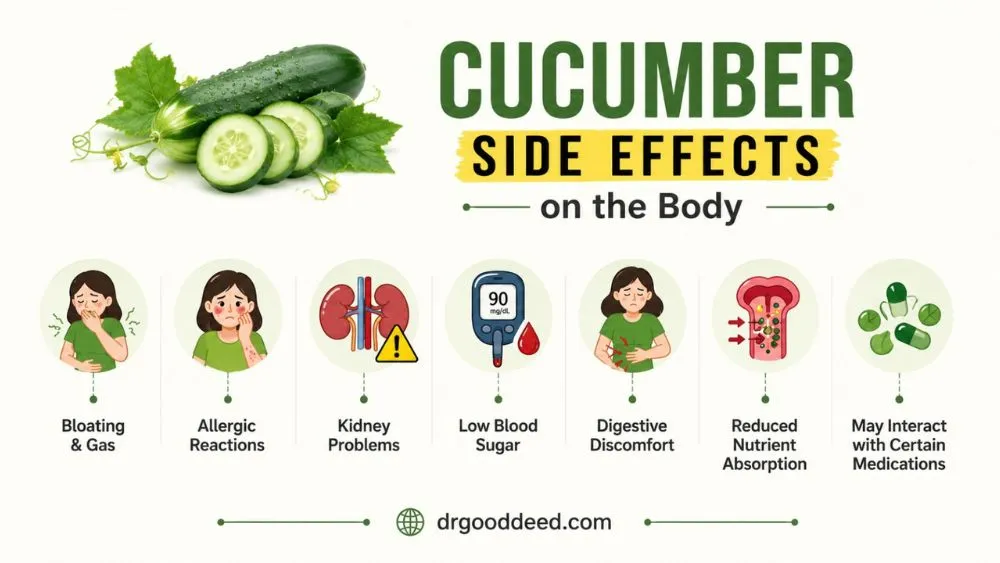
Cucumber side effects on the body extend beyond the gut. Two lesser-discussed effects are electrolyte disruption and nutrient dilution.
Digestive Symptoms (Gas, Diarrhea)
Repeated gas, diarrhea, and cramping from excess cucumber intake signal that the digestive system is under stress. These symptoms are the body’s direct response to too much fiber and water arriving simultaneously.
They are not dangerous in healthy adults but become clinically significant in people with Crohn’s disease, ulcerative colitis, or short bowel syndrome, where the gut lining is already compromised.
Electrolyte Imbalance From Excess Water
Cucumbers add significant fluid volume to daily intake. When total fluid intake becomes excessive, the kidneys excrete sodium more aggressively. This can lower serum sodium levels. Hyponatremia, the clinical term for low blood sodium, at mild levels causes headaches, fatigue, and confusion. This outcome is extremely rare from cucumber alone, but it becomes relevant in people who combine large cucumber intake with excessive plain water consumption, which is common in certain detox protocols.
Nutrient Dilution Effects
This is the least-covered side effect of cucumber overdose in mainstream health content. Eating large amounts of cucumber fills the stomach without delivering dense nutrition. Cucumber is 96% water, with minimal protein, fat, or micronutrients.
When it replaces more nutrient-dense foods in a meal, it creates a caloric and nutritional gap. Over time, this pattern contributes to deficiencies in iron, B12, and zinc, particularly in people already eating a restricted diet.
Allergic Reaction to Cucumber Symptoms
Allergic reaction to cucumber symptoms affect an estimated 2% of the U.S. population, often without the person realizing cucumber is the trigger.
Itching or Swelling
Cucumber belongs to the Cucurbitaceae family, the same family as melons and zucchini. People with latex allergies frequently react to cucumber due to cross-reactive proteins. Symptoms include lip swelling, tongue tingling, and itching around the mouth within minutes of eating. This reaction is called latex-fruit syndrome.
Skin Rashes
Direct skin contact with cucumber juice causes contact dermatitis in sensitive individuals. The reaction presents as red, itchy patches on the hands, lips, or face. It is more common with cucumber skin than flesh, because cucurbitacins concentrate in the outer layer.
Oral Allergy Syndrome
Oral allergy syndrome (OAS) from cucumber is triggered by cross-reactivity with ragweed pollen. People allergic to ragweed, which affects roughly 26 million Americans annually, sometimes react to cucumber with mouth and throat tingling. Cooking cucumber destroys the cross-reactive proteins and eliminates OAS reactions, but most people eat cucumber raw.
How to Manage Cucumber Overconsumption
How to manage cucumber overconsumption depends on the severity of symptoms.
Reducing Intake Immediately
Cut cucumber intake to half a cucumber per day or eliminate it entirely for 48 to 72 hours. This gives the digestive system time to clear excess fiber and rebalance gut motility. Most digestive symptoms from overconsumption resolve within 2 days of reducing intake.
Staying Hydrated Appropriately
Reduce plain water intake slightly if cucumber consumption was high. The goal is to normalize total fluid intake, not dehydrate. The standard recommendation from the U.S. National Academies is 3.7 liters of total water per day for men and 2.7 liters for women, counting water from all food sources.
Eating Balanced Meals
Replace the volume that cucumber was occupying with foods that carry more protein and complex carbohydrates. This stabilizes blood sugar and restores the nutritional density that excess cucumber was diluting.
How to Prevent Side Effects of Cucumber Overdose
Preventing side effects of cucumber overdose does not require eliminating cucumber. It requires controlling portion size and context.
Portion Control
One cucumber per day is a reasonable upper limit for most adults. That equals roughly 300 calories worth of water, 2g of fiber, and minimal macronutrients. Two cucumbers per day is where some individuals begin experiencing digestive discomfort. Three or more is where symptoms become consistent across most people.
Combining With Other Foods
Eating cucumber alongside protein sources, healthy fats, or complex carbohydrates slows its digestion. This reduces the abrupt fiber and water load on the gut. Cucumber with hummus, eggs, or whole grain crackers digests more smoothly than cucumber eaten alone in large quantities on an empty stomach.
Monitoring Body Response
Pay attention to how the body responds after eating cucumbers. Bloating, loose stools, or skin reactions after eating cucumbers indicate sensitivity. These signals are worth tracking. A food diary for 2 weeks clearly shows whether cucumber is the source of recurring symptoms.
FAQs
Can cucumber cause stomach pain?
Yes. Cucumbers cause stomach pain when eaten in excess. Raffinose, a sugar in cucumber, ferments in the large intestine and produces gas. Insoluble fiber speeds up gut transit. Both effects cause cramping and abdominal pressure, typically starting 1 to 2 hours after a large serving.
Can cucumber cause allergic reactions?
Yes. Cucumber triggers two types of allergic reactions: latex-fruit syndrome (lip swelling, itching) in people with latex allergy, and oral allergy syndrome (mouth tingling) in ragweed allergy sufferers. Approximately 2% of Americans experience an allergic reaction to cucumbers in one of these forms.
How much cucumber is safe to eat daily?
One medium cucumber (about 200g) per day is safe for most adults. Two per day is the practical ceiling before digestive side effects appear in sensitive individuals. Beyond three per day, side effects of cucumber overdose including bloating, loose stools, and electrolyte imbalance become common.
Can cucumbers cause bloating or gas?
Yes. Cucumbers contain raffinose, a fermentable sugar that gut bacteria break down into gas. One or two cucumbers rarely causes this. Three or more cucumbers daily, especially eaten quickly on an empty stomach, produces measurable bloating in most adults within 2 hours.
When should I see a doctor after eating cucumber?
See a doctor immediately if throat swelling, difficulty breathing, or hives develop after eating cucumber; these indicate anaphylaxis. For digestive symptoms like diarrhea or bloating lasting more than 72 hours after reducing intake, a gastroenterologist consultation is appropriate.
Is cucumber overdose dangerous?
No, for most healthy adults. Side effects of cucumber overdose are uncomfortable but not life-threatening in standard quantities. The exception is severe allergic reaction (anaphylaxis), which requires emergency treatment. Electrolyte imbalance from extreme cucumber-heavy detox diets is a rare but real risk in people with kidney conditions.