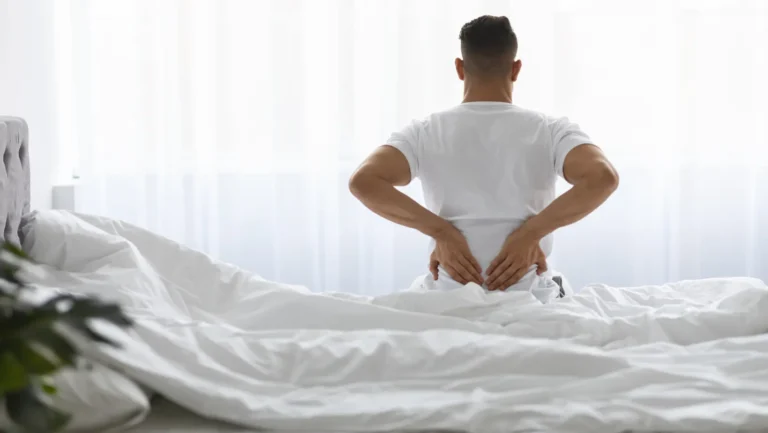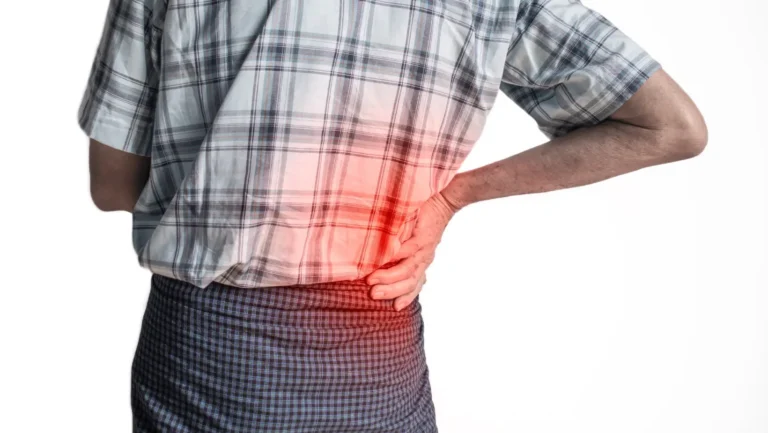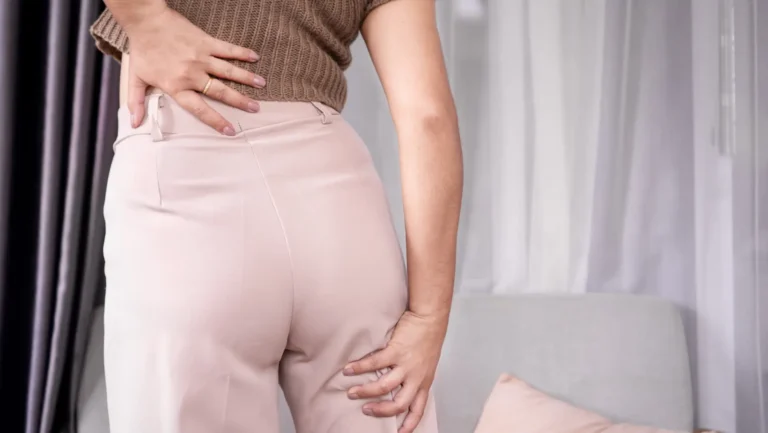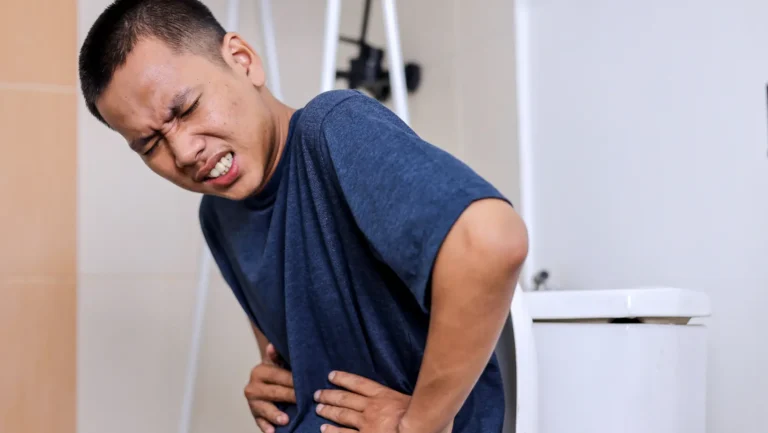

Constipation can cause lower back pain. When stool accumulates in the colon and rectum, it creates measurable pressure against the lumbar spine and surrounding nerves.
The American Gastroenterological Association defines constipation as fewer than three bowel movements per week, affecting roughly 16% of adults in the United States. That backed-up waste does not just cause abdominal discomfort; it physically presses on the structures behind the colon, including the lumbar vertebrae and the sacral nerve roots.
Why Digestive Issues Cause Lower Back Pain
Digestive issues causing lower back pain follow a direct anatomical path. The descending colon and sigmoid colon sit directly in front of the lumbar spine. When stool backs up and the colon expands, it presses into the structures immediately behind it.
Pressure Buildup Inside the Intestines
The colon normally holds about 40 to 60 grams of stool. Severe constipation increases colon content volume enough to create measurable intra-abdominal pressure.
A 2018 study in Colorectal Disease confirmed that patients with chronic constipation showed significantly elevated resting intra-abdominal pressure compared to controls. That pressure transfers to the lumbar discs and sacroiliac joint, which sit immediately behind the colon wall. The result is a dull, pressure-type lower back ache that correlates directly with how full the bowel is.
Straining Affecting Lower Back Muscles
Straining during bowel movements activates the Valsalva maneuver, a sudden spike in intra-abdominal and intrathoracic pressure. Each straining episode spikes lumbar disc pressure at L4-L5 and L5-S1 by an estimated 50 to 80 mmHg above resting levels.
People who strain repeatedly across multiple failed attempts during a single constipation episode load their lumbar discs dozens of times in one sitting. The paraspinal muscles also contract forcefully during straining, accumulating the same tension seen after a heavy lifting session.
Nerve Irritation From Stool Buildup
The sacral nerve plexus runs through the sacrum, directly behind the lower colon and rectum. When hard, impacted stool fills the rectum, it presses against the sacral nerves from the front. This produces referred pain into the lower back, tailbone, and sometimes the upper legs. The irritation mimics sciatica closely enough that many people treat it as a back problem without ever addressing the bowel cause.
Bloating, Constipation, and Lower Back Pain
Bloating, constipation, and lower back pain form a cycle that feeds itself. The gas produced by backed-up fermented stool adds to the mechanical pressure already created by stool volume, amplifying both abdominal and back discomfort simultaneously.
Gas Buildup Increasing Abdominal Pressure
When stool stays in the colon longer than normal, gut bacteria continue fermenting it and producing gas. This trapped gas has nowhere to go. The colon distends further, adding gas volume on top of stool volume.
Intra-abdominal pressure rises with each passing hour. People with irritable bowel syndrome, which frequently involves both constipation and bloating, consistently report simultaneous lower back pain as a secondary symptom in clinical surveys.
Pelvic Discomfort and Spinal Strain
The pelvic floor muscles sit directly beneath the colon and rectum. Chronic constipation causes these muscles to develop a guarded, over-contracted state called pelvic floor hypertonia.
Hypertonic pelvic floor muscles pull on their attachment points at the sacrum and coccyx, creating sustained tension that radiates into the lower lumbar region. Physical therapists who specialize in pelvic health treat this pattern routinely, yet it rarely appears in standard constipation content online.
Feeling of Heaviness and Stiffness
Patients with bloating, constipation and back pain frequently describe a heaviness in the lower back rather than sharp pain. This heaviness reflects the combined weight of retained stool and gas pressing against the posterior abdominal wall.
The lumbar extensors tighten in response to this pressure, adding muscular stiffness on top of the mechanical load.
Hard Stools With Lower Back Discomfort
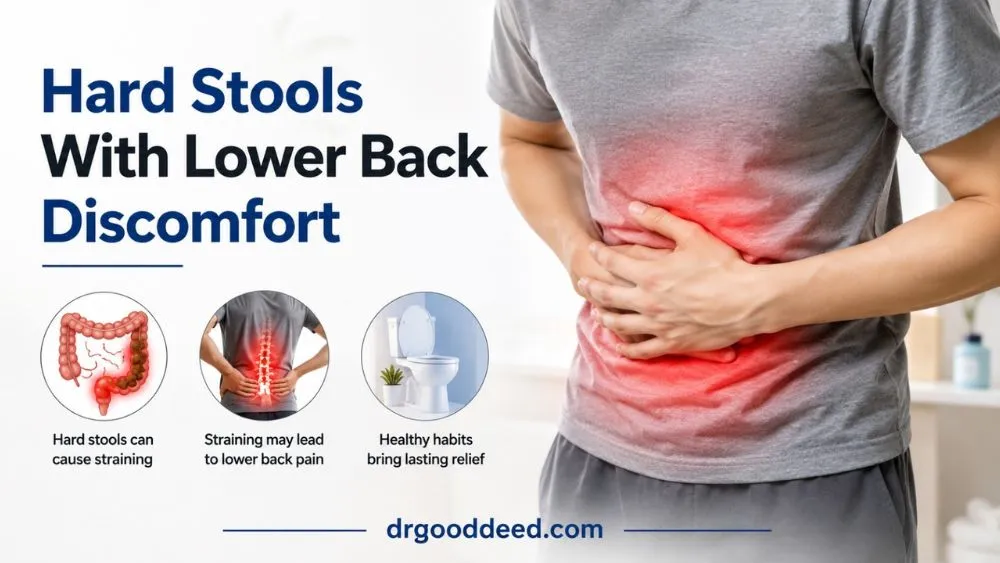
Hard stools with lower back discomfort represent the most acute phase of constipation-related back pain. The harder the stool, the more straining required, and the more mechanical load the lumbar spine absorbs.
Dehydration Causing Stool Hardening
The colon absorbs water from stool as it moves through. When stool moves too slowly, the colon extracts more water than normal, leaving it dry and hard.
Adults who drink fewer than 1.5 liters of water daily show a measurable increase in stool transit time, according to research from the European Journal of Clinical Nutrition. Dehydrated stool also produces more friction against the rectal wall during attempted passage, requiring more straining force and therefore more lumbar load.
Excess Pressure During Bowel Movements
Passing hard stools with lower back discomfort requires generating rectal pressure of up to 80 to 100 cmH2O, compared to 20 to 30 cmH2O for soft stool passage. That additional pressure propagates upward through the abdominal cavity and directly loads the lumbar intervertebral discs.
Repeated over days of constipation, this cumulative disc loading produces the same mechanical effect as multiple heavy lifting sessions without recovery time.
Muscle Tension From Prolonged Straining
Prolonged straining in a seated position creates sustained hip flexor and lumbar paraspinal contraction. People who spend 10 to 20 minutes straining on the toilet hold their lumbar spine in a fixed forward-flexed position under load for that entire duration. This produces muscle fatigue and post-straining soreness in the lower back that persists for hours after the attempt.
Symptoms That Often Occur Together
Constipation can cause lower back pain alongside other predictable symptoms. Recognizing the full symptom cluster helps confirm the gut-spine connection.
Abdominal Bloating and Cramps
Cramping in the lower abdomen, back pain especially on the left side where the sigmoid colon runs, often coincides with lower back aching. The cramping reflects colon wall muscle contractions trying to push stool forward. Those contractions create ripple pressure that travels to adjacent structures including the lumbar spine.
Difficulty Passing Stool
Fewer than three bowel movements per week, stools that require significant straining, and a persistent feeling of incomplete evacuation all confirm functional constipation by Rome IV diagnostic criteria. This clinical standard helps distinguish simple constipation from more serious bowel conditions that require different management.
Pain Worsening After Prolonged Sitting
Sitting compresses both the lumbar discs and the colon simultaneously. People with constipation who sit for more than 2 hours at a time report worsening lower back pain because sitting reduces colonic motility and increases lumbar disc pressure at the same time. Standing and walking after meals directly counteracts both effects.
How to Relieve Constipation and Lower Back Pain
To relieve constipation and lower back pain together, the approach must address bowel function and lumbar muscle tension at the same time. Treating only one side produces incomplete relief.
Increasing Fluid Intake
Drinking 2 to 2.5 liters of water daily softens stool by slowing colonic water reabsorption. Warm water consumed first thing in the morning triggers the gastrocolic reflex, a natural wave of colon contractions that promotes morning bowel movement without straining effort. This alone reduces lumbar disc loading from straining within 24 to 48 hours.
Eating Fiber-Rich Foods
Soluble fiber from oats, psyllium husk, apples, and legumes absorbs water and forms a gel around stool, making it easier to pass. The Academy of Nutrition and Dietetics recommends 25 grams of fiber daily for women and 38 grams for men. Most Americans consume only 15 grams per day. Adding 10 grams of soluble fiber daily produces a statistically significant reduction in constipation frequency within 2 weeks, based on a meta-analysis in Alimentary Pharmacology and Therapeutics.
Gentle Movement and Stretching
Walking for 20 to 30 minutes after meals increases colon motility by 30% compared to sitting post-meal, based on research in Gastroenterology. This reduces stool transit time directly. Simultaneous lumbar stretching releases paraspinal muscle tension from straining, addressing both the bowel and the back in a single activity.
Exercises and Stretches for Constipation Relief
Exercises and stretches for constipation relief that also address lower back pain target both colon motility and lumbar muscle tension simultaneously.
Walking After Meals
A 15 to 20 minute walk after each main meal is the most evidence-supported activity for improving colon transit. The rhythmic core movement during walking activates the colon’s peristaltic contractions while also reducing lumbar muscle guarding from constipation-related strain.
Knee-to-Chest Stretch
Lie on your back and pull both knees toward your chest. Hold for 30 seconds. This position compresses the sigmoid colon gently and stimulates peristalsis while simultaneously decompressing the lumbar facet joints. Done first thing in the morning before getting out of bed, this combines exercises and stretches for constipation relief with lumbar joint mobilization in one movement.
Gentle Spinal Twists and Yoga Poses
Seated or supine spinal twists rotate the colon, massaging its walls and encouraging stool movement. The yoga pose called Pawanmuktasana, or wind-relieving pose, involves lying on the back and pulling one knee toward the opposite shoulder.
This directly compresses the ascending and descending colon sections in sequence, promoting gas and stool transit while releasing sacroiliac joint tension simultaneously.
Foods That Help Improve Digestion
Fruits and Vegetables
Prunes contain sorbitol and dihydroxyphenyl isatin, two compounds that draw water into the colon and directly stimulate bowel contractions. Research from Alimentary Pharmacology and Therapeutics found 100 grams of prunes daily produced better constipation relief than psyllium husk alone. Kiwi fruit contains actinidin, a digestive enzyme shown to improve colonic transit time by 24 hours in clinical trials.
Whole Grains and Fiber Sources
Oat bran, brown rice, and whole wheat bread provide insoluble fiber that adds bulk to stool and reduces transit time. Psyllium husk is the most studied single fiber supplement for constipation, with Level 1 evidence from the American College of Gastroenterology supporting its routine use.
Probiotic-Rich Foods for Gut Health
Lactobacillus casei and Bifidobacterium lactis strains, found in kefir, plain yogurt, and fermented foods like kimchi, increase colonic transit speed. A 2020 meta-analysis in The American Journal of Clinical Nutrition confirmed that probiotic supplementation reduced constipation frequency by 30% and decreased whole-gut transit time by 12 hours on average.
Habits That May Worsen Constipation and Back Pain
Ignoring Bowel Urges
The urge to defecate is a reflex triggered when stool enters the rectum. Ignoring this urge repeatedly causes the rectal walls to stretch and desensitize over time. Eventually, the urge becomes less frequent and weaker. This pattern, called rectal hyposensitivity, is a common cause of chronic constipation in adults who habitually defer bathroom visits.
Excess Processed Foods
Processed foods like white bread, packaged snacks, and fast food contain almost no fiber and high amounts of sodium. Sodium increases colonic water reabsorption, hardening stool. A diet high in ultra-processed foods produces stool transit times 30 to 40% slower than a whole-food diet, based on UK Biobank data published in The Lancet.
Sitting for Long Periods
Prolonged sitting reduces gastric emptying speed and slows colon motility. The combination of reduced movement and sustained lumbar disc compression from sitting makes both constipation and back pain worse together. Getting up and walking for 2 to 3 minutes every 30 minutes counteracts both effects.
When Constipation and Back Pain May Be Serious
Severe Abdominal Swelling
A visibly distended abdomen that feels hard to touch, combined with lower back pain and no bowel movement for more than 5 days, suggests fecal impaction. Fecal impaction requires medical treatment; laxatives alone are often insufficient at this stage.
Fever, Vomiting, or Inability to Pass Stool
Fever alongside constipation and lower back pain suggests possible bowel obstruction, diverticulitis with abscess, or sigmoid volvulus. These require emergency evaluation. Do not attempt home remedies if fever accompanies bowel symptoms.
Sudden Severe Lower Back Pain
Constipation can cause lower back pain severe enough to be an emergency, but sudden severe lower back pain alongside constipation also warrants ruling out aortic aneurysm, which produces exactly this combination. If back pain is sudden, severe, and does not change with position, seek emergency care immediately.
When to See a Doctor
Persistent Constipation Lasting Weeks
Constipation lasting more than 3 weeks despite dietary changes and increased fluid intake warrants physician evaluation. Underlying causes include hypothyroidism, diabetes-related neuropathy, medication side effects, and colorectal structural abnormalities, none of which improve with fiber alone.
Blood in Stool
Blood in the stool alongside constipation and back pain requires colonoscopy to rule out colorectal cancer, rectal polyps, and inflammatory bowel disease. This combination should not be monitored at home beyond a few days.
Unexplained Weight Loss or Severe Pain
Unintentional weight loss of more than 5% of body weight alongside constipation and lower back pain is a red flag for colorectal cancer or another serious gastrointestinal condition. Arrange a physician appointment within days, not weeks.
FAQs
Can trapped gas and bloating increase lower back pressure?
Yes. Trapped gas expands the colon against the posterior abdominal wall, pressing directly onto the lumbar spine. In patients with irritable bowel syndrome, over 60% report simultaneous lower back pain during active bloating episodes, documented across multiple gastroenterology clinical surveys.
Why does constipation sometimes cause pelvic and back discomfort together?
The pelvic floor muscles attach directly to the sacrum and coccyx. Chronic straining causes pelvic floor hypertonia, a sustained over-contracted state. The hypertonic pelvic floor then pulls on sacral and lumbar attachments simultaneously, producing both pelvic pressure and lower back tension during the same constipation episode.
Can dehydration worsen both hard stools and muscle stiffness?
Yes. The colon extracts more water from stool when overall hydration is low, producing harder stool. Dehydration also reduces intervertebral disc fluid content by 10 to 15%, making discs less shock-absorbent. Both effects can worsen constipation and cause lower back pain symptoms at the same time.
How does sitting too long affect digestion and lower back pain?
Sitting for over 2 hours slows colonic peristalsis and simultaneously increases lumbar disc pressure at L4-L5 by 40% compared to standing. Both effects compound without breaks. Getting up and walking for 2 to 3 minutes every 30 minutes reverses both deteriorations measurably.
Is sharp lower back pain normal during severe constipation?
Sharp lower back pain during severe constipation signals sacral nerve compression from an overfull rectum or acute muscle spasm from repeated straining. It is not typical mechanical back pain. If the sharp pain persists beyond 24 hours after achieving bowel relief, medical evaluation is warranted.
What sleeping position helps ease constipation-related back pain?
Sleep on the left side. The descending colon and sigmoid colon run down the left side of the abdomen, so left-side lying uses gravity to move stool toward the rectum. Add a pillow between the knees to reduce the sacroiliac joint tension that constipation consistently worsens overnight.
Can stress slow bowel movements and worsen back tension?
Yes. The gut-brain axis connects the central nervous system directly to the enteric nervous system in the colon wall. Chronic stress activates the sympathetic nervous system, which slows colonic peristalsis and simultaneously tightens paraspinal muscles. Both effects worsen simultaneously under sustained psychological stress.
How quickly can fiber and hydration improve constipation symptoms?
Psyllium husk produces measurable stool softening within 12 to 24 hours of the first dose when taken with 250 ml of water. Increased hydration reduces stool hardness within 24 hours. Full bowel regularity through combined fiber and fluid changes typically improves within 3 to 7 days of consistent use.
Are probiotics useful for preventing constipation-related digestive issues?
Yes. Bifidobacterium lactis and Lactobacillus casei strains specifically improve colonic transit time. The 2020 American Journal of Clinical Nutrition meta-analysis confirmed a 30% reduction in constipation frequency and a 12-hour improvement in whole-gut transit time with regular probiotic use across clinical trials.
When should constipation and lower back pain become a medical concern?
Seek medical evaluation if constipation exceeds 3 weeks despite dietary changes, if blood appears in stool, if fever accompanies bowel symptoms, or if lower back pain is severe and sudden. Any combination of constipation with unintentional weight loss requires physician evaluation within days.