

The health benefits of sweet potatoes matter because they provide fiber, slow-release carbs, and beta-carotene in one cheap food. In the USA, they fit baked meals, lunch bowls, and easy side dishes. This guide covers nutrition, digestion, antioxidants, cooking, recipes, mistakes, and common questions.
Sweet potatoes are a strong food choice when eaten in normal portions. The biggest gains come from simple cooking and regular use.
Nutritional Value of Sweet Potatoes
The health benefits of sweet potatoes start with a mix of fiber, complex carbs, and vitamins. One medium baked sweet potato gives steady energy without a sugar-heavy spike. It also gives vitamin A, potassium, vitamin C, and plant compounds that support daily eating.
| Nutrient, 1 medium baked sweet potato | Approximate amount | Why it matters |
| Calories | 100 to 110 | Fits many meals |
| Carbs | 23 to 27 g | Main energy source |
| Fiber | 3 to 4 g | Helps fullness and bowel movement |
| Vitamin A | More than daily need | Supports eyes and immune defense |
| Vitamin C | Small to moderate amount | Helps normal tissue repair |
| Potassium | Good amount | Supports muscle and fluid balance |
| Manganese | Present | Helps the body use food energy |
Fiber and complex carbohydrates
The fiber and starch in sweet potatoes break down slowly. That is why sweet potato nutrition includes steadier energy than candy or white sweets. Fiber also helps meals feel complete.
Vitamins and minerals in sweet potatoes
Sweet potatoes give beta carotene, which the body turns into vitamin A. They also give potassium, vitamin C, and manganese. These nutrients support skin, nerves, immunity, and energy use.
Antioxidants in sweet potatoes
Orange, purple, and white sweet potatoes all contain protective plant compounds. The orange type has more beta carotene. Purple types add anthocyanins, which give dark color and extra plant value. That is one reason health benefits of sweet potatoes stand out in simple meals.
Benefits of Eating Sweet Potatoes Daily
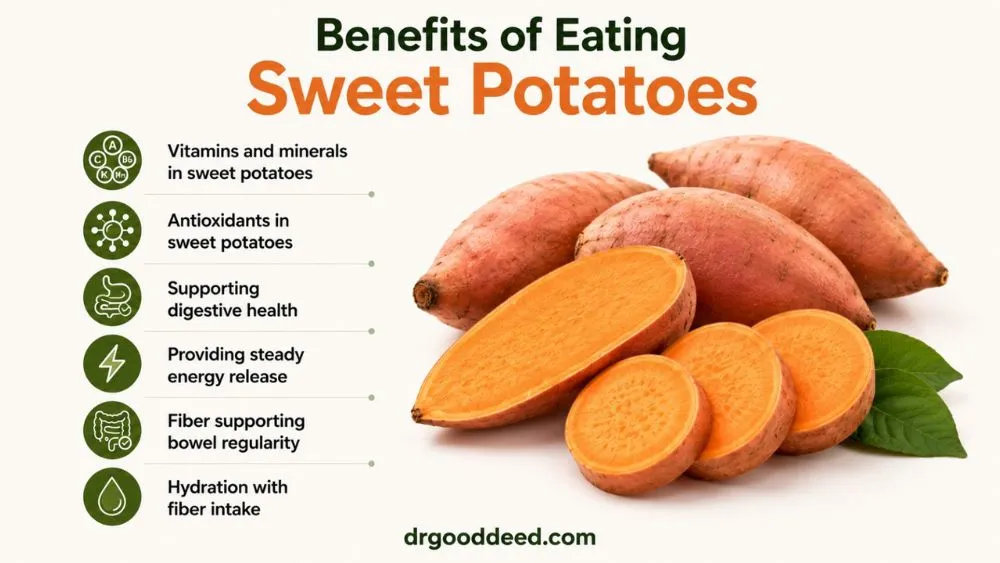
Sweet potatoes work best when the portion stays moderate and the cooking stays plain. Sweet potatoes work well instead of fries, chips, or heavy starch sides. They bring fiber, color, and steady fuel.
Supporting digestive health
Daily use can help bowel habits stay regular. Fiber supports smoother stool movement. Pair them with water, vegetables, and other high-fiber foods for the best effect.
Providing steady energy release
Sweet potato carbs digest more slowly than sugar drinks or sweets. That makes the benefits of eating sweet potatoes daily are useful for school, work, and exercise days. The energy lasts longer than fast snack food.
Helping improve fullness and appetite control
Fiber adds bulk. Bulk helps the stomach feel full. Health benefits of sweet potatoes often include fewer snack cravings later in the day, especially when the meal also has protein such as eggs, beans, fish, or chicken.
Sweet Potatoes for Digestion
Sweet potatoes for digestion work because fiber supports stool movement and feeds helpful gut bacteria. People who eat low-fiber diets often notice the biggest change. The skin helps too, since it adds extra roughage.
Fiber supporting bowel regularity
A medium potato can add a useful fiber boost. The health benefits of sweet potatoes for the gut are strongest when the potato is baked with the skin on. That helps the digestive tract move food more smoothly.
Gut microbiome support
Fiber feeds good bacteria in the large intestine. Sweet potatoes for digestion matter here because a healthier bacterial mix supports normal bowel patterns. That does not happen overnight. It works best with regular fiber intake.
Importance of hydration with fiber intake
Fiber needs water to move well. Without enough fluid, stools can get harder. Sweet potatoes for digestion work better when meals include water, soup, tea, or other watery foods.
Antioxidants in Sweet Potatoes
Antioxidants in sweet potatoes help protect cells from daily wear. The best known ones are beta carotene, anthocyanins, and vitamin C. Color matters, because orange and purple sweet potatoes bring different plant compounds.
- Orange sweet potatoes are rich in beta carotene.
- Purple sweet potatoes contain anthocyanins.
- These compounds support normal cell protection.
- Skin-on cooking keeps more fiber in the meal.
- The health benefits of sweet potatoes improve when sugar toppings stay out.
- These compounds fit best in plain baked, roasted, or steamed dishes.
Best Ways to Cook Sweet Potatoes Healthily
The best ways to cook sweet potatoes healthily keep nutrients, taste, and fiber without extra sugar. Baking, steaming, and roasting work best for most homes. These methods also keep the food easy to mix with protein and vegetables.
Baking and steaming methods
Baking brings out natural sweetness. Steaming keeps the texture soft and uses no oil. Both support steady energy because they avoid heavy breading and deep frying.
Avoiding excessive frying and sugar additions
Sweet potato fries can still be high in oil. Candy-style toppings add fast sugar. These simple methods avoid marshmallows, syrup, and deep frying.
Retaining nutrients during cooking
Cook with the skin when possible. Keep pieces large instead of tiny. This helps limit nutrient loss and keeps texture better. The best ways to cook sweet potatoes healthily also means stopping cooking when the potato turns soft, not watery.
Sweet Potato Recipes for Healthy Diet
Sweet potato recipes for healthy diet should stay simple, filling, and low in added sugar. Good recipes use beans, eggs, chicken, fish, yogurt, greens, or herbs. That turns the potato into a full meal food.
Roasted sweet potato bowls
Roast cubes with olive oil, salt, and pepper. Add black beans, spinach, and chicken or tofu. Sweet potato recipes for healthy diet like this give fiber, protein, and color in one bowl.
Mashed sweet potatoes with herbs
Mash cooked sweet potatoes with garlic, parsley, and a small amount of milk or olive oil. Skip sugar. That keeps the health benefits of sweet potatoes while making a soft side dish for adults and children.
Sweet potato salads and soups
Use roasted chunks in salads or broth-based soup with lentils. These sweet potato recipes for healthy diet work for lunch, dinner, and meal prep. They also hold well in the fridge.
Common Mistakes People Make With Sweet Potatoes
Health value can drop fast when the food turns into dessert. Too much sugar, heavy frying, and oversized servings change the nutrition picture. The vegetable stays useful, but the meal gets less healthy.
Adding excessive sugar or syrups
Sweet potatoes already taste sweet. Brown sugar, syrup, and honey add extra calories and raise the sugar load. That weakens the health benefits of sweet potatoes without adding much real nutrition.
Deep frying sweet potatoes frequently
Deep frying adds oil fast. Fries and chips can turn a healthy food into a high-calorie snack. For many people, this cuts into the value of health benefits of sweet potatoes.
Oversized portions affecting calorie intake
One medium sweet potato fits most meals. Three large ones do not. Big portions can push calories too high, even when the food itself is healthy.
FAQs
Are sweet potatoes healthier than regular potatoes?
Yes, for many meals. The health benefits of sweet potatoes include more beta carotene and more vitamin A support. Regular potatoes still fit a healthy diet, but sweet potatoes give more color and plant compounds.
Can sweet potatoes help improve digestion naturally?
Yes. Sweet potatoes for digestion work because fiber helps stool move and supports gut bacteria. The skin adds extra fiber, so baked potatoes with skin help most.
Why are antioxidants in sweet potatoes important for health?
Antioxidants in sweet potatoes help protect cells from damage and support normal repair. Orange types give beta carotene, and purple types give anthocyanins. Both add useful plant compounds.
Do sweet potatoes raise blood sugar quickly?
No, not usually when baked or steamed plain. Fiber slows digestion. Big portions, frying, or sweet toppings raise blood sugar faster than plain cooked sweet potatoes.
What is the healthiest way to cook sweet potatoes?
Baking, steaming, and roasting are the best picks. The best ways to cook sweet potatoes healthily keep the skin on, use little oil, and skip sugary toppings.
Can sweet potatoes support weight management goals?
Yes. The benefits of eating sweet potatoes daily include fullness and better portion control. They work best when they replace fries, chips, or creamy side dishes.
How often can sweet potatoes be eaten safely?
Most healthy adults can eat them several times each week. Daily use also works when portions stay moderate, and meals stay balanced with protein and vegetables.
Are sweet potatoes good for skin and immune health?
Yes. Beta carotene helps the body make vitamin A, which supports skin and immune defense. Vitamin C adds support for normal tissue repair.
What foods pair well with sweet potatoes in balanced meals?
Protein and greens fit best. Try beans, eggs, chicken, fish, kale, broccoli, lentils, or yogurt. These foods balance the carbs and help the meal stay filling.
Can eating too many sweet potatoes cause digestive discomfort?
Yes. Too much fiber can cause gas, bloating, or loose stool. Start with smaller servings and drink enough water if the diet is low in fiber.