

Yes, irritable bowel syndrome can trigger nausea. The National Institute of Diabetes and Digestive and Kidney Diseases (NIDDK) lists nausea as a recognized symptom linked to IBS flares, especially with IBS-D (diarrhea-predominant) or IBS-M (mixed type). IBS affects roughly 10% to 15% of adults in the United States, according to the American College of Gastroenterology.
Nausea from IBS often shows up with stomach cramps, bloating, and bowel changes. It worsens after trigger foods, during stress, or before a bathroom episode. This guide covers causes, symptoms, food choices, and relief options .
Why IBS May Cause Nausea
Irritable bowel syndrome can trigger nausea through the gut-brain connection. IBS disrupts gut movement, nerve signaling, and stomach emptying, all of which trigger that queasy feeling. Five mechanisms explain how this happens.
Abnormal Gut Motility
Your intestines move food using muscle contractions called peristalsis. In IBS, these contractions speed up, slow down, or turn irregular. When the gut squeezes too hard, it sends signals to the brain’s vomiting center. Irritable bowel syndrome can trigger nausea through irregular gut movement.
Increased Intestinal Sensitivity
People with IBS often have visceral hypersensitivity. Nerve endings in the gut react more strongly to normal gas, stretching, or food movement. A 2024 review at IBS Days, featuring researchers from Vall d’Hebron University Hospital in Spain, found immune cells called eosinophils sit close to nerve endings in the gut lining and may amplify pain and nausea signals.
Gut-Brain Axis Dysfunction
The gut and brain connect through the vagus nerve, running from the brainstem to the digestive tract. Research published in Frontiers in Medicine in 2024 calls this the microbiota-gut-brain axis. When this line gets disrupted, the brain misreads normal digestion as a threat and triggers nausea as protection.
Stress and Anxiety Effects on Digestion
Stress hormones like cortisol slow stomach emptying and raise gut sensitivity at once. A study from McMaster University researchers, presented at IBS Days 2024, showed gut bacteria changes during stress alter brain nerve signaling, explaining why anxiety and IBS symptoms often appear together.
Delayed Stomach Emptying
Some people with IBS, particularly the constipation-predominant type, experience slower stomach emptying. Food sits longer than it should, causing a full, queasy feeling after meals. This delay is a reason IBS nausea after eating is common, especially with large or fatty meals.
Stomach Cramps and Nausea IBS Symptoms
Stomach cramps and nausea IBS symptoms appear together because both come from the same source: an overactive, oversensitive gut. Cramping happens when intestinal muscles contract abnormally, and that contraction can trigger nausea through nerve signals to the brain. Here’s how each symptom connects.
Abdominal Pain and Cramping
Cramping in IBS often comes in waves. These cramps stretch and squeeze the intestinal walls, activating nerve receptors that also connect to the brainstem’s nausea center. Many people feel pain and nausea hit at the same time, usually in the lower or middle belly.
Bloating and Gas
Trapped gas stretches the intestines outward. This stretching presses on nearby organs, including the stomach, creating pressure-related nausea. Bloating builds through the day and often peaks in the evening.
Constipation and Nausea
When stool backs up in the colon, it slows everything above it, including stomach emptying. This backup lets toxins and gas build up, leading to nausea. Does constipation-predominant IBS cause nausea more than other types? Often, yes, because the slowdown affects the whole digestive tract, not just the colon .
Diarrhea and Nausea
In IBS-D, the gut moves too fast. Rapid contractions and fluid shifts overstimulate the vagus nerve, which connects straight to the nausea center. Many people feel nauseous right before or during a diarrhea episode.
Loss of Appetite During Flare-Ups
During a flare, nausea suppresses hunger. The body’s response to feeling sick is to stop wanting food, leading to skipped meals and, oddly, more stomach acid buildup that worsens nausea.
Symptoms That May Accompany IBS Nausea
IBS nausea rarely shows up alone. Irritable bowel syndrome can trigger nausea with other symptoms too, and spotting the full pattern helps separate IBS-related nausea from food poisoning, gallbladder disease, or acid reflux. The table below shows common companions.
| Symptom | How Often It Pairs With Nausea | What It Feels Like |
| Bloating | Very common | Tight, swollen abdomen, especially after meals |
| Abdominal cramping | Very common | Wave-like pain, often relieved by passing gas or stool |
| Diarrhea or constipation | Common | Alternating or one dominant pattern |
| Fatigue | Common | Tiredness during flare-ups, often from poor sleep or pain |
| Headaches | Sometimes | Linked to gut-brain axis disruption |
| Heartburn-like discomfort | Sometimes | Burning sensation in the chest or throat |
| Loss of appetite | Common during flares | Reduced interest in food, early fullness |
Common Triggers of IBS-Related Nausea
Identifying triggers falls into four groups: food, stress, hormones, and medications. A 2024 systematic review on attention and brain-gut interactions in IBS found anxiety and depression affect up to one-third of IBS patients, making psychological triggers as important as dietary ones.
- High-fat meals: Fat slows stomach emptying, increasing the chance of nausea.
- Caffeine and alcohol: Both irritate the stomach lining and speed up gut contractions.
- Large meals: Overfilling the stomach triggers stretch receptors linked to nausea.
- Hormonal shifts: Many women report worse IBS nausea during menstruation, tied to changes in serotonin and prostaglandin levels.
- Acute stress: Job pressure, travel, or emotional conflict can trigger same-day flares.
- Certain medications: Iron supplements, some antibiotics, and NSAIDs can worsen gut irritation.
- Skipping meals: Long gaps between meals let stomach acid build up, which can trigger nausea once you do eat.
Foods to Eat When IBS Causes Nausea
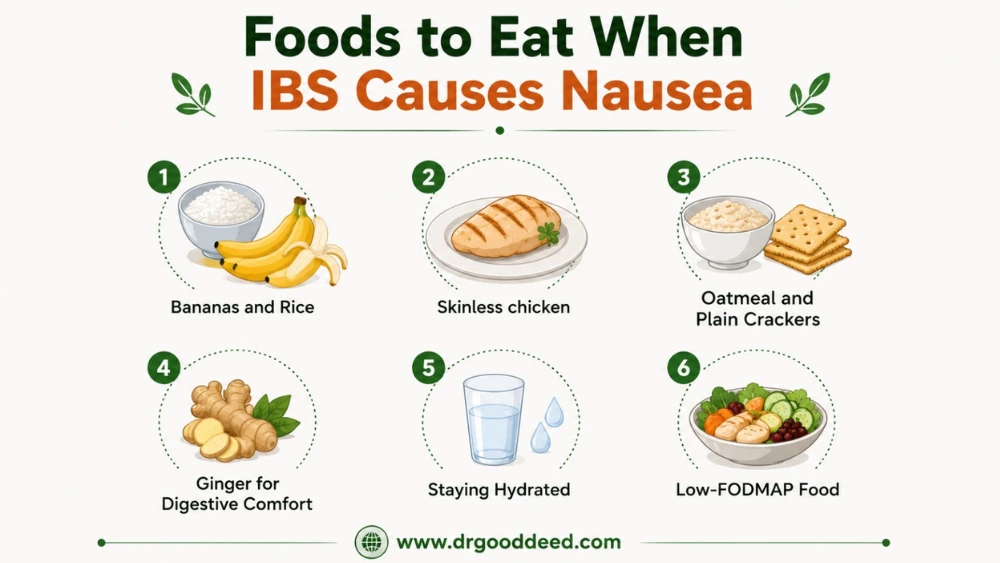
Foods to eat when IBS causes nausea should be gentle, low in fat, and easy for a sensitive gut to break down. During a flare, give the digestive system the smallest workload while still getting some nutrition and fluids. Choosing the right foods to eat when IBS causes nausea early often shortens how long the flare lasts.
Bland, Easy-to-Digest Foods
Plain, simple foods cut the digestive workload. Skinless chicken, white rice, and steamed vegetables without heavy seasoning work as starting points. These foods move through the gut predictably, calming an irritated system.
Low-FODMAP Food Choices
FODMAPs are carbohydrates that ferment in the gut and produce gas. Monash University, which developed the original low-FODMAP research, found around 70% of IBS patients respond well to this diet. Low-FODMAP picks include carrots, spinach, grapes, and lactose-free dairy.
Bananas and Rice
Both are low in FODMAPs and gentle on the stomach. Bananas provide potassium, useful if nausea caused some fluid loss. Rice digests easily and rarely adds extra gas.
Oatmeal and Plain Crackers
Plain oats made with water, not milk if lactose is a trigger, provide soluble fiber that regulates bowel movements without overloading the gut. Plain crackers settle the stomach between meals, especially in the morning.
Ginger for Digestive Comfort
Ginger has long eased nausea, and research backs this for general nausea relief. A small amount of fresh ginger tea or ginger chews calms stomach muscles and reduces the urge to vomit during a flare.
Staying Hydrated
Water, herbal teas like peppermint or chamomile, and oral rehydration solutions replace fluids, especially if diarrhea is part of the flare. Sipping slowly works better than gulping, which can worsen nausea.
Foods That May Worsen IBS Nausea
Irritable bowel syndrome can trigger nausea that gets worse from specific foods. Some foods irritate the gut lining, speed up fermentation, or slow digestion too much. Avoiding these during a flare shortens how long nausea lasts.
Greasy and Fried Foods
Fried foods take longer to digest and slow stomach emptying. This delay raises stomach pressure, a direct path to nausea, often within one to two hours after eating.
Highly Processed Foods
Processed snacks often mix high-fat ingredients, artificial additives, and preservatives that irritate a sensitive gut lining. They also run low in fiber, which worsens constipation-related nausea.
Carbonated Beverages
Soda and sparkling water push gas straight into the stomach. For someone already dealing with bloating, this extra gas adds pressure that triggers nausea within minutes.
Artificial Sweeteners
Sorbitol, mannitol, and xylitol, common in sugar-free gum and candy, absorb poorly and ferment fast in the gut. This fermentation produces gas and pulls water into the intestines, worsening diarrhea and nausea.
Trigger Foods Unique to the Individual
Not every trigger is universal. Some people react badly to garlic and onions; others tolerate those fine but react to dairy or wheat. A food and symptom diary for two to three weeks reveals personal triggers that generic lists miss.
How to Relieve Nausea Caused by IBS
How to relieve nausea caused by IBS comes down to catching it early and calming both gut and nerves at once. The steps below mix diet, behavior, and medical approaches doctors commonly suggest.
Identifying and Avoiding Triggers
Tracking meals, stress levels, and symptoms in a notebook or app for a few weeks reveals patterns. Once a trigger is confirmed, removing it for two to four weeks usually drops nausea frequency noticeably.
Following a Low-FODMAP Diet
A structured low-FODMAP plan, ideally guided by a registered dietitian, runs through elimination, reintroduction, and personalization. A 2024 randomized trial in Gastroenterology used a blinded reintroduction phase to pinpoint specific FODMAP triggers for each patient, beating a permanent restrictive diet.
Eating Smaller Meals
Smaller, more frequent meals reduce stomach wall stretch and lower the chance of nausea-related nerve signals firing. Five small meals often beat three large ones during a flare.
Stress Management Techniques
The gut-brain connection runs both ways, so calming the nervous system calms the gut too. Deep breathing, short walks, and gut-directed hypnotherapy show benefit in clinical studies for reducing IBS symptom severity, including nausea.
Staying Hydrated
Dehydration worsens nausea and can make diarrhea-related fluid loss worse. Small, frequent sips of water or electrolyte drinks beat large gulps when the stomach feels unsettled.
Using Medications When Appropriate
Over-the-counter antacids can help if acid reflux contributes to nausea. Antiemetics, anti-spasmodics, and prescription IBS medications should only be used under a doctor’s guidance, since the right choice depends on whether IBS-D, IBS-C, or IBS-M is the underlying pattern.
Treatment Options for IBS and Nausea
Long-term management of IBS causing nausea symptoms usually combines several approaches rather than relying on one fix. Gastroenterologists typically build a plan around diet, medication, gut health support, and mental health care, adjusted to each person’s symptom pattern.
Dietary Therapy
Beyond low-FODMAP, some patients benefit from soluble fiber supplements like psyllium, which can ease both constipation and the bloating that contributes to nausea. A dietitian can tailor fiber type and amount based on whether constipation or diarrhea dominates.
Medications for IBS Symptoms
Doctors may prescribe antispasmodics to reduce cramping, which indirectly reduces nausea triggered by muscle contractions. For IBS-C, medications like linaclotide can help; for IBS-D, options like rifaximin or eluxadoline may be considered. These require a prescription and medical supervision.
Probiotics and Gut Health
Certain probiotic strains, particularly Bifidobacterium infantis, have shown modest benefits for overall IBS symptom scores in clinical research. Probiotics work by shifting gut bacteria balance, which may reduce the inflammation that contributes to nausea.
Psychological Therapies
Cognitive behavioral therapy (CBT) and gut-directed hypnotherapy have strong evidence behind them for IBS. Because stress directly worsens gut motility and sensitivity, addressing the brain side of the gut-brain axis often reduces nausea frequency significantly.
Personalized Symptom Management Plans
Working with a gastroenterologist to build a written plan, covering diet, medication timing, stress triggers, and a step-by-step response for flare days, helps patients act fast instead of guessing during a bad episode.
How Maria Found Relief From IBS-Related Nausea
Name changed to protect privacy.
Maria, a 34-year-old office worker from Ohio, struggled with morning nausea and stomach cramps for nearly two years before getting an IBS-D diagnosis. Her gastroenterologist started her on a structured low-FODMAP elimination plan with a registered dietitian, alongside a short course of an antispasmodic for cramping.
Within six weeks, Maria’s nausea episodes dropped from almost daily to about twice a month, mostly during high-stress workweeks. She also started gut-directed hypnotherapy sessions, which she credits with helping her recognize stress-triggered flares before they escalated. Her case reflects a common pattern: combining dietary changes with stress management tools tends to outperform either approach alone.
Preventing IBS Flare-Ups and Nausea
Preventing IBS-related nausea in the long term means building consistent habits around meals, sleep, stress, and movement. For people across the United States managing IBS-D, IBS-C, or IBS-M, small daily routines often matter more than any single dietary rule.
- Eat meals at consistent times each day to support steady stomach emptying.
- Limit alcohol and caffeine, especially on an empty stomach.
- Build in short daily stress relief, even five to ten minutes of breathing exercises.
- Avoid lying down immediately after eating; wait at least 30 minutes.
- Keep a rotating list of “safe foods” for flare days so decisions are easy when nauseous.
- Get regular movement, like a daily walk, which supports healthy gut motility.
- Track sleep, since poor sleep is linked to higher next-day IBS symptom severity.
FAQs
1. Can IBS cause nausea every day?
Yes, daily nausea can happen during active flare periods, especially with IBS-D. If nausea occurs every day for more than two weeks, see a doctor to rule out other causes like gallbladder issues or acid reflux.
2. Does irritable bowel syndrome cause nausea after eating?
Yes. IBS nausea after eating typically starts 30 minutes to 2 hours after meals, especially high-fat or high-FODMAP meals, due to delayed stomach emptying and gut stretching.
3. Why does IBS make me feel nauseous?
Nerve signals from an oversensitive, irregularly contracting gut travel through the vagus nerve to the brain’s nausea center. Stress hormones amplify this signal, making nausea worse during flares.
4. Is nausea a common symptom of IBS?
Yes. Nausea is listed by the NIDDK as a recognized symptom associated with IBS, particularly in IBS-D and IBS-M subtypes, though it is less universal than abdominal pain or bloating .
5. What foods should I eat when IBS causes nausea?
Plain rice, bananas, oatmeal made with water, skinless chicken, and ginger tea. These are low-FODMAP, low-fat, and gentle on an irritated gut lining.
6. What foods can worsen IBS-related nausea?
Fried foods, carbonated drinks, sugar-free gum with sorbitol, and large fatty meals. These increase gas, slow digestion, or irritate the gut lining directly.
7. Can stomach cramps and nausea occur together with IBS?
Yes. Intestinal muscle contractions that cause cramping also stimulate nerve pathways linked to nausea, so both symptoms commonly appear within the same flare episode.
8. How can I relieve nausea caused by IBS naturally?
Sip ginger tea, eat small bland meals, stay hydrated with water or electrolyte drinks, and use slow breathing to calm gut-brain signaling during a flare.
9. Can stress trigger IBS nausea?
Yes. Stress hormones slow stomach emptying and increase gut sensitivity simultaneously, which is why anxious periods often line up with worse nausea.
10. Does constipation-predominant IBS cause nausea?
Yes. Backed-up stool slows the entire digestive tract, including stomach emptying, which can cause pressure-related nausea even before a bowel movement occurs.
Sources
- NIDDK: Symptoms and Causes of IBS
- American College of Gastroenterology: IBS Clinical Guidelines
- Monash University FODMAP Research
- Gastroenterology: Blinded Reintroduction Phase for Low FODMAP Diet (2024)
- Frontiers in Medicine: Gut Microbiota and IBS (2024)
- Gut Microbiota for Health: IBS Days 2024 Highlights