
Losing weight with IBS starts with managing symptoms first, then building a calorie deficit around foods the gut can tolerate. Irritable bowel syndrome affects roughly 10% to 15% of adults in the United States, according to the American College of Gastroenterology, and overweight or obesity is common among people with this condition.
A 2025 study from Lund University, published in Nutrients, found that dietary changes aimed at IBS symptoms also reduced weight and improved lipid levels in patients. This guide covers diet, food choices, symptom management, exercise, and common mistakes.
How IBS Affects Weight Management
Losing weight with IBS gets harder when symptoms themselves drive eating patterns, not hunger or appetite. Bloating, pain, and unpredictable bowel habits push many people toward restrictive eating, comfort food binges, or skipped meals, all of which work against steady weight loss. The sections below explain the four biggest ways IBS interferes with weight control.
Food Avoidance and Nutritional Gaps
People with IBS often cut out entire food groups after a bad flare, sometimes without medical guidance. Dairy, gluten, and high-fiber vegetables get dropped first. This can lead to low intake of calcium, iron, and fiber, nutrients that support metabolism and keep hunger in check.
IBS Symptoms That Influence Eating Habits
Bloating and cramping after meals teach the brain to associate eating with discomfort. Some people respond by eating less overall, which can backfire into nutrient deficiencies. Others swing the other way, grazing on “safe” processed snacks that are easy on the gut but high in calories. For IBS-D, the best weight loss tips for IBS diarrhea address this grazing pattern directly with structured small meals.
Stress, Digestion, and Weight Changes
Cortisol, the body’s main stress hormone, increases appetite and promotes fat storage around the abdomen. A 2022 systematic review on physical activity and cortisol found that chronic stress changes both eating behavior and fat distribution, a pattern common in IBS patients who also report higher anxiety levels. Basic exercise tips for people with IBS that lower stress, like short daily walks, address this hormone link directly.
Gut Health and Metabolism
The gut microbiome plays a role in how the body extracts and stores energy from food. Research from a 2024 study published in Nutrients found that aerobic exercise increased beneficial bacteria like Lactobacillus and Bifidobacterium in IBS patients, bacteria linked to better metabolic regulation and reduced inflammation.
Best Diet for IBS and Weight Loss
The best diet for IBS and weight loss combines a low-FODMAP framework with a moderate calorie deficit, built around whole foods the individual already tolerates well.
Rather than starting two diets at once, most gastroenterologists recommend stabilizing symptoms first, then layering in portion control. This avoids the trap of restrictive eating that worsens both IBS and weight outcomes.
Principles of an IBS-Friendly Weight Loss Diet
- Eat at consistent times each day to support steady digestion.
- Prioritize whole foods over ultra-processed options.
- Identify personal trigger foods before cutting calories.
- Avoid extreme restriction, which can trigger binge cycles.
- Work with a dietitian familiar with both IBS and weight management.
These principles form the foundation of any best diet for IBS and weight loss, regardless of which specific eating pattern someone chooses.
Creating a Sustainable Calorie Deficit
A moderate deficit of 300 to 500 calories per day supports gradual weight loss without the metabolic stress that comes from crash dieting. For IBS patients, smaller deficits matter more because very low-calorie diets can worsen constipation and slow gut motility further. This step is central to losing weight with IBS safely over time.
Choosing Nutrient-Dense Foods
Nutrient-dense foods deliver vitamins, minerals, and protein per calorie, which helps control hunger during a deficit. Examples include eggs, fish, Greek yogurt (lactose-free if needed), and leafy greens. These foods also tend to be lower on the FODMAP scale in appropriate portions, which supports managing IBS symptoms while dieting without extra meal prep stress.
Balancing Protein, Fiber, and Healthy Fats
Protein supports muscle retention during weight loss and keeps hunger steady. Soluble fiber, found in oats and carrots, helps regulate bowel movements without the gas-producing fermentation seen with some insoluble fibers. Healthy fats like olive oil and avocado in moderate amounts support satiety without overloading digestion.
Low FODMAP Foods for Weight Loss
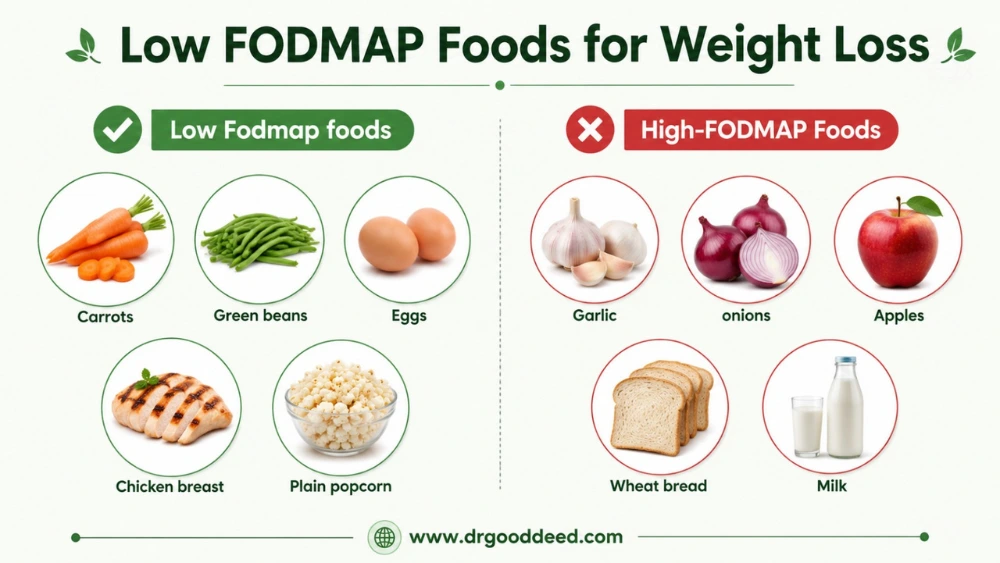
Low FODMAP foods for weight loss work because they reduce bloating and gas while still providing the nutrients needed for a calorie deficit. A 2021 meta-analysis published in Frontiers in Nutrition found that a low-FODMAP diet improved IBS symptoms and was linked to reductions in body mass index across multiple randomized trials. The categories below cover the most useful low-FODMAP picks for weight loss.
Low-FODMAP Vegetables
- Carrots
- Spinach
- Zucchini
- Bell peppers
- Cucumber
- Green beans
Low-FODMAP Fruits
- Strawberries
- Blueberries
- Grapes
- Oranges
- Kiwi
- Unripe bananas
Lean Protein Sources
- Chicken breast
- Turkey
- Eggs
- Firm tofu
- White fish like cod or tilapia
- Shrimp
Healthy Low-FODMAP Snacks
- Rice cakes with peanut butter
- A small handful of walnuts or pumpkin seeds
- Lactose-free yogurt with strawberries
- Hard-boiled eggs
- Plain popcorn
These snacks make it easier to stick with low FODMAP foods for weight loss between meals without triggering bloating.
Common High-FODMAP Foods to Limit
- Garlic and onions
- Wheat-based bread and pasta
- Beans and lentils
- Apples, pears, and watermelon
- Milk and soft cheeses
Limiting these foods is one of the most practical answers to losing weight with IBS, since they often add both calories and gas at the same time.
Managing IBS Symptoms While Dieting
Managing IBS symptoms while dieting in the United States means adjusting meal timing, portion sizes, and food prep methods so weight loss efforts don’t trigger flares. Sudden dietary changes, especially adding too much fiber too fast, are one of the most common reasons people give up on how to lose weight with IBS plans within the first two weeks.
- Increase fiber gradually over two to three weeks, not all at once.
- Cook vegetables instead of eating them raw if raw versions cause gas.
- Avoid combining multiple new foods in one meal during the early adjustment phase.
- Keep a symptom and food log to catch patterns early.
- Stay hydrated, since fiber without enough water worsens constipation.
- Limit caffeine and alcohol, both common gut irritants during a diet change.
For IBS-D specifically, weight loss tips for IBS diarrhea often start with smaller meal portions and soluble fiber sources like oats, which slow gut transit without adding excess calories.
Weight Loss Strategies for IBS Constipation
Weight loss strategies for IBS constipation in the United States focus on increasing soluble fiber, fluid intake, and movement without overloading the gut with insoluble fiber too quickly.
Constipation-predominant IBS (IBS-C) can make calorie-restricted diets feel worse if fiber and water intake don’t increase together.
- Add psyllium husk slowly, starting with one teaspoon daily.
- Drink at least 8 cups of water daily, more if increasing fiber.
- Walk for 20 to 30 minutes after meals to support gut motility.
- Include healthy fats like olive oil, which can ease stool passage.
- Avoid skipping meals, since irregular eating worsens IBS-C.
- Consider magnesium-rich foods like spinach and pumpkin seeds, which support bowel regularity.
Walking after meals is one of the simplest exercise tips for people with IBS dealing with constipation, since movement directly stimulates intestinal contractions.
Foods That Support Weight Loss Without Triggering IBS
Certain food categories consistently support both calorie control and gut comfort. Choosing from these groups removes much of the guesswork involved in losing weight with IBS without constant trial and error.
Lean Proteins
Chicken, turkey, eggs, and firm tofu provide high protein per calorie with minimal fermentable carbohydrates. These foods digest predictably, support muscle mass during a deficit, and rank among the most reliable low FODMAP foods for weight loss.
Low-FODMAP Vegetables
Carrots, zucchini, spinach, and bell peppers add volume and nutrients to meals without triggering excess gas production. Cooking these vegetables can make them even easier to digest for sensitive stomachs.
Low-Sugar Fruits
Berries, kiwi, and oranges provide fiber and vitamins with less sugar than tropical fruits like mango or watermelon, which are also higher in FODMAPs.
Whole Grains That Are Well Tolerated
Oats, quinoa, and rice are generally low-FODMAP in standard portions and provide steady energy. Wheat-based grains are more likely to cause symptoms in people sensitive to fructans.
Healthy Fats in Moderation
Olive oil, walnuts, and avocado in small portions support satiety and hormone balance. Large portions of any fat, even healthy fat, can slow digestion and worsen bloating.
Foods That May Make Weight Loss and IBS More Difficult
Certain foods work against losing weight with IBS goals entirely because some foods add calories while increasing gas, bloating, or irregular bowel movements at the same time. Limiting these categories often produces faster symptom relief than any single dietary rule.
Highly Processed Foods
Packaged snacks combine refined carbohydrates, added sugars, and preservatives. These ingredients add calories quickly while offering little fiber or protein to support fullness.
Sugary Snacks and Beverages
Sugary drinks contribute empty calories and can feed gas-producing bacteria in the gut. Fruit juices, even 100% juice, concentrate fructose in a form that worsens IBS symptoms for many people.
Excess Fatty Foods
Fried foods and heavy cream sauces slow stomach emptying and add significant calories per serving. This combination makes both symptom control and calorie tracking harder, and ignoring it undercuts most weight loss tips for IBS diarrhea before they have a chance to work.
Artificial Sweeteners
Sorbitol, mannitol, and xylitol, found in many “diet” or sugar-free products, ferment in the gut and can cause bloating, gas, and diarrhea, undermining both comfort and consistency with a diet plan.
Individual IBS Trigger Foods
Beyond general lists, personal triggers vary widely. A food that’s fine for one person with IBS-C may cause a flare in someone with IBS-D. Identifying these through an elimination process matters more than following generic food lists.
Case History: Finding a Sustainable Weight Loss Plan With IBS-C
Name changed to protect privacy.
Rachel, a 41-year-old teacher from Texas, had struggled with IBS-C and slow weight gain for years. Every diet she tried either worsened her constipation or left her too uncomfortable to continue. Her doctor referred her to a registered dietitian who specialized in IBS.
The plan started with gradual fiber increases using psyllium husk, daily walks after dinner, and a low-FODMAP framework built around lean proteins and cooked vegetables. Rachel avoided counting calories at first and instead focused on portion awareness and consistent meal timing.
Over four months, she lost 14 pounds and reported her bowel movements became more regular than they had been in years. Her case shows how addressing IBS-C symptoms directly can open the door to losing weight with IBS in a way that restrictive dieting alone never did.
Common Weight Loss Mistakes People With IBS Make
The most common weight loss mistakes for people with IBS in the United States involve rushing dietary changes, over-restricting calories, and ignoring the gut-brain connection that drives both stress eating and symptom flares.
- Cutting calories too aggressively, which can worsen constipation and fatigue.
- Adding fiber supplements too fast without enough water.
- Skipping meals to “save calories,” which disrupts gut motility.
- Following a strict low-FODMAP diet long-term without reintroduction, which can reduce beneficial gut bacteria diversity.
- Ignoring stress management, even though cortisol directly affects both weight and IBS symptoms.
- Choosing intense exercise too soon, which a 2023 study linked to exercise-induced digestive symptoms in some IBS patients. Following gentler exercise tips for people with IBS, like walking or yoga, avoids this issue.
FAQs
1. How can I lose weight with IBS without worsening symptoms?
Increase activity and reduce calories gradually, by 300 to 500 per day, while keeping fiber increases slow and consistent. Sudden changes to either calories or fiber are the most common cause of flares during weight loss.
2. What is the best diet for IBS and weight loss?
A low-FODMAP framework combined with a moderate calorie deficit, prioritizing lean protein, cooked low-FODMAP vegetables, and soluble fiber. Stabilize IBS symptoms first, then add portion control.
3. Can the low-FODMAP diet help with weight loss?
A 2021 meta-analysis in Frontiers in Nutrition linked low-FODMAP diets to reduced BMI in IBS patients, though Monash University researchers note it isn’t designed primarily as a weight loss diet.
4. What are the best low FODMAP foods for weight loss?
Lean proteins like chicken and eggs, low-FODMAP vegetables like zucchini and spinach, and fruits like strawberries and oranges. These provide nutrients without triggering bloating or gas.
5. How do I manage IBS symptoms while dieting?
Managing IBS symptoms while dieting means increasing fiber over two to three weeks, cooking vegetables instead of eating them raw, and introducing one new food at a time to prevent gas and bloating.
6. What are the best weight loss tips for IBS diarrhea?
Eat smaller, more frequent meals, limit high-fat and high-sugar foods that speed up gut transit, and choose soluble fiber like oats over insoluble fiber, which can worsen IBS-D symptoms.
7. Can exercise improve IBS symptoms and support weight loss?
A 2023 study found 12 weeks of moderate aerobic exercise significantly reduced bloating and abdominal pain in 40 IBS participants, while also supporting weight management goals.
8. What are the best exercise tips for people with IBS?
Choose low-impact options like walking, swimming, or yoga, and wait at least three hours after a large meal before exercising. A 2020 PLoS One study found increasing daily steps from 4,000 to 9,500 halved symptom severity in some patients.
9. Should I count calories if I have IBS?
Calorie awareness helps, but rigid counting can increase stress and worsen IBS symptoms for some people. Portion-based approaches often work better for sustainable, symptom-friendly weight loss.
10. Which foods should I avoid when trying to lose weight with IBS?
Fried foods, sugary drinks, artificial sweeteners like sorbitol and xylitol, and high-FODMAP foods like garlic, onions, and wheat-based products if they trigger personal symptoms.
Sources
- American College of Gastroenterology: IBS Clinical Guidelines
- Nutrients (2025): Dietary Modifications in IBS Leads to Reduced Symptoms, Weight, and Lipid Levels
- Frontiers in Nutrition (2021): A Low-FODMAP Diet Improves Global Symptoms and Bowel Habits of Adult IBS Patients
- Monash University: The FODMAP Diet and Weight Loss
- Medical News Today: IBS and Physical Exercise
- Nutrients (2024): Effects of Physical Exercise on the Microbiota in Irritable Bowel Syndrome