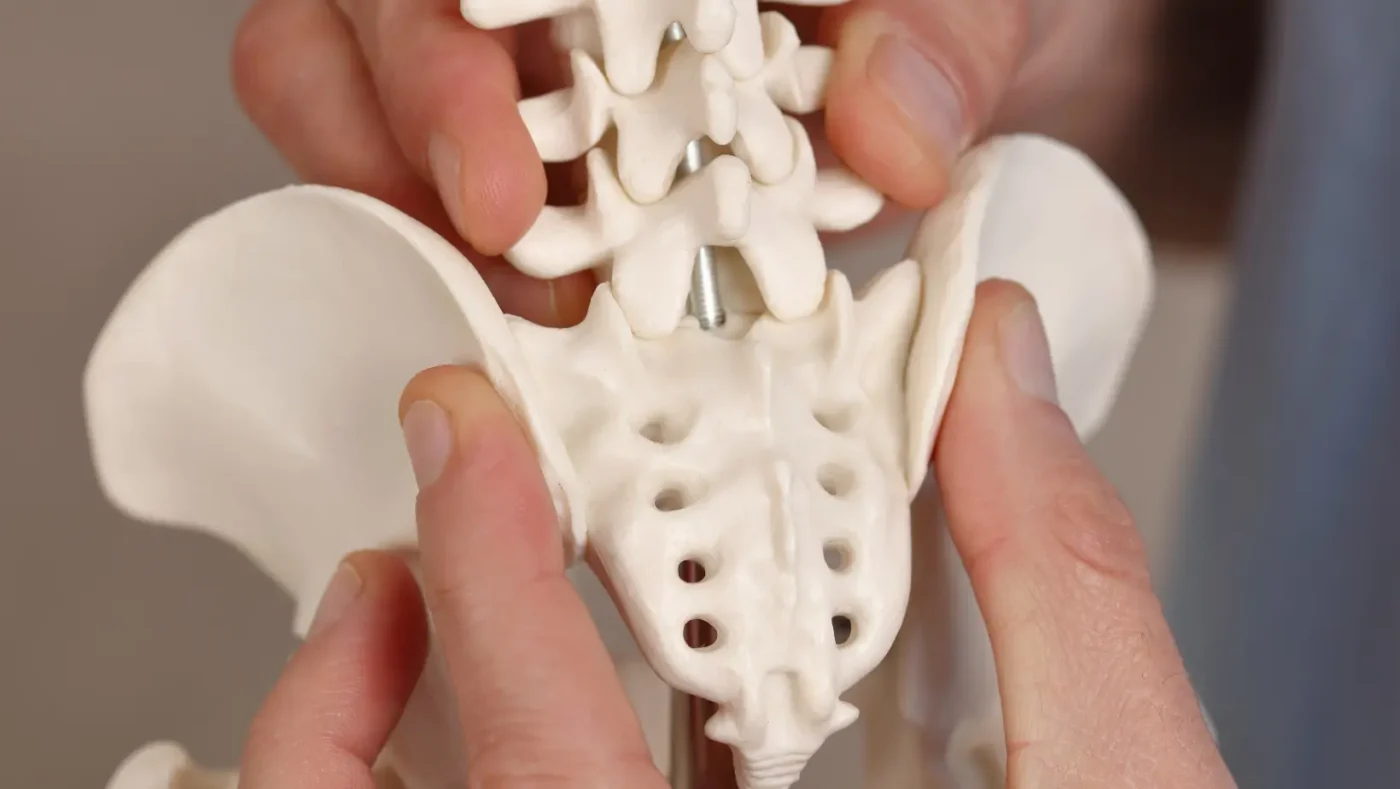

Symptoms of tailbone cancer usually begin as a dull ache near the coccyx that worsens over weeks instead of fading like a normal bruise or strain would. Tailbone tumors, most often a type called chordoma, are rare, affecting roughly 1 person per million each year in the US. They grow slowly but press on nerves and organs nearby as they expand.
This guide covers the tailbone cancer symptoms that separate a tumor from ordinary tailbone pain, the risk factors for sacral tumors, and how doctors confirm a diagnosis of tailbone cancer.
Tailbone Cancer Symptoms
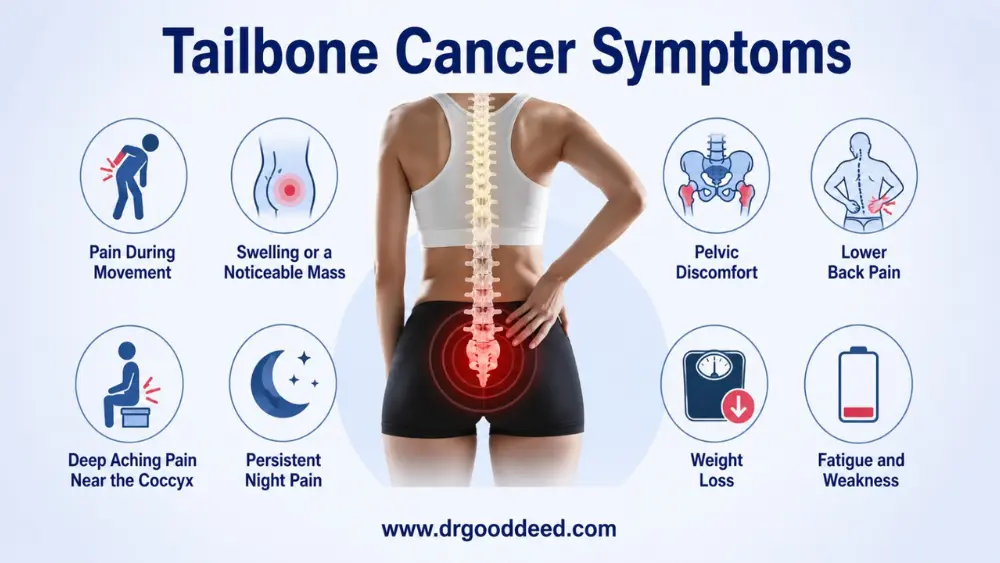
Tailbone cancer symptoms build slowly, which is exactly why so many people wait months before getting checked, mistaking early signs for a pulled muscle or an old injury that never fully healed.
Deep Aching Pain Near the Coccyx
Pain that sits deep in the tailbone, rather than on the surface, is the most reported of all symptoms of tailbone cancer. It often feels dull and constant rather than sharp, and it doesn’t improve with the usual fixes like cushions or stretching.
Lower Back Pain
Lower back pain from tailbone tumors spreads upward from the sacrum as the tumor grows and presses on nearby structures. This is one of the tailbone cancer symptoms that gets mistaken for ordinary strain most often. Unlike muscle strain, this pain doesn’t ease up with rest and tends to get worse over weeks rather than days.
Pelvic Discomfort
A heavy or pressing feeling deep in the pelvis can develop as the tumor expands. This sensation, among the less obvious symptoms of tailbone cancer, is sometimes mistaken for digestive trouble or gynecological issues, which delays the right diagnosis.
Swelling or a Noticeable Mass
In some cases, a firm lump becomes visible or felt at the base of the spine. Not every chordoma reaches this stage before diagnosis, but a palpable mass is one of the more direct symptoms of tailbone cancer that pushes people to finally see a doctor.
Pain During Movement
Sitting for long periods, bending, or standing up from a chair can sharpen the back pain, one of the more activity-linked symptoms of tailbone cancer. This happens because pressure on the coccyx area directly affects the tumor site, something a typical bruise wouldn’t do after the first week or two.
Warning Signs of Cancer in the Tailbone
Warning signs of cancer in the tailbone area go beyond pain alone. These signs point toward something more serious than a fall or prolonged sitting, and they tend to stack up together rather than appearing in isolation.
Persistent Night Pain
Pain that wakes someone up at night, or gets worse while lying down, doesn’t match typical injury patterns. Mechanical pain from strain usually improves with rest. Tumor-related pain often does the opposite.
Unexplained Weight Loss
Dropping weight without changing diet or exercise habits is a red flag across nearly every cancer type, tailbone tumors included. This symptom usually shows up alongside pain rather than on its own.
Progressive Symptoms
Pain or discomfort that keeps getting worse month after month, instead of plateauing, is one of the clearer warning signs of cancer in the tailbone area. A pulled muscle heals. A tumor doesn’t.
Fatigue and Weakness
General tiredness that doesn’t improve with sleep, paired with declining physical stamina, often accompanies tumor growth. This fatigue isn’t the kind solved by an early bedtime.
Symptoms That Do Not Improve With Rest
Standard tailbone injuries respond to rest, ice, and time. Tumor-driven pain doesn’t fade with any of these, even after weeks.
Bowel and Bladder Changes in Tailbone Tumors
Bowel and bladder changes happen when a tumor presses on the sacral nerves controlling these functions, and this is among the symptoms of tailbone cancer that often gets ignored the longest.
People may notice constipation, urinary difficulty, a sense of incomplete emptying, or in advanced cases, loss of bladder or bowel control. These changes happen because the sacrum sits right next to nerve roots, specifically S2 through S5, that manage pelvic organ function, so growth in this exact area disrupts signals before pain even becomes severe.
Nerve-Related Symptoms of Tailbone Tumors
Nerve-related symptoms appear once a tumor grows large enough to press on nearby nerve roots. These symptoms often confuse people because they show up far from the tailbone itself, in the legs and feet instead.
Numbness in the Legs
A loss of normal sensation in one or both legs can develop as nerve compression worsens. This numbness sometimes starts in patches before spreading.
Tingling Sensations
A pins-and-needles feeling running down the legs, similar to sciatica, often results from the same nerve roots being compressed by tumor growth in the sacral region.
Muscle Weakness
Weakness in the legs, especially while climbing stairs or standing from a seated position, signals that motor nerve fibers are affected, not just sensory ones.
Difficulty Walking
As nerve compression advances, balance and coordination can suffer, making walking noticeably harder than it used to be, even on flat ground.
Nerve Compression Symptoms
Saddle numbness, the loss of sensation across the area that would touch a saddle, is a specific and serious nerve compression symptom that needs urgent medical evaluation, since it can signal cauda equina involvement.
How Symptoms Differ From a Tailbone Injury
A tailbone injury from a fall typically causes sharp, localized pain that improves steadily over two to four weeks. Tumor-related pain follows a different pattern entirely.
| Feature | Tailbone Injury | Tailbone Tumor |
| Onset | Sudden, tied to a fall or impact | Gradual, with no clear cause |
| Pain pattern | Improves with rest and time | Doesn’t improve, often worsens |
| Night pain | Rare | Common |
| Bowel or bladder changes | Not present | Can develop as tumor grows |
| Leg symptoms | Rare | Numbness, tingling, weakness possible |
Rare Tailbone Tumors and Their Symptom Patterns
Tailbone tumors are uncommon overall, and the specific type shapes how symptoms unfold over time.
Chordoma
Chordoma accounts for about half of all sacrococcygeal tumors and grows from leftover notochord cells, an embryonic structure involved in spine development. It grows slowly but is locally aggressive, meaning it invades nearby bone, nerves, and blood vessels even when it hasn’t spread elsewhere.
Other Bone or Soft Tissue Tumors
Chondrosarcoma, osteosarcoma, and certain soft tissue sarcomas can also develop in or near the sacrococcygeal region, though far less often than chordoma. These tumors share overlapping symptoms, like deep aching pain and nerve compression, which is why imaging and biopsy matter so much for an accurate diagnosis.
How Tailbone Cancer Is Diagnosed
Diagnosis of tailbone cancer starts with a physical exam checking reflexes, muscle strength, and sensation in the legs and pelvic region. MRI is considered the most reliable imaging test, since it shows soft tissue and nerve detail that X-rays miss. CT scans help map bone involvement, while X-rays alone often struggle to capture clear images of the sacrum. A biopsy, taking a tissue sample directly from the tumor, confirms the diagnosis of tailbone cancer and identifies the exact tumor type before treatment planning begins.
Risk Factors for Sacral Tumors
Risk factors for sacral tumors remain poorly understood compared with more common cancers, which makes this list shorter and less actionable than most cancer risk factor lists.
- Genetic changes: Mutations in the TBXT gene are linked to chordoma formation, and a small number of families show inherited duplication of this gene.
- Age: Most chordoma diagnoses occur in adults between ages 50 and 70, though the disease can appear at any age.
- No clear lifestyle link: Unlike lung or skin cancer, chordoma isn’t tied to smoking, diet, or sun exposure, since it arises from leftover embryonic cells rather than external damage.
- Tuberous sclerosis: This rare genetic condition slightly raises chordoma risk, though the connection remains uncommon even among carriers.
Treatment Options for Tailbone Cancer
Treatment for tailbone tumors centers on removing as much of the tumor as safely possible while protecting nerve function in the pelvic region.
Surgical Removal of the Tumor
Surgery remains the primary treatment, with wide local excision aiming to remove the tumor along with a safety margin of healthy tissue. Five-year survival reaches roughly 82% with surgery alone, based on SEER data spanning decades of sacral chordoma cases, though achieving clean margins near the sacrum is technically difficult due to nearby nerves and organs.
Radiation Therapy
Proton beam or carbon ion radiation is often used alongside surgery, especially when clean margins aren’t possible. These newer radiation methods allow higher doses while sparing pelvic organs, with local control rates above 85% in several published case series.
Chemotherapy
Chemotherapy plays a limited role in chordoma specifically, since these tumors don’t respond as well to standard chemo drugs compared with other cancers. It’s used more selectively, often in cases involving metastasis.
Targeted Therapies
Drugs targeting specific molecular pathways involved in chordoma growth are being studied actively, and some patients with recurrent or metastatic disease receive these as part of clinical trials.
Multidisciplinary Cancer Care
Because sacral tumors affect bone, nerves, and pelvic organs simultaneously, treatment typically involves neurosurgeons, orthopedic oncologists, radiation oncologists, and physical therapists working together rather than one specialist managing care alone.
FAQ
Can lower back pain be caused by tailbone tumors?
Yes. Sacral tumors often cause lower back pain before any other symptom appears, since the sacrum sits directly beneath the lower spine and shares nerve pathways with it.
What is a chordoma and how does it affect the tailbone?
Chordoma is a rare bone cancer growing from leftover embryonic notochord cells. In the tailbone, it grows slowly but invades nearby bone and nerves, often before causing noticeable symptoms.
Can tailbone cancer cause leg numbness or weakness?
Yes. Tumors compressing sacral nerve roots cause numbness, tingling, or weakness in one or both legs, usually as the tumor grows large enough to press on those specific nerves.
Do sacral tumors affect bowel and bladder function?
Yes. Tumors near nerve roots S2 through S5 disrupt bowel and bladder signals, causing constipation, urinary difficulty, or in advanced cases, loss of control.
How is tailbone cancer diagnosed?
Through physical exam, MRI to assess soft tissue and nerve involvement, CT for bone detail, and biopsy to confirm tumor type. MRI is the most reliable single imaging test.
What imaging tests are used to diagnose tailbone cancer?
MRI, CT scan, and sometimes X-ray, though X-rays alone often fail to clearly show sacral tumors. MRI remains the gold standard for assessing size and nerve involvement.
Is tailbone cancer common?
No. Chordoma, the most common tailbone tumor type, affects roughly 1 person per million annually in the US, making it one of the rarer bone cancers diagnosed.
When should I see a doctor for tailbone pain?
Within two to four weeks if pain doesn’t improve with rest, or immediately if numbness, weakness, or bowel and bladder changes develop alongside the pain.
Can tailbone cancer be cured if detected early?
Often, yes. Five-year survival reaches about 82% with surgery alone and stays high with added radiation, though outcomes depend heavily on tumor size and nerve involvement at diagnosis.
Sources
- Cleveland Clinic, Chordoma: What It Is, Types, Symptoms and Treatment
- OrthoInfo, American Academy of Orthopaedic Surgeons, Chordoma
- Penn Medicine, Chordoma: Symptoms and Causes
- PMC/NCBI, Incidence, Treatment, and Survival Patterns for Sacral Chordoma in the United States, 1974-2011
- PMC/NCBI, Sacrococcygeal Chordoma: A Diagnostic Challenge
- Massachusetts General Hospital, Chordoma: Symptoms, Treatment, Prognosis
- Journal of Neurosurgery, Chordoma Incidence, Treatment, and Survival in the 21st Century