

A vestibular migraine diet focuses on eliminating trigger foods while emphasizing stabilizing nutrients that support the inner ear and nervous system. Vestibular migraines combine typical migraine symptoms with vertigo (spinning sensation), dizziness, balance problems, and motion sensitivity.
Roughly 1% of the population experiences this condition, with women affected three times more often than men. Diet plays a significant role because specific food compounds directly affect blood vessel behavior, inner ear fluid balance, and brain chemistry that control both migraine pain and vestibular symptoms.
Why Diet Matters for Vestibular Migraines
Dietary choices directly influence the neurological and vascular systems controlling both migraine pain and balance function. The inner ear contains fluid-filled canals that detect head movement and maintain equilibrium. Blood flow changes, inflammatory compounds from certain foods, and electrolyte imbalances affect how these delicate structures operate.
Managing your vestibular migraine diet addresses root causes rather than just masking symptoms, providing more consistent long-term control.
Key dietary impacts include:
- Blood vessel dilation and constriction patterns affecting inner ear circulation
- Inflammatory compounds from food triggering nerve sensitivity in balance organs
- Blood sugar stability influencing fluid pressure in vestibular canals
- Histamine levels affecting both migraine threshold and vertigo severity
- Sodium and potassium balance controlling inner ear fluid volume
- Dehydration reducing blood flow to balance centers in the brainstem
- Neurotransmitter production depending on amino acids from protein foods
The vestibular system operates through precise biochemical balance. Small disruptions from dietary triggers create outsized effects on symptoms. Foods containing vasoactive compounds (substances affecting blood vessel width) cause rapid changes in inner ear blood flow. This sudden circulation shift triggers both the throbbing pain of migraines and the spinning sensation of vertigo simultaneously.
Best Foods for Vestibular Migraine
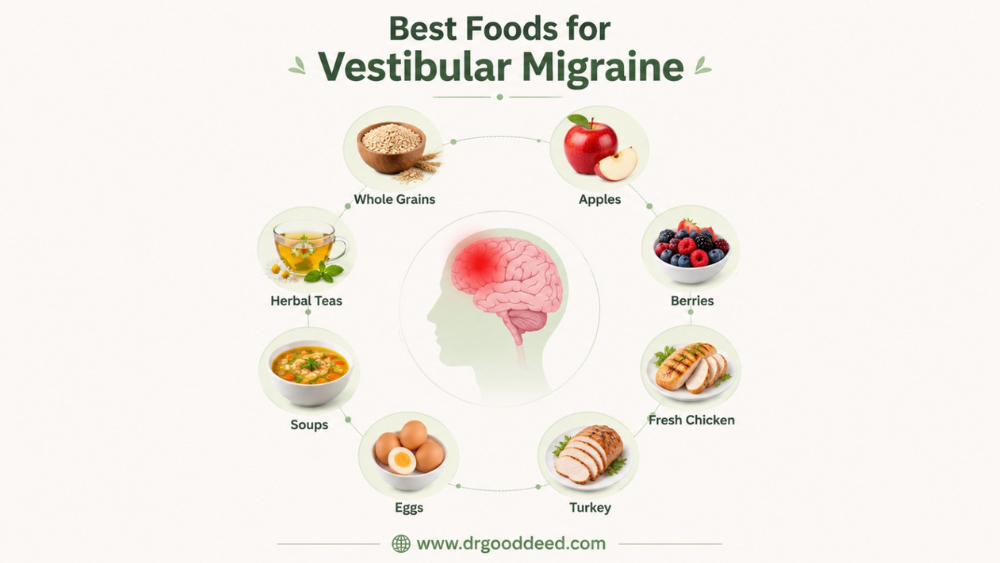
Choosing best foods for vestibular migraine management means selecting items that provide stable energy, support nervous system function, and avoid triggering compounds. Fresh, minimally processed foods generally cause fewer problems than packaged items containing preservatives, flavor enhancers, and aged ingredients.
Whole Grains and Stable Energy Foods
Whole grains release glucose gradually, preventing the blood sugar spikes and crashes that trigger vestibular symptoms. Oatmeal, brown rice, quinoa, and whole wheat bread provide sustained energy for 3-4 hours. This steady glucose supply maintains consistent inner ear fluid pressure and prevents the lightheadedness that accompanies low blood sugar.
Complex carbohydrates also contain B vitamins that support nervous system health. Thiamine (B1) and niacin (B3) help metabolize energy and maintain nerve function. Your vestibular nerve requires these nutrients to transmit balance signals accurately. Starting your day with oatmeal topped with fresh berries provides both stable energy and anti-inflammatory compounds.
Fresh Fruits and Vegetables
Non-citrus fruits like apples, pears, berries, and melons provide vitamins, minerals, and antioxidants without common migraine triggers. Blueberries and strawberries contain flavonoids that reduce inflammation in blood vessels. Green vegetables like broccoli, spinach, and kale offer magnesium, which helps regulate nerve excitability and muscle relaxation.
Fresh produce provides high water content that supports hydration. Cucumbers, celery, watermelon, and lettuce contain 90-95% water, contributing to your daily fluid needs. Proper hydration maintains blood volume and inner ear fluid balance, both critical for preventing vestibular symptoms.
Lean Proteins and Healthy Fats
Fresh chicken, turkey, fish, and eggs provide protein without tyramine that develops in aged or processed meats. Protein stabilizes blood sugar when eaten with carbohydrates, extending the time between meals without triggering symptoms. Aim for palm-sized portions of lean protein at each meal.
Omega-3 fatty acids from salmon, sardines, flaxseeds, and walnuts reduce inflammation throughout your body, including brain and inner ear tissues. These healthy fats support nerve cell membranes and improve signal transmission in your vestibular system. Eating fatty fish twice weekly provides therapeutic omega-3 levels.
Hydrating Foods Supporting Balance
Water-rich foods supplement your fluid intake throughout the day. Soups, smoothies, herbal teas, and fresh fruits provide both hydration and nutrients. The inner ear maintains specific fluid volumes in its semicircular canals. Dehydration concentrates these fluids, disrupting the signals sent to your brain about head position and movement.
Coconut water provides natural electrolytes, including potassium and sodium, that support fluid balance. These minerals help your body retain water in tissues where it’s needed rather than losing it through excessive urination. Maintaining proper electrolyte ratios prevents both dehydration and the fluid retention that can worsen vestibular symptoms.
Magnesium Rich Foods for Migraines
Magnesium-rich foods for migraines provide a mineral that approximately 50% of migraine sufferers lack. Magnesium deficiency increases nerve excitability, causes blood vessel spasms, and disrupts energy production in brain cells. Adequate intake reduces both migraine frequency and vestibular symptom severity.
Nuts, Seeds, and Leafy Greens
Pumpkin seeds contain the highest magnesium concentration, providing 150mg per quarter cup (37% of daily needs). Almonds, cashews, and sunflower seeds also supply significant amounts. Snacking on a small handful of mixed nuts between meals provides steady magnesium absorption.
Dark leafy greens like spinach, Swiss chard, and kale deliver magnesium along with other beneficial nutrients. One cup of cooked spinach provides 157mg of magnesium (39% daily value). Eating a large salad daily or adding greens to smoothies, omelets, or soups increases your intake substantially.
Magnesium and Nervous System Regulation
Magnesium acts as a natural calcium channel blocker, preventing excessive calcium from entering nerve cells. Too much calcium makes nerves fire more easily, lowering your threshold for both migraine and vertigo attacks. Adequate magnesium calms this hyperexcitability, reducing symptom frequency.
This mineral also relaxes smooth muscle tissue in blood vessel walls. Constricted vessels expand more normally when magnesium levels are optimal, preventing the rapid dilation that triggers throbbing pain and dizziness. The recommended daily intake is 310-420mg depending on age and sex, though therapeutic doses for migraine prevention often reach 400-600mg.
Foods Naturally Supporting Muscle Relaxation
Black beans, edamame, and lentils provide magnesium along with protein and fiber. These legumes stabilize blood sugar while delivering minerals that reduce muscle tension. Neck and shoulder tightness often accompanies and worsens vestibular migraines. Adequate magnesium intake helps muscles release tension more effectively.
Whole grains like brown rice and quinoa contain moderate magnesium amounts. Combined with nuts, seeds, and greens throughout the day, these foods provide sufficient intake without supplementation. Dark chocolate (70% cocoa or higher) also supplies magnesium, though some people find chocolate itself triggers migraines.
Low Tyramine Diet for Vestibular Migraines
A low-tyramine diet for vestibular migraines eliminates foods containing this naturally occurring amino acid that forms when protein-rich foods age, ferment, or decompose. Tyramine causes blood vessels to constrict initially, then expand rapidly. This vascular reaction triggers both migraine pain and vestibular symptoms in sensitive individuals.
Aged Cheeses and Processed Meats
Aged cheeses like cheddar, parmesan, blue cheese, and gouda develop high tyramine concentrations during the aging process. Fresh cheeses including ricotta, cottage cheese, cream cheese, and mozzarella contain minimal tyramine and rarely trigger symptoms. Switching to fresh cheese options eliminates a major trigger source.
Processed meats including deli turkey, salami, pepperoni, hot dogs, and bacon contain both tyramine and nitrates. These preservatives expand blood vessels directly. Fresh, unprocessed meats prepared at home avoid these compounds entirely. Cooking chicken breasts, ground turkey, or fish provides protein without triggering symptoms.
Fermented Foods and Migraine Sensitivity
Fermentation produces tyramine as bacteria break down proteins. Sauerkraut, kimchi, pickles, miso, and soy sauce all contain high levels. Yogurt and kefir have moderate amounts that some people tolerate in small quantities. Removing fermented foods for 2-3 weeks while tracking symptoms reveals whether these items trigger your attacks.
Alcohol, particularly red wine and beer, combines tyramine with compounds that inhibit the enzyme breaking down tyramine in your body. This combination creates especially strong reactions. Clear spirits contain less tyramine but alcohol itself causes dehydration and blood sugar fluctuations that worsen vestibular symptoms.
Why Tyramine May Trigger Headaches in Some People
People with migraines may have reduced levels of monoamine oxidase (MAO), the enzyme that breaks down tyramine. When tyramine accumulates, it triggers norepinephrine release, which constricts blood vessels. The subsequent rebound dilation causes throbbing pain and dizziness. Genetic variations in MAO production explain why some people react strongly to tyramine-rich foods while others tolerate them fine.
The effect becomes more pronounced when multiple tyramine sources combine in one meal or when tyramine intake exceeds your body’s breakdown capacity. A small amount of aged cheese might cause no problems, but combining it with processed meat and wine in one meal overwhelms your system’s ability to metabolize the tyramine load.
Food Triggers That May Worsen Vestibular Migraines
Specific dietary components provoke vestibular migraine attacks through various biochemical mechanisms. Individual sensitivity varies considerably, so identifying personal triggers through systematic elimination and reintroduction proves more valuable than following generic restriction lists.
Common culprits affect histamine levels, blood sugar stability, vascular tone, and inflammatory pathways. Keeping detailed food records helps connect specific items to symptom patterns within 2-72 hours after consumption.
Frequent trigger foods include:
- Aged and fermented foods containing tyramine (cheeses, cured meats, pickled items)
- Monosodium glutamate (MSG) in Chinese food, packaged snacks, and processed items
- Artificial sweeteners like aspartame found in diet sodas and sugar-free products
- Chocolate containing phenylethylamine and caffeine that affect blood vessels
- Citrus fruits and juices providing high histamine and acid loads
- Alcohol depleting hydration and B vitamins while containing tyramine
- Caffeinated beverages causing rebound headaches during withdrawal
- Processed foods with preservatives, nitrates, and sulfites
- Nuts including peanuts and walnuts in some sensitive individuals
- Yeast-containing products and fresh-baked bread
Blood sugar fluctuations migraine triggers occur when meals contain excessive simple sugars or when long gaps separate eating times. Rapid glucose spikes followed by crashes disrupt inner ear fluid pressure and reduce oxygen delivery to balance centers. Eating candy, pastries, or sugary drinks without accompanying protein or fat causes dramatic blood sugar swings within 30-90 minutes.
Vestibular Migraine Diet Plan
Creating a sustainable vestibular migraine diet plan requires structure around regular meal timing, adequate hydration, and systematic trigger identification. Unlike temporary diets, this approach becomes a long-term eating pattern adjusted to your individual needs and responses.
Eating Regular Balanced Meals
Consuming meals every 3-4 hours prevents blood sugar drops that trigger symptoms. Each meal should combine protein, complex carbohydrates, and healthy fats. This combination slows glucose absorption and provides sustained energy. A balanced breakfast within one hour of waking stabilizes blood sugar for the entire morning.
Planning meals ahead reduces reliance on convenience foods that often contain hidden triggers. Preparing proteins and vegetables on weekends allows quick assembly of trigger-free meals during busy weekdays. Keeping snacks like fresh fruit with nut butter, vegetables with hummus, or homemade trail mix prevents the desperation eating that leads to poor choices.
Hydration Throughout the Day
Drinking 8-10 cups of water daily maintains blood volume and inner ear fluid balance. Setting hourly reminders to drink water prevents the gradual dehydration that develops when busy or distracted. Carrying a reusable water bottle makes consistent hydration easier.
Adding a pinch of sea salt to water improves absorption and maintains electrolyte balance. The sodium helps your body retain necessary fluid rather than immediately urinating it out. Room temperature water absorbs faster than ice-cold beverages, which can shock your digestive system.
Meal Planning to Identify Triggers
Following an elimination diet for 4-6 weeks removes all common triggers simultaneously. After symptoms improve, reintroduce one food every 3-4 days while tracking reactions. This systematic approach identifies specific triggers rather than guessing. Starting with a baseline of safe foods makes pattern recognition clearer.
Keeping a food and symptom journal documents what you ate, timing of meals, symptom occurrence, severity, and duration. After several weeks, patterns emerge showing which foods correlate with attacks. Mobile apps designed for migraine tracking simplify this process and generate reports showing relationships between diet and symptoms.
Drinks That May Help Reduce Migraine Symptoms
Beverage choices significantly impact hydration status, caffeine intake, and trigger exposure. The vestibular migraine diet includes careful attention to what you drink throughout the day, since fluids affect your body faster than solid foods.
Water and Electrolyte Balance
Plain water forms the foundation of proper hydration. The inner ear requires precise fluid balance to function correctly. Dehydration concentrates inner ear fluids, disrupting the signals that control balance. Drinking consistently prevents this concentration effect.
Electrolyte drinks without artificial sweeteners or excess sugar help maintain mineral balance during hot weather or after exercise. Coconut water, homemade electrolyte solutions with lemon juice and sea salt, or low-sugar sports drinks provide sodium, potassium, and magnesium that support nerve and muscle function.
Herbal Teas Without Caffeine
Ginger tea reduces nausea and has anti-inflammatory properties that may decrease migraine frequency. Peppermint tea can relieve digestive upset that sometimes accompanies vestibular migraines. Chamomile tea promotes relaxation and may improve sleep quality, indirectly reducing migraine triggers.
These caffeine-free options provide warm, soothing beverages without the rebound headaches associated with caffeine withdrawal. Drinking herbal tea also contributes to daily fluid intake while offering therapeutic compounds that support overall health.
Avoiding Sugary Energy Drinks
Energy drinks combine high caffeine with excessive sugar, creating perfect conditions for migraine attacks. The initial energy boost from caffeine and sugar leads to a subsequent crash that triggers symptoms. These beverages also contain artificial colors, flavors, and preservatives that frequently cause reactions in sensitive individuals.
Caffeine tolerance and withdrawal create a complex relationship with migraines. Regular caffeine use requires consistent daily intake to avoid withdrawal headaches. Many people find gradually reducing caffeine eliminates this trigger entirely, though some tolerate small consistent amounts without problems.
Lifestyle Habits That Support Vestibular Migraine Control
Dietary changes work best when combined with consistent lifestyle practices that reduce overall migraine susceptibility. Sleep patterns, stress management, and physical activity significantly influence how well your vestibular migraine diet controls symptoms. These factors interact with diet to either amplify or diminish its effectiveness.
Supporting habits include:
- Maintaining consistent sleep schedules with 7-9 hours nightly
- Managing stress through deep breathing, meditation, or gentle yoga
- Exercising moderately 20-30 minutes most days without overexertion
- Avoiding rapid head movements and positions that provoke vertigo
- Limiting screen time and taking frequent breaks from visual tasks
- Keeping room temperatures comfortable and avoiding overheating
- Practicing good posture to reduce neck tension affecting vestibular function
- Creating dark, quiet environments when symptoms begin
- Tracking menstrual cycles if hormonal patterns trigger attacks
- Building rest periods into busy days before exhaustion develops
Physical activity improves circulation to inner ear structures and releases endorphins that naturally reduce pain sensitivity. However, intense exercise sometimes triggers vestibular symptoms. Finding your personal tolerance through gradual progression prevents exercise-induced attacks while gaining cardiovascular benefits.
Common Mistakes People Make With Migraine Diets
Eliminating too many foods simultaneously makes identifying actual triggers impossible and often leads to nutritional deficiencies. Migraine trigger foods too quickly after short elimination periods prevents accurate assessment of their effects.
Frequent mistakes include:
- Restricting entire food groups unnecessarily without testing individual items
- Not keeping detailed food journals making pattern recognition impossible
- Giving up after one week when elimination diets require 4-6 weeks for full effects
- Ignoring portion sizes since large amounts may trigger while small amounts don’t
- Assuming all “healthy” foods are safe without considering personal sensitivities
- Not accounting for food combinations that trigger when eaten together
- Forgetting hidden ingredients in packaged foods and restaurant meals
- Stopping elimination diet after one food passes testing before trying others
- Not considering medication interactions that affect food sensitivity
- Expecting immediate results when vestibular migraines often have delayed triggers
The timing between food consumption and symptom appearance varies from 30 minutes to 72 hours. This delay makes connecting specific foods to attacks challenging. Consistent journaling over several weeks reveals patterns that single-incident observation misses. Some triggers only cause problems when combined with other factors like stress, poor sleep, or weather changes.
FAQs
What foods commonly trigger vestibular migraines?
Aged cheeses, processed meats, MSG, chocolate, alcohol, citrus fruits, artificial sweeteners, and caffeinated beverages trigger most attacks. Tyramine-rich fermented foods cause vascular changes affecting both migraine and balance. Individual triggers vary significantly, requiring personal identification through elimination testing. Following a vestibular migraine diet means removing your specific triggers, not following generic lists.
How do blood sugar fluctuations affect migraine symptoms?
Rapid glucose drops reduce oxygen delivery to your brain and inner ear, triggering both headache and vertigo within 30-90 minutes. Eating candy or skipping meals causes dramatic swings. Blood sugar fluctuations migraine triggers disrupt inner ear fluid pressure and nerve signaling. Eating balanced meals every 3-4 hours prevents these destabilizing drops.
Why is hydration important for vestibular migraine management?
Dehydration reduces blood volume by 5-10%, decreasing circulation to balance centers in your inner ear and brainstem. Inner ear fluid becomes concentrated, disrupting equilibrium signals. Drinking 8-10 cups daily maintains proper fluid balance. A vestibular migraine diet always prioritizes consistent hydration since even mild dehydration lowers symptom threshold significantly.
What is a low tyramine diet and how does it help?
A low-tyramine diet for vestibular migraines eliminates aged cheeses, cured meats, fermented foods, and alcohol where proteins break down into this amino acid. Tyramine constricts blood vessels then causes rapid dilation, triggering throbbing pain and dizziness. Fresh foods contain minimal tyramine. Most people notice reduced attack frequency within 2-3 weeks.
Which magnesium-rich foods may support migraine prevention?
Pumpkin seeds, almonds, spinach, black beans, and dark chocolate provide therapeutic magnesium levels. This mineral calms nerve excitability and relaxes blood vessel walls, preventing the spasms that trigger attacks. Magnesium-rich foods for migraines should provide 400-600mg daily from food sources. Leafy greens, nuts, and legumes eaten throughout the day meet this target.
Can caffeine worsen dizziness and migraine symptoms?
Yes, caffeine withdrawal within 12-24 hours of your last dose triggers rebound headaches and worsens dizziness. Regular consumption requires consistent daily intake to prevent withdrawal. Gradual reduction over 2-3 weeks eliminates this trigger. Some people tolerate small consistent amounts (under 200mg daily) without problems, while others need complete elimination.
Why do skipped meals sometimes trigger vestibular migraines?
Going longer than 4 hours without eating drops blood glucose 20-30%, reducing fuel for brain and inner ear function. This triggers both headache and vertigo through multiple pathways. Your vestibular migraine diet must include regular meal timing. Eating small balanced meals every 3-4 hours maintains stable glucose and prevents triggering drops.
How can food triggers be identified more accurately?
Eliminate all common triggers for 4-6 weeks until symptoms improve. Reintroduce one food every 3-4 days while documenting reactions in a detailed journal. Note food, timing, portion size, symptom occurrence, and severity. Patterns emerge after 6-8 weeks showing which specific foods trigger your attacks versus safe options.
Are vestibular migraines different from regular vertigo conditions?
Yes, vestibular migraines combine migraine symptoms (throbbing headache, nausea, light sensitivity) with vertigo, dizziness, and balance problems. Episodes last minutes to hours. Regular vertigo from inner ear disorders like BPPV doesn’t include migraine symptoms. The vestibular migraine diet addresses both neurological and balance components through specific dietary modifications.
When should dizziness and migraine symptoms require urgent medical care?
Sudden severe headache with confusion, vision loss, weakness, difficulty speaking, or loss of consciousness needs emergency evaluation. New onset symptoms after age 50, progressively worsening attacks, or symptoms triggered by physical exertion warrant urgent assessment. These signs may indicate stroke, aneurysm, or other serious conditions requiring immediate treatment.