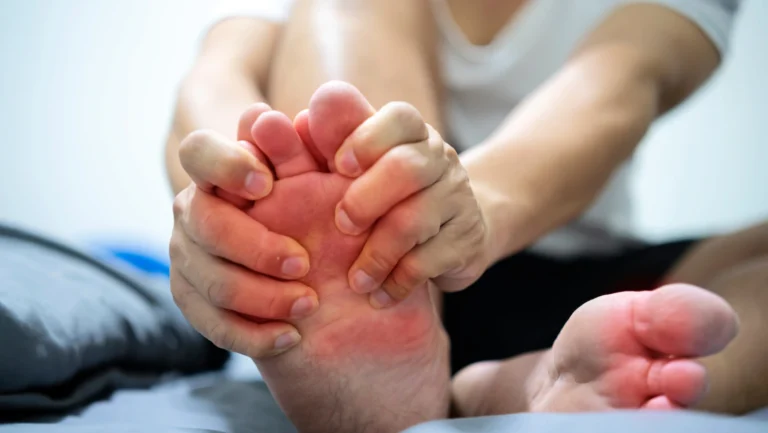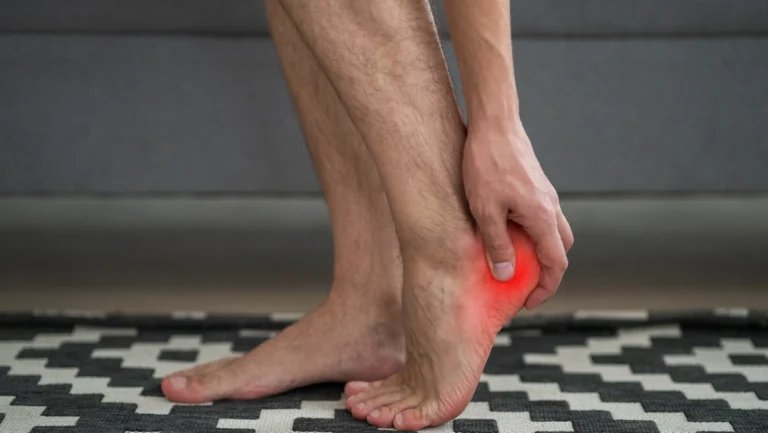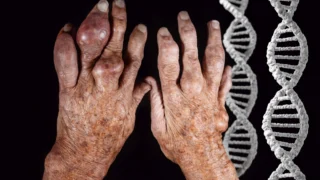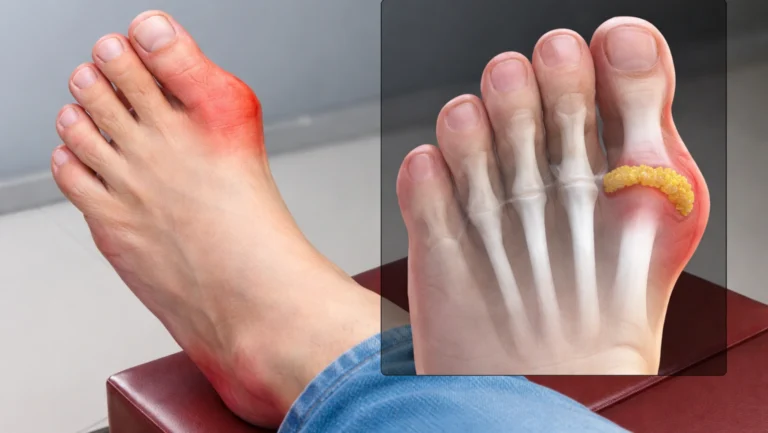

Gout in ankle joints is the second most common site for gout attacks, right after the big toe. It occurs when uric acid crystals (monosodium urate) deposit inside the ankle joint, triggering sudden, intense inflammation. In India, ankle gout is increasingly common in men above 30 and postmenopausal women, often linked to rising rates of obesity, alcohol use, and high-purine diets.
What Causes Gout in the Ankle
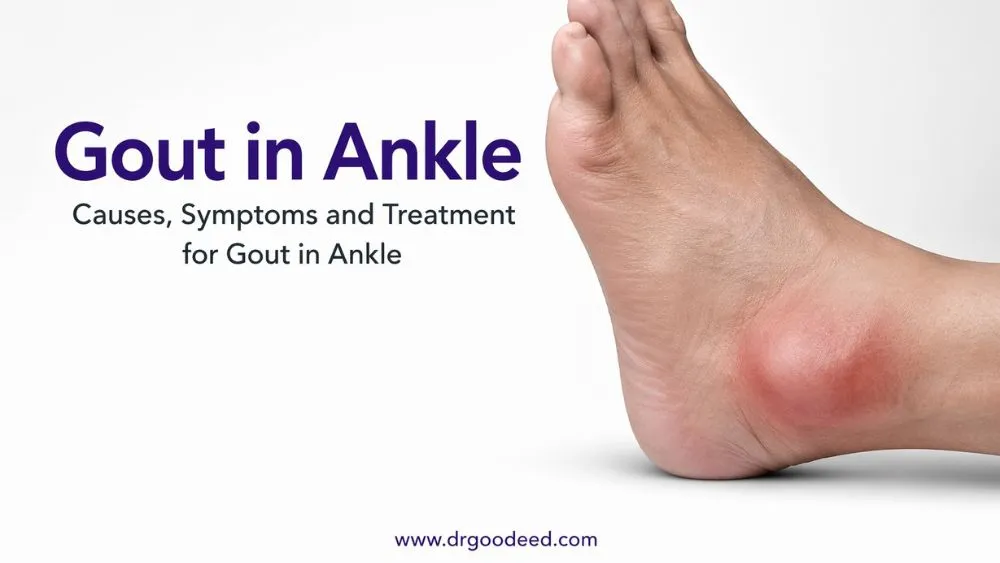
The primary cause of gout in the ankle is uric acid. When the body produces too much of it, or the kidneys don’t flush enough of it out, it builds up in the blood. Eventually, it crystallizes inside cooler, lower-body joints like the ankle.
Uric Acid Crystal Deposition in Ankle Joints
The ankle is farther from the heart than most joints. Blood temperature here is slightly lower, and lower temperatures cause uric acid to solidify faster. Crystals form inside the synovial membrane (joint lining) and trigger an immune response within hours.
High Purine Diet and Alcohol Intake
Purines break down into uric acid during digestion. Red meat, organ meats, shellfish, and beer are the highest sources. Beer specifically combines ethanol with guanosine (a purine compound), making it the single fastest trigger for gout attacks.
Dehydration and Kidney Function Issues
Kidneys filter uric acid out through urine. Dehydration reduces urine output, and uric acid concentrates in the blood. Even a few hours without water during physical activity raises serum uric acid enough to trigger a flare in susceptible individuals.
Genetic Predisposition and Metabolic Conditions
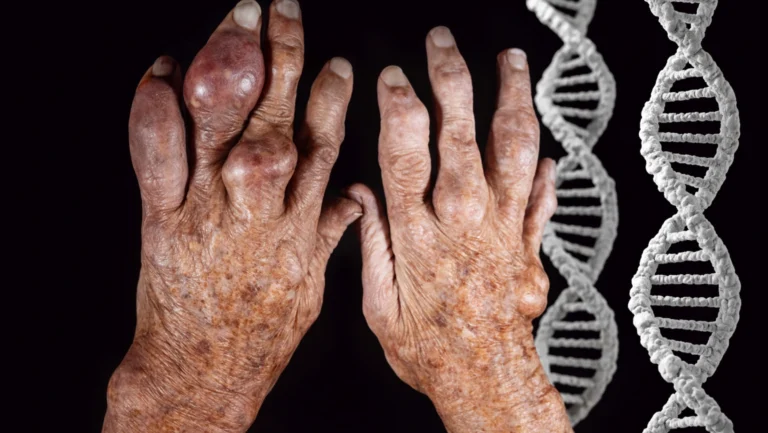
About 20% of gout cases have a direct family history. Mutations in uric acid transporter genes (SLC22A12, ABCG2) reduce kidney excretion efficiency. Conditions like hypertension, Type 2 diabetes, and chronic kidney disease increase gout risk by 2 to 3 times compared to the general population.
How Gout Affects the Ankle Joint
Gout affects the ankle joint; damage happens layer by layer inside the joint structure.
Inflammation Inside the Joint Lining
Urate crystals trigger neutrophils (white blood cells) to rush into the joint space. These cells attempt to destroy the crystals, but in doing so, they release inflammatory enzymes that attack the joint lining itself. This is what produces the burning, throbbing pain.
Fluid Buildup Causing Swelling
The inflammation draws synovial fluid into the joint in excess. The ankle swells visibly. In severe cases, the swelling can extend up toward the lower leg or down into the foot.
Joint Stiffness and Reduced Mobility
As fluid accumulates and inflammation peaks, the joint capsule tightens. Range of motion drops sharply. Many patients describe their ankle feeling “locked” at the height of a flare.
Repeated Attacks Leading to Joint Damage
Each untreated attack deposits more crystals. Over years, chronic inflammation erodes cartilage. In patients with 10 or more untreated flares, X-rays often show bone erosion with “punched-out” lesions, a pattern specific to gout.
Symptoms of Gout in the Ankle
Gout in ankle produces a set of symptoms that are distinct enough to identify even before lab tests.
Severe Ankle Pain at Night
Severe ankle pain at night in gout is the most reported first symptom. Pain typically begins between midnight and 3 AM, when body temperature drops and uric acid crystallizes faster. The pain intensifies within 2 to 4 hours of onset and can reach a level where even the pressure of bedsheets becomes unbearable.
Warmth in Ankle Joint (Key Early Sign)
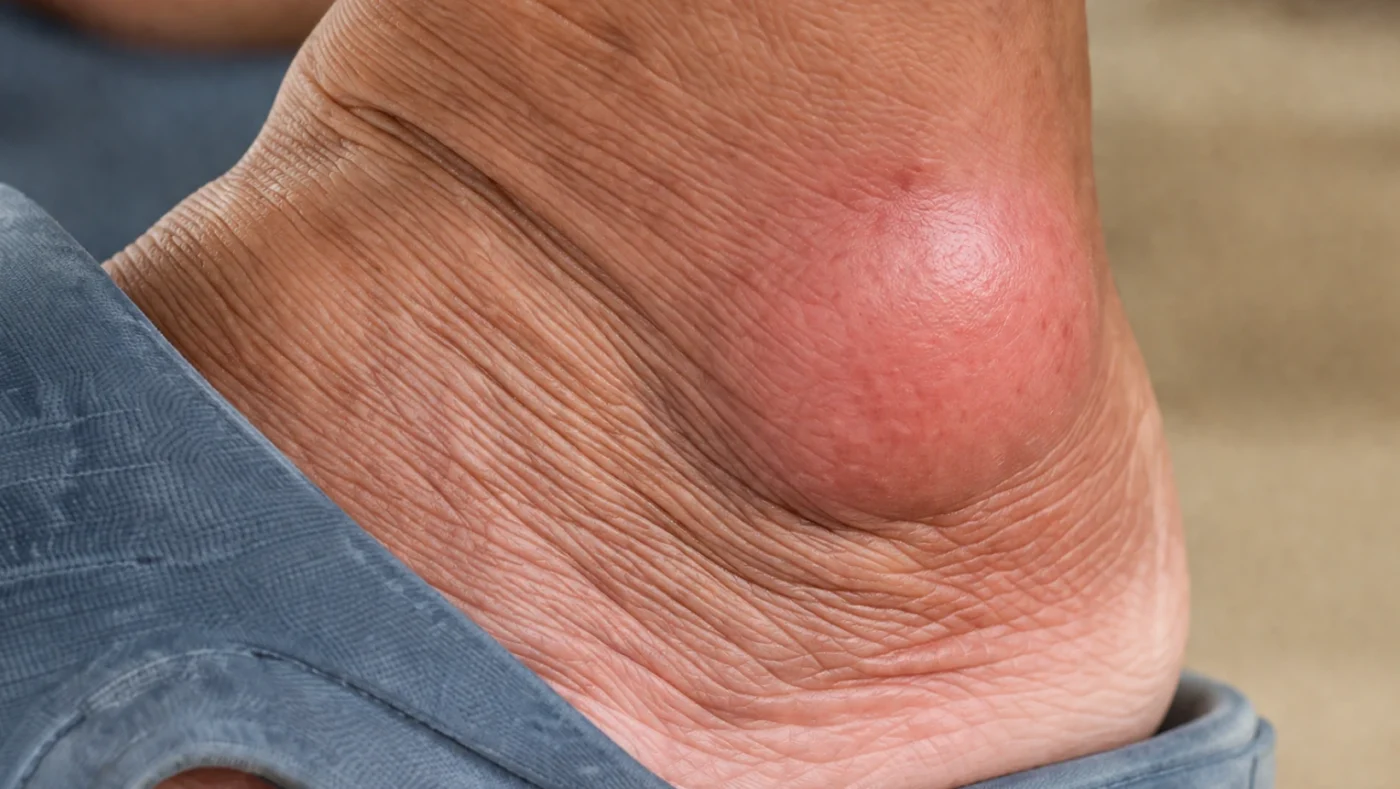
Warmth in ankle joint gout symptoms appears before visible swelling in many cases. The skin over the ankle feels hot to the touch because of the inflammatory response underneath. This warmth combined with redness creates what clinicians call a “hot joint,” which is a red flag for crystal-induced or septic arthritis.
Swelling, Redness, and Tenderness
The ankle looks visibly enlarged. Skin appears stretched and shiny. Even light pressure on the joint surface causes sharp pain. In darker skin tones, redness may appear as a deeper discoloration rather than bright red.
Difficulty Walking or Bearing Weight
Most patients cannot put full weight on the affected foot during a flare. Walking forces the ankle joint to compress, which presses inflamed tissue against the crystals and amplifies pain.
Sudden Onset vs Gradual Worsening
Gout attacks peak within 12 to 24 hours. Ankle sprains worsen gradually after physical activity. If severe ankle pain appears out of nowhere with no injury, gout is the likely cause.
How to Treat Gout in Ankle Fast
Treating gout in ankle fast requires acting within the first 12 to 24 hours of symptoms. Waiting longer reduces how effective anti-inflammatory treatment will be.
For immediate relief before a doctor visit:
- Rest the ankle completely. Avoid standing or walking on it.
- Ice the joint for 20 minutes every 2 to 3 hours. Do not apply ice directly to skin.
- Elevate the leg above hip level to reduce fluid accumulation.
- Drink 3 liters of water within the first 24 hours to push uric acid through the kidneys.
- Avoid alcohol, red meat, and shellfish until the flare resolves completely.
Medical treatment options:
- NSAIDs: Indomethacin (25 to 50 mg, three times daily) or naproxen sodium (500 mg twice daily) are first-line options. They work within 2 to 4 hours of the first dose.
- Colchicine: Most effective when taken within 12 hours. The standard dose is 1.2 mg at onset, then 0.6 mg one hour later. Do not exceed this dosing without medical advice.
- Corticosteroids: For patients who cannot take NSAIDs (due to kidney disease or peptic ulcers), prednisolone at 30 to 35 mg daily for 5 days works well.
Diagnosis of Ankle Gout
Joint Fluid Analysis (Urate Crystals)
Arthrocentesis (drawing fluid from the joint with a needle) remains the gold standard. Under polarized light microscopy, urate crystals appear as needle-shaped with a strong negative birefringence. This test definitively rules out septic arthritis.
Blood Uric Acid Test
Serum uric acid above 6.8 mg/dL confirms hyperuricemia. But uric acid levels sometimes drop during an active flare, so a normal result doesn’t rule out gout.
Imaging (Ultrasound, X-ray)
Ultrasound shows the “double contour sign,” a white line over cartilage caused by urate crystal deposition. This appears even in early gout. X-rays are used in later stages to assess bone erosion.
Differentiating Gout vs Ankle Sprain
| Feature | Gout | Ankle Sprain |
| Onset | Spontaneous, no injury | After twisting or impact |
| Skin | Hot, red, shiny | Normal or bruised |
| Pain peak | 12 to 24 hours | Immediate |
| Lab | High uric acid | Normal |
Risk Factors for Ankle Gout
- Obesity: BMI above 30 increases uric acid production by roughly 40%.
- Alcohol consumption: More than 2 drinks daily raises gout risk by 2.5 times.
- High purine diet: Organ meats, sardines, anchovies, mussels.
- Chronic diseases: Kidney disease reduces uric acid clearance; diabetes increases crystal formation risk through insulin resistance pathways.
How Long Does Gout in the Ankle Last
Typical Duration (3 to 10 Days)
An untreated gout in ankle flare lasts 7 to 10 days on average. With colchicine started within 12 hours, most flares resolve in 3 to 4 days.
With Treatment vs Without Treatment
Without treatment: 10 to 14 days of severe pain, gradual resolution. Without addressing uric acid, the next flare arrives within 6 to 12 months.
With NSAIDs or colchicine: Pain reduces by 50% within 24 hours. Most patients return to normal walking within 4 to 5 days.
Factors Affecting Recovery Time
- Uric acid level at onset (higher = longer flare)
- Hydration status
- Whether the patient rested the joint or kept walking on it
- Time between symptom start and first medication dose
Complications of Untreated Ankle Gout
Ignoring gout in ankle flares leads to structural damage over time.
- Chronic joint inflammation: After 3 or more untreated flares, the joint stays partially inflamed even between attacks.
- Tophi formation: Chalky white crystal deposits form under the skin around the ankle. They are painless initially but eventually limit movement and cause visible deformity.
- Permanent joint damage: Cartilage erosion leaves bone exposed. Late-stage gout X-rays show rat-bite erosions at the joint margins.
- Reduced mobility: Severe tophi around the ankle tendon can rupture tendons if left untreated.
How to Prevent Gout in the Ankle
Preventing gout in ankle recurrence requires keeping serum uric acid below 6 mg/dL consistently.
- Drink 2.5 to 3 liters of water daily; concentrated morning urine is a warning sign of insufficient hydration.
- Eat low-fat yogurt or milk daily; casein and lactalbumin in dairy actively lower uric acid levels (confirmed in a 2004 NEJM study of 47,150 men).
- Consume 250 ml of tart cherry juice daily; a 2012 Boston University study showed it cut gout attack frequency by 35%.
- Target and maintain a body weight with BMI below 25.
- If prescribed allopurinol or febuxostat, take it daily without stopping, even when feeling well.
- Avoid crash diets. Rapid weight loss spikes uric acid through cell breakdown.
When to See a Doctor
See a doctor within 24 hours if gout in ankle is accompanied by fever above 38°C, since this combination suggests possible septic arthritis, which is a medical emergency. Waiting can result in permanent joint destruction.
Also seek medical evaluation if:
- The same ankle has flared more than twice in 12 months
- Visible lumps appear around the ankle joint (tophi)
- Pain doesn’t reduce after 72 hours of rest and NSAIDs
- You take diuretics, cyclosporine, or low-dose aspirin (all raise uric acid significantly)
- Blood test shows uric acid above 9 mg/dL
A rheumatologist is the right specialist for recurrent ankle gout. A single-visit GP consultation is appropriate for a first-time flare.
Frequently Asked Questions
Can gout affect only the ankle?
Yes. Gout in ankle can occur as an isolated site, especially in patients who consume alcohol heavily but avoid red meat. The ankle is the primary site in roughly 10% of first-time gout presentations.
How do I know if ankle pain is gout or sprain?
Gout appears without injury, peaks within 12 to 24 hours, and produces skin warmth with redness. A sprain follows physical trauma, peaks immediately, and shows bruising rather than heat. A serum uric acid test above 6.8 mg/dL confirms gout.
Why is ankle gout worse at night?
Body temperature drops at night, lowering joint temperature in the ankle. Cooler temperatures accelerate urate crystal formation. Cortisol levels also fall at night, reducing natural inflammation suppression, which makes severe ankle pain at night gout more intense.
Can walking worsen ankle gout?
Yes. Walking compresses the inflamed joint, crushes crystal-irritated tissue, and prolongs the flare. Complete rest shortens flare duration by 2 to 3 days compared to patients who continue walking.
What is the fastest way to relieve ankle gout pain?
Colchicine 1.2 mg taken within 12 hours of onset, combined with ice application and leg elevation, reduces pain by 50% within 24 hours. This is faster than NSAIDs alone in most clinical comparisons.
Can ankle gout become chronic?
Yes. After 3 or more untreated flares, gout in ankle transitions to chronic tophaceous gout. At this stage, the joint stays inflamed between attacks and tophi form around the ankle permanently.
Does drinking water help ankle gout?
Yes. 3 liters of water within 24 hours of a flare onset increases uric acid excretion through urine. Staying hydrated between flares keeps serum uric acid 0.3 to 0.5 mg/dL lower on average.
What foods trigger ankle gout attacks?
This foods are trigger gout. Beer (highest risk), organ meats (liver, kidneys), sardines, anchovies, mussels, and high-fructose corn syrup drinks. Beer triggers gout faster than any other food or drink because it combines two uric acid-raising mechanisms simultaneously.
Can gout spread from toe to ankle?
Yes. As uric acid levels stay elevated over time, crystal deposits form in additional joints. Progression from the big toe to the ankle typically happens within 2 to 5 years in untreated patients.
Is ankle gout a sign of severe gout?
Ankle involvement usually indicates serum uric acid above 8 mg/dL. While not automatically severe, gout symptoms alongside multiple joint involvement signals that uric acid control has been inadequate and disease progression is likely without treatment.